

How to Choose an ANSI Grade 1 Mortise Lock Manufacturer?
TL;DR: Choosing an ANSI Grade 1 Mortise Lock Manufacturer
What is the fastest answer for buyers? Choosing the right ANSI Grade 1 mortise lock manufacturer means verifying ANSI/BHMA A156.13 Grade 1 performance, UL 10C fire-door project support, 2-3/4″ / 70mm backset compatibility, 1-3/4″ / 44.5mm door thickness logic, field reversible handing, cylinder options, OEM/ODM capability, and factory testing control. A reliable manufacturer should help door brands, distributors, contractors, and project buyers reduce function mismatch, fire-door approval risk, installation failure, and after-sales cost.
Quick Answer: What Should Buyers Check First?
What should buyers check before choosing a supplier? Buyers should first confirm whether the supplier can prove real Grade 1 engineering capability, not only provide a catalog photo. A serious partner should understand ANSI/BHMA A156.13, UL 10C positive-pressure fire-door logic, mortise lock functions, latchbolt strength, cylinder planning, standard door preparation, and repeatable mass production.
Why is this decision important for B2B projects? A weak supplier can cause hard closing, latch jamming, lever return failure, cylinder mismatch, function-code mistakes, failed site installation, and batch inconsistency. Therefore, buyers should evaluate engineering, testing, materials, dimensional compatibility, and OEM/ODM process before sending a large RFQ.
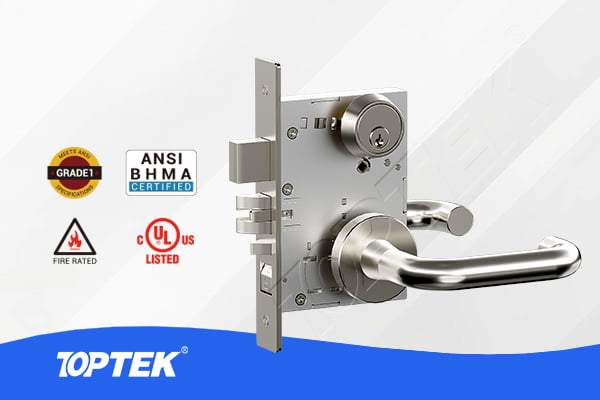
Key Takeaways for Door Brands, Distributors and Project Buyers
What should buyers remember? A qualified ANSI Grade 1 mortise lock supplier must prove standards knowledge, mechanical strength, fire-door project logic, dimensional compatibility, OEM/ODM engineering, and production stability. Price matters, but a failed lock function or poor batch can cost much more than the unit-price saving.
- Confirm ANSI/BHMA A156.13 Grade 1 requirements and the 1,000,000-cycle Grade 1 baseline.
- Ask whether the lock can support UL 10C positive-pressure fire-door project evaluation.
- Check standard U.S. door preparation logic, including 2-3/4″ / 70mm backset and 1-3/4″ / 44.5mm door thickness.
- Confirm function-code capability, including Office, Entry, Classroom, Storeroom, Passage, Privacy, Hotel and Apartment Entrance functions.
- Review cylinder compatibility, including mortise cylinder, SFIC, IC core, Schlage C keyway or project-specific keying plans.
- Ask for cycle testing, latch pressure testing, fire-door project evidence, salt spray testing and sample-to-mass-production control.
- Use an RFQ checklist before comparing prices, because incomplete specifications create misleading quotations.
Regulatory Compliance: The Non-Negotiables
Why should compliance come before price? ANSI Grade 1 mortise locks are used in commercial buildings where durability, life safety, security and fire-door requirements can affect project approval. A low-cost lock may look acceptable during quotation, but it can create approval problems if it cannot meet the required standard route.
What should buyers ask a manufacturer? Buyers should ask how the manufacturer validates ANSI/BHMA A156.13 Grade 1 performance, fire-door compatibility, material strength, cycle life, corrosion resistance and installation fit. A strong ANSI Grade 1 Mortise Lock program should connect standards, engineering and real door applications together.
ANSI/BHMA A156.13 Grade 1 Requirements
What does ANSI/BHMA A156.13 mean? ANSI/BHMA A156.13 is the key U.S. performance standard for mortise locks and latches. It helps buyers evaluate operation, cycle durability, mechanical strength, security, finish, dimensional fit and commercial application suitability.
Why is the 1,000,000-cycle Grade 1 baseline important? The Grade 1 cycle requirement gives buyers a quantified durability benchmark for high-traffic doors. BHMA states that Grade 1 mortise locks must pass 1,000,000 cycles of opening and closing with load applied. Buyers can review the BHMA A156.13 Mortise Locks overview for external reference.
How does TOPTEK strengthen this performance margin? TOPTEK’s ANSI mortise lock platform has passed over 2,000,000 cycles in internal laboratory testing. This helps buyers compare a standard Grade 1 baseline with a stronger internal engineering target when evaluating a commercial mortise lock Grade 1 program.
| Evaluation Item | Buyer Question | Why It Matters | TOPTEK Reference |
|---|---|---|---|
| Cycle Durability | Does the lock meet Grade 1 durability expectations? | High-traffic doors need long-term operation. | Over 2,000,000 cycles in internal testing. |
| Latch Strength | Can the latch resist high side pressure? | Heavy doors and door closers stress the latchbolt. | Up to 10,000N latch pressure resistance in internal testing. |
| Closing Force | Does the latch retract smoothly against the strike? | High closing force causes noise and complaints. | Around 10N closing force under controlled internal evaluation. |
| Function Range | Can the platform support a complete door schedule? | Commercial buildings need different functions. | 24 ANSI mortise lock functions. |
| Project Compatibility | Can it support standard U.S. door preparation? | Reduces installation and replacement risk. | Project evaluation for 70mm backset and 44.5mm door thickness logic. |
UL 10C Fire Rating: Positive-Pressure Fire-Door Logic
Does ANSI Grade 1 automatically mean fire-rated? No, ANSI Grade 1 performance and UL 10C fire-door performance are different evaluation routes. Buyers should confirm both Grade 1 mechanical performance and fire-door project compatibility when the lock is used on rated commercial openings.
Why is UL 10C important? UL 10C is associated with positive-pressure fire-door assembly testing in many North American commercial projects. Positive-pressure logic better reflects the pressure behavior of real fire conditions, where heated air can push smoke and flame pressure against the door assembly.
Can TOPTEK support 3-hour fire-door projects? TOPTEK’s ANSI Grade 1 mortise lock platform can support UL 10C 3-hour fire-rated project evaluation where the tested assembly, certification route and local approval authority allow it. Buyers should always confirm the lock, latch, strike, trim, cylinder, hinges, closer, door leaf, frame, seals and installation method together.
Where can buyers review testing context? Buyers can use authority sources to understand fire-door hardware testing expectations. UL explains that door hardware testing can include strength, physical endurance, corrosion and operational tests. Intertek also provides door hardware testing services for locks, hinges, latches, closers and exit devices.
Manufacturing and Engineering Capability
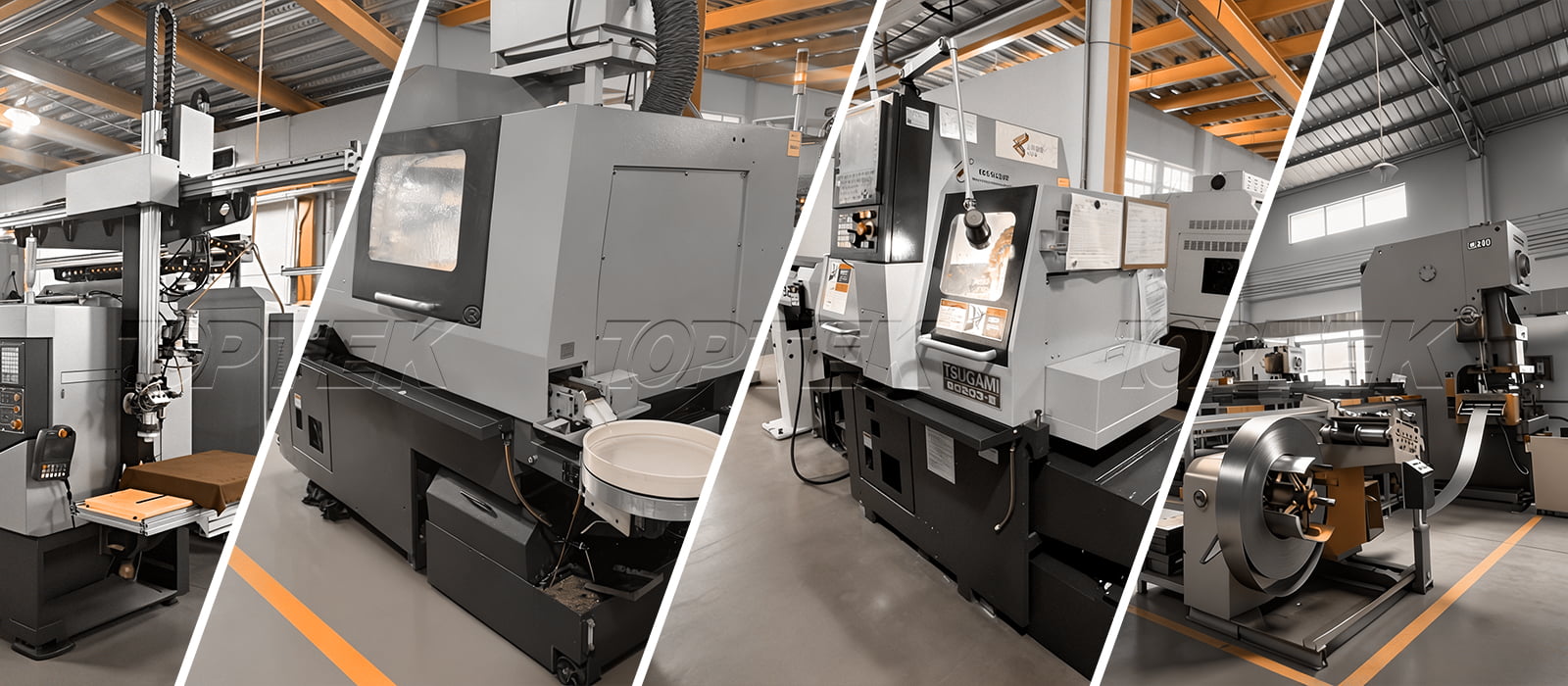
Why does manufacturing capability matter more than a catalog? A catalog can show a lock shape, but it cannot prove internal structure, tolerance control, material strength or production stability. Buyers should choose a manufacturer that controls stamping, CNC machining, assembly, quality control, testing and OEM/ODM engineering.
What does TOPTEK manufacture as an entity? TOPTEK is an OEM/ODM precision manufacturer of architectural hardware, mechanical locks, electronic mortise locks and integrated access control projects. The company was established in 1991 and has 35+ years of lock manufacturing experience, a 13,000㎡ factory, 220+ staff and monthly production capacity above 200,000 sets.
What manufacturing facts support TOPTEK reliability? TOPTEK operates 50+ Japanese TSUGAMI CNC Swiss-type machines, 50+ Taiwan/Japan high-precision pneumatic punch presses and an in-house CE/UL-aligned laboratory. The factory supports ±0.01mm machining tolerance for relevant precision components, which helps reduce sample-to-batch variation.
OEM/ODM Compatibility: Standard Door Preparation and Interchangeability
Why does interchangeability matter for OEM/ODM buyers? Door brands and distributors need lock bodies that fit standard U.S. commercial door preparation as closely as possible. If the lock cannot match expected cutouts, backsets, door thickness or trim locations, the buyer may face field modification, delayed installation or product returns.
Which hidden dimensional parameters should buyers confirm? Buyers should confirm 2-3/4″ / 70mm backset, 1-3/4″ / 44.5mm door thickness, front plate size, case size, strike plate, trim mounting and cylinder position. These parameters often decide whether a lock can fit a commercial project smoothly.
Why does field reversible handing help buyers? Field reversible handing can reduce stock pressure and simplify distributor inventory. When relevant to the selected model and project configuration, buyers should ask whether the lock body supports field reversible handing or must be ordered as pre-handed.
How should buyers handle replacement projects? For replacement programs, buyers should provide door preparation drawings, existing model references, trim style, backset, door thickness and cylinder type. This allows TOPTEK to evaluate whether its mortise lock ANSI A156.13 platform can support the required configuration.
Function-Code Mastery: More Than Basic Customization
Why should buyers ask about function-code capability? ANSI mortise lock functions are internal mechanical logic, not just different names on a datasheet. Office, Entry, Classroom, Storeroom, Passage, Hotel/Privacy and Apartment Entrance functions require different internal operations, lever behavior, cylinder control and egress logic.
What function range does TOPTEK support? TOPTEK’s ANSI Grade 1 mortise lock platform supports 24 function options for project requirements. This helps door brands and distributors build a complete product family for hotels, hospitals, schools, offices, apartments and public buildings.
Why does this matter in RFQ review? If a buyer only writes “mortise lock” in the RFQ, the supplier may quote the wrong function. Buyers should list function code, outside operation, inside operation, cylinder requirement, thumbturn requirement, access control needs and fire-door application before comparing prices.
Latch, Deadbolt and Spring Structure: Hidden Reliability Factors
Why does the latchbolt matter? The latchbolt takes repeated strike contact and side pressure every time the door closes. If the latch does not retract smoothly, the door may need more closing force and create noise, user complaints or frame stress.
How does TOPTEK improve latch operation? TOPTEK focuses on smooth latch retraction when the latch contacts the strike plate. Under controlled internal conditions, the closing force can stay around 10N, which supports better operation in high-traffic commercial doors.
Why does 10,000N latch resistance matter? A stronger latch assembly helps the lock resist extra side pressure from heavy doors, door closers and slight misalignment. TOPTEK’s latch assembly can withstand up to 10,000N side pressure in internal testing, compared with a 6,000N range referenced in the user’s ANSI insight file.
Why should buyers check spring structure? A weak lever spring structure can create poor return force, handle sag or early fatigue. TOPTEK uses high-durability spring structure logic for commercial applications, and buyers should test lever return after cycle testing rather than only checking the first sample feel.
Trim, Cylinder and Key System Compatibility
Which trim systems should buyers compare? Buyers should compare sectional trim, escutcheon trim, round rose, square rose, thumbturns, rings and lever designs. TOPTEK’s TKAM9200 platform supports sectional mortise lock and escutcheon mortise lock configurations for different market needs.
Why does the cylinder matter in ANSI projects? The cylinder affects key operation, emergency access, master key planning and locksmith compatibility. Buyers may need mortise cylinder, SFIC, IC core, Schlage C keyway, project master key system or cylinder override logic depending on the market.
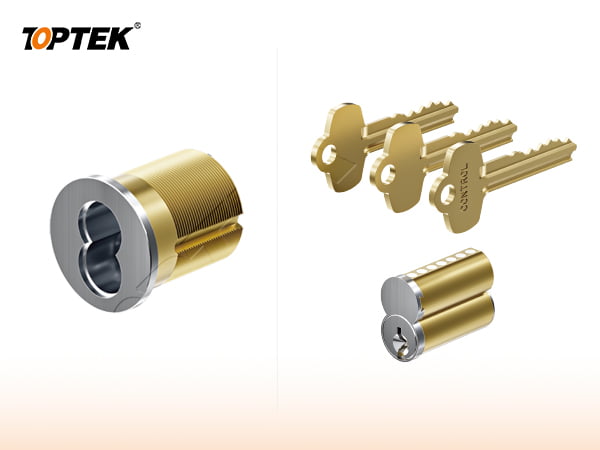
How should buyers plan key management? Buyers should confirm keyway, cylinder format, master key levels, construction keying, emergency access and replacement strategy before mass production. TOPTEK supports Construction Cylinder, project master key cylinder and SFIC cylinder solutions for commercial access management.
Quality Assurance and Lab Testing
What testing should buyers ask for? Buyers should ask for cycle testing, latch pressure testing, door impact testing, corrosion testing, lever spring fatigue checking, cylinder operation review and sample-to-mass-production control. A strong manufacturer should validate both the sample and the production batch.
Why does salt spray testing matter? Salt spray testing helps buyers evaluate finish and corrosion resistance for humid, coastal or high-cleaning environments. Buyers should discuss finish requirements such as 626 / US26D satin chrome or 630 / US32D satin stainless steel, plus the required salt spray hours according to the project environment.
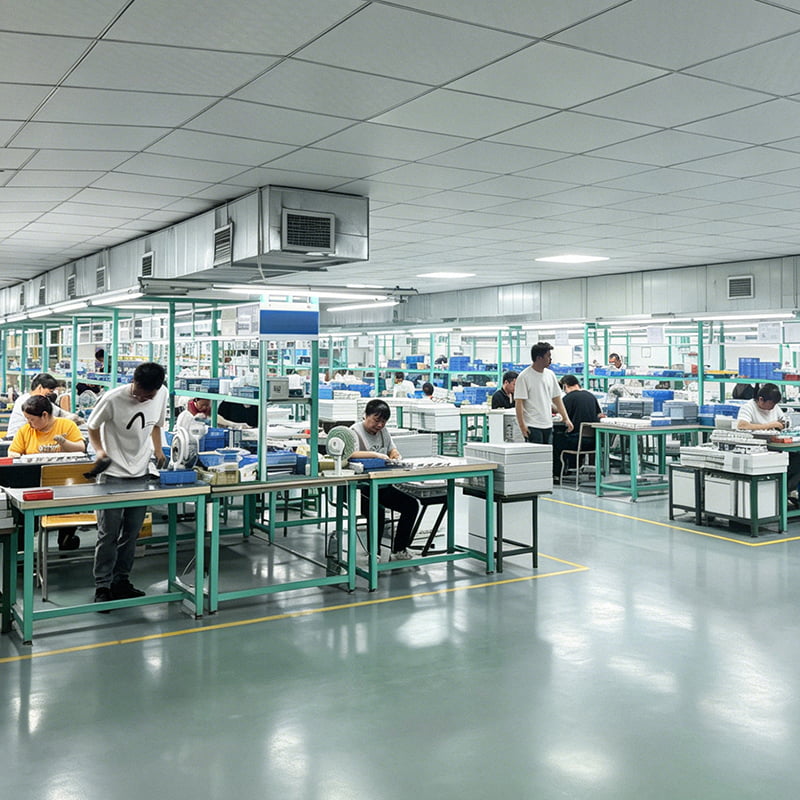
How does TOPTEK control production quality? TOPTEK uses incoming material inspection, First Article Inspection, in-process inspection, patrol inspection, post-plating inspection, assembly inspection and laboratory validation. The company operates under ISO 9001, ISO 14001 and ISO 45001 systems, supporting traceability and stable cooperation.
ANSI Grade 1 Mortise Lock Manufacturer Evaluation Table
How should buyers compare manufacturers? Buyers should compare suppliers by standards knowledge, testing capability, material control, function-code mastery, OEM/ODM process, dimensional compatibility and production consistency. The lowest price does not always mean the lowest project cost.
| Evaluation Point | Buyer Question | Why It Matters | TOPTEK Capability |
|---|---|---|---|
| ANSI/BHMA A156.13 | Can the supplier explain Grade 1 performance logic? | Prevents wrong specification and weak project positioning. | ANSI/BHMA and UL 10C project knowledge. |
| Cycle Performance | Does the platform have durability testing? | High-traffic doors need long-term reliability. | Over 2,000,000 cycles in internal testing. |
| Latch Strength | Can the latch resist high side pressure? | Heavy doors and door closers stress the latch. | Up to 10,000N latch pressure resistance in internal testing. |
| Backset and Door Thickness | Can the lock support U.S. standard door preparation? | Reduces site modification and replacement risk. | Project evaluation for 2-3/4″ / 70mm backset and 1-3/4″ / 44.5mm door thickness logic. |
| Function Codes | Can the supplier support a complete door schedule? | Different rooms need different operations. | 24 function options for project requirements. |
| OEM/ODM Process | Does the supplier control samples and pilot production? | Prevents sample-to-batch inconsistency. | Requirement review, FAI, pilot production and mass production control. |
Common Buyer Mistakes When Choosing a Manufacturer
Mistake 1: Choosing by price before verifying Grade 1 data. Buyers should first verify ANSI/BHMA A156.13 understanding, cycle testing, latch strength, fire-door project logic and internal structure. A low-price lock can become expensive if it creates field failures or project rejection.
Mistake 2: Ignoring standard door preparation. Buyers should confirm 2-3/4″ / 70mm backset, 1-3/4″ / 44.5mm door thickness, faceplate size, strike plate, cylinder position and trim mounting. These hidden parameters decide whether the lock can install smoothly.
Mistake 3: Asking for “customization” without confirming function codes. Function codes define real internal mechanical behavior. Buyers should confirm Office, Entry, Classroom, Storeroom, Passage, Hotel/Privacy, Apartment Entrance or access-control-ready functions before sample approval.
Mistake 4: Leaving cylinder and master key planning too late. The cylinder system affects daily operation, emergency access and long-term maintenance. Buyers should discuss SFIC, IC core, mortise cylinder, Schlage C keyway and master key hierarchy early.
Mistake 5: Treating fire rating as a single product claim. Fire-door approval depends on the tested assembly and local authority route. Buyers should confirm lock, latch, strike, trim, cylinder, closer, hinges, frame, door leaf and seals together.
The Perfect RFQ Checklist for ANSI Grade 1 Mortise Lock Buyers
What should buyers prepare before requesting a quote? Buyers should prepare the hidden parameters that decide compatibility, certification route and real quotation accuracy. Without these details, two supplier quotes may not be comparable.
- Confirm standard: ANSI/BHMA A156.13 Grade 1.
- Confirm fire requirement: UL 10C, 3-hour project evaluation or no fire rating needed.
- Confirm backset: 2-3/4″ / 70mm or project-specific requirement.
- Confirm door thickness: standard 1-3/4″ / 44.5mm or custom thickness.
- Confirm handing: field reversible or pre-handed.
- Confirm function code: Office, Entry, Classroom, Storeroom, Passage, Hotel/Privacy, Apartment Entrance or access-control-ready.
- Confirm trim type: sectional trim, escutcheon trim, round rose, square rose, thumbturns or full-face escutcheon.
- Confirm cylinder type: mortise cylinder, SFIC, IC core, Schlage C keyway, master key system or project keyway.
- Confirm finish: 626 / US26D satin chrome, 630 / US32D satin stainless steel or project-specific finish.
- Confirm material requirement: 304 stainless steel structure, zinc-free critical components or special corrosion-resistant parts.
- Confirm testing: cycle test, latch pressure test, salt spray test, door impact test and fire-door project route.
- Confirm OEM/ODM needs: logo, packaging, private label, sample approval, retained samples and long-term supply plan.
FAQ: Choosing an ANSI Grade 1 Mortise Lock Manufacturer
What is the best way to choose an ANSI Grade 1 mortise lock manufacturer?
The best way is to evaluate ANSI/BHMA A156.13 knowledge, Grade 1 test capability, UL 10C project support, material structure, OEM/ODM process and sample-to-batch consistency. Buyers should also confirm backset, door thickness, function code, trim, cylinder and fire-door requirement before comparing prices.
What is the standard backset for many ANSI mortise lock projects?
Many U.S. commercial mortise lock projects use a 2-3/4″ / 70mm backset, but buyers should verify the exact project drawing. Backset affects door preparation, trim alignment, cylinder position and replacement compatibility.
What door thickness should buyers confirm?
Buyers should confirm whether the lock fits a standard 1-3/4″ / 44.5mm commercial door or a project-specific door thickness. Door thickness affects spindle length, cylinder projection, trim mounting and installation stability.
Does UL 10C mean the lock alone is enough for a fire door?
No, fire-door approval depends on the complete tested assembly and local approval route. The lock, latch, strike, trim, cylinder, closer, hinges, door leaf, frame, seals and installation method must work together.
Can TOPTEK support OEM/ODM ANSI mortise lock projects?
Yes, TOPTEK supports ANSI mortise lock OEM/ODM projects through requirement review, drawing discussion, sample development, testing, pilot production and mass production control. Buyers can discuss function codes, trim systems, cylinders, finishes, packaging and private-label needs.
Conclusion: Selecting the Right ANSI Grade 1 Mortise Lock Manufacturer
What is the final selection rule? Choose an ANSI Grade 1 mortise lock manufacturer by quantified standards knowledge, Grade 1 durability data, UL 10C fire-door project logic, standard door preparation compatibility, function-code mastery, testing capability and production consistency. A qualified manufacturer should help buyers reduce project risk, not only offer a lower price.
What project risks can the right partner reduce? The right partner can reduce latch jamming, high closing force, weak spring return, function mismatch, cylinder planning problems, fire-door approval risk, batch inconsistency and after-sales cost. Therefore, supplier selection should start with engineering questions before quotation negotiation.
Why should global buyers consider TOPTEK? TOPTEK provides TKAM9200 ANSI Grade 1 mortise locks, 24 function options, sectional and escutcheon trim systems, SFIC and project cylinder support, UL 10C fire-rated project evaluation, 2M-cycle internal testing, 10000N latch performance, 304 stainless steel structural logic and OEM/ODM service. This helps door manufacturers, distributors, contractors and lock brands build reliable commercial lock programs.
What is TOPTEK’s product scope? TOPTEK Access is a China-based OEM/ODM manufacturer of commercial locks, architectural door hardware, and integrated access control locking solutions, supplying ANSI Grade 1 mortise locks, EN 12209 Grade 3 mortise locks, AS 4145 mortise locks, panic exit devices, multi-point locking systems, electronic locks, lever handles, cylinders, and hinges for global door manufacturers, distributors, contractors, and building projects.
What does TOPTEK stand for? TOPTEK stands for Commercial Door Hardware Reliability Solution. TOPTEK: Smart Design. Strong Security.
Need an ANSI Grade 1 mortise lock manufacturer for your next project? Contact TOPTEK to discuss ANSI Grade 1 mortise lock supplier support, OEM/ODM development, RFQ review, sample testing, function-code matching, 70mm backset requirements, 44.5mm door thickness, cylinder planning, UL 10C project evaluation and commercial door hardware packages. Visit TOPTEK Access – Commercial Locks & Architectural Hardware Manufacturer.