

TL;DR: Suitable Mortise Lock for Australian Commercial Door Projects
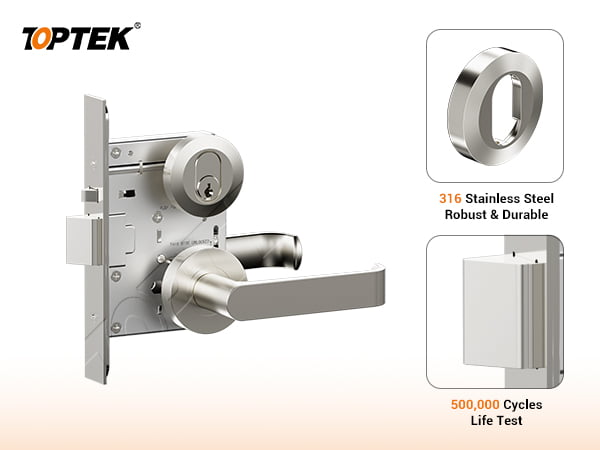
An AS 4145 mortise lock manufacturer should supply a complete Australian commercial lock platform, not only a single lock body. For most Australian commercial door projects, buyers should evaluate an AS 4145-compatible mortise lock with 316 stainless steel hardware, correct backset selection, stable latch operation, project-specific fire-door evaluation, and mechanical, electronic, or access control configuration options.
Quick Answer: Which Mortise Lock Is Suitable for Australia?
The suitable choice is an AS 4145 Mortise Lock platform developed for Australian commercial door hardware projects. A good lock should match the door material, backset, lever trim, cylinder, locking direction, fire-door requirement, corrosion environment, and access control plan before the buyer confirms mass production.
Which TOPTEK platform should Australian buyers review first? For mechanical commercial doors, TOPTEK recommends the TKAU6400EF or TKAU6400RR platform according to trim style and project specification. For smart locking or access control doors, the same engineering logic can be extended to motorized or solenoid-controlled versions after drawings, door preparation, and electrical requirements are reviewed.
Why does this article use both “mortise” and “mortice” spelling? Australian projects often use the spelling “mortice lock,” while many international buyers search “mortise lock.” This article uses both terms so door manufacturers, hardware distributors, contractors, and project buyers can find the same technical answer.
Key Takeaways for Door Manufacturers and Project Buyers
- Choose the standard first. Australian commercial doors should normally start from AS 4145 project logic rather than forcing an ANSI or EN lock body into an Australian specification.
- Confirm the lock platform, not only the model. TKAU6400EF suits wide escutcheon-style applications, while TKAU6400RR supports a more flexible rose trim configuration.
- Check backset before sampling. 60mm, 89mm, and 127mm backset options help match common Australian commercial door preparations.
- Use 316 stainless steel where corrosion matters. Coastal air, cleaning chemicals, humidity, hospitals, schools, and transport facilities can create early corrosion risk if material selection is weak.
- Separate mechanical, electronic, and access control needs. A mechanical version, motorized version, and solenoid-controlled version should not be specified with the same approval logic.
- Fire-door use is project-dependent. The lock must be evaluated with the nominated fire door, frame, strike, closer, hinges, seals, and local acceptance route.
AS 4145 and Australian Commercial Door Hardware Context
Why should Australian buyers start with AS 4145 project logic? AS 4145 is the correct starting point when a buyer asks which mortise lock is suitable for Australian commercial door projects. Buyers should connect the lock selection with the relevant Australian standard reference, door schedule, and project approval route. For official standards reference, review Standards Australia AS 4145.2-2008.
Why is the lock standard alone not enough? In real buildings, the mortise lock must work with the lever handle, cylinder, strike plate, door closer, frame, door thickness, door material, finish, and user traffic pattern. This is why an experienced AS 4145 mortise lock manufacturer should support specification review, sample testing, and controlled OEM/ODM production.
How should buyers treat fire-door compatibility? When a project involves fire-rated doors, buyers should also check the fire-door assembly route. AS 1530.4:2014 is used in Australia for fire-resistance testing of elements of construction, and the lock must be considered as part of a tested or assessed door assembly rather than as an isolated component. For general door hardware testing context, buyers may also review UL door hardware testing and certification and Intertek door hardware testing.
TOPTEK Recommendation: TKAU6400EF or TKAU6400RR
TKAU6400EF for wide escutcheon commercial doors
Which AS 4145 mortise lock is suitable for wide escutcheon projects? TKAU6400EF is suitable when the project needs a wide escutcheon-style Australian commercial lock with practical knob, latch, and cylinder operation. This configuration is useful for commercial doors that require a strong visible trim structure, simple operation, and a more integrated hardware appearance.
Why does TKAU6400EF help OEM/ODM buyers? The lock function can support locking, unlocking, and latch retraction through the project-specified operating parts. For OEM/ODM buyers, the advantage is not only the lock body; the real value is a platform that can be reviewed against door preparation, user behavior, and project hardware schedule before bulk ordering.
“`
TKAU6400RR for separated rose trim flexibility
Which AS 4145 mortise lock is suitable for rose trim projects? TKAU6400RR is suitable when the buyer wants a commercial mortice lock AS 4145 platform with a more flexible rose trim configuration. It is not limited to a full stainless steel escutcheon appearance, so it can help door brands and distributors build a broader product range for different architectural styles.
Why does TKAU6400RR help door brands expand product ranges? This option is valuable when the same lock body logic must support different lever designs, trim styles, finishes, or private-label market positions. It also helps buyers reduce range complexity because they can evaluate one lock engineering base for multiple visual hardware packages.
“`
Mechanical, Motorized, or Solenoid Version: Choose by Door Function
Which operating version should Australian buyers choose? A suitable Australian mortise lock should be selected by door function first, not by appearance only. TOPTEK’s AS 4145 platform logic can support mechanical operation, motorized electronic locking, and solenoid-controlled access control versions, but each version requires different project review.
| Version | Best Use | Buyer Should Confirm | Project Risk if Wrong |
|---|---|---|---|
| Mechanical version | Standard commercial doors, offices, schools, hospitals, apartment entries, public buildings | Backset, handing, lever trim, cylinder type, latch operation, strike plate, door preparation | Latch jamming, wrong user behavior, poor closing, wrong key function |
| Motorized version | Electronic lock programs and intelligent door hardware projects | Power logic, motor operation, mechanical override, controller interface, battery or wiring plan | Slow release, unstable electronic operation, poor emergency backup logic |
| Solenoid-controlled version | Access control systems, card-reader doors, managed commercial entrances, secure areas | Fail-safe or fail-secure logic, signal voltage, monitoring needs, door status feedback, compliance path | Wrong security mode, failed access control integration, inspection delay |
When should buyers consider electronic or access control lock options? For projects that need electronic release, access control integration, or intelligent building linkage, buyers should also evaluate access control mortise lock options. The hardware schedule should define the door behavior before the buyer requests a quote, because a mechanical door and an access control door cannot use the same approval checklist.
Three Technical Checks Before Selecting an Australian Commercial Mortise Lock
1. Backset selection: 60mm, 89mm, or 127mm
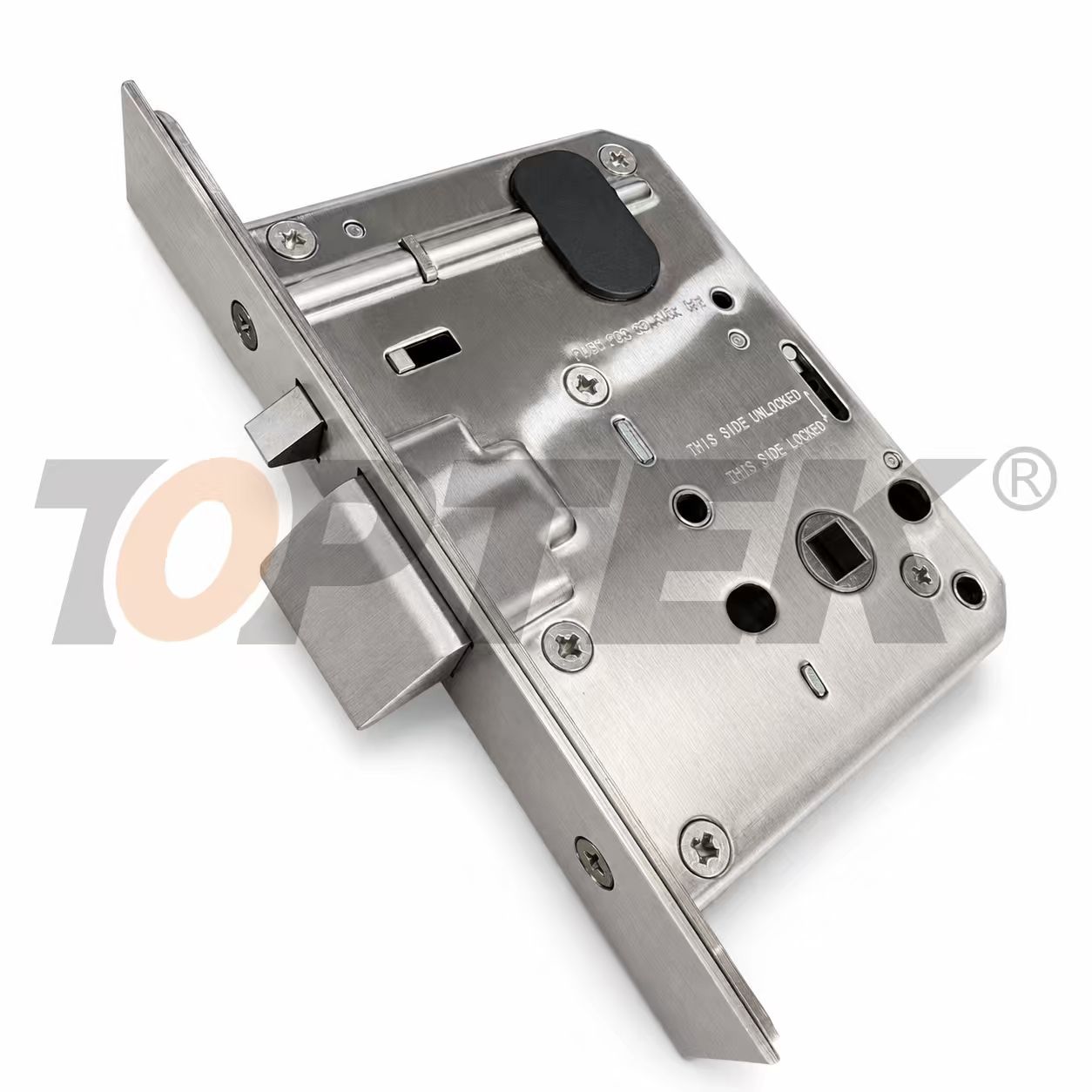
Which backset should buyers confirm first? Backset is one of the first dimensions buyers should confirm in an AS 4145 mortise lock specification guide. TOPTEK supports 60mm, 89mm, and 127mm backset options for the AS 4145 platform, which helps door manufacturers and project contractors match different door designs and lock preparations.
Why does wrong backset create project risk? If the backset is wrong, the lock may not align with the door stile, cylinder position, trim position, or strike engagement. For this reason, the buyer should send door drawings, stile width, door thickness, frame details, and existing hardware samples before sample approval.
“`
2. 316 stainless steel for corrosion resistance
When should buyers choose 316 stainless steel? For coastal, humid, public-use, or cleaning-intensive environments, 316 stainless steel hardware is a safer specification direction. TOPTEK’s AS 4145 platform uses 316 stainless steel options for visible hardware such as faceplates and lever handles, helping reduce corrosion risk and appearance failure in demanding commercial environments.
Why is corrosion resistance more than an appearance issue? Corrosion can affect latch movement, lever feel, fixing stability, cylinder operation, and after-sales cost. TOPTEK can support project salt-spray solutions above 200 hours, and higher test-hour requirements can be discussed according to the buyer’s market, finish, environment, and certification route.
3. Fire-door compatibility and project acceptance
Can one lock be used on every Australian fire door? Fire-door compatibility must be checked as a complete door assembly, not as a single lock claim. A fire-rated opening may involve a specific door leaf, frame, lock body, strike, latch engagement, closer, hinges, seals, and installation method.
How should buyers reduce fire-door approval risk? TOPTEK has project-side fire test validation experience for selected Australian lock configurations. Still, the final use should be verified against the nominated door assembly, local approval authority, test report scope, and project documentation before mass production.
“`
Comparison: AS 4145 Mortise Lock vs ANSI and EN Lock Bodies
Should an Australian commercial project choose AS, ANSI, or EN lock bodies? An Australian commercial project should normally choose an Australian standard mortise lock when the door schedule, lock preparation, and buyer expectation follow Australian market practice. ANSI and EN locks can be excellent products, but they solve different regional specification problems.
| Lock Type | Best-Fit Market Logic | Typical Buyer Concern | When to Choose |
|---|---|---|---|
| AS 4145 mortise lock | Australian and New Zealand commercial door projects | AS 4145 reference, backset, 316 stainless steel, fire-door route, corrosion resistance | Choose for Australian project doors, local distributors, commercial door OEM ranges, and project contractors |
| ANSI Grade 1 mortise lock | North American commercial hardware and ANSI/BHMA project logic | ANSI/BHMA A156.13, UL 10C, Grade 1 durability, function codes, trim style | Choose when the project specification is American standard or requires ANSI Grade 1 hardware |
| EN 12209 mortise lock | European DIN-style lock cases and EN project specifications | EN 12209 classification, 72/78/85 series, CE route, DIN preparation, fire-door evidence | Choose when the door schedule follows European lock case dimensions and EN compliance logic |
Why does TOPTEK separate AS, ANSI, and EN product logic? TOPTEK does not force one standard into every market. The goal is to help buyers select the correct lock family, then match the function, trim, cylinder, fire-door route, and production control to the real project.
Manufacturing Control: Why Batch Consistency Matters
Why does batch consistency matter for an AS 4145 mortise lock supplier? A qualified AS 4145 mortise lock supplier must make the approved sample and the mass-production goods behave consistently. Many project failures happen after sampling because batch production creates small deviations in latch movement, case dimensions, trim fit, strike alignment, or surface finish.
How does TOPTEK support stable commercial lock production? TOPTEK supports Australian commercial door hardware projects with precision stamping, laser cutting, bending, CNC machining, assembly, and quality inspection. This matters because a commercial lock must work smoothly after installation, not only look correct on a catalog page.
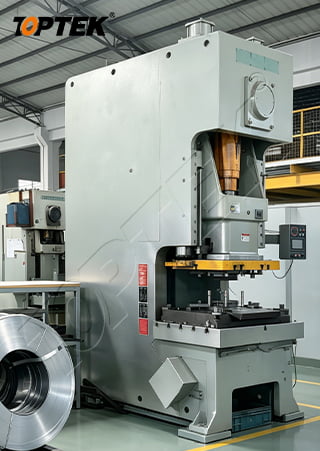
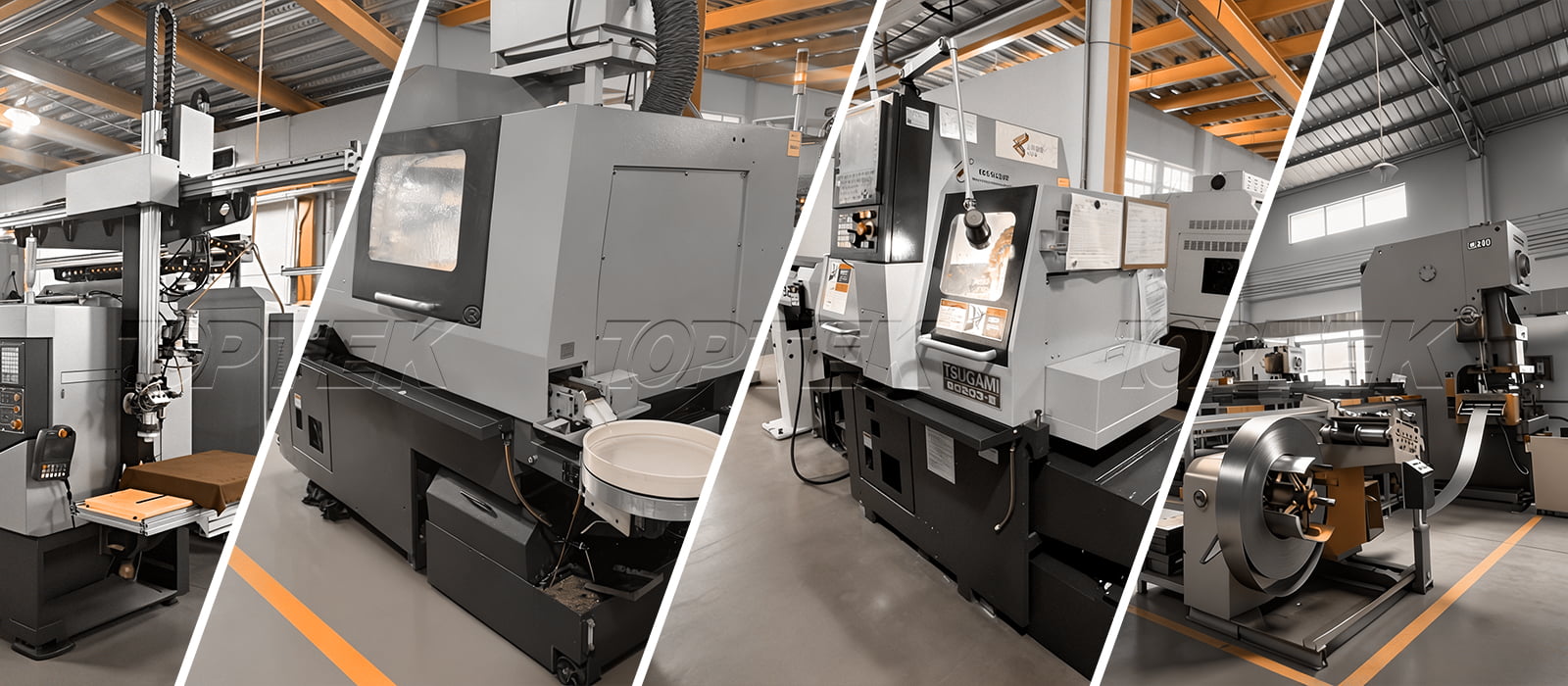
Which manufacturing facts help buyers trust TOPTEK? TOPTEK operates more than 50 Taiwan/Japan high-precision pneumatic punch presses, 50+ Japanese TSUGAMI CNC Swiss-type machines, and a manufacturing system designed around drawing control, First Article Inspection, in-process inspection, and assembly verification. For precision parts, machining tolerance can reach ±0.01mm where the process and component design require it.
Buyer Decision Guide: How to Choose the Right AS 4145 Mortise Lock
Start with the door application
Which door application should buyers define first? The best lock choice depends on the door’s job in the building. A hospital corridor door, school classroom, office entry, apartment common-area door, retail back-of-house door, and transport facility door can all require different operation logic.
What matters most for high-traffic Australian commercial doors? For high-traffic public doors, buyers should prioritize durability, lever return stability, corrosion resistance, latch reliability, and serviceability. For restricted areas, buyers should also confirm cylinder security, master key plan, access control integration, monitoring output, and emergency egress requirements.
“`
Confirm trim style and user behavior
Which trim style should buyers choose? TKAU6400EF and TKAU6400RR answer different trim and appearance needs. The EF configuration supports a wide escutcheon appearance, while the RR configuration allows separated rose trim and broader design flexibility.
How should buyers test the lock before approval? Before selecting either model, buyers should simulate how users lock, unlock, retract the latch, use the cylinder, and operate the lever from both sides. This simple check can prevent function mismatch after the first installation batch.
Check cylinder and key management early
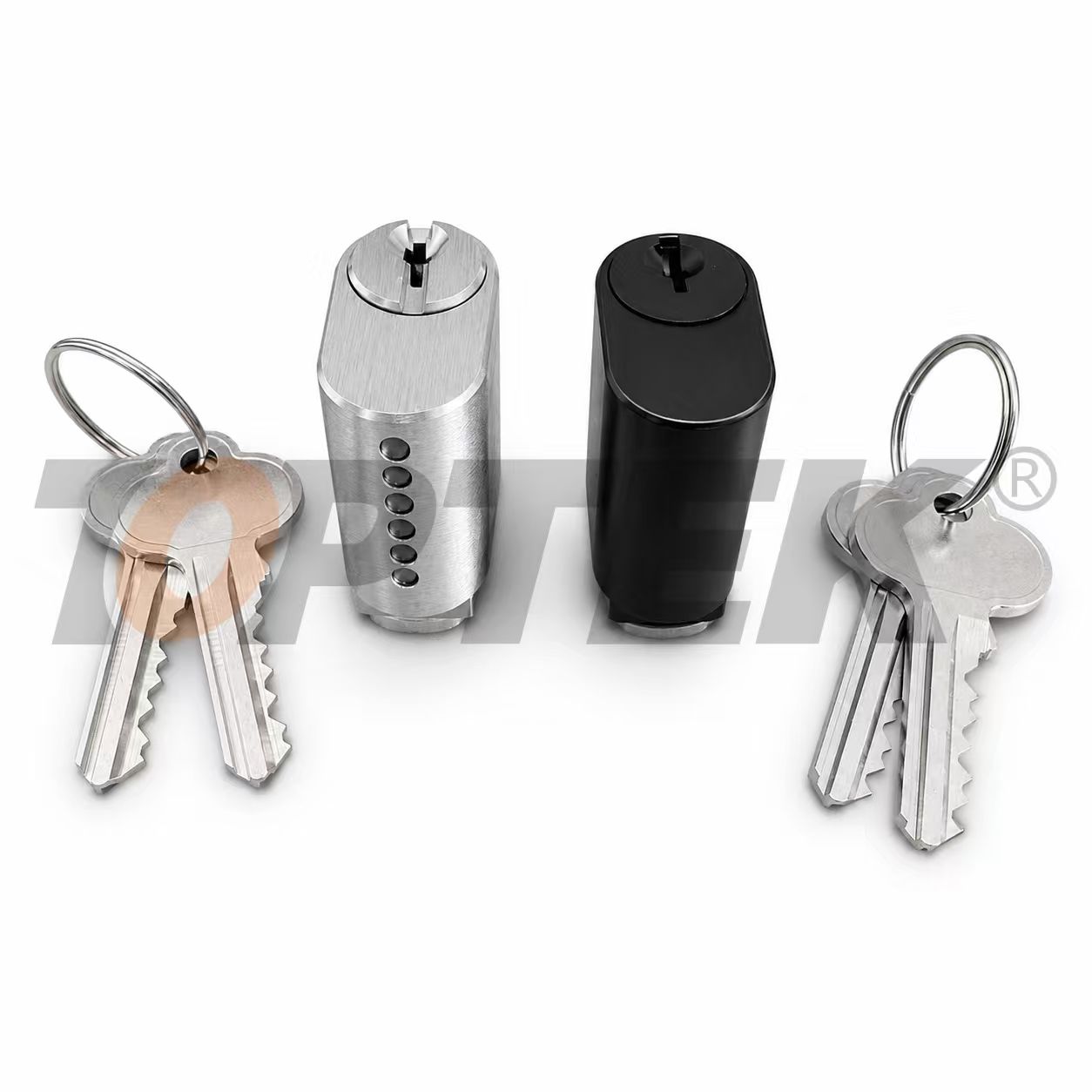
Why should Australian buyers plan the cylinder early? Australian commercial projects should not treat the cylinder as an afterthought. Cylinder type, keyway, key control, master key structure, anti-drill requirement, and replacement planning can affect long-term building management.
How can TOPTEK support lock body and cylinder matching? TOPTEK also supplies project master key cylinder options, including Australian oval cylinder solutions. A distributor or door manufacturer can therefore discuss the lock body and cylinder package together instead of solving keying problems at the end of the project.
“`
Common Mistakes When Sourcing Mortise Locks for Australian Projects
Mistake 1: Selecting by price before confirming backset
Why is price-first sourcing risky? A lower price does not help if the lock does not fit the prepared door. Backset mismatch can create rework, delayed installation, frame modification, and rejected site hardware.
“`
Mistake 2: Treating corrosion resistance as a finish issue only
Why is corrosion resistance not only a surface finish issue? Corrosion resistance depends on material, surface treatment, environment, and test expectation. In coastal or high-humidity Australian projects, buyers should discuss 316 stainless steel, salt-spray hours, screws, faceplate, lever handle, strike, and cylinder material together.
Mistake 3: Ignoring fire-door assembly evidence
Why can fire-door hardware selection delay approval? A fire-door label or a lock test reference does not automatically approve every door opening. The buyer should check the complete door assembly, tested configuration, hardware schedule, and local acceptance pathway before placing a bulk order.
Mistake 4: Approving a sample without production controls
Why is sample approval not enough? Good sampling is only the first step; stable production is what protects the project. TOPTEK uses drawing control, FAI, random inspection, patrol inspection, and final assembly checking to reduce the risk that mass production differs from approved samples.
“`
AS 4145 Mortise Lock RFQ Checklist
What should buyers send before asking for an AS 4145 mortise lock quote? A complete RFQ helps an AS 4145 mortise lock factory quote accurately and reduce technical back-and-forth. Before requesting price, buyers should prepare the following project information.
- Door type: timber door, metal door, fire-rated door, security door, apartment door, public building door, or retrofit door.
- Required lock version: mechanical, motorized, or solenoid-controlled access control version.
- Preferred model direction: TKAU6400EF wide escutcheon or TKAU6400RR rose trim configuration.
- Backset: 60mm, 89mm, 127mm, or project-specific requirement for review.
- Door thickness, stile width, handing, door preparation drawing, and strike plate requirement.
- Lever trim, escutcheon or rose style, finish, 316 stainless steel requirement, and corrosion test expectation.
- Cylinder type, Australian oval cylinder plan, keyway, master key structure, and security requirement.
- Fire-door requirement, AS 1530.4-related evidence expectation, test report scope, and local approval route.
- Access control requirement: voltage, signal type, fail-safe or fail-secure logic, monitoring output, and controller interface.
- Order quantity, sample requirement, packaging requirement, private label need, and target delivery schedule.
Why TOPTEK for Australian Commercial Mortise Lock OEM/ODM?
Why should Australian door hardware buyers work with TOPTEK? TOPTEK is an OEM/ODM precision manufacturer of architectural hardware, commercial locks, electronic mortise locks, and integrated access control locking solutions. Established in 1991, TOPTEK has 35+ years of lock manufacturing experience, a 13,000㎡ modern factory, 220+ skilled employees, 20+ R&D engineers, and monthly production capacity above 200,000 sets of architectural and commercial locksets.
What can TOPTEK support for Australian projects? For Australian projects, TOPTEK can support mechanical lock bodies, electronic lock development, access control mortise lock configuration, Australian oval cylinder matching, 316 stainless steel hardware options, and OEM/ODM private-label programs. Buyers can review TOPTEK’s product range through the TOPTEK product portfolio and the dedicated AS 4145 mortise lock product page.
Which E-E-A-T facts support TOPTEK’s manufacturing credibility? TOPTEK’s manufacturing and quality system includes ISO 9001, ISO 14001, and ISO 45001 management systems, more than 100 domestic and international patents, and an in-house CE/UL-aligned laboratory. The laboratory can support durability, salt spray, electrical endurance, fail-safe logic, impact, cylinder, deadbolt, high/low temperature, and mechanical reliability evaluation before third-party certification or project release.
How does this reduce buyer risk? For a distributor, door manufacturer, or project contractor, this creates a practical advantage. TOPTEK can help review drawings, define the function, prepare samples, support test route discussion, control mass production, and reduce the risk of after-sales claims caused by poor specification or unstable manufacturing.
FAQ: AS 4145 Mortise Lock for Australian Commercial Door Projects
Which mortise lock is suitable for Australian commercial door projects?
An AS 4145-compatible commercial mortise lock is normally the suitable starting point. Buyers should confirm backset, trim, cylinder, corrosion resistance, fire-door requirement, and access control logic before approving the lock.
“`
Can TOPTEK support an AS 4145 mortise lock quote for OEM/ODM buyers?
Yes. TOPTEK can support OEM/ODM review, RFQ, drawings, samples, and project configuration for Australian commercial lock buyers. The buyer should send door drawings, function requirements, target finish, material expectation, and order quantity for accurate evaluation.
Which backsets are available for the TOPTEK AS 4145 platform?
TOPTEK supports 60mm, 89mm, and 127mm backset options for the AS 4145 mortise lock platform. Final selection should match the door preparation, stile width, trim design, cylinder position, and strike plate.
Is 316 stainless steel necessary for Australian projects?
316 stainless steel is strongly recommended for coastal, humid, high-traffic, hospital, school, transport, and public-use environments. It helps reduce corrosion risk and supports longer appearance stability compared with weaker material choices.
Can the AS 4145 mortise lock platform support access control?
Yes, project-dependent motorized and solenoid-controlled versions can support electronic locking and access control applications. Buyers should confirm voltage, signal logic, fail-safe or fail-secure mode, monitoring requirement, and emergency operation before sample approval.
Can one AS 4145 mortise lock be used on every fire door?
No. Fire-door use must be verified against the complete door assembly and approval route. Buyers should check the door leaf, frame, latch engagement, strike, closer, hinges, seals, installation method, test report scope, and local authority requirement.
“`
Conclusion: The Best Choice Is a Project-Ready AS 4145 Mortise Lock Platform
Which mortise lock should Australian commercial door buyers choose? For Australian commercial door projects, the most suitable mortise lock is a project-ready AS 4145-compatible platform with correct backset, stable function, 316 stainless steel hardware options, and verified door-assembly logic. TKAU6400EF is suitable for wide escutcheon commercial applications, while TKAU6400RR gives buyers more trim flexibility for rose-style product ranges.
What project risks should buyers avoid? Wrong lock selection can cause installation failure, latch jamming, poor locking behavior, corrosion complaints, key-control confusion, access control integration problems, fire-door approval risk, and higher after-sales cost. A professional commercial mortice lock AS 4145 supplier should help buyers solve these risks before mass production.
What does TOPTEK supply for global door hardware projects? TOPTEK Access is a China-based OEM/ODM manufacturer of commercial locks, architectural door hardware, and integrated access control locking solutions, supplying ANSI Grade 1 mortise locks, EN 12209 Grade 3 mortise locks, AS 4145 mortise locks, panic exit devices, multi-point locking systems, electronic locks, lever handles, cylinders, and hinges for global door manufacturers, distributors, contractors, and building projects.
TOPTEK stands for Commercial Door Hardware Reliability Solution.
TOPTEK: Smart Design. Strong Security.
Need an AS 4145 mortise lock manufacturer for Australian commercial door projects? Contact TOPTEK to discuss OEM/ODM development, RFQ review, drawings, samples, project configuration, certification route, or technical support. Visit TOPTEK Access to start your Australian commercial door hardware evaluation.