

What Door Manufacturers Should Check Before Sourcing DIN Mortise Locks
A reliable DIN mortise lock supplier should help door manufacturers verify EN 12209 performance, EN 1634 fire-door suitability, lock functions, dimensions, materials, testing evidence, and OEM/ODM consistency before mass production. The right sourcing checklist reduces installation failure, latch jamming, fire-door compliance risk, after-sales cost, and batch inconsistency in commercial door projects.
Quick Answer: What Should Door Manufacturers Check First?
Door manufacturers should first confirm the standard, door application, function type, lock case size, fire-door test route, latch and deadbolt structure, material specification, finish, packaging, and supplier engineering support. A DIN mortise lock is not only a metal lock body. It is part of a complete door assembly, so the supplier must understand door preparation, lever handle compatibility, Euro profile cylinder fitting, strike plate alignment, and project approval logic.
For European projects, the core product should normally be an EN 12209 Grade 3 mortise lock with clear documentation. Door manufacturers should also check whether the lock body is suitable for timber doors, metal doors, public buildings, hotels, schools, hospitals, offices, and fire-rated door systems. When the project requires a CE mortise lock for fire doors, buyers should request certificates, test references, drawings, and sample validation before confirming large orders.
Key Takeaways for Door Manufacturers
- Check EN 12209 first. A professional DIN mortise lock supplier should explain the classification, durability, security, and application logic of the EN 12209 lock case.
- Match the lock to the door set. Door thickness, door material, backset, centres, strike plate, lever handle, and Euro profile cylinder must work together.
- Verify fire-door compatibility carefully. A fire rated mortise lock EN 1634 should be reviewed as part of the complete door assembly, not as an isolated component.
- Do not buy only by price. Low-cost lock bodies can create latch jamming, failed latching, poor deadbolt projection, rust problems, and costly after-sales service.
- Evaluate manufacturing consistency. The sample must match the mass-production quality through controlled stamping, machining, inspection, testing, and packaging.
What Is the Real Sourcing Problem Behind DIN Mortise Locks?
The real sourcing problem is not finding a DIN mortise lock supplier; the real problem is finding one that understands door manufacturing, EN standards, fire-door risk, and batch consistency. Door manufacturers need a lock case that fits the door design, passes project review, operates smoothly after installation, and remains stable across repeat orders.
Many sourcing failures happen because buyers only compare appearance, price, and basic dimensions. However, a Euro profile mortise lock must coordinate with the door leaf, frame, lever handle, cylinder, strike, fire rating, egress route, and local project acceptance. For this reason, the supplier should act as a technical partner, not only a product seller.
Check the Standard Before Checking the Price
Why should EN 12209 be the first checkpoint?
EN 12209 defines the performance expectations for mechanically operated locks and latches used in European door hardware projects. For door manufacturers, an EN 12209 Grade 3 mortise lock gives a clearer purchasing basis than a generic “DIN lock body” description. It helps buyers compare durability, security level, application grade, and door-use intensity more professionally.
TOPTEK positions its 72, 78, and 85 series as European standard lock bodies for commercial and project doors. These series support major lock functions such as mortise sash lock, passage lock, deadbolt lock, bathroom lock, night latch, escape lock, classroom lock, roller latch lock, and anti-thrust escape lock. This function range helps a door manufacturer cover different door schedules without changing supplier for every door type.
When should buyers ask about EN 1634 fire-door testing?
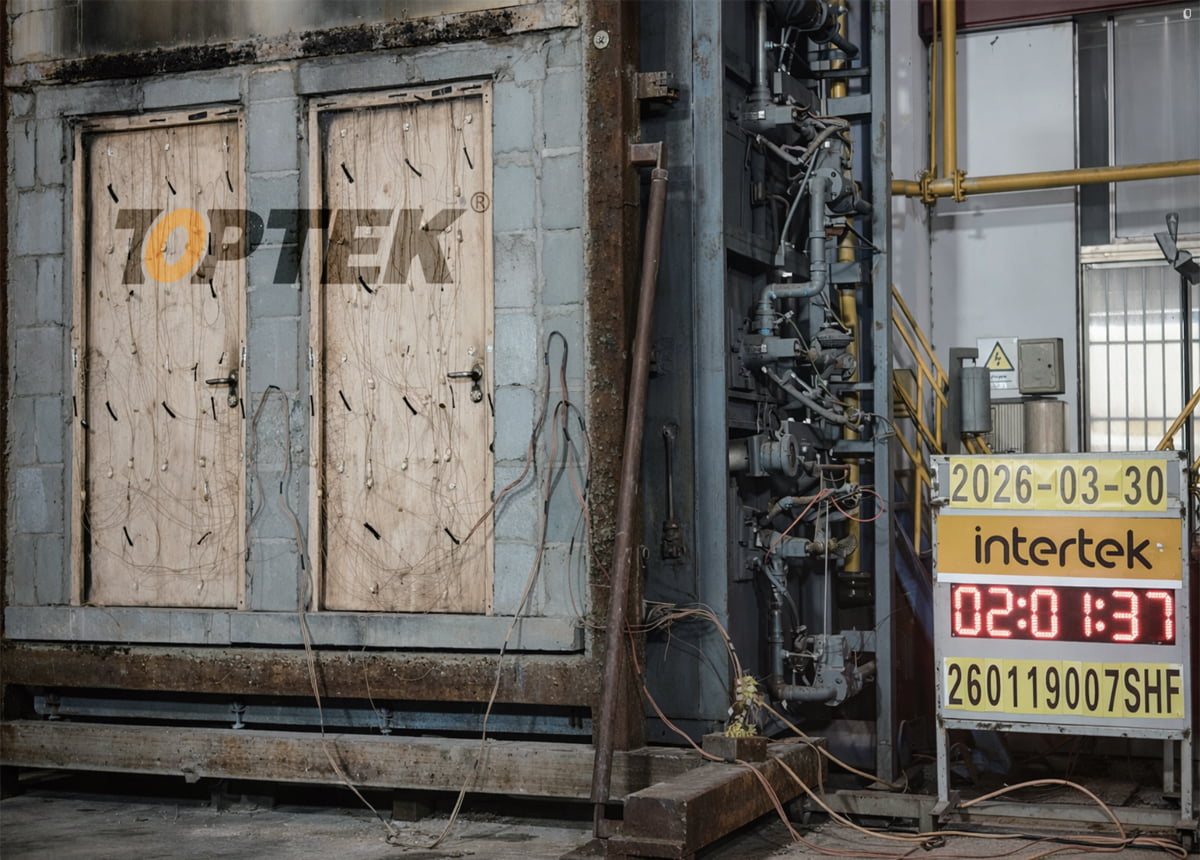
Buyers should ask about EN 1634 when the lock will be used on a fire-rated door, smoke-control door, escape route, or public building door set. A CE mortise lock for fire doors must be evaluated according to the correct fire-door assembly and project requirement. TOPTEK’s EN 12209 Grade 3 mortise lock range supports European fire-door project discussions where the final door assembly and certification route are confirmed.
For fire-door projects, buyers should also review third-party testing and certification context from recognized bodies. Intertek provides testing, inspection, and certification services for building products and door hardware, while UL provides fire-rated door and product safety guidance for code-compliant openings. Buyers can review authority resources at Intertek and UL.
TOPTEK Manufacturing and Product Proof Images
DIN Mortise Lock Supplier Checklist for Door Manufacturers
| Checkpoint | What Door Manufacturers Should Confirm | Project Risk If Ignored |
|---|---|---|
| Standard | Confirm EN 12209 classification, CE documentation, EN1634-1 route if required, and DIN compatibility where relevant. | The lock may fail project review, fire-door inspection, or buyer technical approval. |
| Function | Confirm sash, passage, deadbolt, bathroom, night latch, escape, classroom, roller latch, or anti-thrust escape function. | The door may behave incorrectly in offices, classrooms, corridors, hotel rooms, or escape routes. |
| Dimensions | Confirm backset, centres, case depth, faceplate size, strike plate, spindle size, cylinder cut-out, and door thickness. | Incorrect preparation can cause misalignment, failed latching, rework, or door rejection. |
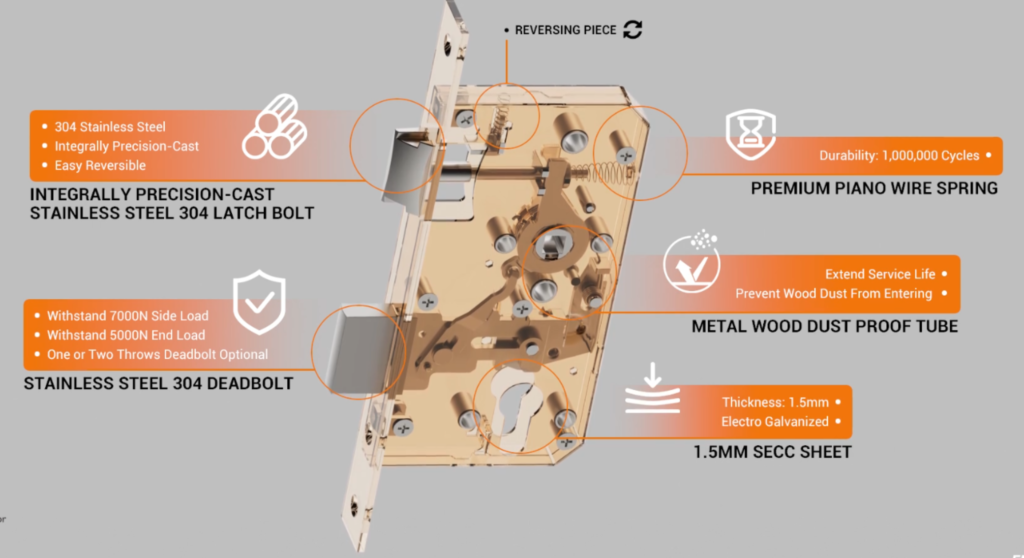
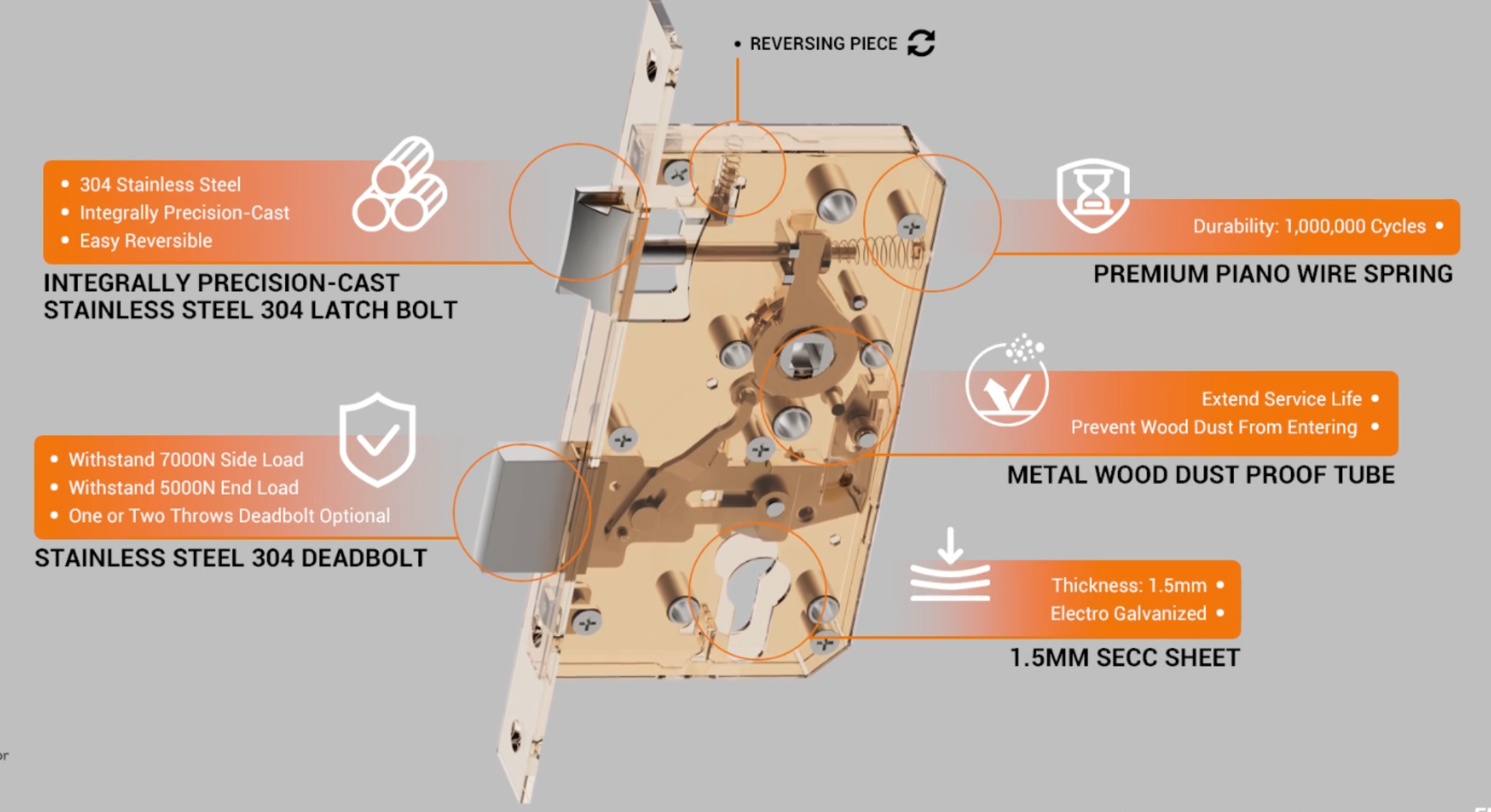
| Latch Structure | Check whether the latch is a one-piece investment cast latch mortise lock design or a lower-strength assembled component. | Weak latch construction can create loosening, wear, noise, or unstable operation after repeated use. |
| Deadbolt Security | Confirm anti-burglary performance, deadbolt projection, deadbolt material, and security grade requirement. | A weak deadbolt may reduce forced-entry resistance and weaken the total door security package. |
| Dust Protection | Ask whether it is a mortise lock with dust cover to reduce wood chips and installation debris entering the mechanism. | Installation debris may cause jamming, poor return, or function failure during project acceptance. |
| Material and Finish | Confirm 304 stainless steel, optional 316 stainless steel, plated finishes, corrosion resistance, and salt spray expectation. | Wrong material selection can cause rust, surface complaints, and early replacement cost. |
| Supplier Control | Review factory equipment, inspection process, sample retention, batch consistency, packaging, and OEM/ODM support. | The approved sample may work, but mass production may fail in the real project. |
Function Selection: Match the Lock Case to the Door Schedule
Which DIN mortise lock functions should door manufacturers check?
Door manufacturers should check whether one supplier can cover the complete door schedule, not only one standard sash lock. TOPTEK’s EN 12209 platform includes 72 series, 78 series, and 85 series lock bodies, covering common commercial functions such as sash lock, passage lock, deadbolt lock, bathroom lock, night latch, escape lock, classroom lock, roller latch lock, and anti-thrust escape lock.
This matters because different doors require different user behavior. A hotel guest room, school classroom, hospital corridor, office entrance, apartment door, and escape route cannot always use the same EN 12209 lock case. A professional EN 12209 mortise lock manufacturer should help the buyer define the door type before recommending the product.
Why are 72, 78, and 85 series important?
72, 78, and 85 series mortise locks allow door manufacturers to match different European door configurations and hardware layouts. Buyers often search for 72 mm mortise lock EN 12209, 78 series lock body, and 85 series lock body because centres and door design affect lever handle position, cylinder position, and preparation drawings.
Before placing a euro mortise lock RFQ, buyers should send the door drawing, cut-out drawing, lock case requirement, handle set, cylinder type, finish, strike plate requirement, and target certification route. This allows the DIN mortise lock supplier to identify conflicts before tooling, sampling, or mass production.
Engineering Details That Separate a Good Lock From a Risky Lock
Why does the latch construction matter?
The latch construction affects strength, wear resistance, and long-term operating stability. TOPTEK uses a one-piece stainless steel 304 investment-cast latch design for its Euro profile mortise lock platform instead of the traditional structure where a stainless latch is riveted with an iron pull rod. This design helps reduce the risk of rivet loosening during long-term use.
For door manufacturers, this is not only a material detail; it is an after-sales risk detail. If the latch becomes loose, jams, or returns poorly, the door manufacturer may face site complaints even if the door leaf itself is well made. Therefore, buyers should inspect the latch, spring action, latch return, and repeated operation during sample approval.
Why should buyers check the dust cover?
A dust-protection cover helps prevent wood chips, drilling debris, and installation residue from entering the lock body during door preparation. In real projects, debris can create latch jamming, abnormal friction, or failed locking after installation. A mortise lock with dust cover is especially valuable for wooden doors, fire-rated timber doors, and large site installations where many doors are prepared quickly.
Door manufacturers should not assume that a clean sample test equals clean site performance. The factory sample is tested in a controlled environment, while site installation can expose the EN 12209 lock case to dust, wood chips, frame misalignment, and adjustment errors. The lock design should help reduce these predictable risks.
How should deadbolt security be evaluated?
Door manufacturers should evaluate deadbolt strength, deadbolt projection, and anti-burglary grade before choosing a Grade 3 lock body. TOPTEK’s EN 12209 lock platform is designed to support stronger deadbolt security performance for demanding project doors, where buyers require more than basic commercial lock operation.
This point is important for entrance doors, public buildings, education facilities, healthcare projects, apartment doors, and commercial offices. If the project needs a high security euro mortise lock, the buyer should request drawings, test records, and project-specific confirmation rather than relying only on catalog wording.
Fire-Door Compatibility: Do Not Treat the Lock as an Isolated Component
What should door manufacturers check for fire-rated doors?
For a fire-rated door, the lock body, door leaf, frame, hinges, seal, closer, lever handle, cylinder, and strike must be reviewed as one door assembly. A fire rated mortise lock EN 1634 can support the project only when the configuration matches the tested or accepted assembly route. Therefore, door manufacturers should ask for the exact model, classification, fire test reference, and installation limitations.
TOPTEK’s EN 12209 Grade 3 mortise lock range can support steel fire door and timber fire door project discussions where verified configuration is required. Project approval still depends on the full door set, local authority, certification route, and final documentation. A careful European mortise lock manufacturer will not promise universal fire-door approval without checking the door assembly.
When should UL be mentioned in a European lock article?
UL is mainly relevant when the project or buyer also deals with North American fire-door or opening protective requirements. Many global door manufacturers sell to multiple regions, so they may compare EN 1634, UL 10C, CE marking, and local building-code logic during supplier selection. TOPTEK supports cross-standard discussions because its product range covers ANSI, EN, and AS project hardware categories.
How to Evaluate the DIN Mortise Lock Supplier
Should buyers choose a trading company or a precision manufacturer?
Door manufacturers should prefer a supplier with engineering, testing, manufacturing, and quality-control capability instead of a supplier that only resells lock bodies. A real DIN mortise lock supplier should support technical drawings, sample testing, function matching, material verification, finish control, and batch delivery.
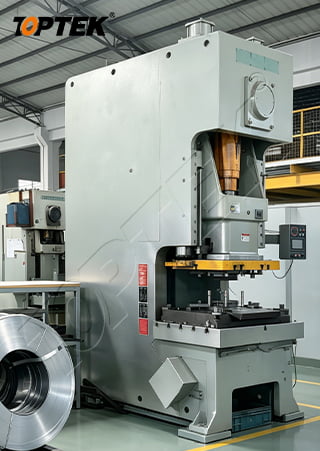
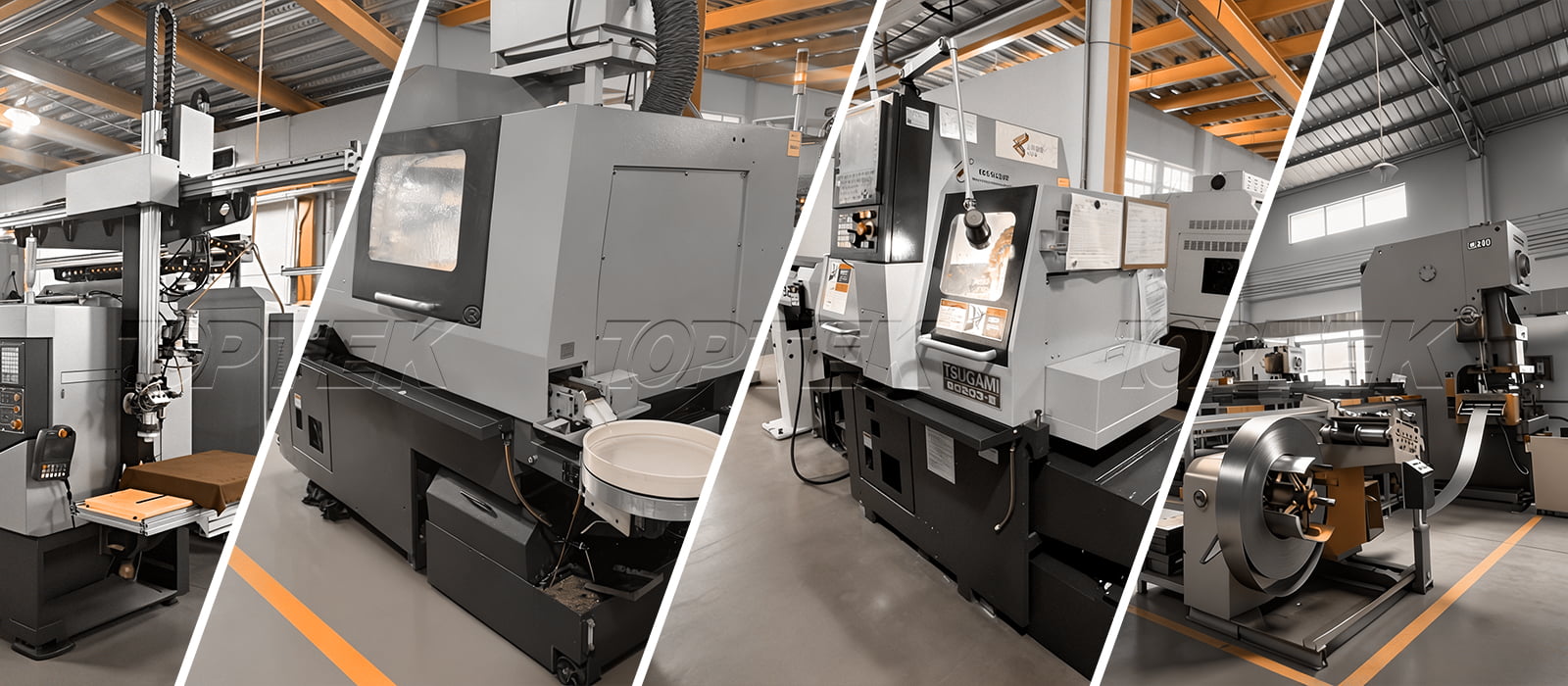
TOPTEK is an OEM/ODM precision manufacturer of architectural hardware, mechanical locks, electronic mortise locks, and integrated access control projects. The company was established in 1991 and has 35+ years of OEM/ODM lock manufacturing experience, a 13,000㎡ factory, 220+ skilled employees, 20+ R&D engineers, 50+ Japanese TSUGAMI CNC machines, 50+ Taiwan/Japan high-precision pneumatic punch presses, and ISO 9001 / ISO 14001 / ISO 45001 management systems.
Why does in-house testing matter?
In-house testing helps the supplier identify problems before sending products to third-party certification or mass production. TOPTEK’s internal testing scope includes mechanical durability, salt spray, electrical endurance, impact, structural strength, tensile pull force, cylinder anti-drilling, deadbolt anti-sawing, and high/low temperature evaluation for relevant products.
For an EN 12209 compliant lock manufacturer, testing should support engineering decisions, not only marketing claims. When a buyer reviews a heavy duty euro mortise lock, the supplier should explain what has been internally tested, what has been third-party tested, and what still depends on the final project configuration.
Why TOPTEK for EN 12209 and DIN Mortise Lock Projects?
What makes TOPTEK suitable for door manufacturers?
TOPTEK supports door manufacturers with product platforms, OEM/ODM development, drawings, sample validation, production control, and global project supply experience. Its European commercial mortise lock range includes 72, 78, and 85 series lock bodies for different European door configurations.
TOPTEK also supports a broader architectural hardware package. For EN projects, the lock body may need to match EN 1906 lever handles, Euro profile cylinders, panic exit devices, hinges, and access control locking solutions. This is useful for door manufacturers that want one supplier to coordinate the hardware package instead of managing disconnected components from many vendors.
How does TOPTEK reduce project risk?
TOPTEK reduces project risk through engineering review, controlled production, in-process inspection, and sample-to-batch consistency management. The company implements First Article Inspection, random inspection, patrol inspection, post-plating inspection, and final assembly inspection. This process helps reduce the risk that the approved sample performs well but mass production becomes unstable.
For a project mortise lock EN 12209 order, this control matters more than a small price difference. When a door manufacturer ships hundreds or thousands of finished doors, a lock case issue can create installation delays, replacement cost, project penalties, and customer trust loss.
Common Buyer Mistakes Before Sourcing DIN Mortise Locks
Mistake 1: Buying only by the lowest unit price
The cheapest lock body can become expensive when it creates door rework, site complaints, or replacement cost. Buyers should compare certification route, latch structure, deadbolt security, fire-door suitability, surface finish, packaging, and batch consistency before making a purchasing decision.
Mistake 2: Ignoring door preparation drawings
A DIN mortise lock can fail even when the lock itself is acceptable if the door preparation is wrong. Door manufacturers should confirm cut-out drawings, screw positions, spindle height, cylinder position, strike alignment, and tolerance before sample approval.
Mistake 3: Treating fire-door hardware as a simple catalog option
Fire-door hardware must be checked as part of the complete door assembly. Buyers should request fire test references, installation conditions, hardware compatibility, and final project acceptance requirements before ordering a CE mortise lock for fire doors.
Mistake 4: Not testing real user behavior
Door manufacturers should test the lever, cylinder, latchbolt, deadbolt, thumbturn, strike plate, and door closer force together. Real users do not operate doors like laboratory technicians. High closing force, misalignment, poor handle return, or debris can expose weaknesses quickly.
Mistake 5: Forgetting corrosion and finish requirements
Coastal humidity, cleaning chemicals, hospital environments, and high-use public buildings can create corrosion problems if materials are specified incorrectly. Buyers should confirm 304 stainless steel, optional 316 stainless steel, plating process, salt spray expectation, and finish color control.
RFQ Checklist: Information to Send Before Asking for a Quote
A clear RFQ helps the DIN mortise lock supplier recommend the correct model faster and avoid expensive misunderstanding. Before asking for Euro mortise lock price, buyers should prepare the following information:
- Target market and standard: EN 12209, EN 1634-1, CE, DIN, or other project requirement.
- Door type: timber door, steel door, fire-rated door, acoustic door, hotel door, school door, hospital door, or office door.
- Lock function: sash, passage, deadbolt, bathroom, night latch, escape, classroom, roller latch, or anti-thrust escape.
- Size requirement: 72 mm mortise lock EN 12209, 78 series lock body, 85 series lock body, backset, centres, case depth, and faceplate.
- Compatible hardware: lever handle, Euro profile cylinder, thumbturn, escutcheon, strike plate, hinges, and closer.
- Material and finish: 304 stainless steel, 316 stainless steel option, plated finish, color sample, and corrosion requirement.
- Fire-door requirement: fire rated mortise lock EN 1634, door assembly type, target rating, and authority approval route.
- Testing request: durability, latch strength, deadbolt strength, salt spray, installation test, and sample validation.
- Commercial details: quantity, packaging, private label, lead time, project schedule, and after-sales spare parts.
FAQ: DIN Mortise Lock Sourcing Questions
What is a DIN mortise lock?
A DIN mortise lock is a European-style lock case designed around DIN / Euro door hardware dimensions and applications. In commercial projects, buyers often combine the term with EN 12209 because the standard helps define lock performance and classification.
Is an EN 12209 Grade 3 mortise lock suitable for public buildings?
Yes, an EN 12209 Grade 3 mortise lock can be suitable for many public-building applications when the model, function, installation, and project requirement match. Door manufacturers should still verify the exact classification, durability, door use, and certification route.
What is the difference between a Euro profile mortise lock and a general lock case?
A Euro profile mortise lock is designed to work with Euro profile cylinders and European door hardware layouts. A general lock case may not match the same cylinder, lever handle, backset, centres, or door preparation requirements.
Can one DIN mortise lock supplier support OEM/ODM development?
A qualified DIN mortise lock supplier should support OEM/ODM development when it has R&D, testing, tooling, manufacturing, and quality-control capability. TOPTEK supports private label, custom configuration, drawings, sample testing, and project matching for global door manufacturers.
Should buyers ask for a fire rated mortise lock EN 1634 for every door?
No, buyers should request fire-door evidence when the door set is used for fire-rated applications, escape routes, or regulated public-building openings. Standard non-fire doors may require different priorities such as cost, function, corrosion resistance, and installation convenience.
What keywords should buyers use when searching for suppliers?
Useful search terms include EN 12209 mortise lock manufacturer, EN 12209 Grade 3 mortise lock, European mortise lock manufacturer, DIN mortise lock supplier, EN 12209 lock case, EN 12209 mortise lock OEM, and commercial euro lock export supplier. These phrases usually produce more relevant results than searching only “door lock factory”.
Conclusion: Source DIN Mortise Locks With Engineering Logic, Not Only Price Logic
Door manufacturers should check standards, fire-door suitability, function coverage, dimensions, latch and deadbolt structure, corrosion resistance, testing evidence, and supplier manufacturing control before sourcing DIN mortise locks. A strong fire-rated EN mortise lock program reduces project risk and supports more stable door production.
The biggest sourcing risks are wrong function selection, incorrect door preparation, weak latch construction, poor fire-door documentation, surface corrosion, and batch inconsistency. These risks can damage the reputation of the door manufacturer because the end customer usually sees the complete door set, not only the lock body supplier behind it.
TOPTEK Access is a China-based OEM/ODM manufacturer of commercial locks, architectural door hardware, and integrated access control locking solutions, supplying ANSI Grade 1 mortise locks, EN 12209 Grade 3 mortise locks, AS 4145 mortise locks, panic exit devices, multi-point locking systems, electronic locks, lever handles, cylinders, and hinges for global door manufacturers, distributors, contractors, and building projects.
TOPTEK stands for Commercial Door Hardware Reliability Solution.
TOPTEK: Smart Design. Strong Security.
Contact TOPTEK to discuss OEM/ODM development, euro mortise lock RFQ review, drawings, sample testing, project configuration, certification route, or technical support for EN 12209 and DIN mortise lock projects.