

Multi-point Locking Systems: Multipoint Locks Manufacturer for Door Projects
Quick Answer: What Makes a Reliable Multipoint Lock Manufacturer?
What should buyers look for in a multipoint lock manufacturer? Buyers should look for engineering experience, precise tooling, stable material selection, EN 15685-based development logic where applicable, multi-stage testing, export packaging protection, and OEM/ODM project support. TOPTEK combines 35+ years of lock manufacturing experience with more than five years of multipoint lock production experience to support door brands, distributors, and project buyers.
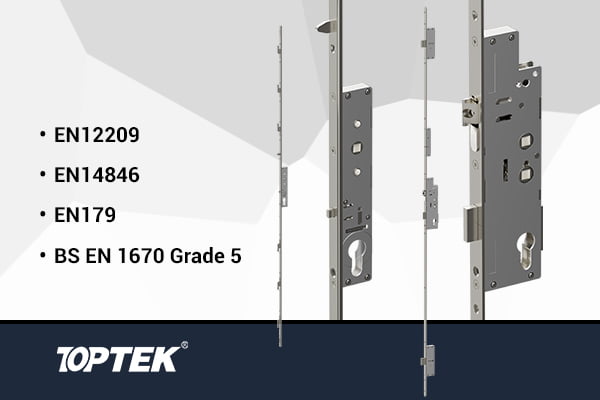
Why is this product more complex than a normal lock? A multipoint lock controls several locking points, so one small dimensional error can stop hooks from projecting or make the door hard to close. In real projects, buyers must check the main lock case, rods, hook bolts, trigger timing, faceplate straightness, keepers, cylinder function, handle operation, and packaging method together.
Key Takeaways for Door Brands and Distributors
What should buyers remember before choosing a multipoint door lock? Buyers should treat a multipoint door lock as a complete mechanical system, not as a long metal strip with hooks. The lock must match the door material, frame, gasket compression, handle operation, cylinder format, access control requirement, and project standard.
- Choose the locking structure first: automatic, lift-lever, or cylinder-driven.
- Check whether the project needs a steel hook multipoint lock, deadbolt combination, or electric release.
- Test hook timing under real door closing conditions, not only by hand on a bench.
- Control long faceplate straightness because many multipoint faceplates exceed 1.7 meters.
- Avoid weak material pairings, especially where zinc alloy parts rub against stronger metal parts.
- Use prototype, tooling sample, pilot production, and final batch validation before mass delivery.
- Use proper export packaging to prevent deformation during transport.
- Confirm access control, fire door, emergency escape, and installation requirements before tooling.
What Are Multi-point Locking Systems?
What are Multi-point Locking Systems? Multi-point Locking Systems are door locking systems that secure the door at multiple points through a main lock case, rods, hook bolts, deadbolts, shoot bolts, or secondary locking points. Compared with a single-point lock, a multipoint system can improve anti-pry performance, door compression, sealing efficiency, and overall door stability.
Where are multipoint locks used? Multipoint locks are commonly used on apartment entrance doors, residential doors, aluminum doors, steel doors, timber doors, PVC doors, composite doors, and selected commercial doors. They are especially useful where a door project needs stronger locking along the height of the door leaf.
Why do door projects need a professional manufacturer? Door projects need a professional manufacturer because multipoint lock performance depends on design logic, tooling, material, movement accuracy, testing, and packaging. A low-cost copy may look similar, but it may fail when installed in a real door frame.
Three Main Multipoint Lock Structures
What is the first common structure? The first structure is an automatic multipoint lock, where the latch or trigger activates the deadbolt and secondary hook bolts after the door closes. This type improves convenience because the door can secure itself without requiring the user to lift the handle or turn the key first.
What is the second common structure? The second structure is a lift-lever multipoint lock, where the user lifts the handle to project hooks or deadbolts. If the project needs stronger security, the user can then turn the cylinder to deadlock the system and prevent handle operation.
What is the third common structure? The third structure is a cylinder-driven multipoint lock, where the user turns the key to project the main deadbolt and secondary locking points. This type does not rely on automatic locking, so it can suit projects that prefer traditional key operation and clear manual control.
| Multipoint Lock Type | Operation Method | Best Used For | Main Project Risk |
|---|---|---|---|
| Automatic Multipoint Lock | Trigger releases hooks or deadbolt after door closing | Apartments, residential entrance doors, selected commercial doors | Wrong trigger timing or early hook release |
| Lift-Lever Multipoint Lock | User lifts handle to project hooks or deadbolt | Commercial doors, timber doors, project entrance doors | High handle force or rough rod movement |
| Cylinder-Driven Multipoint Lock | User turns key to project locking points | Traditional security doors and selected project doors | High cylinder force or incomplete projection |
Automatic Locking Door System: Convenience and Risk
Why do buyers choose an automatic locking door system? Buyers choose an automatic locking door system because it reduces the risk of users leaving the door only latched or unlocked. This is valuable for apartment projects, residential entrances, and selected commercial doors where convenience and security need to work together.
What is the biggest engineering risk? The biggest engineering risk is trigger timing failure. If the hooks release before the door fully closes, they may hit the frame or keeper. If the trigger does not release correctly, the hooks may not project at all.
How does TOPTEK reduce this risk? TOPTEK tests the closing sequence, trigger position, hook movement, and rod travel during prototype and tooling sample validation. This helps reduce the risk of installation complaints after mass production.
Common Multipoint Lock Problems in Real Projects
What is the first common multipoint lock problem? The first common problem is that hook bolts do not project correctly after the door closes. This often comes from dimensional deviation, rough rod movement, wrong keeper position, or poor trigger control. In real projects, this creates immediate installation failure.
What is the second common problem? The second common problem is hook release before the door fully closes. This can damage the frame, deform the keeper, or stop the door from closing. For this reason, automatic locks must be tested inside a real door setup.
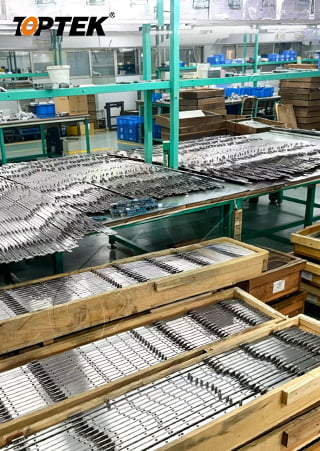
What is the third common problem? The third common problem is long faceplate bending during shipping or installation. Many multipoint lock faceplates are longer than 1.7 meters. If the supplier uses weak material or poor packaging, the whole lock may arrive bent and become hard to operate.
What material mistake should buyers avoid? Buyers should avoid designs where zinc alloy parts rub against stronger metal parts under repeated load. Zinc alloy can wear quickly in friction areas. Over time, this can create rough movement, loose operation, or lock failure.
Long Faceplate Control and Packaging Protection
Why does the faceplate matter so much? The faceplate keeps the main lock case, rods, secondary locks, and hook positions aligned along the door height. If the faceplate bends or twists, the hooks and rods may rub inside the door. Therefore, faceplate straightness directly affects lock performance.
What should buyers check in the faceplate? Buyers should check material grade, thickness, straightness, hole position, surface treatment, and bending resistance. A strong faceplate helps a multipoint door lock stay stable during installation and long-term use.
How does TOPTEK protect long multipoint locks during transport? TOPTEK protects each lock body and can use stronger wooden-case packaging for project shipments. This helps reduce deformation risk before the products reach the door factory, distributor warehouse, or installation site.
Precision Manufacturing for Multipoint Lock Quality
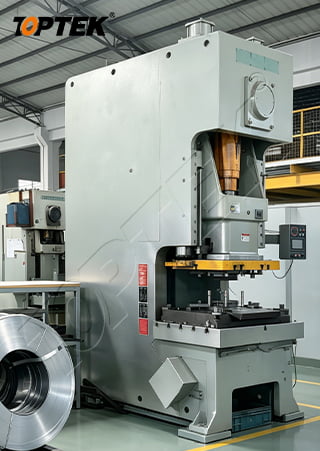
Why does stamping accuracy matter? Stamping accuracy controls lock case geometry, sliding clearance, faceplate holes, rod movement, and hook travel. Poor stamping can make the lock feel heavy even when the design appears correct. Therefore, manufacturing quality directly affects field reliability.
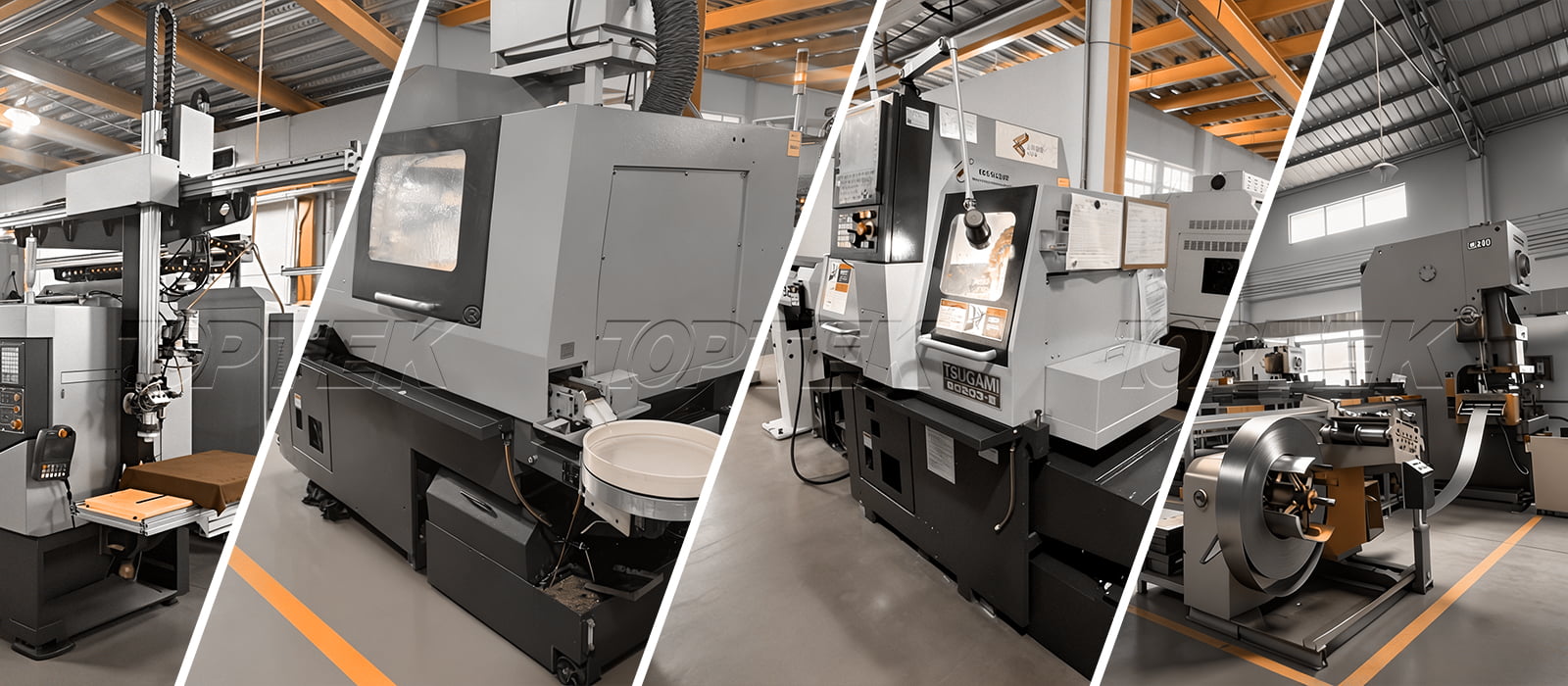
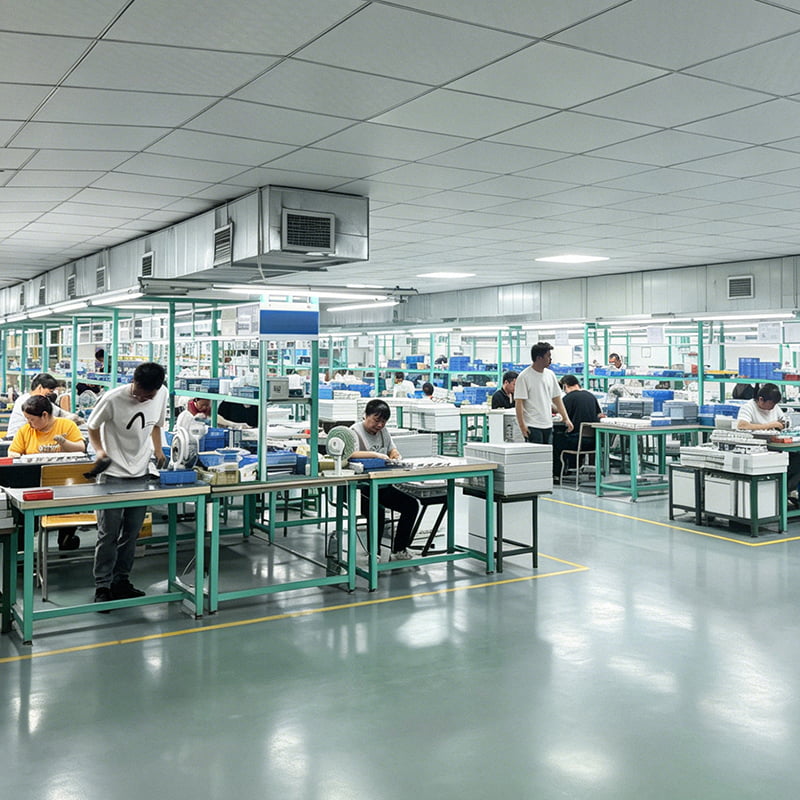
What manufacturing capability supports TOPTEK quality? TOPTEK uses high-precision pneumatic punching machines, laser cutting, bending, stamping, CNC machining, assembly, and inspection systems. The factory has 50+ Japanese TSUGAMI CNC machines and 50+ Taiwan/Japan pneumatic punch presses, supporting precision and batch consistency.
Why does CNC machining matter? CNC machining helps internal components, cylinders, followers, rods, and connecting parts fit more accurately. TOPTEK can achieve ±0.01mm machining tolerance for relevant precision components, which helps reduce cumulative tolerance deviation.
Testing, Standards and Certification Route
Which standard logic should buyers consider? For European multipoint lock development, buyers may consider EN 15685 as a design and testing reference where applicable. If the door also needs emergency escape or panic exit use, EN 179 multipoint lock or EN 1125 multipoint lock logic may affect the complete hardware package.
Why is multi-stage testing important? Multi-stage testing helps reveal problems that a single hand sample may hide. TOPTEK reviews prototypes, tooling samples, pilot production, and final production before releasing a project multipoint locking solution.
Which external testing references support buyer evaluation? External testing organizations help buyers understand performance and certification expectations. UL states that door hardware performance testing may include strength, physical endurance, corrosion, and operational tests. Intertek also offers door hardware testing services for locks, hinges, latches, closers, and exit devices.
Why does salt spray testing matter? Salt spray testing helps evaluate corrosion resistance before mass production. TOPTEK has mature solutions that can support more than 200 hours of salt spray testing for selected configurations. Higher requirements can also be discussed according to material, finish, exposure level, and buyer standards.
Access Control Multipoint Lock Applications
Can a multipoint lock work with access control? Yes, an access control multipoint lock can combine mechanical locking points with electric release, monitoring signals, or motorized operation. However, the design must coordinate the motor, solenoid, hooks, deadbolt, cylinder, handle, sensors, controller, and inside egress requirement.
What should buyers confirm before adding electronics? Buyers should confirm power supply, fail-safe or fail-secure logic, monitoring outputs, door status sensors, cylinder override, and emergency egress requirement. If these requirements are added too late, the lock case and internal mechanism may need major redesign.
Which TOPTEK electronic products can support such projects? TOPTEK can coordinate multipoint development with Electronic Lock and Access Control Devices, access control mortise lock, and electromechanical commercial lock platforms. This helps door brands plan mechanical and electronic door-opening logic together.
Door Project Applications
Which door types can use multipoint locks? Multipoint locks can be developed for aluminum doors, steel doors, wooden doors, PVC doors, composite doors, apartment entrances, and selected commercial doors. Buyers should provide door drawings before development because each door material can affect backset, faceplate width, keeper position, and installation tolerance.
Why do apartment projects use multipoint locks? Apartment projects often need stronger sealing, better anti-pry performance, and improved door compression. A multipoint lock for apartment projects can support both security and comfort when the door, frame, gasket, hinge, and lock keepers are correctly matched.
Why do public buildings use multipoint locks? Public buildings may need stronger door stability, better locking control, and long-term service reliability. A multipoint lock for public buildings must be tested for real operation, not only appearance and drawing size.
How does a door sealing multipoint lock help? A door sealing multipoint lock can pull the door leaf toward the frame at multiple points. This can support better compression, air tightness, sound reduction, and thermal performance when the whole door assembly is designed correctly.
Common Buyer Mistakes
What is the first common mistake? The first mistake is choosing a multipoint lock only by price or drawing length. Buyers should also compare locking logic, hook timing, material contact points, testing method, packaging protection, and supplier engineering support.
What is the second common mistake? The second mistake is approving a hand sample without pilot production validation. A hand sample may move smoothly, but tooling samples and pilot batches can reveal tolerance problems. Therefore, small-batch testing should happen before mass delivery.
What is the third common mistake? The third mistake is discussing access control requirements too late. Motorized operation, monitoring signals, fail-safe or fail-secure logic, and cylinder override can change the whole structure. For this reason, electrical requirements should be frozen before tooling.
What is the fourth common mistake? The fourth mistake is ignoring export packaging for long lock bodies. A long multipoint lock can bend during transport if packaging is weak. This can make the whole locking system jam before installation even starts.
RFQ Checklist for Multipoint Lock Projects
What should buyers prepare before requesting a quote? Buyers should prepare door drawings, operation type, door material, lock length, backset, center distance, locking point positions, and project standards. A clear RFQ helps the supplier evaluate structure, price, tooling, test route, and sample schedule more accurately.
- Confirm whether the project needs automatic, lift-lever, or cylinder-driven operation.
- Confirm door material: aluminum, steel, wooden, PVC, composite, or fire-rated door.
- Confirm lock case size, faceplate length, faceplate width, backset, center distance, and hook position.
- Confirm whether the project needs a steel hook multipoint lock or a multipoint lock with deadbolt.
- Confirm whether the project needs access control multipoint lock or motorized multipoint lock logic.
- Confirm whether EN 15685, EN 179, EN 1125, fire door, or other project standards apply.
- Confirm salt spray target, surface finish, corrosion resistance requirement, and packaging method.
- Confirm prototype testing, tooling sample testing, pilot production, and mass production inspection.
- Confirm private label, multipoint lock OEM, multipoint lock ODM, datasheet, installation guide, and spare parts plan.
- Confirm expected annual volume, sample schedule, target price range, and certification route.
Why TOPTEK Is a Multipoint Locks Manufacturer for Door Projects
What makes TOPTEK different from a simple lock supplier? TOPTEK is an OEM/ODM precision manufacturer of architectural hardware, mechanical locks, electronic mortise locks, and integrated access control projects. The company has 35+ years of lock manufacturing experience, a 13,000㎡ factory, 220+ staff, 20+ R&D engineers, and monthly production capacity above 200,000 sets.
What manufacturing facts support TOPTEK reliability? TOPTEK operates 50+ Japanese TSUGAMI CNC Swiss-type machines, 50+ Taiwan/Japan high-precision pneumatic punch presses, and an in-house CE/UL-aligned laboratory. The factory supports ±0.01mm machining tolerance for relevant precision parts, which helps reduce tolerance deviation in OEM/ODM development.
How does TOPTEK support door brands and distributors? TOPTEK supports requirement review, drawing discussion, prototype development, tooling sample testing, pilot production, final inspection, packaging validation, and after-sales feedback loops. This helps door brands and distributors build differentiated private-label products while reducing development risk.
FAQ: Multipoint Locks Manufacturer for Door Projects
What is the difference between a multipoint lock and a standard mortise lock?
A multipoint lock secures the door at several points, while a standard mortise lock usually secures one central lock point. This difference can improve anti-pry performance, compression, and sealing when the full door assembly is designed correctly.
Can TOPTEK develop custom multipoint locks for door brands?
Yes, TOPTEK supports OEM/ODM multipoint lock development based on door drawings, locking logic, material requirement, testing route, packaging method, and target market. Buyers should provide door drawings and expected operation logic before sample development.
Can multipoint locks support access control?
Yes, multipoint locks can support access control when the motor, solenoid, monitoring output, cylinder override, power failure mode and inside egress logic are defined early. Late electronic changes can increase tooling and redesign risk.
What is the biggest risk in automatic multipoint locks?
The biggest risk is incorrect trigger timing. If hooks release too early, they may hit the frame. If they release too late or not at all, the door may fail to secure correctly.
Why is packaging important for multipoint locks?
Packaging is important because long multipoint lock faceplates can bend during transport. Proper product protection and wooden-case packaging can reduce deformation risk before installation.
Conclusion: Choosing the Right Multipoint Locks Manufacturer
What is the final answer for door brands? A reliable multipoint locks manufacturer should understand locking logic, door materials, hook timing, faceplate straightness, tooling accuracy, corrosion testing, packaging protection and OEM/ODM project management. Door brands should not approve a multipoint lock only by appearance, price or drawing length.
What project risks does this article help buyers avoid? This article helps buyers avoid hook projection failure, early hook release, long faceplate bending, zinc alloy wear, poor pilot production, access control redesign, weak packaging and after-sales cost. For this reason, early engineering discussion is more valuable than late-stage problem fixing.
Why should global buyers consider TOPTEK? TOPTEK provides PD1000, Auto Lock, EU001, automatic locking logic, steel hook and deadbolt combinations, access control integration, OEM/ODM development, EN 15685-based engineering review where applicable, in-house testing and export packaging support. This helps door manufacturers, distributors and project buyers reduce sample risk, tooling risk, installation risk and long-term maintenance cost.
What is TOPTEK’s product scope? TOPTEK Access is a China-based OEM/ODM manufacturer of commercial locks, architectural door hardware, and integrated access control locking solutions, supplying ANSI Grade 1 mortise locks, EN 12209 Grade 3 mortise locks, AS 4145 mortise locks, panic exit devices, multi-point locking systems, electronic locks, lever handles, cylinders, and hinges for global door manufacturers, distributors, contractors, and building projects.
What does TOPTEK stand for? TOPTEK stands for Commercial Door Hardware Reliability Solution. TOPTEK: Smart Design. Strong Security.
Need a multipoint lock manufacturer for your next project? Contact TOPTEK to evaluate PD1000 multipoint lock, Auto Lock multipoint lock, EU001 multipoint lock, automatic multipoint locks, steel hook multipoint locks, access control multipoint locks, fire door multipoint lock options and complete OEM/ODM commercial door hardware packages. Visit TOPTEK Access – Commercial Locks & Architectural Hardware Manufacturer.