

Why does this matter for commercial door projects? A wrong function can make a good Grade 1 mortise lock fail the real application. A door manufacturer, distributor, contractor, architect, or system integrator may select a strong lock body, but the project can still face complaints if the outside lever behavior, classroom control logic, storeroom access rule, or dormitory deadbolt requirement is wrong.
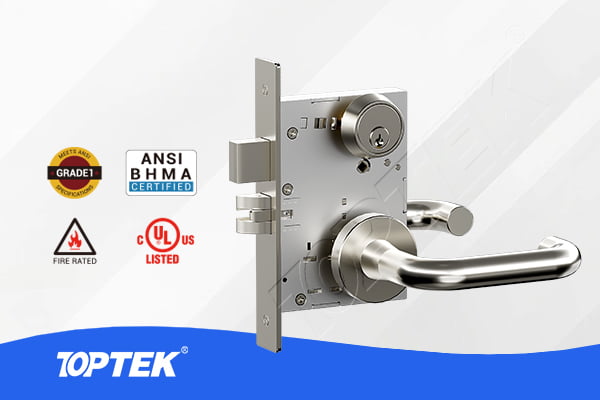
Which functions does this guide explain? This article explains F04 Office / Entry Function, F05 Classroom Function, F07 Storeroom Function, and F13 Corridor / Dormitory Function. It is written for buyers comparing an ANSI Grade 1 Mortise Lock, commercial mortise lock Grade 1, mortise lock ANSI A156.13, classroom mortise lock ANSI, storeroom mortise lock ANSI, and Grade 1 mortise lock for commercial doors.
Quick Answer: What Are F04, F05, F07 and F13 ANSI Mortise Lock Functions?
What is the fastest way to understand these four ANSI mortise lock functions? F04 is usually for office or entry doors, F05 is for classrooms, F07 is for storerooms, and F13 is for corridor or dormitory doors that normally require deadbolt security. The inside lever must usually allow free egress, while the outside side follows a different control rule for each application.
| Function | Common English Name | Typical Application | Outside Operation | Inside Operation |
|---|---|---|---|---|
| F04 | Office / Entry Function | Commercial offices, entry rooms, staff rooms | Outside trim can be locked by inside thumbturn or outside key | Inside lever retracts latchbolt for free egress |
| F05 | Classroom Function | Schools, training rooms, education buildings | Outside lever is controlled by outside key | Inside lever retracts latchbolt for immediate egress |
| F07 | Storeroom Function | Storage rooms, equipment rooms, utility areas | Outside lever remains locked; outside entry requires key | Inside lever retracts latchbolt for safe exit |
| F13 | Corridor / Dormitory Function | Dormitory rooms, corridor doors, residential room entrances | Outside access is secured and normally tied to deadbolt security | Inside operation supports free egress while maintaining room security |
What makes this guide useful for buyers? It connects function numbers with real door applications. Instead of only listing F04, F05, F07, and F13, this guide explains how each function affects user behavior, project acceptance, and RFQ communication for a heavy duty mortise lock ANSI project.
“`
What Standard Context Should Buyers Know?
Which standard is commonly connected with ANSI mortise lock functions? ANSI/BHMA A156.13 is the key performance standard context for mortise locks and latches. It addresses operational testing, strength testing, security testing, cycle testing, finish testing, and dimensional criteria for mortise lock performance. Buyers should review the latest standard context through BHMA and confirm local code requirements before final project approval.
Do function numbers alone prove performance grade? No. Function numbers describe operation logic, not the full grade, finish, trim design, certification scope, or fire-door approval. A buyer should still confirm Grade 1 performance, door preparation, cylinder format, lever trim, fire-rating pathway, and project acceptance requirements before ordering a BHMA Grade 1 mortise lock.
Why should buyers check certification and testing routes early? Testing strategy affects project risk, especially on fire-rated doors and high-traffic commercial openings. For safety and certification context, buyers may refer to UL and Intertek when planning fire testing, inspection, certification, or market-entry requirements.
How does TOPTEK reduce generic article risk after explaining these standard functions? TOPTEK connects function selection with manufacturing, testing, and OEM/ODM engineering support. With 35+ years of lock manufacturing experience, an in-house CE/UL-aligned testing laboratory, ISO 9001 / ISO 14001 / ISO 45001 systems, and precision manufacturing capability, TOPTEK helps buyers move from function name to project-ready lock configuration.
What Is F04 Office / Entry Function?
Where is F04 normally used? F04 Office / Entry Function is suitable for commercial office doors and entry doors where controlled outside access and free inside egress are required. The latchbolt operates by lever from either side unless the outside trim is locked by an inside thumbturn or an outside key.
How does F04 behave when locked? When F04 is locked, the outside lever becomes inoperative, while the inside lever still retracts the latchbolt. This logic suits offices, manager rooms, meeting rooms, and staff-controlled spaces where people inside must exit without a key.
Why is F04 different from a simple passage lock? F04 gives the user a practical locking option from the inside or by key, while a passage function usually does not provide the same access-control logic. For commercial door lock ANSI Grade 1 projects, F04 often provides a balanced solution between convenience and basic room security.
What should buyers confirm before choosing F04? Buyers should confirm thumbturn logic, cylinder operation, lever trim, door handing, latchbolt engagement, and auxiliary deadlatch performance. In a real office building, poor alignment can cause failed latching, user complaints, and repeated service calls.
What Is F05 Classroom Function?
Where is F05 normally used? F05 Classroom Function is designed for classrooms, training rooms, and educational facilities where the outside lever must be controlled by a key. The inside lever remains available for immediate egress, which is essential for school and campus door planning.
How does F05 improve school access control? F05 allows authorized staff to lock or unlock the outside lever from the exterior side by key. This helps teachers, facility managers, and security teams control classroom access without giving students an inside locking button that may create operational problems.
Why is F05 not the same as F04? F05 usually places locking control at the outside key, while F04 may allow inside thumbturn or key control depending on the lock design. This difference matters in education projects because classroom safety, authorized control, and free egress must work together.
What should buyers include in an F05 RFQ? Buyers should ask for classroom mortise lock ANSI function details, cylinder specification, lever trim type, finish, door thickness, strike plate configuration, and school door usage frequency. A Grade 1 mortise lock for schools should also consider high traffic, abuse resistance, and long-term lever return performance.
What Is F07 Storeroom Function?
Where is F07 normally used? F07 Storeroom Function is designed for storage rooms, utility rooms, equipment rooms, service areas, and restricted-access spaces. The outside lever normally remains locked at all times, and outside entry requires a key.
Why do facility managers choose F07? F07 prevents casual outside entry while keeping the inside lever free for exit. This makes the function suitable for janitor rooms, back-of-house areas, electrical rooms, stock rooms, and service corridors.
How is F07 different from F05? F07 is normally always locked from the outside, while F05 can be locked or unlocked from the outside by key. A classroom should not behave like a storeroom unless the project team wants the outside side to require a key every time.
What project risk appears when buyers confuse F07 with other functions? A wrong storeroom function can create daily inconvenience, access delays, and emergency service complaints. Buyers should clearly state whether the outside lever must always stay locked or whether authorized users need a selectable locked/unlocked status.
What Is F13 Corridor / Dormitory Function?
Where is F13 normally used? F13 Corridor / Dormitory Function is suitable for dormitory rooms, corridor doors, residential room entrances, and similar room-door applications that normally need deadbolt security and free egress. Compared with a latch-only access function, F13 usually supports stronger room-door security logic.
Why is F13 important for dormitory and corridor doors? F13 helps combine controlled outside entry, room privacy, deadbolt security, and safe inside exit. In a dormitory or residence-style project, users often expect higher security than an ordinary office door while still needing quick egress from the room side.
How does F13 differ from F04, F05, and F07? F13 is normally selected when the door requires deadbolt security, not only outside lever control. F04 focuses on office or entry control, F05 focuses on classroom key control, and F07 focuses on always-locked storeroom entry.
What should buyers verify before specifying F13? Buyers should verify deadbolt operation, cylinder override, thumbturn design, inside egress behavior, local fire-door requirements, and door preparation. TOPTEK also supports F13-related OEM/ODM discussion for ANSI mortise lock manufacturer, ANSI Grade 1 mortise lock OEM, and ANSI Grade 1 mortise lock ODM projects.
F04 vs F05 vs F07 vs F13: Which ANSI Mortise Lock Function Should You Choose?
How should a buyer compare these functions quickly? The easiest method is to start with the door application, then confirm outside access control, inside egress, deadbolt need, and key management. Function selection should follow the building use case, not only the buyer’s habit or a copied product list.
| Door Application | Recommended Function | Main Reason | Buyer Warning |
|---|---|---|---|
| Office door | F04 Office / Entry | Balanced control for office access and free egress | Confirm thumbturn or key-control logic before RFQ |
| Classroom door | F05 Classroom | Outside key controls classroom status | Do not use storeroom logic unless key-entry-only is required |
| Storage room | F07 Storeroom | Outside side remains locked; entry requires key | May be inconvenient for high-frequency staff rooms |
| Utility or equipment room | F07 Storeroom | Restricts unauthorized entry from public areas | Confirm master key system and emergency access plan |
| Dormitory room | F13 Corridor / Dormitory | Supports room-door security and deadbolt logic | Confirm free egress and fire-door compatibility |
| Residential corridor room door | F13 Corridor / Dormitory | Combines controlled entry with stronger room security | Check local codes and door preparation before order |
Why Does Function Selection Affect Project Risk?
What happens when the function is wrong? The door may lock incorrectly, users may lose convenient access, or the building team may face complaints after installation. A strong mortise lock body cannot solve a wrong function choice after the door is already prepared.
What mechanical problems should buyers watch? Buyers should check closing force, latch retraction, strike alignment, auxiliary deadlatch position, and lever return stability. In high-traffic doors, small dimensional issues can become latch jamming, failed latching, noisy closing, or handle sagging.
How does TOPTEK design address heavy commercial use? TOPTEK’s ANSI mortise lock platform uses precision investment casting for critical components such as latchbolt, deadbolt, and auxiliary bolt, depending on the model and project configuration. This approach helps improve structural strength when compared with weaker component structures often found in low-cost market products.
Why should fire-door projects receive extra review? Fire-rated doors require matched hardware, correct latching, approved door preparation, and suitable project documentation. Buyers should not treat a function number as a full fire-door approval by itself. The door assembly, local code, test evidence, and authority requirements still need confirmation.
How Does TOPTEK Support ANSI Grade 1 Mortise Lock Function Selection?
What is TOPTEK’s product platform for these functions? TOPTEK offers the TKAM9200 ANSI Grade 1 mortise lock platform with sectional trim, escutcheon trim, lever designs, thumbturn options, ring options, and multiple function configurations. This makes it suitable for lock brands, door manufacturers, distributors, and project contractors that need flexible specification support.
What performance keywords should buyers connect with this product type? Buyers often search for mortise lock with 2 million cycles, 10000N latch mortise lock, investment cast mortise lock, UL fire rated mortise lock, TKAM9200 mortise lock, and mortise lock RFQ Grade 1. These terms are useful because they reflect real purchasing concerns, not only generic lock descriptions.
How does TOPTEK support OEM/ODM buyers? TOPTEK supports requirement review, function matching, drawing discussion, sample development, internal validation, pilot production, and mass production control. This process helps buyers avoid costly changes after the product enters their market.
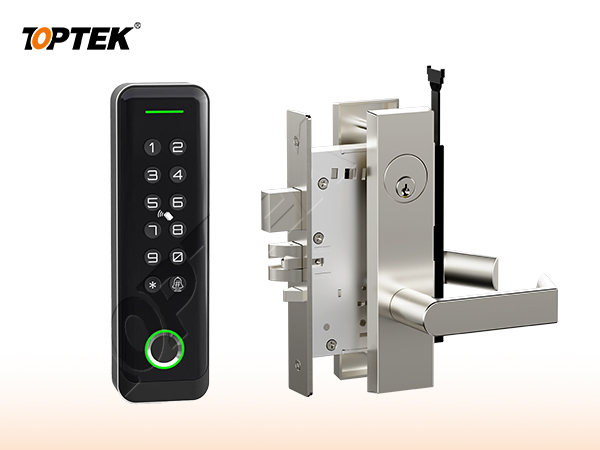
When should an electrified solution be considered? If the project needs card reader integration, remote release, monitoring output, fail-safe or fail-secure logic, buyers should review Electronic Lock and Access Control Devices instead of only mechanical mortise lock functions. Mechanical function logic and access control logic must work together in modern commercial buildings.
RFQ Checklist: What Should Buyers Confirm Before Ordering?
What should a professional RFQ include? A clear RFQ should include function number, door application, trim style, cylinder type, handing, finish, door thickness, strike requirement, and compliance expectation. The more complete the RFQ, the faster the supplier can confirm the correct configuration.
Function and Door Use
- Confirm F04, F05, F07, F13, or another required ANSI mortise lock function.
- State whether the door is for office, classroom, storeroom, dormitory, corridor, hotel, school, hospital, or office building use.
- Confirm whether the project needs latch-only control or deadbolt security.
- Confirm whether inside free egress must always remain available.
Hardware Configuration
- Confirm sectional mortise lock or escutcheon mortise lock trim.
- Confirm round rose mortise lock Grade 1, square rose mortise lock Grade 1, or full-face escutcheon trim.
- Confirm mortise lock thumbturn Grade 1 requirements for F04 or F13 applications.
- Confirm mortise lock cylinder override and master key requirements.
Project and Compliance Review
- Confirm whether the lock is used on a fire door, security door, public building door, or high-traffic door.
- Confirm whether the project requires internal test data, third-party certification path, or sample validation.
- Confirm whether the buyer needs a commercial mortise lock price, mortise lock quote ANSI, or long-term private label OEM program.
- Confirm packaging, batch consistency, finish sample approval, and replacement part support.
How should buyers manage keying for multi-door projects? Buyers should plan the cylinder and master key system at the same time as the lock function. For complex buildings, a project master key cylinder plan helps reduce key confusion and improves long-term facility management.
Common Buyer Mistakes When Selecting ANSI Mortise Lock Functions
What is the first common mistake? Many buyers choose a function number without confirming real door behavior. The project team should test how the outside lever, inside lever, key, thumbturn, latchbolt, deadbolt, and auxiliary deadlatch operate before approving samples.
What is the second common mistake? Some buyers confuse classroom, office, and storeroom functions because all three may appear similar in a catalog. F04, F05, and F07 can all support controlled access, but their outside control logic is different.
What is the third common mistake? Project teams may ignore the door environment. Coastal humidity, cleaning chemicals, high traffic, heavy doors, door closer force, and poor strike alignment can change the real performance of a Grade 1 mortise lock for commercial doors.
What is the fourth common mistake? Buyers sometimes treat function choice as separate from trim, cylinder, hinge, and door preparation. In reality, an opening works as a system, so the lock body, lever trim, cylinder, strike, door closer, hinge, and installation quality must match the door application.
Why Choose TOPTEK for ANSI Mortise Lock Function Projects?
Why is TOPTEK different from a simple trading supplier? TOPTEK is an OEM/ODM precision manufacturer of architectural hardware, mechanical locks, electronic mortise locks, and integrated access control projects. The company was established in 1991 and has more than 35 years of OEM/ODM lock manufacturing experience.
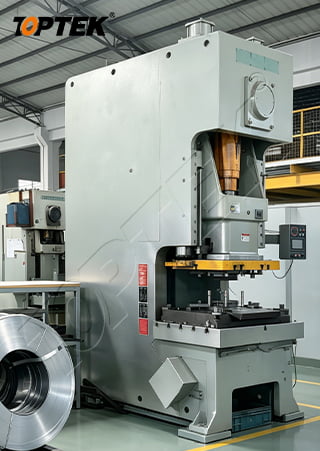
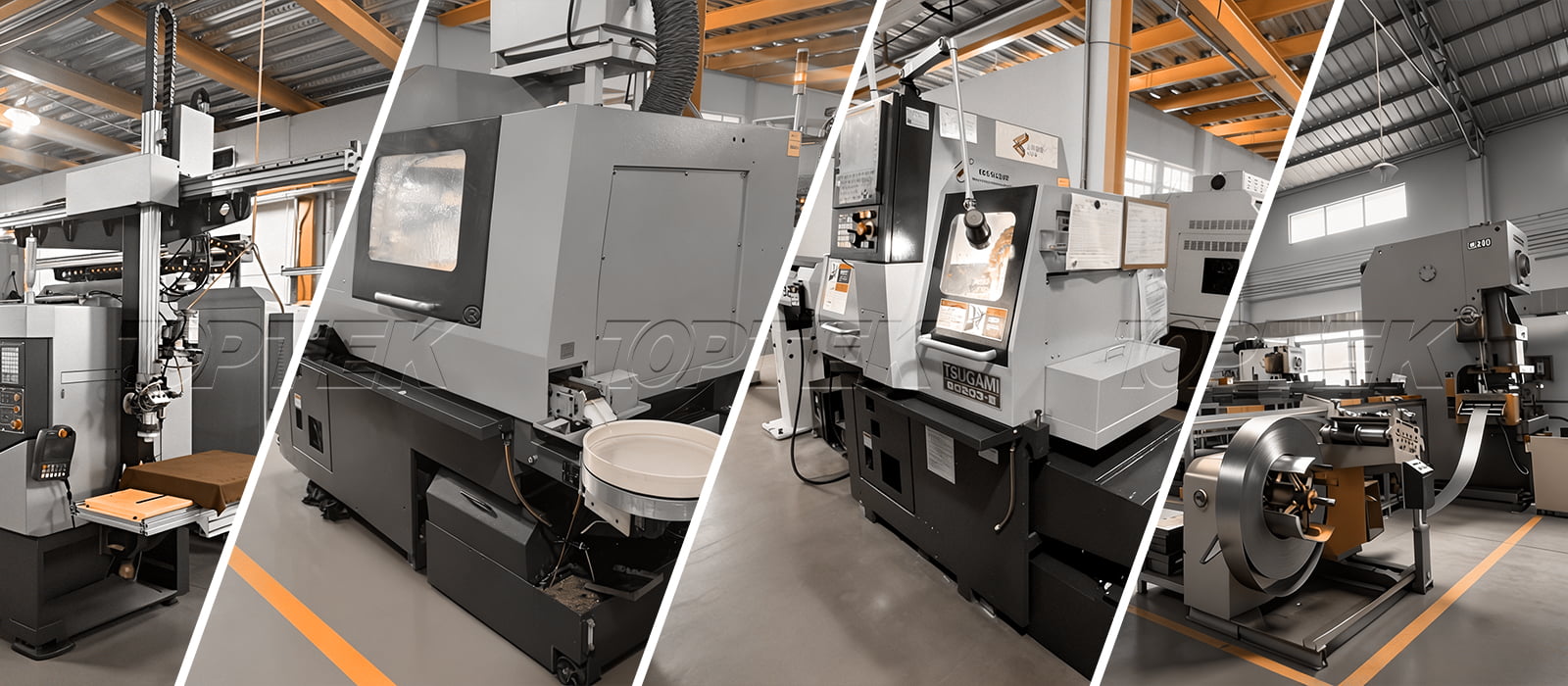
What manufacturing capability supports stable quality? TOPTEK operates a modern 13,000㎡ factory with 220+ skilled employees, 20+ R&D engineers, 50+ Japanese TSUGAMI CNC Swiss-type machines, and 50+ Taiwan/Japan high-precision pneumatic punch presses. Precision machining tolerance can reach ±0.01mm for relevant components, supporting dimensional consistency and long-term durability.
What testing capability supports project confidence? TOPTEK uses an in-house CE/UL-aligned testing laboratory for mechanical durability, ANSI Grade 1/2 performance checks, electrical endurance, salt spray testing, handle torque, impact resistance, structural strength, cylinder anti-drilling, deadbolt anti-sawing, and high/low temperature evaluation. This validation process helps reduce batch inconsistency and project risk.
How does TOPTEK support global customers? TOPTEK provides OEM/ODM and private label services for professional lock brands, door manufacturers, distributors, contractors, system integrators, and project buyers. The company supports application review, compliance route discussion, product configuration, sample testing, and scalable production for global commercial door projects.
FAQ: ANSI Mortise Lock Functions F04, F05, F07 and F13
What is F04 function on an ANSI mortise lock?
What is the direct answer? F04 is commonly known as Office / Entry Function. It is used for commercial office and entry doors where the outside trim can be locked while the inside lever still allows free egress.
What is F05 classroom function?
What is the direct answer? F05 Classroom Function allows the outside lever to be controlled by the outside key. It suits schools, classrooms, training rooms, and education buildings where authorized staff control the room from the corridor side.
What is F07 storeroom function?
What is the direct answer? F07 Storeroom Function keeps the outside lever locked and requires a key for outside entry. It is suitable for storage rooms, utility rooms, service rooms, and equipment rooms.
What is F13 corridor or dormitory function?
What is the direct answer? F13 Corridor / Dormitory Function normally suits room entrances where deadbolt security and free egress are both needed. It is often used for dormitory rooms, corridor doors, and residence-style room doors.
Which ANSI mortise lock function should be used for classrooms?
What is the direct answer? F05 is the common classroom function. Buyers should still confirm the exact manufacturer’s function description, cylinder type, and local project requirements before final specification.
Can one lock body support multiple functions?
What is the direct answer? Some Grade 1 mortise lock platforms can support multiple function options through different internal configurations, trims, cylinders, and thumbturn arrangements. Buyers should confirm the exact lock body platform, available function list, and sample before mass production.
Conclusion: How Should Buyers Choose F04, F05, F07 and F13?
What is the best selection method? Start with the door application, then confirm outside control, inside egress, deadbolt requirement, key management, and project compliance. Use F04 for office or entry control, F05 for classroom control, F07 for key-entry storeroom access, and F13 for dormitory or corridor doors that need stronger room-door security.
What should buyers avoid? Do not select a function only because the number appears in a catalog. A commercial mortise lock Grade 1 project should also confirm the door type, user behavior, fire-door requirement, cylinder plan, strike alignment, trim design, and maintenance expectations.
Project Risk Summary
What risks come from the wrong ANSI mortise lock function? The main risks include wrong access behavior, failed latching, fire-door inspection concerns, user complaints, high maintenance cost, and delayed project acceptance. These risks often appear after installation, when changes become expensive.
How can buyers reduce these risks? Buyers should request technical confirmation, sample testing, drawing review, and function operation videos before ordering in volume. For OEM/ODM buyers, TOPTEK recommends function confirmation before tooling, packaging, certification route planning, and first article approval.
TOPTEK Product Scope for Global Commercial Door Hardware Projects
What does TOPTEK supply beyond ANSI mortise lock functions? TOPTEK Access is a China-based OEM/ODM manufacturer of commercial locks, architectural door hardware, and integrated access control locking solutions, supplying ANSI Grade 1 mortise locks, EN 12209 Grade 3 Mortise Lock, AS 4145 Mortise Lock, Panic Exit Device, Multi-point Locking Systems, electronic locks, EN 1906 Lever Handle, cylinders, and Precision Hinges and Door Power Transfer Solutions for global door manufacturers, distributors, contractors, and building projects.
What does TOPTEK stand for? TOPTEK stands for Commercial Door Hardware Reliability Solution. TOPTEK combines precision manufacturing, project-oriented engineering, OEM/ODM flexibility, and commercial door hardware testing support.
What is TOPTEK’s slogan? TOPTEK: Smart Design. Strong Security. Visit TOPTEK Access to discuss ANSI mortise lock functions, drawings, samples, project configuration, certification route, RFQ, OEM/ODM customization, or technical support.
Need help selecting F04, F05, F07, F13, or another ANSI Grade 1 mortise lock function? Contact TOPTEK for OEM/ODM support, function confirmation, sample testing, lock body drawings, project configuration, and commercial door hardware RFQ review.