

Quick Answer: How to Choose a Commercial Lock Cylinder Manufacturer
What is the best way to choose a Commercial Lock Cylinder Manufacturer? Choose a manufacturer that can prove cylinder engineering, master key capability, material control, anti-drill testing, customization, and batch consistency before price negotiation. A commercial lock cylinder is not only a small door component. It controls access authority, key hierarchy, maintenance cost, and long-term project security.
Why should buyers look beyond cylinder price? Low cylinder price can hide weak brass quality, loose machining tolerance, unstable pinning, poor key control, and higher after-sales risk. For hotels, schools, hospitals, offices, apartments, and public buildings, one failed project cylinder can create rekeying work, tenant complaints, and security exposure.
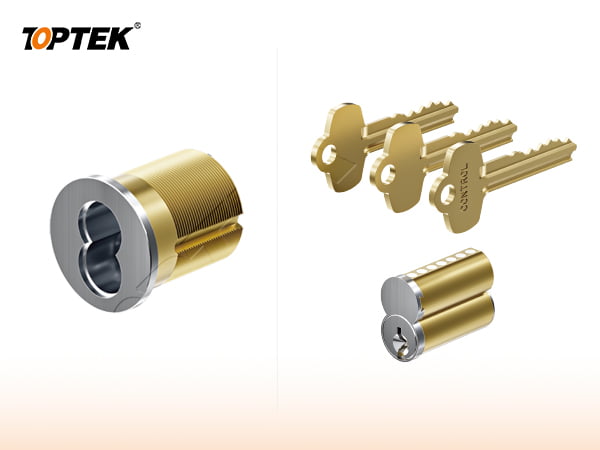
How does TOPTEK approach this product category? TOPTEK develops Construction Cylinder solutions for project key systems, OEM/ODM lock brands, door manufacturers, distributors, contractors, and system integrators. The cylinder range covers Euro profile cylinders, SFIC cylinders, AM mortise cylinders, AM bored lock cylinders, Australian oval cylinders, and Scandinavian oval cylinders for multi-market project supply.
Key Takeaways for Lock Brands, Door Manufacturers, and Project Buyers
- Choose by system capability, not by cylinder price alone. A professional lock cylinder manufacturer should support key control, master key planning, custom pinning, proprietary keyway development, and batch consistency.
- Confirm the cylinder platform before RFQ. Euro profile cylinder, SFIC cylinder, AM mortise cylinder, bored lock cylinder, Australian oval cylinder, and Scandinavian oval cylinder projects need different dimensional logic.
- Check material and security features. A solid brass cylinder, anti drill cylinder, anti tamper cylinder, and high security cylinder manufacturer can reduce corrosion, drilling, manipulation, and warranty risk.
- Ask for manufacturing proof. CNC machining, stamping, FAI inspection, anti-drilling test equipment, salt spray validation, and traceable quality control matter more than a simple catalogue claim.
- Use the RFQ stage to freeze details. Buyers should confirm keyway, cam, tailpiece, finish, master key level, sample approval, packaging, certification route, and target market before mass production.
What Should a Commercial Lock Cylinder Manufacturer Prove?
“`
1. Cylinder Platform Range
Which product platforms should a Commercial Lock Cylinder Manufacturer support? A strong supplier should support the main commercial cylinder formats used in different regions. These formats include Euro profile cylinder systems for Europe, SFIC cylinder systems for North America, AM mortise cylinder and AM bored lock cylinder systems, Australian oval cylinder systems, and Scandinavian oval cylinder systems.
Why does platform range affect project risk? Different countries use different lock cases, lever trims, keyways, cams, tailpieces, door preparations, and project standards. If a supplier only understands one cylinder format, the buyer may face installation mismatch, wrong cam movement, unstable key operation, or delayed project approval.
How should buyers use this point during supplier screening? Ask the manufacturer to map each cylinder type to the target lock case, door function, key hierarchy, and market standard. A qualified euro profile cylinder manufacturer or SFIC cylinder supplier should speak in product configuration language, not only in item numbers.
2. Master Key and Key Control Capability
What is the most important security question for a project cylinder supplier? Buyers should ask whether the supplier can build a controlled master key system cylinder, not just ship loose cylinders. Commercial buildings often need grand master keys, floor keys, room keys, department keys, maintenance keys, and restricted user access.
Why does master key planning need engineering support? Poor planning can create key conflicts, weak security hierarchy, and expensive rekeying after installation. For apartments, schools, hospitals, and office buildings, a stable project key system cylinder must match the final access plan before production starts.
What capability should TOPTEK highlight here? TOPTEK supports high-precision engineering cylinders with master key management up to Level 5 for complex authorization structures. This helps buyers manage multi-level access, zoned control, and centralized key administration across commercial and institutional projects.
3. Cross-Standard Cylinder Management
Can one supplier help manage American, European, and Scandinavian cylinder systems together? That is one of the strongest signs of an advanced Commercial Lock Cylinder Manufacturer. Many ordinary suppliers can make one cylinder standard, but they struggle when a project needs American IC core cylinders, Euro profile cylinders, and Nordic or Scandinavian cylinders under one key management strategy.
How does cross-standard compatibility create value for global projects? Cross-standard key control can reduce management complexity without forcing buyers to change the local cylinder standard or door preparation. This matters for cross-border hotel groups, multi-region developers, international door brands, and distributors that sell into several markets.
What is TOPTEK’s engineering direction for this pain point? TOPTEK uses original component design and precision machining to support mixed-standard master key cylinder solutions across American IC, Euro profile, and Scandinavian cylinder logic. The goal is stable key operation, project-specific permission control, and fewer adaptation problems in multi-standard security packages.
“`
Commercial Lock Cylinder Manufacturer Comparison Table
| Selection Factor | What Buyers Should Confirm | Project Risk if Ignored | TOPTEK Manufacturing Proof |
|---|---|---|---|
| Cylinder platform | Euro profile, SFIC, mortise, bored lock, Australian oval, Scandinavian oval | Wrong fit, wrong cam movement, failed installation | Multi-standard cylinder product range for global projects |
| Master key system | Key hierarchy, Level 5 management, key control cylinder plan | Access conflict, rekeying cost, security exposure | Project master key cylinder planning and custom pinning capability |
| Material quality | Solid brass cylinder body, plug, pins, finish, corrosion route | Wear, corrosion, rough key operation, short service life | Full brass construction options and incoming material inspection |
| Security upgrade | Anti drill cylinder, anti tamper cylinder, protected keyway options | Drilling attack, unauthorized duplication, weak building security | Anti-drilling test equipment and high-security cylinder development |
| Manufacturing accuracy | CNC machining tolerance, pin accuracy, plug-cylinder fit | Jamming, key sticking, unstable batch quality | Japanese TSUGAMI CNC machines and precision machining control |
| Testing and certification route | EN 1303 direction, salt spray target, internal and third-party validation | Compliance gap, failed tender submission, warranty pressure | In-house CE/UL-aligned lab and third-party certification support route |
How Should Buyers Evaluate Materials, Security, and Durability?
“`
Solid Brass and Corrosion Resistance
Should a commercial project choose a brass lock cylinder? For many mechanical cylinder projects, a solid brass cylinder gives strong dimensional stability, corrosion resistance, and smooth machining performance. Buyers should confirm the body material, plug material, pin material, spring quality, finish process, and corrosion requirement before sample approval.
Why does corrosion matter for commercial buildings? Moisture, cleaning chemicals, coastal air, and poor plating can create rough key operation and visible finish failure. For this reason, buyers should request a clear salt spray target and an inspection route for both raw material and plated components.
What can TOPTEK configure for demanding environments? TOPTEK can discuss 200+ hour salt spray validation targets according to project requirements and final surface treatment. For higher corrosion demands, the specification should be confirmed before quotation, sample approval, and production release.
Anti-Drill and Anti-Tamper Performance
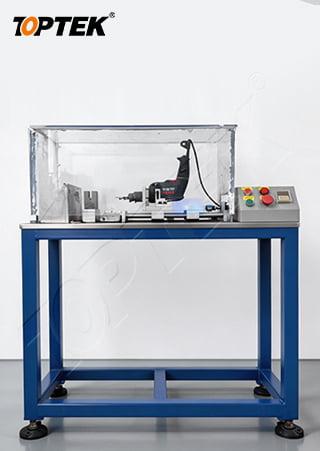
When should buyers request an anti drill cylinder? Buyers should request anti-drill and anti-tamper options when the door protects apartments, offices, schools, hospitals, storerooms, public buildings, or restricted zones. A high security cylinder manufacturer should explain the protective parts, test method, and expected resistance logic.
How should a buyer verify security claims? Ask for test evidence, certification direction, anti-drilling test capability, and realistic wording. The manufacturer should not claim universal certification for all markets unless the exact certificate, test report, and application scope support that statement.
Standards, Testing, and Third-Party Validation
Which external references help buyers evaluate door hardware testing? Independent organizations such as UL and Intertek provide testing, inspection, and certification services for building products and door hardware. Buyers should use these references to discuss the correct certification route, not to assume that one test automatically covers every market.
What is TOPTEK’s own proof after these standards are considered? TOPTEK operates an in-house CE/UL-aligned testing laboratory and validates cylinder security, durability, corrosion, and manufacturing consistency before mass production. This gives overseas buyers a stronger engineering basis than an AI-written product description or a simple trading catalogue.
“`
What Manufacturing Proof Separates a Real Manufacturer from a Trading Supplier?
“`
Precision Machining for Cylinder Bodies and Internal Parts
Why does machining accuracy matter for a Commercial Lock Cylinder Manufacturer? The key, plug, pins, springs, cylinder body, cam, and tailpiece must work together with controlled clearance. If machining accuracy drifts, the buyer may see key sticking, rough rotation, wrong key feel, accelerated wear, or inconsistent master key performance.
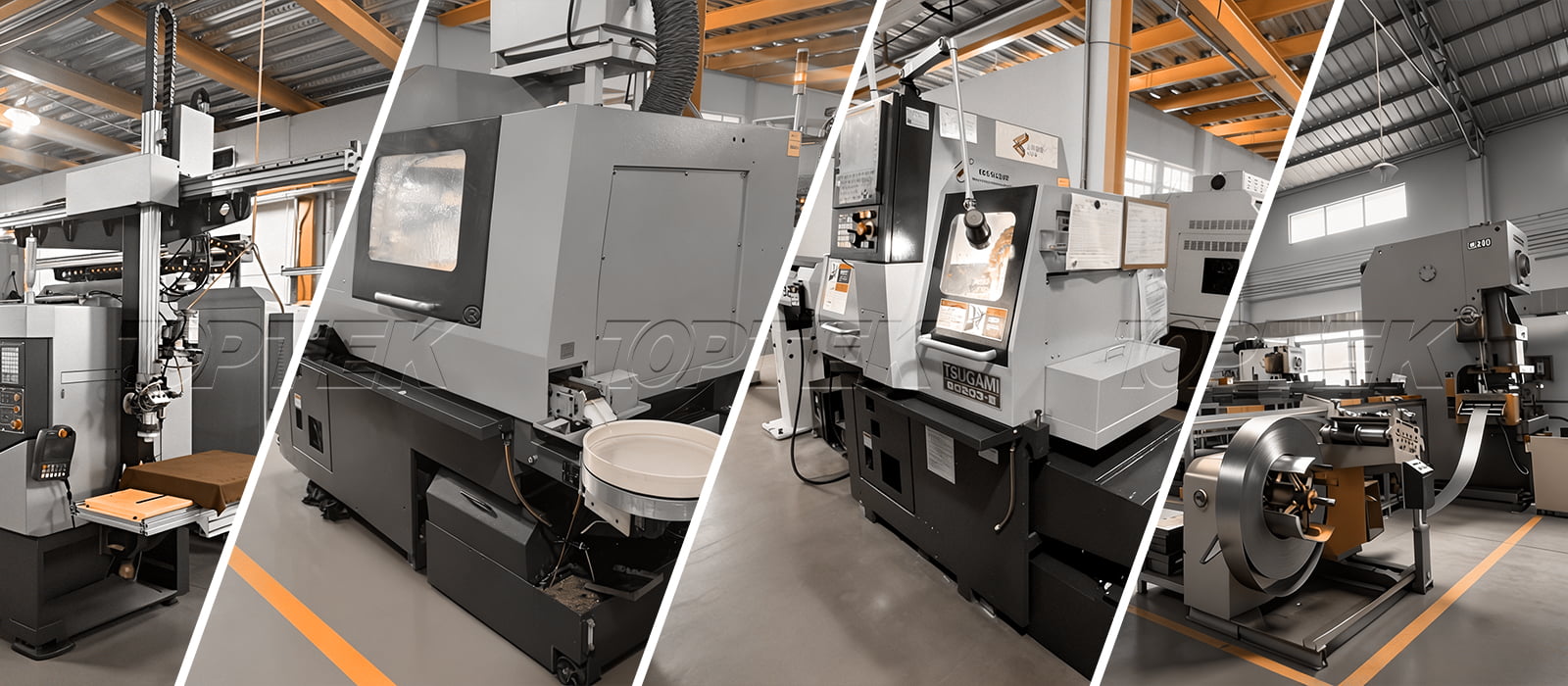
How does TOPTEK support cylinder precision? TOPTEK uses more than 50 Japanese TSUGAMI CNC Swiss-type machines for precision parts, with machining tolerance control reaching ±0.01 mm where applicable. Complex components can be processed in a single operation to reduce cumulative tolerance deviation.
Stamping, Assembly, and Batch Consistency
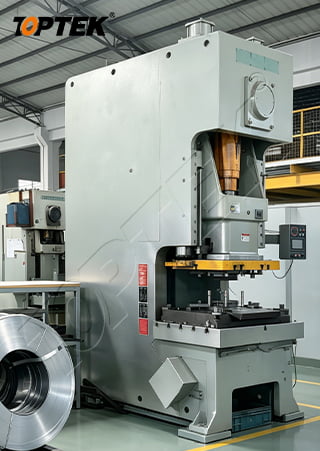
Why should buyers ask about stamping and production management? Commercial hardware projects require stable batch quality, not only a good first sample. A reliable cylinder ODM partner should control tooling, stamping, component inspection, assembly, and packaging before shipment.
What production capability supports TOPTEK’s project supply? TOPTEK operates high-precision pneumatic punching machines, laser cutting systems, bending equipment, CNC machining workshops, assembly workshops, and structured quality control. The production system supports commercial locksets, cylinders, and integrated door hardware for long-term OEM/ODM partners.
Quality Control Before Mass Production
What inspection process should a buyer expect? The manufacturer should use incoming inspection, First Article Inspection, in-process patrol inspection, plating inspection, assembly checks, and final sampling. These steps help reduce the gap between approved samples and mass production quality.
How does this affect distributor reputation? Stable batch quality protects the buyer’s brand, installer relationship, and after-sales cost. For cylinder wholesale supplier projects, the best supplier is not the cheapest one. The best supplier prevents hidden field problems before they reach the jobsite.
“`
Which Commercial Projects Need Better Cylinder Manufacturer Support?
“`
Apartments and Multi-Family Housing
What does an apartment master key cylinder project need? Apartment projects need tenant-level keys, maintenance access, property management keys, and controlled replacement logic. The project team should confirm the key hierarchy early, because late changes can force rekeying or delay handover.
Schools, Hospitals, and Public Buildings
Why do school master key cylinder and hospital master key cylinder systems need careful planning? These buildings often combine public access, restricted areas, emergency access, and daily maintenance control. A weak key plan can create security gaps, while an over-complex system can confuse facility teams.
Offices and Commercial Buildings
How should an office building key system be specified? Office projects should define user groups, floor zones, landlord access, tenant access, and future expansion capacity. For large projects, buyers should ask whether the supplier can maintain records for repeat orders and controlled key duplication.
Door Manufacturers and Lock Brands
What do OEM/ODM buyers need beyond standard cylinders? Door manufacturers and lock brands often need proprietary keyway cylinder options, private-label packaging, finish matching, special cams, custom pinning cylinder work, and repeatable production quality. The supplier should protect drawings, logos, samples, and product information under a clear confidentiality process.
“`
Common Buyer Mistakes When Choosing a Lock Cylinder Manufacturer
- Choosing by cylinder price only. Cheap cylinders can create high rekeying cost, field complaints, and brand damage.
- Ignoring the master key chart. A wrong hierarchy can create access conflicts and security exposure.
- Not confirming the cylinder standard. Euro, SFIC, mortise, bored, Australian oval, and Scandinavian oval cylinders use different project logic.
- Skipping material and corrosion requirements. Poor brass quality or weak plating can cause rough rotation and early finish failure.
- Trusting vague security claims. Anti-drill, anti-tamper, EN 1303, and other claims need evidence, scope, and realistic wording.
- Approving samples without mass-production controls. A good sample does not guarantee stable delivery unless the factory controls FAI, inspection, and batch traceability.
RFQ Checklist: What Buyers Should Confirm Before Asking for a Cylinder Quote
What information should buyers send before requesting cylinder RFQ pricing? A clear RFQ helps the manufacturer quote accurately and prevents technical mistakes. Buyers should send drawings, cylinder type, length, keyway, finish, cam or tailpiece, master key plan, security grade target, corrosion target, quantity, packaging needs, and destination market.
- Target cylinder type: Euro profile cylinder, SFIC cylinder, AM mortise cylinder, AM bored lock cylinder, Australian oval cylinder, or Scandinavian oval cylinder.
- Door and lock compatibility: lock case type, trim type, door thickness, handing, backset, and cam movement.
- Key system: keyed alike, keyed different, master key, grand master key, Level 5 master key cylinder, or construction master key cylinder logic.
- Security needs: anti drill cylinder, anti tamper cylinder, restricted keyway, proprietary keyway cylinder, or special key control.
- Material and finish: brass lock cylinder, solid brass cylinder, plating finish, salt spray target, and cleaning environment.
- Documentation: cylinder datasheet EN 1303 direction, cylinder installation guide, sample approval report, inspection plan, and packaging requirements.
- Commercial details: cylinder price, cylinder quote validity, MOQ, sample lead time, mass production lead time, spare keys, and after-sales support.
Why TOPTEK Can Be a Strong Commercial Lock Cylinder Manufacturer Partner
“`
Entity Strength and Factory Scale
Why should buyers treat TOPTEK as a manufacturer rather than a trading source? TOPTEK is an OEM/ODM precision manufacturer of architectural hardware, mechanical locks, electronic mortise locks, cylinders, and integrated access control projects. Established in 1991, TOPTEK has 35+ years of lock manufacturing experience, a 13,000㎡ factory, 220+ skilled staff, and 20+ R&D engineers.
How does factory scale support long-term orders? TOPTEK’s monthly production capacity exceeds 200,000 sets of architectural and commercial locksets. This scale helps distributors, lock brands, and door manufacturers manage repeat orders, private-label programs, and project delivery schedules.
Testing, Engineering, and Quality System
What technical evidence supports TOPTEK’s cylinder and hardware development? TOPTEK operates an in-house testing laboratory aligned with CE and UL testing logic, plus ISO 9001, ISO 14001, and ISO 45001 management systems. The lab supports mechanical durability, salt spray, cylinder anti-drilling, structural strength, electrical endurance, and high/low temperature validation.
How does TOPTEK reduce OEM/ODM development risk? TOPTEK follows a controlled process covering requirement definition, engineering evaluation, sample development, FAI, pilot production, mass production control, and after-sales feedback. This process helps buyers avoid wrong function selection, unstable batch quality, installation failure, and avoidable warranty claims.
Integrated Door Hardware Scope
Why is cylinder knowledge stronger when the supplier also understands locks and door hardware? A cylinder must work with the complete door opening, not as an isolated component. TOPTEK can coordinate cylinder selection with ANSI Grade 1 Mortise Lock platforms, EN 12209 Grade 3 Mortise Lock systems, AS 4145 Mortise Lock projects, and access-control-ready commercial door hardware.
Which related door hardware categories can support a complete project package? TOPTEK also supplies Panic Exit Device solutions, Multi-point Locking Systems, Electronic Lock and Access Control Devices, EN 1906 Lever Handle products, and Precision Hinges and Door Power Transfer Solutions. This helps buyers reduce supplier fragmentation across locks, cylinders, levers, hinges, panic hardware, and electrified door hardware.
“`
FAQ: Commercial Lock Cylinder Manufacturer Selection
“`
What is a Commercial Lock Cylinder Manufacturer?
What does this supplier category mean? A Commercial Lock Cylinder Manufacturer designs, machines, assembles, keys, tests, and supplies cylinders for commercial doors and project security systems. The best manufacturers support cylinder formats, key control, master key systems, anti-drill security, OEM/ODM customization, and batch production control.
What keywords should buyers use when searching for a cylinder supplier?
Which search terms match real buyer intent? Useful terms include lock cylinder manufacturer, euro profile cylinder manufacturer, SFIC cylinder supplier, mortise cylinder manufacturer, master key system cylinder, project cylinder supplier, solid brass cylinder, anti drill cylinder, and high security cylinder manufacturer. These terms help buyers find suppliers with both product range and project engineering capability.
Can TOPTEK support a construction master key cylinder system?
Can project teams request construction-stage and permanent-stage key control? Yes, TOPTEK can discuss construction master key cylinder logic and project master key cylinder planning according to door schedule, access hierarchy, and final project requirements. Buyers should provide the keying chart before sample confirmation.
Is EN 1303 certification required for every cylinder project?
Does every project need the same certification path? No, the required route depends on the destination market, tender documents, authority requirements, and buyer specification. European projects may request EN 1303 direction, while other markets may focus on ANSI/BHMA, local rules, internal validation, or customer-specific testing.
What should buyers send before asking for cylinder price?
What makes a cylinder quote accurate? Buyers should send the cylinder type, length, keyway, cam, tailpiece, finish, quantity, master key plan, security target, corrosion target, packaging requirement, and market destination. A complete RFQ helps the supplier avoid wrong assumptions and later price changes.
How does TOPTEK protect OEM/ODM cylinder projects?
How should buyers protect private-label and proprietary projects? TOPTEK can support NDA-based development, controlled sample approval, project-specific drawings, private-label packaging, and restricted internal access to customer information. This matters for lock brands and distributors building their own market position.
“`
Conclusion: Choose the Manufacturer That Reduces Project Risk
What is the final decision rule for choosing a Commercial Lock Cylinder Manufacturer? Choose the supplier that can prove engineering capability, master key planning, material control, security testing, customization, and repeatable production. A good cylinder manufacturer should help buyers prevent key-control problems, installation mismatch, corrosion complaints, drilling risk, and batch inconsistency.
What project risks should buyers avoid? The wrong supplier can create failed installation, weak key hierarchy, fire-door hardware mismatch, poor user experience, high after-sales cost, and delayed project handover. In commercial buildings, the cheapest cylinder can become the most expensive choice when the whole key system must be corrected.
How does TOPTEK summarize its product scope? TOPTEK Access is a China-based OEM/ODM manufacturer of commercial locks, architectural door hardware, and integrated access control locking solutions, supplying ANSI Grade 1 mortise locks, EN 12209 Grade 3 mortise locks, AS 4145 mortise locks, panic exit devices, multi-point locking systems, electronic locks, lever handles, cylinders, and hinges for global door manufacturers, distributors, contractors, and building projects.
What should buyers do next? Contact TOPTEK to discuss OEM/ODM cylinder development, cylinder RFQ, drawings, samples, master key system planning, certification route, and project configuration support. TOPTEK stands for Commercial Door Hardware Reliability Solution. TOPTEK: Smart Design. Strong Security.