

Can a Mortise Lock Be Used on Metal Doors? Quick Answer
Direct answer for project buyers
Can a Mortise Lock Be Used on Metal Doors? Yes. Project teams can use a mortise lock on metal doors when they match the lock case, cut-out, reinforcement, strike plate, handing, and fire-rating route. Metal doors need tighter preparation than timber doors. The lock pocket, faceplate support, latch line, and strike box must stay accurate.
Which platform fits European metal doors best? Many European commercial projects start with TOPTEK’s EN 12209 Grade 3 Mortise Lock platform. TOPTEK offers 72 series, 78 series, and 85 series lock bodies. The range covers sash lock, passage lock, deadbolt lock, bathroom lock, night latch, escape lock, classroom lock, roller latch lock, and anti-thrust escape lock functions.
Why does this decision affect project cost? A lock can fit the door size but still create site problems if buyers miss function, strike, corrosion, or compliance details. Poor selection can lead to latch jamming, failed closing, fire-door inspection risk, and expensive after-sales work.
Key Takeaways for Metal Door Mortise Lock Buyers
What should buyers remember first?
- Metal doors can use mortise locks when the door cut-out, reinforcement, lock body, and strike line match.
- European projects often use EN 12209 lock cases for commercial metal doors, fire doors, hotels, schools, hospitals, offices, and public buildings.
- A metal door euro lock case needs strict dimensional control because steel pockets leave less tolerance than timber doors.
- Fire-rated metal doors need assembly-level review, including lock, strike, lever handle, cylinder, hinges, seals, frame, and installation method.
- TOPTEK supports OEM/ODM projects for EN 12209 lock body manufacturer programs, euro mortise lock RFQ work, and project mortise lock EN 12209 requirements.
What Type of Mortise Lock Should Be Used on Metal Doors?
European metal door projects
Should buyers choose an EN mortise lock for European metal doors? Usually yes, when the project follows European door hardware logic. A European commercial mortise lock helps buyers align lock function, door type, and hardware schedule. Buyers should still confirm centers, backset, door thickness, and strike details.
North American metal door projects
When does an ANSI mortise lock make more sense? North American hollow metal doors often need ANSI/BHMA function logic and UL fire-door evaluation. In that case, buyers should review TOPTEK’s ANSI Grade 1 Mortise Lock platform. The door schedule should define function, trim, cylinder, and fire-door route before quotation.
Australia and New Zealand projects
When should buyers use an Australian-standard lock? ANZ projects need local hardware habits and door manufacturer approval paths. Buyers should review TOPTEK’s AS 4145 Mortise Lock range when the project needs an Australian standard mortise lock route. Fire-door projects should involve the door manufacturer early.
Metal Door Mortise Lock Selection Table
Fast comparison for RFQ review
| Buyer Check Point | Correct Selection Logic | Project Risk If Ignored |
|---|---|---|
| Door material | Confirm hollow metal, steel fire door, aluminum profile, or stainless steel door before lock selection. | Wrong pocket, weak support, failed latching, or rework. |
| Standard route | Match EN 12209, ANSI/BHMA, AS 4145, or local rules to the target market. | Inspection delay or rejected hardware schedule. |
| Fire-door requirement | Review lock, strike, handle, cylinder, hinges, frame, and door leaf as one assembly. | Fire-door compliance risk. |
| Lock function | Choose sash, passage, classroom, escape, bathroom, night latch, roller latch, or deadbolt function. | Wrong user operation or poor egress logic. |
| Strike alignment | Confirm strike depth, latch projection, door gap, frame tolerance, and reinforcement position. | Latch jamming, failed closing, or noise complaints. |
| Corrosion environment | Select material, finish, and salt spray target according to site exposure. | Rust, finish failure, and higher maintenance cost. |
Which Standards Matter When a Mortise Lock Is Used on Metal Doors?
EN, ANSI, and AS route selection
Does the lock standard matter more than the door material? No. Buyers must review the standard, door material, fire rating, and local approval route together. European projects often review an EN 12209 lock case and a fire-rated EN mortise lock configuration. North American projects may need a commercial mortise lock Grade 1 direction. ANZ projects may need an Australian standard mortise lock approach.
Testing and certification references
Can testing agencies help buyers reduce risk? Yes. Testing, inspection, and certification bodies help verify product and fire-door evidence. Buyers can use recognized organizations such as UL for safety and fire-testing context. They can also review Intertek for testing, inspection, and certification context.
TOPTEK engineering support
What does TOPTEK add after the standard discussion? TOPTEK adds manufacturing control, testing support, engineering review, and OEM/ODM customization. TOPTEK operates an in-house CE/UL-aligned testing laboratory. The lab supports durability, structural strength, corrosion resistance, handle torque, impact resistance, cylinder security, and temperature testing for relevant product development stages.
TOPTEK EN 12209 Mortise Lock Engineering for Metal and Fire Door Projects
Function coverage
What makes TOPTEK’s EN 12209 lock case practical for commercial projects? TOPTEK builds the EN platform around 72 series, 78 series, and 85 series lock bodies. Buyers can discuss sash lock, passage lock, deadbolt lock, bathroom lock, night latch, escape lock, classroom lock, roller latch lock, and anti-thrust escape lock functions. The platform supports many EN 12209 lock body manufacturer and distributor programs.
Latch strength and dust protection
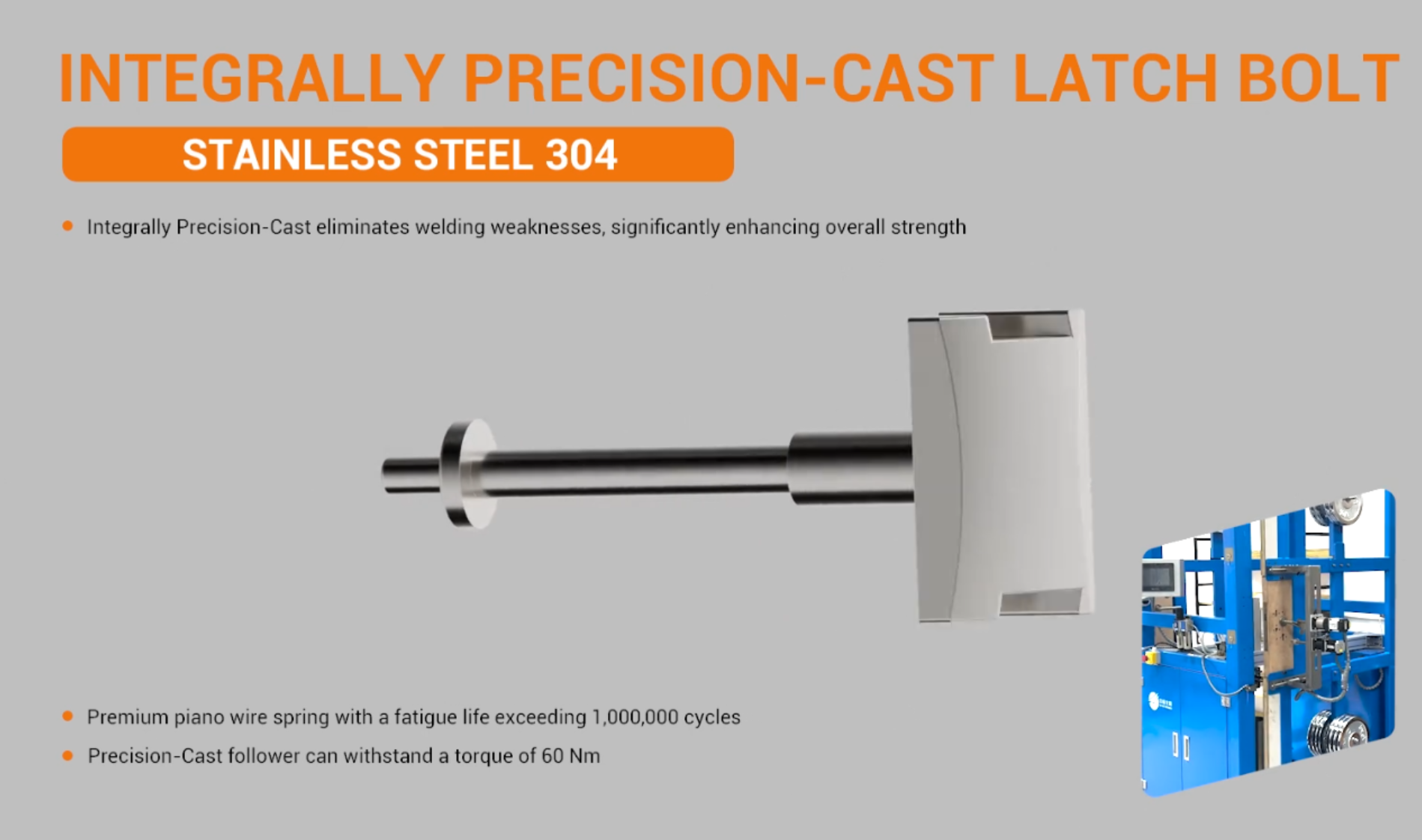
Why does the latch design matter on metal doors? Metal doors leave less room for weak latch geometry, friction, or strike deviation. TOPTEK’s EN platform uses a one-piece 304 stainless steel investment cast latch bolt. This EN mortise lock design avoids the riveted stainless latch and iron pull-rod structure used in many conventional products.
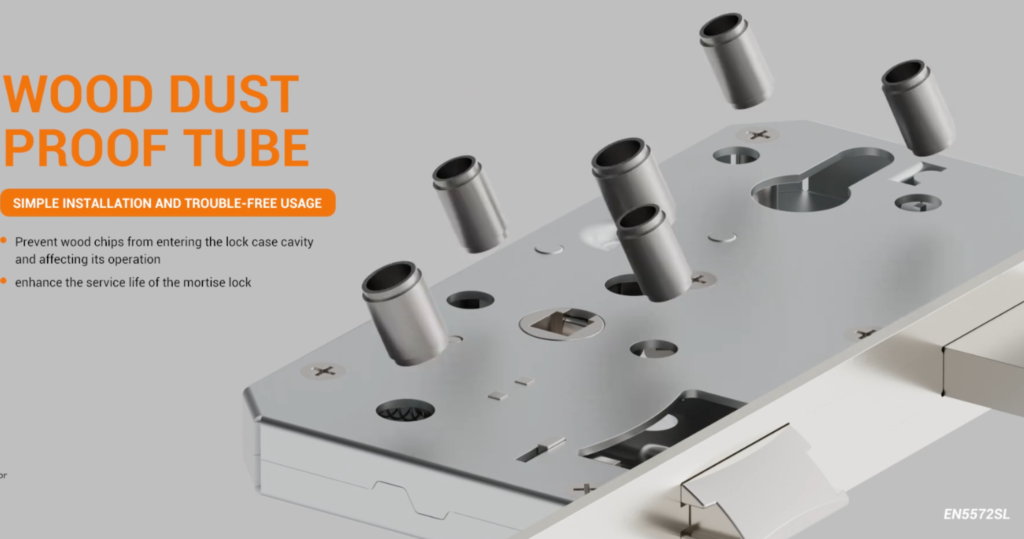
Why does TOPTEK add dust protection? A mortise lock with dust cover helps block installation debris from entering the lock body. Timber doors create wood chips, while metal doors can create filings and site dust. A cleaner internal mechanism helps reduce jamming and weak latch movement after installation.
Security, durability, and corrosion
How does TOPTEK address deadbolt security? TOPTEK’s EN platform can support anti-burglary Grade 4 deadbolt performance in the relevant configuration. Project documentation states 5,000N axial pressure and 7,000N side pressure capability for that configuration. Buyers should confirm final documents before tender submission.
How does TOPTEK address durability and fire-door references? TOPTEK documentation states CE durability at 300,000 cycles for the relevant EN lock body. TOPTEK internal laboratory testing can reach 1,000,000 cycles for high-frequency public-use evaluation. TOPTEK documentation also references steel door fire testing up to 260 minutes and wood door fire testing up to 132 minutes for the relevant test context.
How does TOPTEK handle corrosion-sensitive sites? TOPTEK can offer suitable finishes and material options for the faceplate, strike plate, latch bolt, deadbolt, and exposed parts. For coastal, hospital, school, and hotel projects, TOPTEK can discuss 316 stainless steel options and salt spray requirements above 200 hours where the specification requires stronger corrosion resistance.
Why a Metal Door Mortise Lock Needs a Complete Hardware System
Lever handle compatibility
Why should buyers review the lever handle with the lock body? A strong lock case still performs poorly when the handle sags or the spindle support fails. High-traffic metal doors should use a compatible EN 1906 Lever Handle. TOPTEK can also support a stainless steel commercial lever handle for corrosion-sensitive buildings and an EN 1906 Grade 4 lever handle direction for stronger lifecycle needs.
Cylinder and master key planning
Which cylinder details should buyers confirm early? The project should define cylinder format, keyway, master key level, and security upgrade requirements before mass production. TOPTEK supports Construction Cylinder solutions, project master key cylinder planning, and high-security commercial cylinder customization for multi-building projects.
Hinges and wiring route
Why do hinges affect lock performance? Door alignment controls latch engagement, closing force, and long-term lock stability. Heavy metal doors need suitable Precision Hinges and Door Power Transfer Solutions. Project teams should also confirm the stainless steel butt hinge specification and door power transfer hardware when the opening includes access control wiring.
Should a Metal Door Use Mechanical, Electronic, Multipoint, or Panic Hardware?
Mechanical and electronic locking
Is a mechanical mortise lock enough for metal doors? A mechanical mortise lock works for many classrooms, offices, hotel service doors, utility rooms, and standard commercial openings. Buyers should focus on function, durability, latch strength, deadbolt security, strike alignment, corrosion resistance, and fire-door compatibility.
When should buyers consider electronic locking? Electronic locking helps when the metal door connects to access control, hotel management, staff-only areas, or smart building platforms. TOPTEK’s Electronic Lock and Access Control Devices include access control mortise lock configurations, motorized mortise lock options, solenoid lock cases, fail-safe and fail-secure options, and monitoring outputs.
Multipoint and panic solutions
Do all metal doors need multipoint locking? No. Tall doors, entrance systems, and sealing-sensitive openings may benefit from multipoint locking. TOPTEK’s Multi-point Locking Systems can support an automatic multipoint lock direction, steel hook and deadbolt combinations, and multipoint lock OEM development.
When do exits need panic hardware? Public exits may need panic or emergency exit hardware instead of a standard lock function. TOPTEK’s Panic Exit Device range supports fire exit hardware, commercial emergency egress device requirements, high traffic, and fast exit operation.
Engineering Insight: Why Stable Batch Quality Matters
Sample approval versus mass production
Why is sample approval not enough for metal door lock projects? One good sample does not prove that every production batch will pass installation, operation, and compliance review. In one buyer-reported overseas case, a supplier’s lock product could not pass an annual CE audit consistently. The buyer faced large-scale overseas stock risk. The lesson is clear: batch consistency belongs in the specification.
Installation debris and project acceptance
Why does installation debris create after-sales risk? Debris inside the lock body can create jamming, weak latch movement, or function failure after installation. In a Malaysia project case reported by a customer, lock operation problems during project acceptance forced approximately 1,500 locks to receive inspection and replacement. TOPTEK uses a dust protection structure to reduce this risk.
Factory control before shipment
What should buyers learn from these cases? Buyers should evaluate the factory’s testing system, incoming material inspection, stamping consistency, machining tolerance, assembly process, and after-sales response. A cheaper lock body can become expensive after installation rework, replacement cost, project delay, and brand damage.
Common Buyer Mistakes Before Ordering Mortise Locks for Metal Doors
Incomplete RFQ information
What is the first mistake buyers make? Many buyers ask only for Euro mortise lock price without drawings, lock pocket dimensions, door thickness, frame details, or fire-door requirements. A correct euro mortise lock quote needs project information, not only a model name.
Wrong door assumption
What is the second mistake buyers make? Some buyers assume a wood door euro lock case can always fit a metal door. Metal doors may need different faceplate fixing, strike support, pocket clearance, and tolerance control.
Separated hardware decisions
What is the third mistake buyers make? Some teams buy the lock body, handle, cylinder, hinge, and strike plate separately. That approach creates risk. The door opening works as a system, so each part must match the hardware schedule.
Wrong function for the room
What is the fourth mistake buyers make? Many projects use one generic function for too many room types. A classroom, bathroom, apartment entrance, hotel back-of-house door, fire exit, and utility room need different operation logic.
RFQ Checklist: What Buyers Should Send Before Ordering
Information TOPTEK needs for accurate quotation
What should buyers send before requesting an EN 12209 mortise lock OEM or ODM quotation? Buyers should send door drawings, lock schedule, market standard, fire-rating requirement, target function, finish requirement, quantity, and sample expectations. This information helps TOPTEK recommend the correct EN 12209 mortise lock supplier solution.
- Door material: hollow metal, steel fire door, stainless steel door, aluminum profile door, or timber door.
- Door thickness, lock pocket size, faceplate dimensions, backset, centers, and strike detail.
- Required lock function: sash, passage, bathroom, classroom, deadbolt, night latch, escape, roller latch, or anti-thrust escape.
- Project market: Europe, Middle East, North America, Australia, Southeast Asia, or another region.
- Standard route: EN 12209, EN 1634, EN 179, EN 1125, ANSI/BHMA, UL, AS 4145, or project-specific rules.
- Fire-door requirement: steel door, wood door, assembly evidence, and local approval authority.
- Corrosion requirement: indoor, coastal, hospital, high-humidity, cleaning-chemical exposure, or salt spray target.
- Electronic integration: mechanical only, electric release, motorized operation, solenoid control, monitoring signal, fail-safe, or fail-secure.
- Commercial information: annual quantity, sample quantity, private label needs, packaging method, and delivery schedule.
Why TOPTEK for Mortise Locks on Metal Doors?
Manufacturing and engineering base
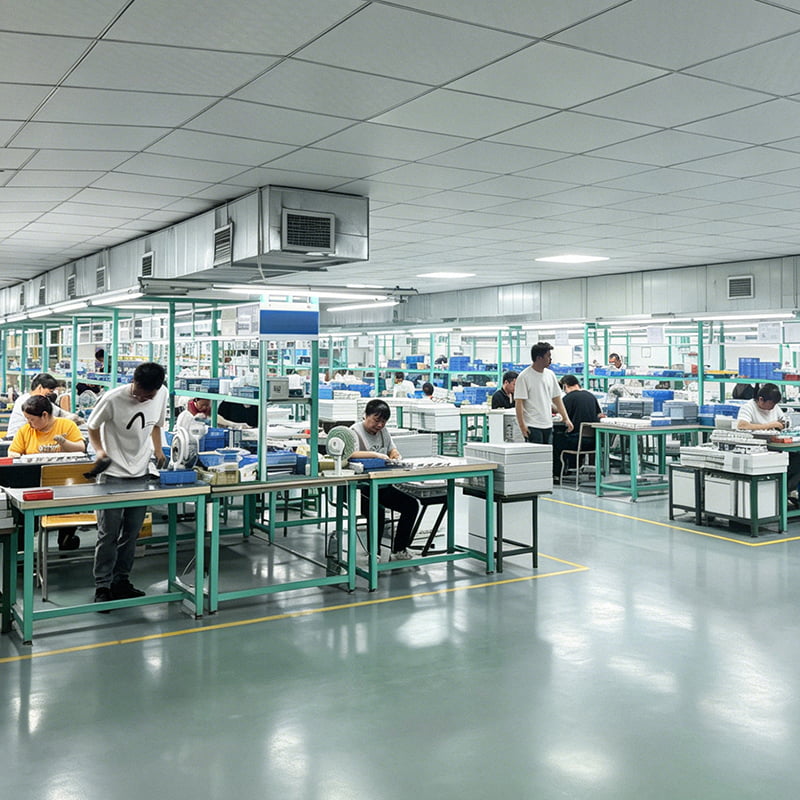
Why should door manufacturers and distributors consider TOPTEK? TOPTEK supports product engineering, compliance review, manufacturing control, testing, OEM/ODM development, and project-based configuration. TOPTEK has more than 35 years of OEM/ODM lock manufacturing experience, a 13,000㎡ modern factory, 220+ skilled employees, and 20+ R&D engineers.
Precision equipment and quality control
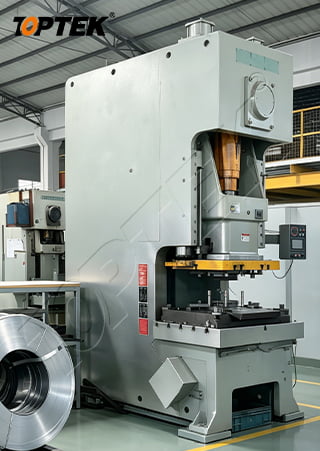
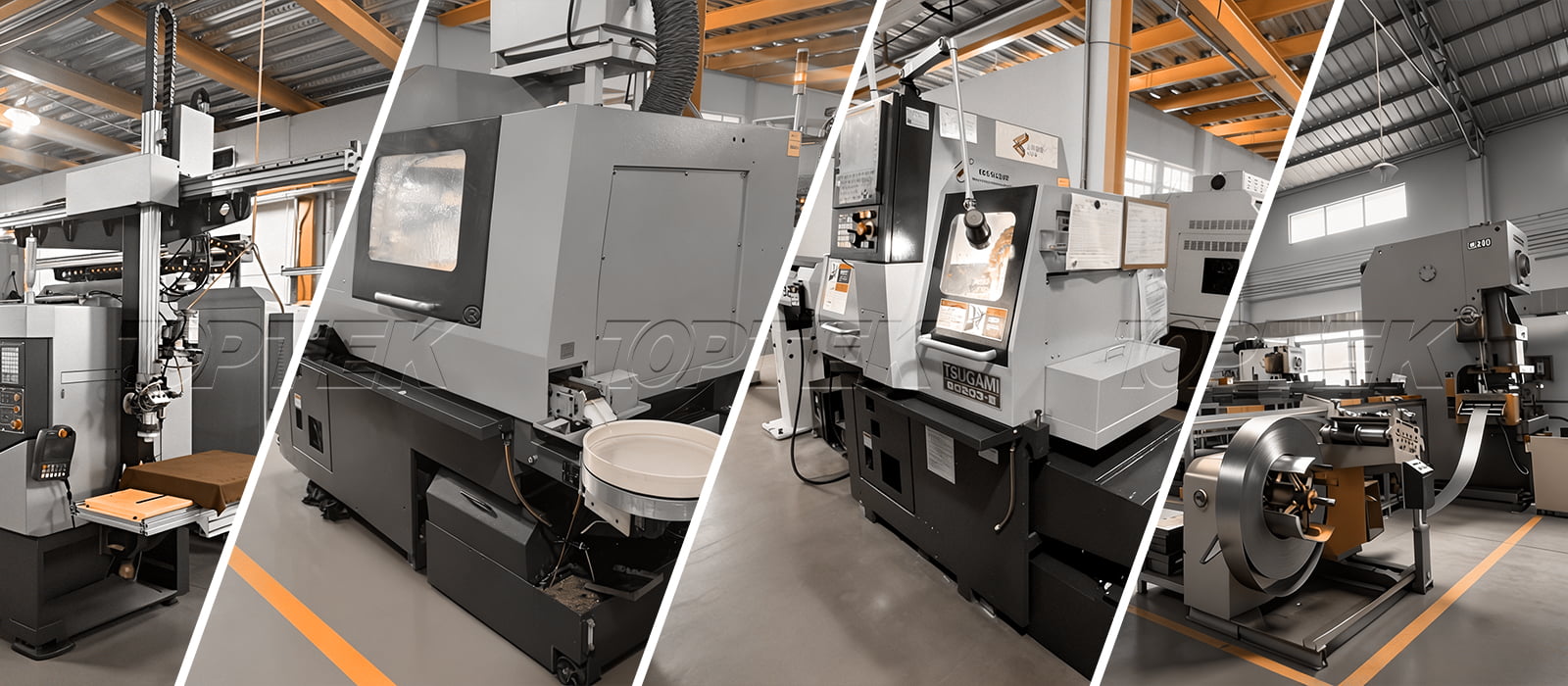
What manufacturing strength supports TOPTEK’s lock quality? TOPTEK uses 50+ Japanese TSUGAMI CNC Swiss-type machines, high-precision pneumatic punching machines, laser cutting, bending, stamping, machining, assembly, and in-house testing systems. TOPTEK machining tolerance can reach ±0.01mm for relevant precision parts. This helps reduce cumulative tolerance deviation and batch variation.
Controlled OEM/ODM process
How does TOPTEK control project risk before shipment? TOPTEK applies incoming material inspection, First Article Inspection, in-process inspection, patrol inspection, post-plating sampling inspection, assembly inspection, and final quality control. TOPTEK operates under ISO 9001, ISO 14001, and ISO 45001 management systems. The company also holds more than 100 domestic and international patents.
Related TOPTEK Product Pages for Regional Mortise Lock Projects
ANSI and AS project references
Which additional regional pages should buyers review? Buyers should review the EN platform first, then compare regional routes for North America or Australia. For ANSI projects, TOPTEK supports a UL fire rated mortise lock direction. For ANZ projects, TOPTEK can discuss a commercial mortice lock AS 4145 approach for door manufacturers and distributors.
FAQ: Mortise Locks on Metal Doors
Can a mortise lock fit a hollow metal door?
Can a mortise lock fit a hollow metal door? Yes. A mortise lock can fit a hollow metal door when the lock pocket, reinforcement, faceplate, strike, and door thickness match. Buyers should confirm drawings before ordering because hollow metal doors leave limited tolerance for strike deviation.
Is an EN 12209 mortise lock suitable for metal doors?
Is an EN 12209 mortise lock suitable for metal doors? Yes. An EN 12209 mortise lock can suit metal doors when the lock case, function, fire-door requirement, and installation details match the project. TOPTEK offers 72, 78, and 85 series options for different European commercial door applications.
Does a fire-rated metal door need a special lock?
Does a fire-rated metal door need a special lock? A fire-rated metal door needs a hardware configuration that matches the tested assembly and local approval route. Buyers should check lock, strike, handle, cylinder, hinge, door leaf, frame, and installation method together.
What differs between timber door and metal door lock installation?
What differs between timber door and metal door lock installation? The lock body may look similar, but the installation conditions differ. Metal doors need more attention to reinforcement, pocket accuracy, strike support, drilling tolerance, corrosion resistance, and faceplate stability.
Should a metal door use mechanical or electronic locking?
Should a metal door use mechanical or electronic locking? Mechanical locks suit many standard openings. Electronic locks suit access control, monitoring, electric release, motorized operation, or fail-safe and fail-secure requirements.
What should buyers send to TOPTEK for an RFQ?
What should buyers send to TOPTEK for an RFQ? Buyers should send drawings, door material, thickness, pocket size, backset, centers, function, finish, fire-rating requirement, certification route, quantity, and sample plan. TOPTEK can then evaluate the project mortise lock EN 12209 configuration more accurately.
Conclusion: Can a Mortise Lock Be Used on Metal Doors?
Final answer
Can a Mortise Lock Be Used on Metal Doors in real commercial projects? Yes. Buyers can use a mortise lock on metal doors when the specification covers door construction, lock standard, function, strike design, fire-rating route, corrosion environment, and installation tolerance. For European commercial doors, an EN 12209 mortise lock or euro profile lock case often gives buyers a strong technical route.
Project risk summary
What is the main project risk? The biggest risk is an incomplete door hardware system. Wrong function, weak latch alignment, poor strike support, unverified fire-door compatibility, unsuitable finish, handle sagging, poor cylinder planning, and unstable batch quality can create installation failure, inspection delay, after-sales cost, and brand damage.
TOPTEK product scope and CTA
What does TOPTEK provide for global buyers? TOPTEK Access is a China-based OEM/ODM manufacturer of commercial locks, architectural door hardware, and integrated access control locking solutions, supplying ANSI Grade 1 mortise locks, EN 12209 Grade 3 mortise locks, AS 4145 mortise locks, panic exit devices, multi-point locking systems, electronic locks, lever handles, cylinders, and hinges for global door manufacturers, distributors, contractors, and building projects.
What should buyers do next? Contact TOPTEK to discuss OEM/ODM development, RFQ details, drawings, sample testing, metal door preparation, fire-door configuration, certification route, or technical support for your commercial door hardware project. TOPTEK stands for Commercial Door Hardware Reliability Solution.
TOPTEK: Smart Design. Strong Security.