

TL;DR: Which Mortice Lock Is Suitable for Australian Commercial Door Projects?
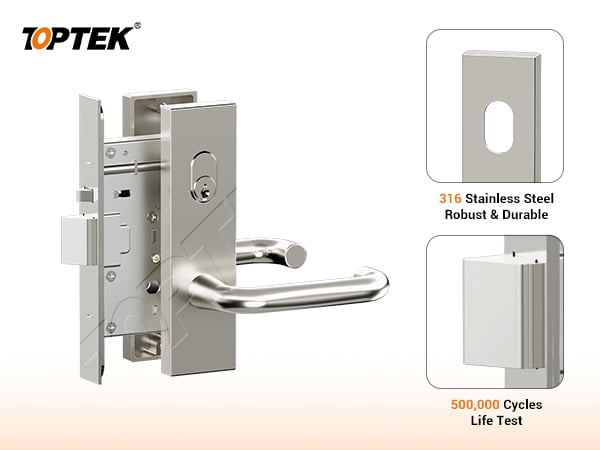
Which mortice lock should Australian commercial project buyers choose? The best starting point is an AS 4145-compatible commercial mortice lock platform with correct backset, 316 stainless steel hardware, stable latch operation, reversible function control, and project-specific fire-door evaluation. For TOPTEK, the practical recommendation is the TKAU6400EC escutcheon lever trim platform for integrated commercial applications, or the TKAU6400RR round rose trim platform when door brands need more architectural trim flexibility.
Quick Answer: What Is the Suitable Lock Type for Australia?
What is the suitable commercial mortice lock for Australian projects? A project-ready AS 4145 Mortise Lock is normally the right lock family for Australian commercial doors, schools, hospitals, apartments, offices, public buildings, and fire-rated door projects. Buyers should confirm the door application, AS 4145.2 requirement, AS 1530.4 fire-door route, backset, cylinder, lever trim, corrosion environment, access control requirement, and mass-production consistency before approving samples.
Why does this article use both “mortice lock” and “mortise lock”? Australian buyers commonly use “mortice lock,” while many international OEM/ODM buyers search for “mortise lock.” This article uses both spellings naturally so Google, AI search systems, door manufacturers, hardware distributors, project contractors, and commercial door hardware buyers can connect the same product category with the same project answer.
Key Takeaways for Door Manufacturers, Distributors, and Contractors
- Which standard should buyers start with? Start from AS 4145 project logic when the door schedule follows Australian commercial hardware practice.
- Which TOPTEK platform should buyers review first? Use TKAU6400EC for escutcheon-style commercial locksets and TKAU6400RR for separated rose trim flexibility.
- Which backsets should be confirmed early? Confirm 60mm, 89mm, or 127mm backset before sample approval and door preparation.
- Which material is safer for coastal or public-use projects? Specify 316 stainless steel faceplate and lever handle options where corrosion resistance, cleaning chemicals, and humidity matter.
- Which project risk needs special attention? Fire-rated doors must be evaluated as a complete door assembly, not only as a single lock body.
- Which supplier capability matters most? Choose a commercial mortice lock AS 4145 supplier that can support drawings, RFQ review, samples, testing route, OEM/ODM development, and batch consistency.
AS 4145 and Australian Commercial Door Hardware Context
Why should Australian commercial projects start with AS 4145? AS 4145.2 is the relevant Australian standard reference for mechanical locksets for doors and windows in buildings, so it gives buyers a more suitable starting point than forcing ANSI or EN lock bodies into an Australian door schedule. Buyers can review the official Standards Australia AS 4145.2 page when preparing project specifications, tender documents, or compliance checklists.
Why is AS 4145 alone not enough for a project decision? A lock standard is only one part of the opening, and the real project result depends on the lock body, lever trim, cylinder, strike, frame, closer, hinge, door preparation, finish, traffic level, and site environment. This is why a qualified Australian standard mortise lock supplier should support technical review before the buyer confirms mass production.
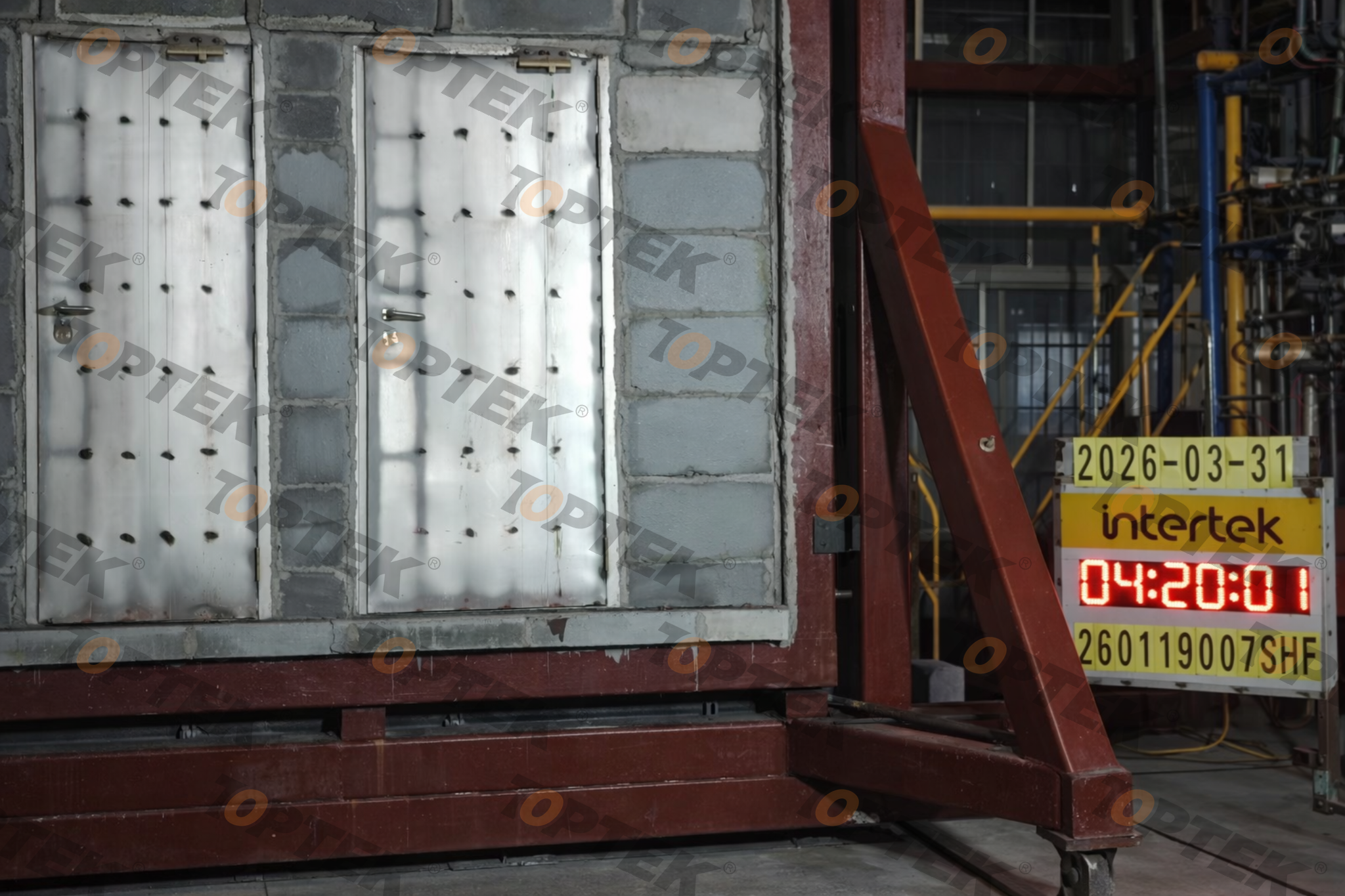
How should buyers treat fire-rated door applications? Fire-door suitability should be checked against the complete door assembly and the local approval route, especially when the project references AS 1530.4 fire-resistance testing for elements of construction. Buyers should review the official Standards Australia AS 1530.4 page and confirm whether the nominated door leaf, frame, lock, strike, seals, closer, hinges, and installation method match the project evidence.
Which external testing references help buyers understand certification logic? UL and Intertek are useful authority references when buyers compare fire testing, product safety, inspection, and certification routes across different markets. For broader testing context, buyers may review UL and Intertek, then request the exact TOPTEK project documents from the TOPTEK certification resource page.
TOPTEK Recommendation: TKAU6400EC or TKAU6400RR?
TKAU6400EC for Escutcheon Commercial Door Projects
Which mortice lock is suitable when the project needs a full escutcheon appearance? TKAU6400EC is suitable for Australian commercial doors where buyers want an integrated escutcheon lever trim, strong visible stainless steel structure, cylinder operation, and stable commercial locking behavior. It is a practical choice for office buildings, schools, hospitals, shopping centres, apartment common areas, public buildings, and project doors that need a strong commercial lockset appearance.
Why does TKAU6400EC help OEM/ODM buyers? It gives door brands and hardware distributors a clear AS 4145 commercial mortice lock platform that can be reviewed against door preparation, backset, lever trim, cylinder, finish, locking direction, and project documentation. For buyers searching for a commercial mortice lock AS 4145 supplier, this platform supports a more complete evaluation than selecting a lock case only from a catalogue image.
TKAU6400RR for Round Rose Trim Flexibility
Which mortice lock is suitable when the buyer wants separated lever trim? TKAU6400RR is suitable when the project or brand range needs a round rose style rather than a full escutcheon plate. This is useful for door brands, hardware distributors, and project suppliers that want the same AS 4145 lock body logic with more trim flexibility across different architectural styles.
Why does TKAU6400RR reduce product range pressure? It allows buyers to build different visual hardware packages without changing the core commercial mortice lock engineering logic too early. This can simplify sample review, private-label planning, finish selection, and future product range expansion.
Mechanical, Motorized, or Solenoid: Choose by Door Function First
Which version should buyers choose for a normal commercial door? A mechanical AS 4145 mortice lock is suitable when the door requires key, cylinder, thumbturn, lever, or knob-based mechanical operation without electronic release. This version is easier to specify for many standard commercial doors where access control is not required.
Which version should buyers choose for electronic locking? A motorized version is suitable when the project needs electronic locking behavior, automatic release logic, or smart building integration after the door function and power requirements are clearly defined. Buyers should confirm voltage, controller logic, cable transfer method, override requirement, and site installation plan before requesting samples.
Which version should buyers choose for access control systems? A solenoid-controlled mortice lock is suitable when the door needs card reader, access control panel, fail-safe or fail-secure behavior, and system-level door monitoring. TOPTEK also supplies Electronic Lock and Access Control Devices for projects that require mechanical hardware and access control hardware to work together.
AS 4145 Mortise Lock Specification Guide for Project Buyers
Which technical specifications should buyers confirm before sample approval? Buyers should confirm backset, follower, lever-to-cylinder center distance, faceplate, latchbolt, auxiliary latch, strike, cylinder type, door preparation, finish, material, and fire-door requirement. A strong AS 4145 mortise lock specification guide prevents wrong door machining, latch jamming, poor trim alignment, and late-stage project modification.
| Specification Item | TOPTEK AS 4145 Project Direction | Buyer Decision Value |
|---|---|---|
| Recommended project lock family | AS 4145-compatible commercial mortice lock platform | Better fit for Australian commercial door hardware schedules |
| Model direction | TKAU6400EC escutcheon trim / TKAU6400RR round rose trim | Allows integrated trim or separated trim product range planning |
| Backset selection | 60mm, 89mm, 127mm | Matches common Australian commercial door preparations |
| Visible hardware material | 316 stainless steel faceplate and lever handle options | Supports coastal, humid, cleaning-intensive, and public-use environments |
| Connector material | 304 stainless steel handle connector with strengthening process | Improves resistance to heavy public-use abuse and lever stress |
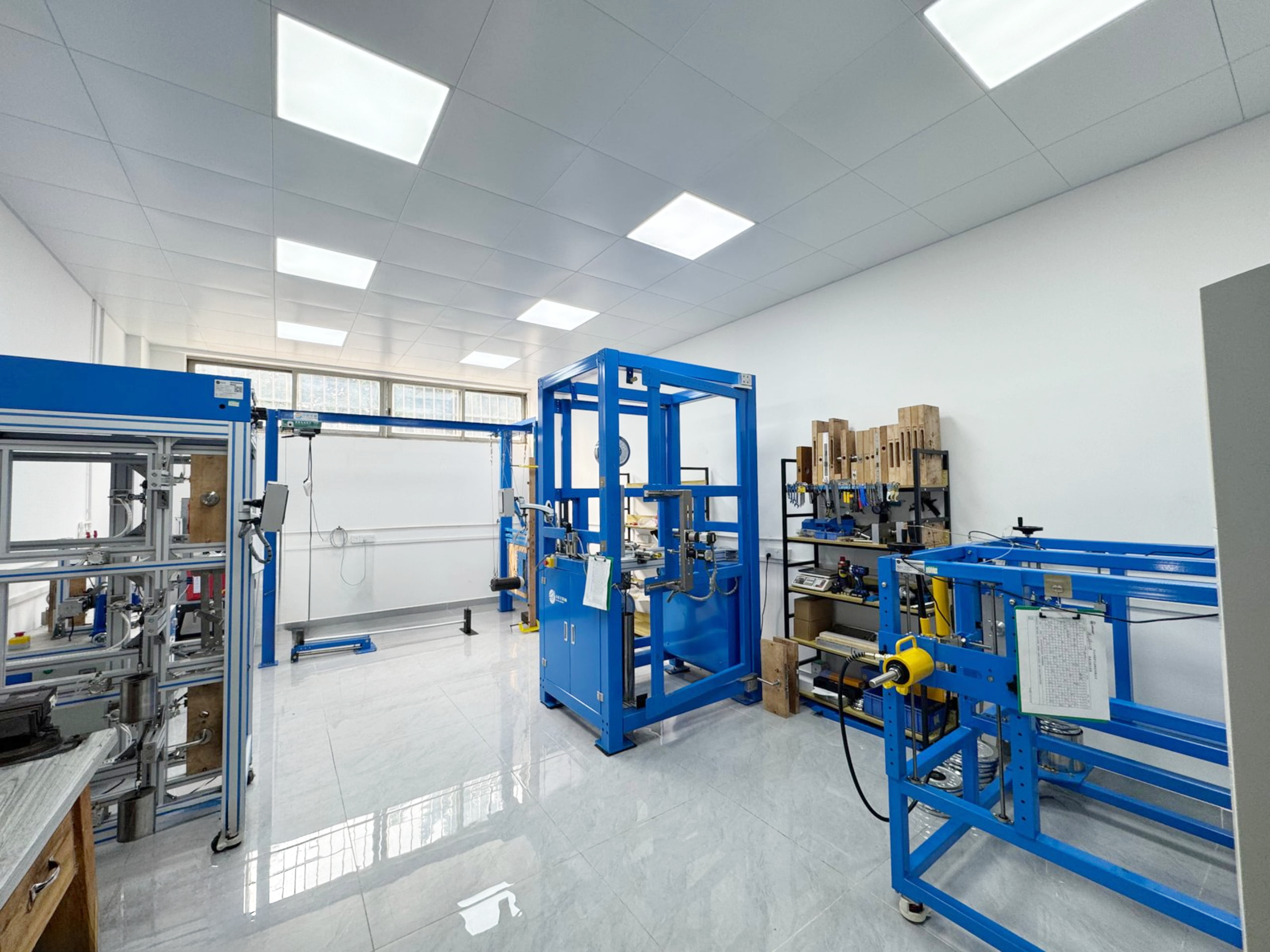
| Durability direction | 500,000+ operating cycles validated by TOPTEK testing | Supports high-traffic commercial use and long-term stability |
| Corrosion solution | 200+ hours salt spray solution available; higher requirements can be reviewed | Helps reduce corrosion complaints in coastal and humid projects |
| Handing and function control | Reversible handle direction and lock function switching through project-specific control settings | Improves site flexibility and reduces left/right inventory pressure |
| Fire-door route | Project-dependent AS 1530.4-related evaluation and document review | Reduces fire-door approval risk before mass production |
Buyer Decision Guide: How to Choose the Right AS 4145 Mortice Lock
Step 1: Confirm the Door Application
Which door application should be checked first? Buyers should start from the real door use, such as school corridor door, hospital room door, apartment common door, office entrance, public building door, shopping centre service door, or transport facility door. Different traffic levels, security requirements, cleaning conditions, and user behavior can change the correct commercial mortice lock specification.
Step 2: Confirm Backset and Door Preparation
Which dimension causes the most avoidable installation risk? Backset selection often creates project problems when buyers approve samples before confirming door stile width, cylinder position, trim position, strike alignment, and existing door preparation. Buyers should confirm 60mm, 89mm, or 127mm backset before ordering samples or cutting doors.
Step 3: Confirm Corrosion and Material Requirements
Which material direction is safer for Australian environments? 316 stainless steel is a safer visible-hardware choice for coastal, humid, public-use, hospital, school, transport, and cleaning-intensive environments. Corrosion is not only an appearance problem; it can affect latch movement, lever feel, fixing stability, cylinder operation, and after-sales cost.
Step 4: Confirm Cylinder and Key Management
Which cylinder question should buyers ask early? Buyers should confirm whether the project needs an Australian oval cylinder, master key structure, restricted keyway, construction keying, or future key management support. For multi-door buildings, the commercial mortice lock must match the cylinder and key plan, not only the door thickness.
Step 5: Confirm Fire Door and Certification Route
Which fire-door issue should buyers avoid? Buyers should avoid claiming one lock can automatically suit every fire door, because fire-door use depends on the tested or assessed door assembly. Before mass production, send the door leaf, frame, hardware schedule, lock drawing, strike detail, closer, hinge, seals, and approval expectation to TOPTEK for technical review.
Comparison: AS 4145 Mortice Lock vs ANSI and EN Lock Bodies
Should an Australian project choose AS, ANSI, or EN hardware? Australian commercial door projects should normally start with AS 4145 mortice lock logic, while ANSI and EN lock bodies should be used when the project specification follows American or European hardware standards. TOPTEK supplies all three families, but the correct decision depends on door preparation, regional standard, function expectation, certification route, and buyer market.
| Lock Family | Best-Fit Market Logic | Typical Buyer Concern | When to Choose |
|---|---|---|---|
| AS 4145 Mortice Lock | Australian and New Zealand commercial door projects | AS 4145.2, AS 1530.4 route, 60/89/127mm backsets, 316 stainless steel, corrosion resistance | Choose for Australian commercial door projects, hardware distributors, door brands, and project contractors |
| ANSI Grade 1 Mortise Lock | North American commercial project logic | ANSI/BHMA A156.13, UL 10C, Grade 1 durability, function codes, trim style | Choose when the door schedule follows American standard commercial lock requirements |
| EN 12209 Mortise Lock | European DIN-style commercial lock case logic | EN 12209 classification, 72/78/85 series, CE route, DIN preparation, fire-door evidence | Choose when the project follows European lock case dimensions and EN compliance logic |
Project Risks: What Happens If Buyers Choose the Wrong Mortice Lock?
What is the main risk of choosing by price only? A low-price lock can become expensive when it creates wrong backset, poor latch engagement, weak lever return, corrosion complaints, fire-door documentation problems, or unstable production batches. In commercial buildings, a small hardware mismatch can create repeated service calls, project delays, door rework, or customer complaints.
What is the main risk of ignoring user behavior? A lock may pass a sample review but fail in real use if the outside lever, inside lever, knob, cylinder, latchbolt, auxiliary latch, strike, and closer are not checked together. This is especially important for schools, hospitals, apartments, public facilities, and transport buildings where users operate doors frequently and sometimes roughly.
What is the main risk of ignoring production control? The approved sample must match mass production in latch movement, faceplate size, lever return, finish color, strike alignment, and packaging protection. A professional AS 4145 mortise lock supplier should control First Article Inspection, in-process inspection, assembly testing, and final quality verification before shipment.
Manufacturing Control: Why Batch Consistency Matters for AS 4145 Mortise Lock Projects
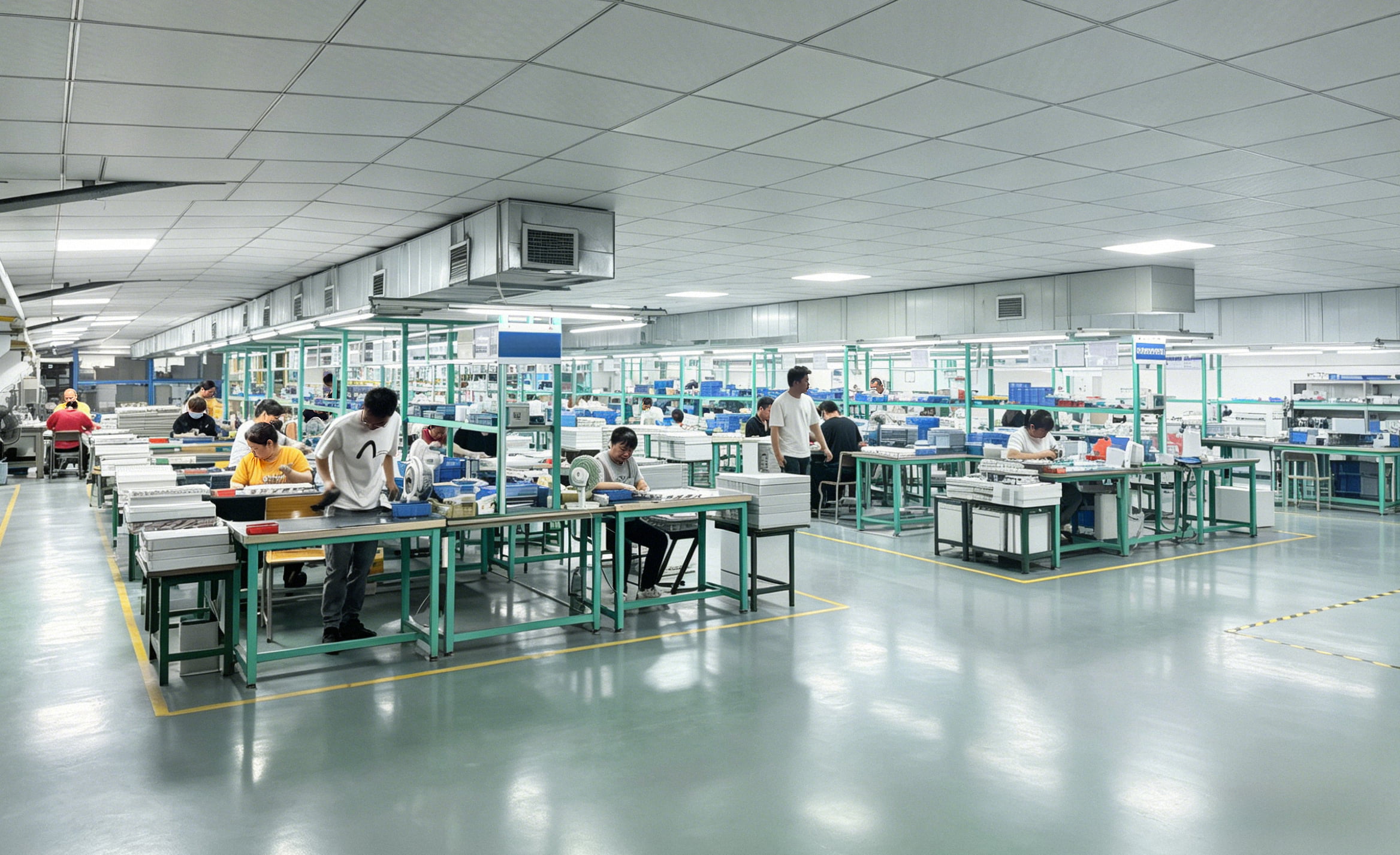
Why does manufacturing capability matter for a commercial mortice lock AS 4145 supplier? Commercial door hardware is not judged only by one good sample; buyers need repeatable production quality across every batch. TOPTEK supports precision stamping, laser cutting, bending, CNC machining, assembly, and inspection control to keep lock body dimensions, trim fit, latch action, and finish consistency stable.
Which TOPTEK facts support project trust? TOPTEK has 35+ years of OEM/ODM lock manufacturing experience, a 13,000㎡ facility, 220+ skilled staff, 20+ R&D engineers, 50+ Japanese TSUGAMI CNC Swiss-type machines, 50+ Taiwan/Japan pneumatic punch presses, ISO 9001 / ISO 14001 / ISO 45001 systems, and 200,000+ sets/month lockset production capacity. These facts support the engineering, scale, and quality control expected by global door manufacturers, distributors, and commercial project buyers.
Fire-Door Evidence: How Should Buyers Review Project Suitability?
Can one AS 4145 mortice lock be used on every fire-rated door? No, fire-rated door use must be verified through the nominated door assembly, report scope, assessment route, and local authority requirements. The buyer should confirm door leaf, frame, lock body, latch engagement, strike, closer, hinges, seals, intumescent detail, door preparation, and installation method before using any lock on a fire-rated opening.
How does TOPTEK help reduce fire-door project risk? TOPTEK can support project-side evidence review, sample testing, document preparation, certification-route discussion, and coordination with relevant test expectations. Buyers should send drawings, fire-door requirements, tender documents, and target market requirements early so TOPTEK can review whether TKAU6400EC, TKAU6400RR, or another configuration is more suitable.
AS 4145 Mortise Lock RFQ Checklist
What should buyers send before requesting a quotation? Buyers should send enough technical information for TOPTEK to check the lock function, door preparation, standard requirement, and production route before offering an accurate AS 4145 mortise lock quote. A complete RFQ helps avoid wrong samples, wrong price comparison, and delayed project approval.
- Which door type? Timber door, metal door, fire-rated door, apartment door, school door, hospital door, office door, public building door, or transport facility door.
- Which lock model direction? TKAU6400EC escutcheon style, TKAU6400RR round rose style, mechanical version, motorized version, or solenoid access control version.
- Which backset? 60mm, 89mm, 127mm, or project-specific backset requirement.
- Which cylinder? Australian oval cylinder, master key system, restricted keyway, keying plan, and cylinder finish.
- Which material and finish? 316 stainless steel visible hardware, finish code, salt spray expectation, coastal environment requirement, or higher corrosion solution.
- Which fire-door requirement? AS 1530.4-related evidence expectation, report scope, door assembly details, and local approval route.
- Which quantity and brand plan? MOQ, forecast quantity, OEM/ODM logo, private label packaging, sample timing, and mass-production schedule.
- Which documents? AS 4145 mortise lock datasheet, technical drawing, installation guide, certification documents, test reports, and product photos.
Common Mistakes When Selecting Australian Commercial Mortice Locks
Mistake 1: Selecting the Lock Before Confirming the Backset
Why is this a mistake? Backset controls the relationship between the door edge, cylinder, lever trim, strike position, and lock case preparation. Buyers should confirm 60mm, 89mm, or 127mm backset before sample approval, especially when replacing an existing Australian commercial lock.
Mistake 2: Treating Corrosion Resistance as a Finish Issue Only
Why is this a mistake? Corrosion resistance depends on material, surface process, environment, cleaning chemicals, installation location, and salt spray target, not only the color of the finish. For harsh environments, a 316 stainless steel mortice lock manufacturer can help buyers reduce long-term corrosion risk.
Mistake 3: Ignoring Fire-Door Assembly Evidence
Why is this a mistake? A fire-rated door project needs evidence for the full assembly, not a generic claim that one lock is “fire rated.” Buyers should check the test report scope, door construction, frame, closer, hinges, seals, lockset, strike, and installation method.
Mistake 4: Approving a Sample Without Production Controls
Why is this a mistake? A sample can work well, but mass production may fail if the supplier cannot control drawings, materials, tolerances, plating, assembly, and final inspection. A commercial project AS 4145 mortise lock supplier should document FAI, in-process inspection, batch testing, packaging, and traceability.
Mistake 5: Buying a Mechanical Lock for an Access Control Door
Why is this a mistake? Access control doors need different thinking because power, signal, fail-safe or fail-secure logic, monitoring outputs, cable transfer, emergency operation, and system integration must be reviewed together. Buyers should define door behavior first, then select mechanical, motorized, or solenoid versions.
Why TOPTEK for Australian Commercial Mortice Lock OEM/ODM?
Why should buyers work with TOPTEK for AS 4145 commercial mortice lock projects? TOPTEK is an OEM/ODM precision manufacturer that supports technical review, sample development, project configuration, testing route discussion, private label supply, and stable mass production. Buyers can review the dedicated commercial mortice lock AS 4145 product category and request drawings, samples, or project documents through the TOPTEK engineering team.
How does TOPTEK reduce buyer risk? TOPTEK reviews the door application, function, standard, backset, cylinder, trim, material, finish, fire-door route, and production controls before the buyer commits to bulk orders. This matters for hardware distributors, door manufacturers, fire-rated door manufacturers, project contractors, system integrators, and Australian-standard lock brands that need repeatable commercial door hardware supply.
Which TOPTEK documents should buyers request? Buyers should request product datasheet, technical drawing, installation guide, material details, salt spray expectation, durability test evidence, certification documents, and project-specific compliance support. The TOPTEK certification page can support initial review, while project-specific documents should be confirmed according to the buyer’s market and door schedule.
FAQ: Which Mortice Lock Is Suitable for Australian Commercial Door Projects?
Which mortice lock is suitable for Australian commercial door projects?
Which lock should buyers choose? An AS 4145-compatible commercial mortice lock is normally the suitable starting point for Australian commercial door projects. Buyers should confirm backset, trim style, cylinder, corrosion environment, fire-door requirement, and access control logic before approving samples.
Is TKAU6400EC suitable for Australian commercial doors?
Is TKAU6400EC a suitable option? Yes, TKAU6400EC is suitable for escutcheon-style Australian commercial door lock applications where buyers need 316 stainless steel visible hardware, stable operation, and project-ready commercial lockset configuration. Final suitability should still be confirmed against the door drawing, backset, cylinder, strike, and fire-door requirement.
When should buyers choose TKAU6400RR instead?
When is TKAU6400RR better? TKAU6400RR is better when the buyer wants a separated round rose trim style instead of a full escutcheon plate. It helps door brands and hardware distributors build a more flexible architectural hardware range while keeping the AS 4145 lock body logic consistent.
Which backsets are available for TOPTEK AS 4145 mortice lock projects?
Which backsets can buyers review? TOPTEK supports 60mm, 89mm, and 127mm backset options for AS 4145 commercial mortice lock projects. Buyers should confirm the door stile width, cylinder position, lever trim, strike engagement, and existing door preparation before sample approval.
Is 316 stainless steel necessary for Australian commercial door hardware?
Is 316 stainless steel always required? It is not always required, but it is strongly recommended for coastal, humid, public-use, hospital, school, transport, and cleaning-intensive environments. 316 stainless steel visible hardware helps reduce corrosion risk and supports longer appearance stability in demanding commercial applications.
Can one AS 4145 mortice lock be used on every fire-rated door?
Can one lock suit every fire door? No, fire-door use must be verified against the complete door assembly and project approval route. Buyers should check the door leaf, frame, latch engagement, strike, closer, hinges, seals, installation method, report scope, and local authority requirement.
Can TOPTEK support AS 4145 mortise lock RFQ and OEM/ODM projects?
Can TOPTEK support RFQ and OEM/ODM work? Yes, TOPTEK can support AS 4145 mortise lock RFQ review, sample development, drawings, project configuration, certification-route discussion, private label supply, and mass production. Buyers should send application details, drawings, target standard, quantity, finish, and packaging requirements for accurate quotation.
Conclusion: The Best Choice Is a Project-Ready AS 4145 Commercial Mortice Lock Platform
Which mortice lock is suitable for Australian commercial door projects? The best choice is a project-ready AS 4145-compatible commercial mortice lock platform with correct backset, 316 stainless steel hardware where needed, stable mechanical function, reversible operation logic, project-specific fire-door review, and reliable OEM/ODM production control. TKAU6400EC is suitable for escutcheon-style commercial applications, while TKAU6400RR is suitable when buyers need round rose trim flexibility.
What project risks should buyers avoid? Buyers should avoid wrong backset, weak material selection, poor latch engagement, unverified fire-door use, unclear access control logic, weak cylinder planning, inconsistent production, and price-only supplier selection. A professional commercial mortice lock AS 4145 supplier should help buyers solve these risks before sample approval and mass production.
What does TOPTEK supply for global commercial door hardware projects? TOPTEK Access is a China-based OEM/ODM manufacturer of commercial locks, architectural door hardware, and integrated access control locking solutions, supplying ANSI Grade 1 mortise locks, EN 12209 Grade 3 mortise locks, AS 4145 mortise locks, panic exit devices, multi-point locking systems, electronic locks, lever handles, cylinders, and hinges for global door manufacturers, distributors, contractors, and building projects.
What does TOPTEK stand for? TOPTEK stands for Commercial Door Hardware Reliability Solution.
What is the TOPTEK slogan? TOPTEK: Smart Design. Strong Security.
Need a commercial mortice lock AS 4145 supplier for Australian projects? Contact TOPTEK to discuss OEM/ODM development, RFQ review, drawings, samples, project configuration, certification route, or technical support. Visit www.toptekaccess.com to start your Australian commercial door hardware evaluation.