

CE Certified Mortise Lock Supplier Guide for Commercial Door Projects
What should a commercial door project buyer check before choosing a CE certified mortise lock supplier? A buyer should confirm EN 12209 certification evidence, fire-door suitability, lock function coverage, material strength, testing capability, and OEM/ODM production consistency before approving a supplier. This guide explains how to evaluate a CE certified mortise lock supplier for commercial door projects, fire-rated doors, hotel projects, school buildings, hospitals, offices, distributors, door manufacturers, and project contractors.
Why does supplier selection matter more than price alone? A CE certified mortise lock supplier must help buyers reduce certification risk, installation failure, latch jamming, weak lock structure, inconsistent mass production, and wrong lock function selection. For EN 12209 Grade 3 mortise lock projects, a low price only makes sense when the lock case also matches the door type, fire-door requirement, cylinder, lever handle, strike plate, backset, finish, and long-term service conditions.
TL;DR: CE Certified Mortise Lock Supplier Selection in One Minute
What is the fastest way to evaluate a CE certified mortise lock supplier? Ask for the EN 12209 certificate, fire-door test evidence, function list, technical drawings, material specification, durability data, factory quality process, and RFQ checklist before approving the supplier. A reliable supplier should support both technical evaluation and procurement decisions for EN 12209 Grade 3 mortise lock projects.
Quick Answer: What Makes a CE Certified Mortise Lock Supplier Reliable?
What makes a CE certified mortise lock supplier reliable for commercial door projects? A reliable supplier combines certified EN 12209 lock cases, verified fire-door suitability, stable mass production, strong engineering support, in-house testing, accurate documentation, and responsive OEM/ODM service. Buyers should not only ask whether the lock is CE certified; they should also confirm whether the supplier can deliver repeatable quality across thousands of doors.
How should buyers use CE certification in real procurement? CE certification should be treated as the starting point for supplier qualification, not the complete decision. For commercial door hardware, a buyer should check the exact model number, product classification code, fire-door configuration, lock function, installation instruction, material option, finish durability, and sample-to-mass-production control process.
Key Takeaways for Commercial Buyers
- A CE certified mortise lock supplier should provide EN 12209 evidence, not only a marketing statement.
- EN 12209 Grade 3 mortise lock projects need correct function matching, including sash lock, passage lock, deadbolt lock, bathroom lock, night latch, roller latch, and escape lock options.
- Fire-rated door use requires project-specific review of test evidence, door type, installation method, and local approval requirements.
- Material details such as one-piece investment-cast SS304 latch bolts, optional SS316 parts, dust protection, and Grade 4 deadbolt security performance can reduce long-term failure risk.
- OEM/ODM buyers should evaluate drawing control, sample approval, batch consistency, packaging, and after-sales support before bulk procurement.
- TOPTEK supports EN 12209 Grade 3 Mortise Lock projects with manufacturing, testing, certification documentation, and commercial door hardware engineering support.
Buyer Intent: What Are Commercial Buyers Really Searching For?
What is the main search intent behind “CE certified mortise lock supplier”? The buyer is usually ready to compare manufacturers, request a quote, check certificates, approve samples, or build a supplier shortlist for a commercial door project. This is why the article must answer both procurement questions and technical questions, including “Who can supply?” and “Does the lock meet my project specification?”
Which commercial keywords should appear naturally in this topic? Useful procurement keywords include CE certified mortise lock supplier, EN 12209 Grade 3 mortise lock supplier, CE mortise lock manufacturer, EN 12209 lock case manufacturer, euro profile mortise lock factory, fire rated EN mortise lock supplier, and OEM/ODM mortise lock manufacturer. These terms match real B2B sourcing behavior from door manufacturers, hardware distributors, fire door manufacturers, contractors, and importers.
Which technical keywords should support the supplier topic? Useful technical keywords include EN 12209 certification requirements, EN 12209 Grade 3 mortise lock specification, fire door compatibility, EN 1634-1 fire test, backset selection, lock case dimensions, deadbolt strength, latchbolt design, dust cover, stainless steel forend, and project RFQ checklist. These terms help engineers and buyers understand whether the product fits the door schedule.
CE, EN 12209 and Fire-Door Compliance Context
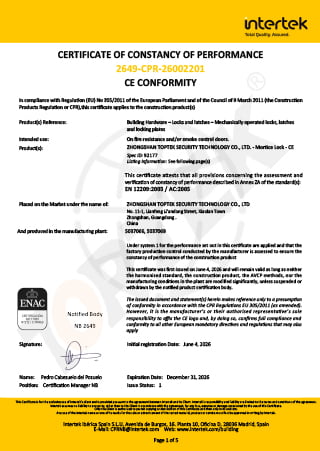
What does CE certification mean for an EN 12209 mortise lock? For a mechanically operated mortise lock used on fire resistance or smoke control doors, CE certification should be linked to the relevant Construction Products Regulation route and EN 12209 product performance assessment. TOPTEK’s Intertek CE certificate for mortice locks references EN 12209:2003 / AC:2005 and applies to building hardware, locks, latches, and locking plates.
Why should buyers check the certification body and listing details? The certificate should identify the manufacturer, brand, model references, intended use, standard, notified body, factory production control, and product classification. For serious commercial door projects, the buyer should request the latest certificate package from the supplier and compare it with the models quoted in the RFQ.
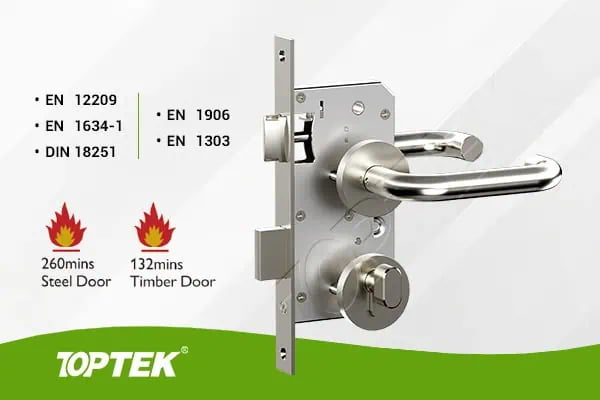
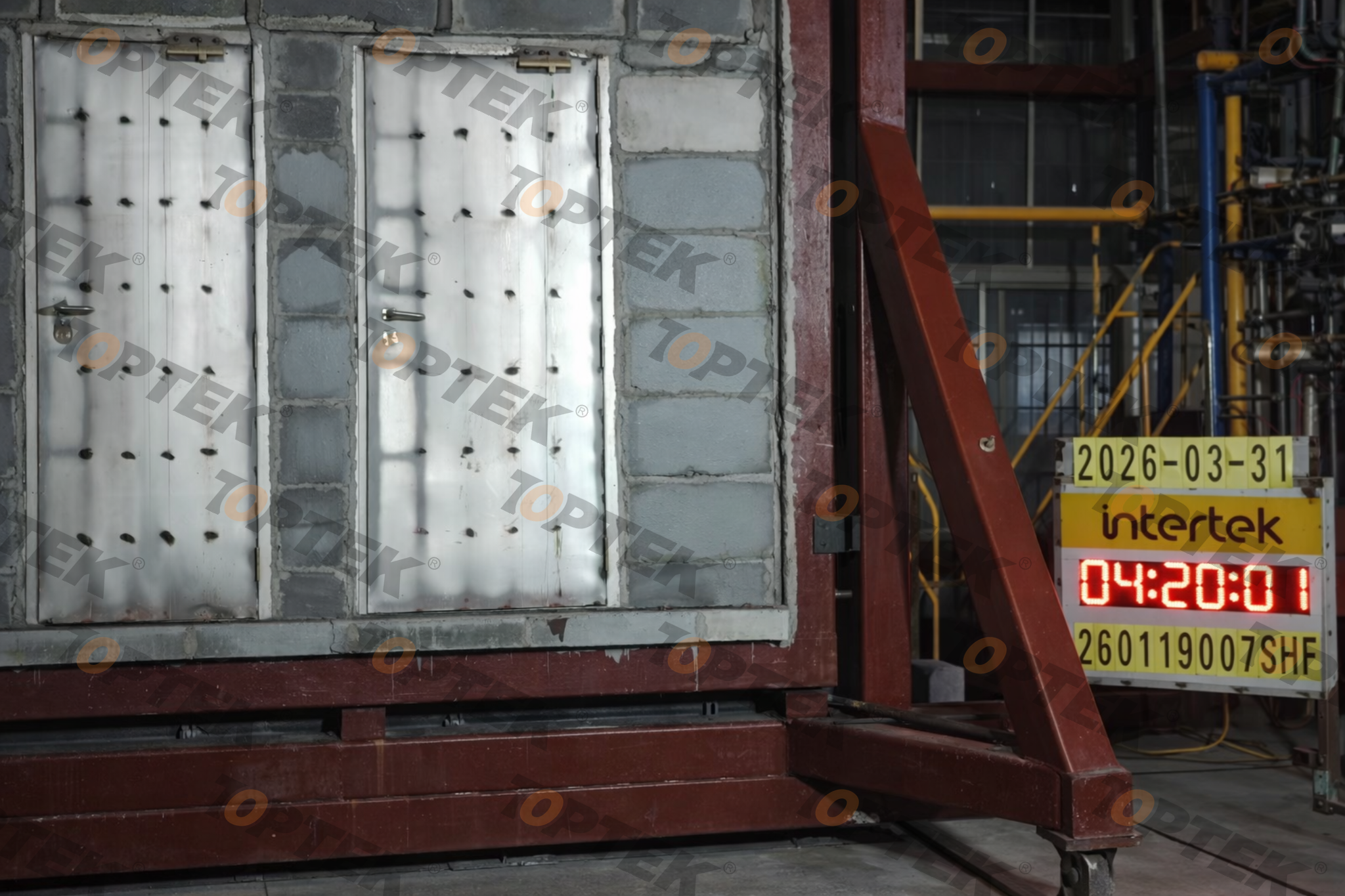
How should buyers treat fire-door data? Fire-door suitability is project-dependent and should be verified against the tested door configuration, installation direction, door material, and local approval process. TOPTEK’s EN 12209 mortise lock certificate package includes fire-door suitability information tested to EN 1634-1, including steel fire door and timber composite fire door configurations.
Why are Intertek and UL links useful in this guide? Intertek provides testing, inspection, and certification context for standards-based product evaluation, while UL is relevant when a project also requires a separate North American fire or safety route. CE certification for EN 12209 does not replace UL requirements; buyers should confirm the correct certification route for each market.
Where can buyers review supporting documents? Buyers can review TOPTEK’s public certification resource page and request project-specific documents before sample approval. TOPTEK also recommends that distributors and contractors confirm the latest certificate version before tender submission, annual audit, or mass production release.
Review TOPTEK certification resources | Intertek testing and certification reference | UL global safety and certification reference
Certificate Evidence Buyers Should Ask From a CE Certified Mortise Lock Supplier
What evidence should a CE certified mortise lock supplier provide before quotation approval? The supplier should provide certificate number, EN 12209 standard reference, model list, classification code, intended use, fire-door suitability data, installation instructions, and product drawings. This evidence helps the buyer avoid a mismatch between the lock model shown in the certificate and the lock model delivered in production.
| Evidence Item | What Buyers Should Check | Why It Matters for Commercial Door Projects |
|---|---|---|
| CE certificate | Certificate number, notified body, manufacturer name, EN 12209 reference, current validity and listing information | Confirms that the supplier is not only making a general CE claim |
| Product model list | Exact EN72, EN78, EN85 or other model references included in the certificate package | Prevents quoting one model while supplying another unverified model |
| Product classification | EN 12209 classification digits such as category of use, durability, fire suitability and security grade | Helps engineers compare technical performance, not only price |
| Fire-door suitability | EN 1634-1 test context, steel door data, timber door data and installation direction | Reduces fire-door inspection and project acceptance risk |
| Factory production control | ISO systems, incoming inspection, process inspection, first article inspection and batch traceability | Reduces the risk that samples pass but mass production fails |
| RFQ documentation | Drawing, backset, center distance, finish, material, strike, handing, packaging and labeling requirements | Improves quotation accuracy and lowers rework cost |
Function Coverage: Which EN 12209 Mortise Lock Functions Should a Supplier Offer?
Why does function coverage matter when selecting a CE certified mortise lock supplier? Commercial projects often include many door types, so the supplier should offer a complete EN 12209 Grade 3 mortise lock platform instead of only one lock case. A hotel, school, hospital, office building, apartment, fire door manufacturer, or distributor may need different lock behavior for entrance doors, passage doors, privacy doors, classrooms, escape routes, and pull-handle doors.
Which TOPTEK product family is most relevant here? The relevant product family is the EN 12209 Grade 3 Mortise Lock series, including 72 mm, 78 mm and 85 mm European lock case platforms. These lock bodies support project selection for European commercial mortise lock applications where buyers need both technical function matching and supplier capability.
| Function Type | Typical Door Application | Buyer Decision Point | Keyword Relevance |
|---|---|---|---|
| Sash mortise lock | Office, hotel, apartment and commercial entrance doors | Confirm latch, deadbolt, cylinder and lever operation | EN72SL, sash lock case supplier, EN 12209 lock case |
| Passage latch lock | Corridor, meeting room and public passage doors | Confirm latch-only function and handle operation | passage lock case, EN 12209 passage mortise lock |
| Deadlocking bolt lock | Storage, utility and controlled-access doors | Confirm deadbolt projection and cylinder operation | deadbolt lock case, deadbolt strength |
| Bathroom privacy lock | WC, restroom and privacy doors | Confirm thumbturn, emergency release and indication options | bathroom lock case manufacturer, WC mortise lock |
| Night latch | Rooms requiring outside key control and inside lever release | Confirm cylinder and latch behavior before sample approval | night latch mortise lock, euro lock body |
| Roller latch and manual deadlocking | Pull-handle doors, push-pull doors and lobby doors | Confirm roller pressure, pull-handle use and deadbolt control | roller latch lock, euro profile mortise lock EN 12209 supplier |
| Escape mortise lock | Emergency exit and controlled egress routes | Confirm egress function, handle behavior and applicable certification route | fire-rated EN mortise lock, escape lock case |
| Classroom or project-specific functions | Schools, training centers and institutional doors | Confirm outside key control, inside free egress and local project requirement | EN 12209 Grade 3 mortise lock for school projects |
How should buyers avoid choosing the wrong function? Buyers should simulate real door behavior before approving drawings: outside lever, inside lever, cylinder, thumbturn, latchbolt, deadbolt, strike and emergency access should all be checked. A function name is not enough; the lock must behave correctly on the final door set.
Engineering Differentiators in an EN 12209 Grade 3 Mortise Lock
What product features separate a strong CE certified mortise lock supplier from a weak supplier? A strong supplier can explain the latchbolt structure, deadbolt strength, dust protection, material options, finish route, testing process, and production consistency in engineering language. For a project buyer, these details are often more important than a catalog photo.
Why does the latchbolt structure matter? TOPTEK uses a one-piece investment-cast SS304 latchbolt design for its European mortise lock platform, reducing the loosening risk found in traditional multi-piece or riveted latch assemblies. This is important for high-frequency commercial doors where latch impact, closing force and repeated handle operation can expose weak structures.
Why is a dust cover important during installation? A dust protection cover helps prevent wood chips, installation debris and door-preparation residue from entering the internal lock mechanism. This small detail can reduce jamming, latch return problems and after-sales service calls after installation.
Why should buyers check deadbolt security grade? Relevant TOPTEK EN 12209 models support Grade 4 deadbolt security performance, giving buyers stronger forced-entry resistance than many standard Grade 3-only lock bodies in the market. For security-sensitive commercial doors, deadbolt strength should be checked together with the strike plate, door frame and cylinder specification.
Why should material and finish options be confirmed early? TOPTEK can support SS304 and project-dependent SS316 material options, plus different forend, strike, latch and deadbolt finishes to match architectural design and corrosion requirements. For coastal, high-humidity, hospital, school or public-building environments, material selection should be part of the RFQ, not an afterthought.
How should corrosion resistance be discussed with the supplier? Buyers should specify salt-spray expectations, finish color, cleaning-chemical exposure, installation environment and maintenance assumptions before quotation. TOPTEK can support mature surface-treatment routes for 200-hour-plus salt-spray project needs and internal laboratory verification for higher corrosion-resistance targets when the project requires it.
Testing, Manufacturing and Batch Consistency
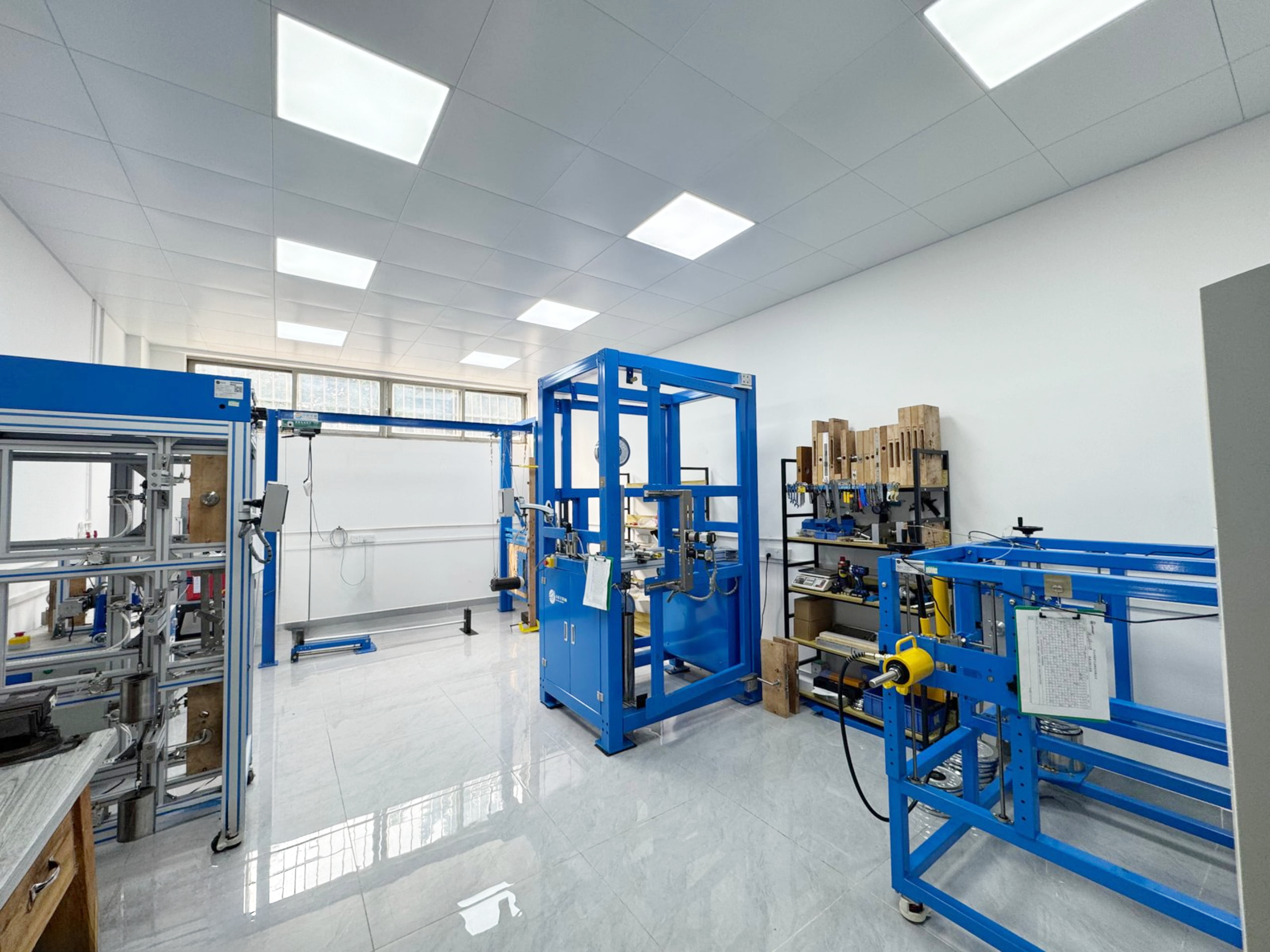
Why should a buyer visit or audit the supplier’s testing capability? A CE certified mortise lock supplier should not rely only on a certificate; it should also operate internal verification before and during production. In-house testing helps confirm that engineering changes, tooling updates, component lots and surface finishes remain controlled before products reach the project site.
What should buyers ask about durability testing? Buyers should ask whether the supplier can verify latch action, lever operation, deadbolt operation, return force, closing force and long-term cycling under controlled test conditions. TOPTEK’s internal laboratory can conduct durability testing up to 1,000,000 cycles for development and quality validation, while certification data should always be checked against the official report scope.
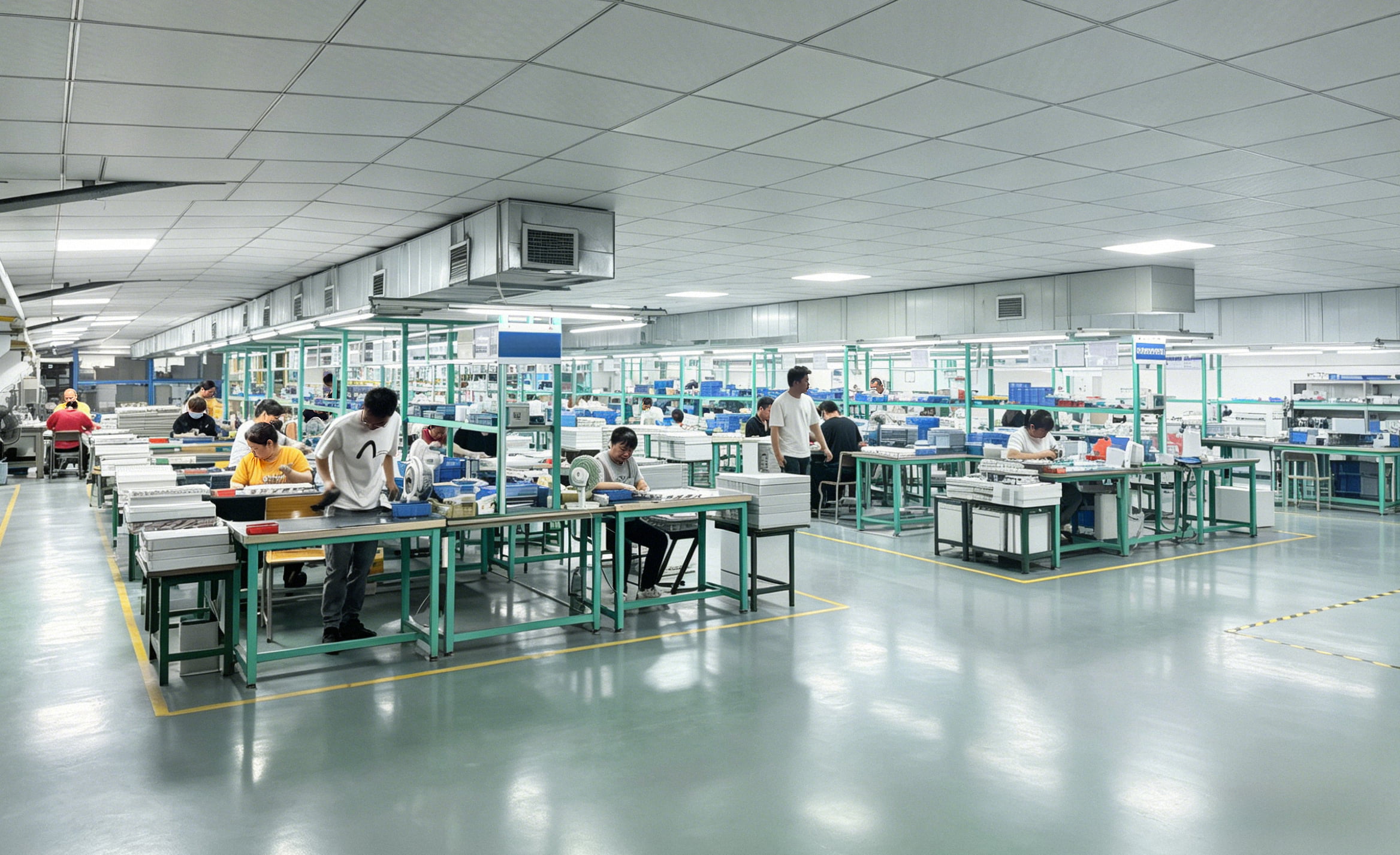
What production controls reduce batch inconsistency? First Article Inspection, incoming material inspection, in-process inspection, electroplating inspection, assembly inspection and final sampling inspection reduce the risk that mass production differs from the approved sample. For a door manufacturer or distributor, this process is essential when ordering thousands of EN 12209 Grade 3 mortise lock bodies.
Why do CNC and stamping capabilities matter for a mortise lock case? Precision machining and controlled stamping help keep lock case dimensions, screw positions, latch alignment, follower alignment and strike compatibility stable. TOPTEK operates 50+ Japanese TSUGAMI CNC machines, 50+ Taiwan/Japan pneumatic punch presses, laser cutting, CNC bending, assembly and QC capabilities for commercial door hardware production.
How does factory scale affect project delivery? Factory scale matters because commercial projects require stable lead times, repeatable packaging, batch traceability and the ability to handle follow-up orders. TOPTEK operates a 13,000 square meter facility, employs 220+ staff, supports 20+ R&D engineers and has monthly production capacity above 200,000 commercial locksets.
Fire-Rated Door Projects: What Buyers Should Confirm
Can a CE certified mortise lock supplier guarantee use on every fire door? No. Fire-door suitability must be verified against the tested product, door construction, installation direction, local regulation, certificate scope and final project approval process. A CE certified mortise lock supplier can provide evidence, but the project team must confirm compatibility with the door assembly and local acceptance rules.
What fire test data is useful for TOPTEK EN 12209 mortise locks? TOPTEK’s certificate package includes EN 1634-1 fire-door suitability data, including 260 minutes for a single-leaf single-action swing steel fire door and 132 minutes for a timber composite fire door configuration. Buyers should use this evidence as part of project review, not as a blanket approval for all possible door constructions.
Why should fire-door evidence be checked before mass production? If the lock body, strike plate, fixing method, door material or installation method does not match the approved route, the project can face inspection delays or rework. This is why fire-rated EN mortise lock procurement should include certificate review, sample installation, door preparation review and a written compliance matrix.
Supplier Comparison: Trading Supplier vs Engineering Manufacturer
Why should buyers distinguish a trading supplier from an engineering manufacturer? A trading supplier may quote quickly, but an engineering manufacturer can review drawings, function logic, materials, testing, packaging, certification route and long-term project risk. For CE certified mortise lock supplier selection, this distinction affects quality stability and after-sales cost.
| Evaluation Area | Weak Supplier Risk | Strong CE Certified Mortise Lock Supplier Standard |
|---|---|---|
| Certificate evidence | Only sends a logo or vague CE claim | Provides certificate, model list, classification and project documentation |
| Function matching | Cannot explain real door behavior | Reviews sash, passage, deadbolt, bathroom, night latch, roller and escape functions |
| Material control | Uses unclear latchbolt and forend materials | Clarifies SS304, SS316, finish route, corrosion target and approved samples |
| Testing capability | No internal durability or installation verification | Runs internal lifecycle, strength, salt spray and installation-related checks |
| OEM/ODM process | Changes drawings without controlled approval | Uses requirement freeze, engineering review, sample approval, pilot run and ECN control |
| Mass production | Sample works but production batch fails | Controls FAI, IQC, IPQC, final inspection, packaging and traceability |
How should buyers convert this comparison into an RFQ? Buyers should send the door schedule, certification requirement, lock function, drawing, material, finish, packaging and target market to the supplier before asking for final price. This gives the European commercial mortise lock supplier enough information to quote accurately.
RFQ Checklist for CE Certified Mortise Lock Supplier Evaluation
What should be included in an EN 12209 Grade 3 mortise lock RFQ? A strong RFQ should define the lock function, backset, center distance, forend size, strike type, cylinder type, lever compatibility, door thickness, handing, finish, fire requirement, certification expectation, packaging and annual volume. Without these details, different suppliers may quote different products under the same name.
| RFQ Item | Buyer Should Specify | TOPTEK Support |
|---|---|---|
| Lock function | Sash, passage, deadbolt, bathroom, night latch, roller, escape or custom function | Function review and model recommendation |
| Dimensions | Backset, center distance, case size, forend width, forend length and fixing holes | Technical drawing and sample confirmation |
| Standards | EN 12209, EN 1634-1, DIN 18251, EN 1906, EN 1303 or market-specific requirements | Certification document support and compliance matrix |
| Material | SS304, SS316, steel, finish, corrosion target and salt-spray hours | Material route and surface-treatment advice |
| Door type | Timber door, steel door, fire door, hotel door, school door, hospital door or office door | Project-based application review |
| Companion hardware | Lever handle, Euro profile cylinder, thumbturn, escutcheon, strike and fixing screws | Integrated commercial door hardware matching |
| Commercial terms | MOQ, target price, annual forecast, private label, packaging and delivery schedule | OEM/ODM quotation, sample route and bulk order planning |
Common Buyer Mistakes When Choosing a CE Certified Mortise Lock Supplier
Mistake 1: Treating CE as a Logo Instead of a Documented Scope
Why is this mistake dangerous? A CE logo alone does not prove that the quoted lock model, classification, intended use and fire-door suitability match the buyer’s project. Buyers should request the full certificate package and compare it with the model list, product drawing and quotation.
Mistake 2: Choosing Function Names Without Testing Door Behavior
Why can function names create project risk? The same function name may behave differently across suppliers, especially for night latch, classroom, roller latch and escape lock applications. Buyers should test the outside lever, inside lever, key, thumbturn, latchbolt, deadbolt and strike before sample approval.
Mistake 3: Ignoring Installation Debris and Door Preparation
Why does installation debris matter? Wood chips, drilling residue and poor door preparation can enter weak lock mechanisms and cause latch jamming or return failure. TOPTEK’s dust protection design helps reduce this risk, but correct installation and clean mortising remain essential.
Mistake 4: Comparing Price Without Comparing Material Structure
Why is a cheap lock case often expensive later? A low-price lock with weak latch construction, unstable finish or poor deadbolt structure can create service calls, replacement cost and customer complaints. Buyers should compare latchbolt material, deadbolt strength, forend thickness, strike design, plating route and corrosion testing.
Mistake 5: Approving Samples Without Batch Control
Why is sample approval not enough? A sample can work well while mass production fails if the factory lacks FAI, IQC, process inspection, finish control, tooling control and final performance checks. A CE certified mortise lock supplier should prove repeatability, not only sample-making ability.
Why TOPTEK for EN 12209 Grade 3 Mortise Lock Projects?
Why should project buyers consider TOPTEK as a CE certified mortise lock supplier? TOPTEK combines EN 12209 Grade 3 mortise lock manufacturing, CE documentation, in-house testing, precision production, OEM/ODM engineering, and commercial door hardware integration. This makes TOPTEK suitable for door manufacturers, distributors, contractors, fire door manufacturers, hardware brands and project procurement teams.
OEM/ODM Precision Manufacturing
How does TOPTEK support OEM/ODM buyers? TOPTEK supports requirement definition, compliance matrix review, product engineering, sample development, First Article Inspection, pilot production, mass production, packaging control and after-sales feedback. This structured OEM/ODM process helps buyers reduce redesign risk after market launch.
Factory and Engineering Capability
What factory capability supports project reliability? TOPTEK was established in 1991 and operates a 13,000 square meter factory with 220+ staff, 20+ R&D engineers, 50+ Japanese TSUGAMI CNC machines, 50+ pneumatic punching machines, laser cutting, bending, assembly and QC systems. These capabilities support consistent commercial lock production rather than small-batch trading supply.
Testing and Quality System
What quality systems improve E-E-A-T trust? TOPTEK operates under ISO 9001, ISO 14001 and ISO 45001 management systems and uses an in-house CE/UL-aligned testing laboratory for mechanical, electrical, durability, salt spray, impact, cylinder, deadbolt and environmental verification. This evidence supports TOPTEK’s credibility as an engineering-driven commercial door hardware manufacturer.
Integrated Product Range
Why does integrated product range matter for door projects? A commercial door project often needs more than one lock body, so TOPTEK can coordinate EN mortise locks with lever handles, cylinders, hinges, panic exit devices, multi-point locking systems and electronic locks. Buyers can also review related categories such as EN 1906 Lever Handle, Construction Cylinder, Electronic Lock and Access Control Devices, and Precision Hinges and Door Power Transfer Solutions.
FAQ: CE Certified Mortise Lock Supplier for Commercial Door Projects
What is a CE certified mortise lock supplier?
What does this supplier type mean? A CE certified mortise lock supplier is a manufacturer or project supplier that can provide mortise lock products with CE documentation, relevant EN standard evidence, model listing, product classification and project support. For European commercial projects, buyers usually check EN 12209 lock cases and fire-door suitability data.
Is EN 12209 Grade 3 enough for every commercial door?
Is one grade enough for all door types? No. EN 12209 Grade 3 helps define performance level, but buyers still need to confirm function, door type, fire rating route, cycle requirement, material, cylinder, lever handle and local project specification. The correct lock case depends on the complete door schedule.
Can TOPTEK supply fire-rated EN mortise locks?
Can TOPTEK support fire-rated door projects? TOPTEK can provide EN 12209 mortise lock documentation and fire-door suitability evidence for relevant models, including EN 1634-1 test context for steel and timber door configurations. Final use must be confirmed against the project’s door assembly and approval route.
What information should I send for a quotation?
What should a buyer send before asking for price? Send the door schedule, lock function, backset, center distance, forend size, strike requirement, finish, material, cylinder type, lever handle type, fire-door requirement, target market, packaging and order quantity. This allows TOPTEK to provide a more accurate EN 12209 Grade 3 mortise lock quote.
Does TOPTEK support OEM/ODM and private label projects?
Can TOPTEK support custom development? Yes. TOPTEK supports OEM/ODM development, private label supply, drawing review, sample testing, pilot production and mass production for commercial locks and architectural door hardware. For new designs, TOPTEK recommends confirming certification scope and engineering feasibility early.
What makes TOPTEK different from a trading supplier?
Why is TOPTEK different? TOPTEK is a China-based OEM/ODM manufacturer with 35+ years of lock manufacturing experience, precision production equipment, internal testing capability, ISO systems, R&D engineers and a broad commercial door hardware portfolio. This helps buyers reduce technical risk, supply risk and after-sales risk.
Conclusion: Choose a CE Certified Mortise Lock Supplier by Evidence, Not Only Price
What is the safest sourcing strategy for commercial door projects? Buyers should select a CE certified mortise lock supplier by verifying certificates, EN 12209 classification, fire-door data, function coverage, material structure, testing capability, factory control and OEM/ODM support. This approach helps reduce installation problems, inspection risk, batch inconsistency and long-term maintenance cost.
What project risk should buyers remember? The wrong EN 12209 mortise lock can cause door behavior failure, failed fire-door review, latch jamming, handle mismatch, cylinder incompatibility, finish corrosion, and expensive project rework. A well-qualified supplier should help buyers prevent these problems before sample approval and mass production.
What is TOPTEK’s product scope for global project buyers? TOPTEK Access is a China-based OEM/ODM manufacturer of commercial locks, architectural door hardware, and integrated access control locking solutions, supplying ANSI Grade 1 mortise locks, EN 12209 Grade 3 mortise locks, AS 4145 mortise locks, panic exit devices, multi-point locking systems, electronic locks, lever handles, cylinders, and hinges for global door manufacturers, distributors, contractors, and building projects.
How should buyers contact TOPTEK for the next step? Send your door schedule, drawings, standard requirement, fire-door expectation, lock function, material, finish, quantity and target market to TOPTEK for RFQ review, sample testing, OEM/ODM development or project configuration support. You can start from the fire-rated EN mortise lock product category or contact TOPTEK through www.toptekaccess.com.
What does TOPTEK stand for? TOPTEK stands for Commercial Door Hardware Reliability Solution. TOPTEK: Smart Design. Strong Security.