

CE Mortice Lock Set Guide: Matching the Lock Body, Lever Handle, Cylinder and Strike
Focus: mortice lock set
CE Door Hardware Buyer Guide | 27 August 2026
Author: Ivan He, TOPTEK | Technical review status: final engineering sign-off required before publication.
TL;DR
- A mortice lock set is a coordinated door-opening package, not simply a lock body placed beside unrelated accessories.
- Freeze the required function first, then match backset, centres, case, forend, strike and door preparation.
- Match the lever follower and spindle square, spindle length, trim fixing and springing as one interface.
- Match the Euro cylinder profile, cam, A/B length, function and key plan to the lock and finished trim.
- Approve the complete production-intent set in a representative door and frame before bulk release.
Quick Answer
What must be matched in a CE mortice lock set? The buyer must coordinate the lock body and function with the lever handle, follower and spindle, Euro cylinder and cam, forend and strike, door and frame preparation, fixings, finish and evidence. A correct individual component can still create a failed set when its dimensions or operating logic do not match the other parts.
1. Why a Mortice Lock Set Must Be Engineered as One Package
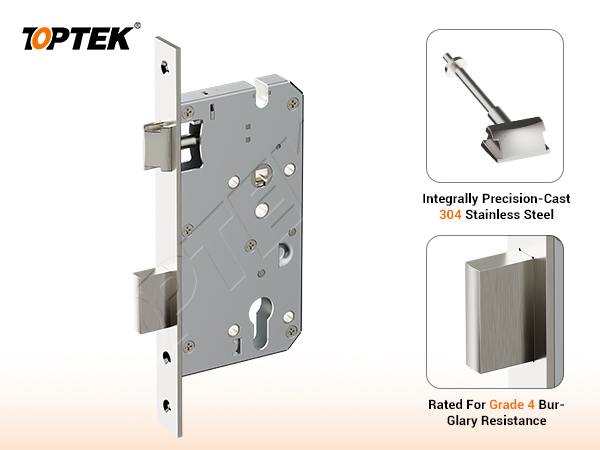
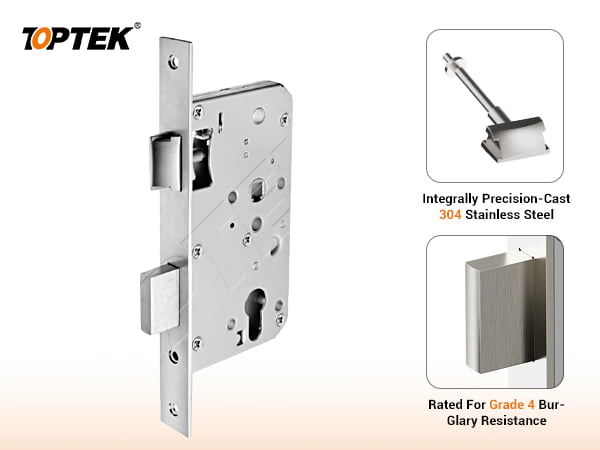
The phrase “mortice lock set” often appears in a purchase list as if it were a single product. In practice, it describes several mechanical interfaces working inside one door opening. The lock body establishes the function and dimensional axes. The lever and spindle retract the latch. The cylinder drives the specified locking action. The forend positions the lock at the door edge, and the strike receives the latch and deadbolt in the frame.
Choosing each item separately creates avoidable risk. A lever may fit the door but use the wrong spindle square. A cylinder may enter the profile aperture but have the wrong cam or length. A strike may look similar yet place the keep outside the bolt path. The buyer therefore needs one approved bill of materials, one coordinated drawing set and one fitted sample.
This page owns the complete-set purchasing intent. It links component-level questions to the existing guides rather than repeating the detailed measurement intent of replacement, case-depth, forend/strike, cylinder/spindle and RFQ articles.
2. Complete Mortice Lock Set Components
| Component | Control points | Approval evidence |
|---|---|---|
| Lock body | Function, backset, centres, case depth, handing | Model drawing and function test |
| Forend | Width, height, thickness, shape, finish | Door-edge preparation drawing |
| Strike | Keep geometry, thickness, lip, frame fixing | Frame preparation and fitted alignment |
| Lever trim | Rose/plate, fixing, springing, projection | Trim drawing and return test |
| Spindle | Square, length, split/solid function | Door-stack calculation and operation |
| Cylinder | Profile, cam, A/B length, key/turn function | Cylinder drawing and key test |
| Fixings | Material, length, thread, door/frame substrate | Installation pack |
3. Start with Lock Function, Not Appearance
A sash lock, deadlock, passage latch, night latch, bathroom lock, roller lock and escape lock do not provide the same door behavior. The hardware schedule must say who can open the door, from which side, by lever, key, thumbturn or another release, and what should happen when locked. Only then can the correct lock body and trim architecture be selected.
TOPTEK’s verified EN 12209 mortice lock product category contains multiple functions rather than one universal lock. The verified EN72SL page describes a sash function where the lever operates the latchbolt and the Euro profile cylinder operates the latchbolt and deadbolt. That operating description belongs to EN72SL; it must not be transferred automatically to another function.
Freeze the door schedule
Record door number, room use, handing, access direction, locking state, egress requirement, door and frame materials, fire or smoke requirement, and frequency of use. The schedule should identify whether the set is mechanical only or coordinates with electrified hardware.
4. Match Lock Body Dimensions to the Door
Backset, centre distance, case depth and forend size describe different features. The backset influences lever and cylinder position relative to the door edge. Centre distance establishes the relationship between the lever follower and cylinder. Case depth must fit the stile or door construction without conflicting with glass, reinforcement or edge details. The forend must match the prepared recess.
The EN72SL page lists 72 mm centres and backsets from 40 to 100 mm, but these are model options, not one configuration supplied automatically. The order and drawing must freeze the selected backset, follower option, forend width and shape. Buyers should use the dedicated case-depth and sash-lock guides for detailed measurement, then bring the approved values into the complete-set record.
5. Match Lever Handle, Follower and Spindle
The lever set must engage the lock follower without excessive play or binding. Confirm the follower square and spindle square as a matched pair. TOPTEK’s EN72SL data lists 8 by 8 mm and 9 by 9 mm follower options. The 72 mm centre distance does not determine which spindle square is supplied.
Calculate spindle length from the complete finished door and trim stack. Include roses or escutcheons, mounting plates and tolerances. Confirm whether the project needs a solid or split spindle, whether the lever set is sprung, how the two sides are fixed, and whether the lever return force coordinates with the lock spring.
For EN 1906 lever options, use the verified TOPTEK lever handle category as a range reference. Certification and fire-test statements must still match the exact selected lever model and assembly scope.
6. Match the Euro Cylinder and Keying
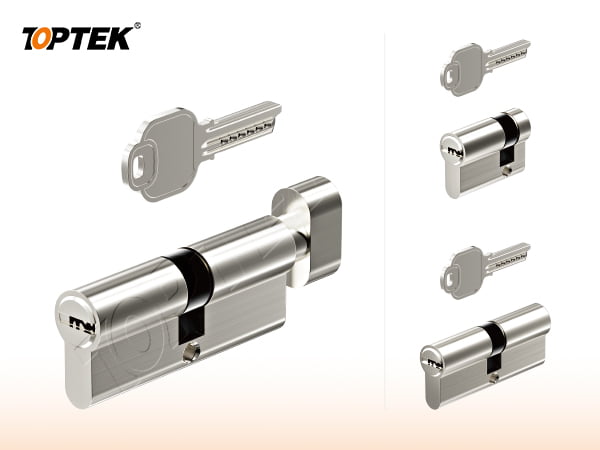
A Euro profile cut-out confirms the general cylinder form but not the complete interface. Buyers must confirm cam geometry and home position, fixing-screw location, permitted rotation, key/key, key/thumbturn or half-cylinder function, and the operation required from each side.
Measure the cylinder from the fixing-screw centre to each finished trim face and record oriented A/B dimensions. Excessive projection can increase exposure; a recessed cylinder can make key use difficult. Coordinate escutcheons and protectors before length approval. The verified EPCVK6P page is a product reference, but the final project configuration still requires a drawing, key plan and fitted sample.
Define keyed different, keyed alike or master-key relationships, key quantities, blank control and future replacement. Key authorization is part of the set even though it is not visible in the door preparation.
7. Match Forend, Strike and Door Gap
The lock will not operate reliably if the door-edge and frame parts are treated as decoration. Confirm forend height, width, thickness, radius or square corners, screw positions and finish. Match the strike to the latch and deadbolt positions, frame material and required lip or keep geometry.
Door gap, seals, frame adjustment and hinge alignment influence engagement. Test the latch under normal closing conditions and confirm the deadbolt reaches full projection without rubbing. Do not enlarge the strike opening to hide a dimensional mismatch. Record the approved strike and fixing in the set packaging list.
8. Buyer Compatibility Checklist
- Door number, function and access direction
- Exact lock model and revision
- Backset, centres and case depth
- Forend and strike dimensions
- Door and frame materials and preparations
- Follower and spindle square
- Spindle length and trim stack
- Lever springing and fixing method
- Cylinder profile, cam and A/B length
- Keying hierarchy and key quantities
- Handing and latch reversal
- Finish and corrosion environment
- Evidence required for the exact assembly
- Production-intent fitted sample
9. Common Buyer Mistakes
- Ordering a “mortice lock set” without listing its components.
- Selecting the lock body before defining door function.
- Confusing 72 mm centres with spindle size.
- Using door thickness alone to select spindle or cylinder length.
- Assuming every Euro cylinder cam works in every lock.
- Mixing lever and lock evidence from different models.
- Substituting a visually similar strike without alignment testing.
- Approving loose parts instead of an installed door set.
10. Project Risks and Controls
| Risk | Result | Control |
|---|---|---|
| Wrong function | Door does not meet access intent | Function matrix and door schedule |
| Wrong spindle interface | Lever play or incomplete retraction | Follower/spindle drawing and test |
| Wrong cylinder | Locking action fails or projection is unsafe | Cam and A/B approval |
| Strike mismatch | Binding or incomplete bolt engagement | Frame preparation and fitted sample |
| Evidence overreach | Unsupported approval claim | Verify exact scope through TOPTEK Resources |
11. TOPTEK Evidence and Product Range
TOPTEK’s internal EN 12209 materials, CE certificate file, product images, brand context and live product pages support the lock-family, manufacturing and component facts used here. Website statements were checked during this execution. A product-page statement remains model-specific; internal testing is not described as third-party certification.
The current product range includes 72, 78 and 85 series functions with related lever and cylinder categories. Buyers should start at the TOPTEK product portfolio, then freeze each component and evidence scope at model level.
12. Mortice Lock Set RFQ Checklist
- Project and target market
- Door schedule and lock function
- Door/frame drawings and materials
- Lock model, backset, centres and case
- Forend and strike geometry
- Lever model, rose/plate and fixing
- Follower/spindle square and length
- Cylinder type, cam and A/B length
- Keying plan and quantities
- Handing and finish
- Fire, smoke, egress or security requirements
- Required documents with model scope
- Packaging and set-marking rules
- Sample, drawing and revision approval owners
13. Why TOPTEK for Complete-Set Coordination
TOPTEK covers mortice lock bodies, EN 1906 lever handles and construction cylinders within one commercial door hardware program. This allows the project team to review the mechanical interfaces together and create one controlled set record for quotation, sample, production and site handover.
The boundary remains clear: product breadth does not remove the need for exact engineering approval. A repeatable set comes from controlled drawings, matched components, scoped evidence and a fitted production-intent sample.
Frequently Asked Questions
What is included in a complete mortice lock set?
A project-ready set normally includes the specified lock body and function, forend, strike plate, lever handles or trim, matched spindle, Euro profile cylinder where required, cylinder fixing screw, mounting hardware and the approved drawings and evidence. Exact contents must be stated on the schedule.
Can any lever handle be used with a mortice lock?
No. Confirm the centre distance, follower square, spindle square and length, lever fixing, springing, rose or escutcheon geometry, door thickness and required function. Approve the lever and lock together.
Can any Euro profile cylinder fit a CE mortice lock set?
A Euro profile opening alone is not enough. Confirm cylinder A/B length, cam geometry and orientation, fixing-screw position, key or thumbturn function, trim projection and keying plan.
Does a 72 mm mortice lock always use an 8 mm spindle?
No. The 72 mm value refers to the lever-to-cylinder centre distance. The follower and spindle square are separate specifications. TOPTEK EN72SL information lists 8 by 8 mm and 9 by 9 mm follower options.
Should the strike plate be ordered with the lock body?
Yes for a controlled project set. Match strike shape, thickness, lip or keep geometry, frame material, door gap and latch/deadbolt positions. A visually similar strike may not align or support the required operation.
What should buyers approve before mass production?
Approve the component schedule, exact model and function, dimensional drawings, finishes, handing, key plan, evidence scope, packaging list and a production-intent set installed in a representative door and frame.
Conclusion
A CE mortice lock set succeeds when its lock body, function, lever, spindle, cylinder, forend, strike, fixings and evidence are approved as one door-opening package. Freeze the schedule, prove every interface and sign the fitted sample before bulk release.