
Bathroom Mortise Lock Function: WC Privacy, Thumbturn & Emergency Release Explained by a Bathroom Lock Case Manufacturer
What does a buyer need to know before sourcing a bathroom mortise lock? A bathroom mortise lock function gives a WC, washroom, hotel bathroom, office toilet, or commercial restroom door privacy from the inside while still allowing emergency release from the outside. For door manufacturers, hardware distributors, project contractors, and architectural hardware buyers, the key is to match the bathroom lock case, lever handle, thumbturn, outside emergency release, indicator, strike plate, and EN 12209 project requirement as one door hardware set.
Why should this article matter to an EN 12209 buyer? Because a bathroom lock case manufacturer must explain function behavior, CE certificate scope, standard context, installation risk, and batch consistency before a buyer approves samples or sends an RFQ. TOPTEK builds EN 12209 Grade 3 mortise lock platforms for European commercial mortise lock applications, including bathroom lock, passage lock, mortise sash lock, deadbolt lock, night latch, classroom lock, escape lock, roller latch lock, and anti-thrust escape lock configurations.
TL;DR: Bathroom Mortise Lock Function in One Minute
What is the shortest answer? A bathroom mortise lock function uses a lever-operated latchbolt for daily access, an internal thumbturn to engage privacy locking, and an outside emergency release to open the door when urgent access is required. For B2B projects, the correct WC privacy lock should be reviewed together with EN 12209 lock case performance, CE certificate scope, lever handle compatibility, indicator trim, door preparation, fire-door requirements, and OEM/ODM supply stability.
Quick Answer: How Does a WC Bathroom Mortise Lock Work?
How does a WC bathroom mortise lock work in real use? The lever handle retracts the latchbolt, the inside thumbturn controls the privacy bolt or deadbolt, and the outside release allows emergency unlocking with a coin, screwdriver, or emergency tool depending on the trim design. This makes the bathroom lock case suitable for toilets, washrooms, hotel rooms, apartments, offices, hospitals, schools, public facilities, and commercial restroom doors where user privacy and emergency access must both be considered.
| Function Point | How It Works | Buyer Checkpoint |
|---|---|---|
| Lever handle operation | The lever retracts the latchbolt for normal entry and exit. | Confirm EN 1906 lever handle compatibility, spindle size, fixing method, and door thickness. |
| Inside thumbturn privacy | The internal thumbturn operates the privacy bolt or WC locking element. | Check thumbturn travel, trim compatibility, user comfort, and indicator alignment. |
| Outside emergency release | The outside release opens the privacy function in an emergency. | Confirm release method, tool access, and whether the project requires special emergency access rules. |
| Vacant / occupied indication | The outside indicator shows whether the room is free or in use. | Check indicator design, trim finish, and language / color preference for the market. |
Key Takeaways for Bathroom Lock Case Buyers
- A WC mortise lock is not a normal cylinder lock. It usually works with a thumbturn and emergency release set rather than a Euro profile cylinder.
- A bathroom mortise lock function is a privacy function. It should protect user privacy while still allowing emergency access from outside.
- EN 12209 matters for the lock case. Buyers should confirm durability, strength, security, function, CE certificate scope, fire-door project context, and the correct model listing.
- Hardware matching is critical. The lock case, lever handle, spindle, WC turn, indicator, release trim, strike plate, screws, and door preparation must match.
- OEM/ODM buyers should check batch consistency. A good sample is not enough if mass production cannot maintain the same latch movement, finish, spring force, and assembly accuracy.
What Is a Bathroom Mortise Lock Function?
What is the bathroom mortise lock function? It is a WC privacy locking function designed for bathroom, washroom, toilet, hotel, apartment, office, and public facility doors. The latchbolt handles normal door closing and opening, while the internal thumbturn provides privacy locking when the room is occupied.
What makes this different from an entrance lock? A bathroom mortise lock is not primarily designed for key control or high-security entrance locking. It focuses on privacy, simple operation, emergency access, and user-friendly indication; therefore, it normally pairs with a WC turn and release set instead of a profile cylinder.
What should a project buyer call this product in an RFQ? Use practical search and purchasing terms such as bathroom mortise lock, WC mortise lock, bathroom lock case, WC privacy lock, European bathroom lock, DIN bathroom lock case, and EN 12209 bathroom mortise lock. If the buyer is sourcing from a factory, the RFQ can also include bathroom lock case manufacturer, EN 12209 Grade 3 mortise lock supplier, or euro profile mortise lock EN 12209 supplier.
How the WC Privacy, Thumbturn, and Emergency Release Work Together
How does the lever handle work? The lever handle operates the latchbolt so users can open and close the door during normal daily use. In a hotel bathroom, apartment WC, or commercial washroom, the latchbolt keeps the door closed without forcing users to operate a key.
How does the internal thumbturn lock the door? The thumbturn on the inside controls the privacy bolt, deadbolt, or WC locking function, allowing the user to lock the bathroom door from inside without a key. This design is important in projects where convenience, privacy, and simple maintenance are more important than entrance-door key control.
How does the outside emergency release protect safety? The outside release allows staff, family members, or facility managers to unlock the privacy function in an emergency. Depending on the trim design, the release may work with a coin, screwdriver, or dedicated emergency tool, which helps in elderly-care, hotel, school, apartment, and public building applications.
How does the vacant / occupied indicator improve user experience? The indicator communicates room status before a user touches the lever, reducing unnecessary handle operation and user complaints. For high-traffic washrooms, a clear indicator also helps facility managers reduce confusion and service calls caused by wrong hardware selection.
EN 12209, CE Marking, and Fire-Door Context for Bathroom Mortise Locks
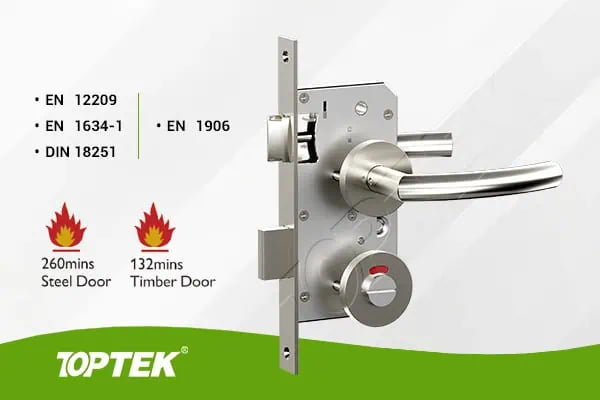
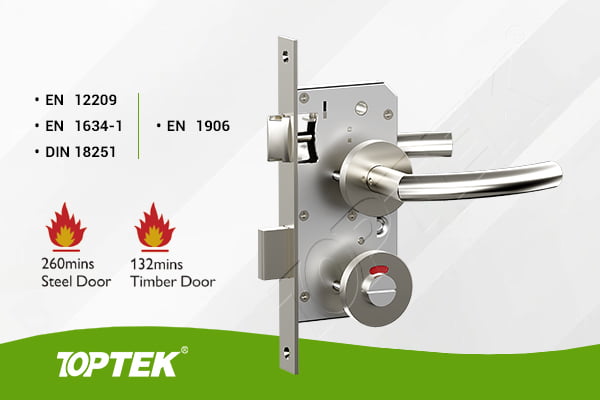
What does EN 12209 mean for a bathroom lock case? EN 12209 is the European standard context for mechanically operated locks and locking plates, including requirements and test methods for durability, strength, security, and functionality. For bathroom mortise lock buyers, this means the lock case should not be treated as a simple decorative item; it should be reviewed as part of a tested mechanical door hardware system.
Where can buyers check the standard context? Buyers can review EN 12209 information from testing and standards organizations before finalizing a project specification. Intertek describes EN 12209 as a harmonized standard under the Construction Products Regulation for CE Marking of mechanically operated locks and locking plates, while BSI lists EN 12209 information for mechanically operated locks and locking plates with product characteristics and test methods. See Intertek EN 12209 and BSI EN 12209 for authority reference.
Does CE marking automatically mean the bathroom lock is suitable for every fire door? No. Fire-door use depends on the complete door assembly, test evidence, hardware configuration, installation method, certificate scope, and local approval route, not only the lock case name. For fire-rated projects, buyers should verify the lock case, lever handle, latch behavior, door closer, hinges, seals, door leaf, frame, and project acceptance route together.
Why mention UL in a European bathroom lock article? UL is not the EN 12209 CE route, but UL door hardware testing and certification information helps global buyers understand fire-door and hardware evaluation logic for North American or cross-standard projects. Buyers working across Europe, North America, the Middle East, and Australia should keep CE / EN and UL / ANSI routes separate and confirm the required authority before sample approval. See UL door hardware testing and certification for fire and security hardware testing context.
TOPTEK CE Certificate Proof for EN 12209 Bathroom Lock Case
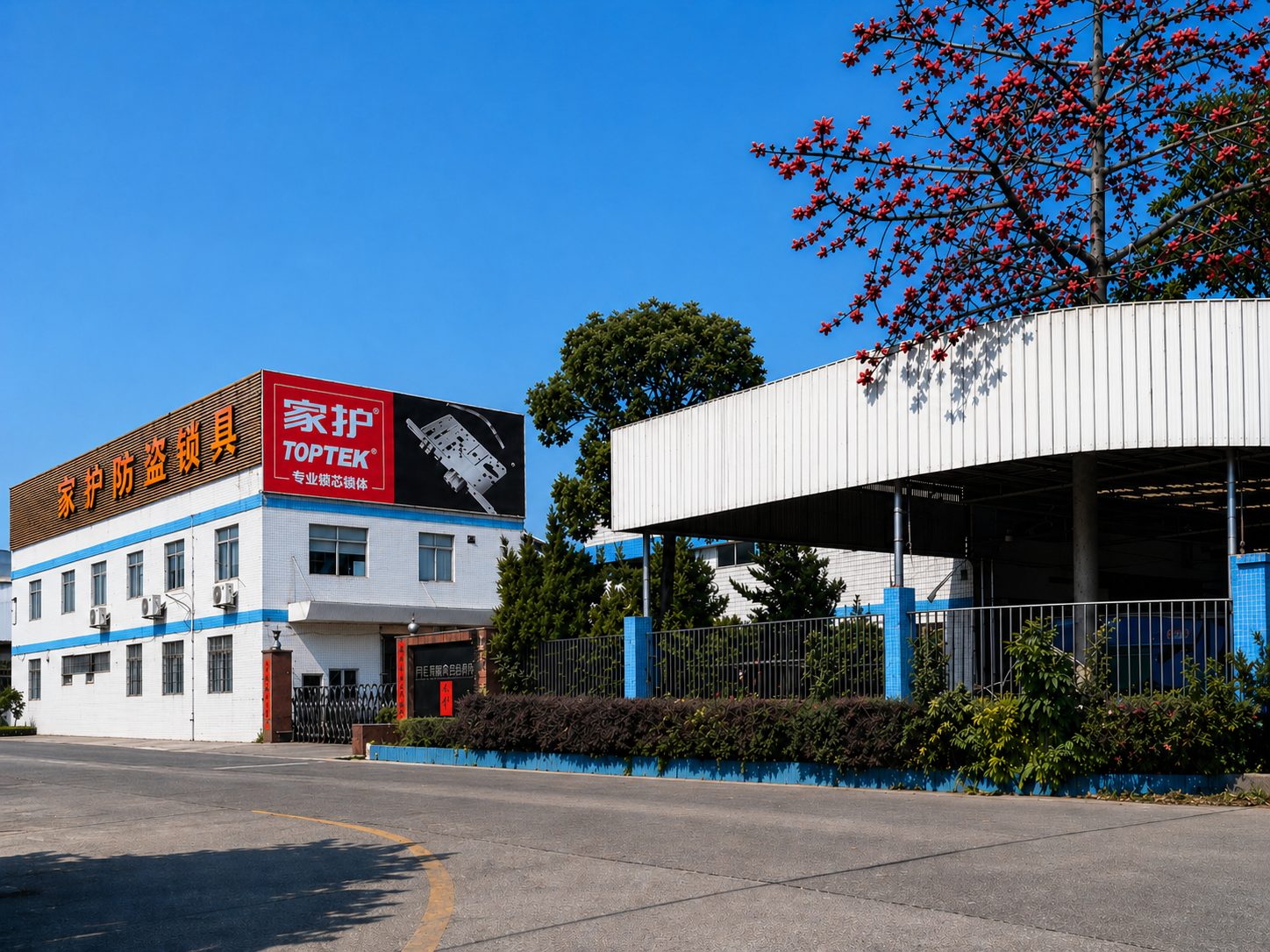
What CE evidence supports this bathroom lock case? TOPTEK EN 12209 bathroom lock models EN5578WCL, EN6078WCL, and EN6578WCL are listed in the Intertek Certificate of Constancy of Performance / CE Conformity No. 2649-CPR-26002201. The certificate covers building hardware — locks and latches — mechanically operated locks, latches, and locking plates, placed on the market under ZHONGSHAN TOPTEK SECURITY TECHNOLOGY CO., LTD.
Which standard is stated in the certificate? The certificate refers to EN 12209:2003 / AC:2005 under the Construction Products Regulation (EU) No. 305/2011. For B2B buyers, this gives the bathroom mortise lock function stronger technical credibility than a generic WC lock description, because the listed product belongs to the mechanically operated lock case scope.
What is the intended use stated by the certificate? The certificate states the intended use as fire resistance and/or smoke control doors. However, fire-door application must still be checked against the exact door assembly, installation method, project requirement, local approval route, and the certificate scope before final project approval.
Where can buyers review TOPTEK certificate resources? Buyers can visit the TOPTEK certification resources page to review available certification documents and discuss the correct certification route before project submission. For OEM/ODM projects, TOPTEK recommends confirming the model number, function, backset, door type, fire-door requirement, and local approval requirement before mass production.
“`
| Certificate Item | TOPTEK CE Certificate Information |
|---|---|
| Certificate Type | Certificate of Constancy of Performance / CE Conformity |
| Certificate No. | 2649-CPR-26002201 |
| Certification Body | Intertek Ibérica Spain S.L.U. |
| Notified Body | NB 2649 |
| Standard | EN 12209:2003 / AC:2005 |
| Spec ID | 92177 |
| Initial Registration Date | June 4, 2026 |
| Expiration Date | December 31, 2026 |
Certified Bathroom Lock Models Listed in the CE Certificate
Which WC bathroom lock models are listed? The Intertek CE certificate lists TOPTEK bathroom lock models EN5578WCL, EN6078WCL, and EN6578WCL, with the function described as: latch is operated by handle, deadbolt is operated by turn. This directly supports the article topic of WC privacy, thumbturn operation, and bathroom mortise lock function.
| Bathroom Lock Model | Backset | C-to-C Distance | Function Description |
|---|---|---|---|
| EN5578WCL | 55 mm | 78 mm | Latch operated by handle; deadbolt operated by turn. |
| EN6078WCL | 60 mm | 78 mm | Latch operated by handle; deadbolt operated by turn. |
| EN6578WCL | 65 mm | 78 mm | Latch operated by handle; deadbolt operated by turn. |
EN 12209 Product Classification and Fire-Door Suitability Context
What product classification is shown for the bathroom lock models? The CE certificate lists the bathroom lock models EN5578WCL, EN6078WCL, and EN6578WCL with the EN 12209 product classification 3 X 9 1 2 0 G – B G 2 0. Buyers should use this classification together with the full certificate and listing report when preparing project documentation or technical submittals.
What fire-door suitability information is shown? The certificate includes fire-door suitability data tested according to EN 1634-1:2014+A1:2018, showing 260 minutes E-Integrity for a single leaf steel fire door and 132 minutes E-Integrity / 132 minutes I-Insulation for a single leaf timber composite fire door. In real projects, this should be reviewed carefully with the complete door set, installation instructions, local authority requirements, and final project approval process.
“`
TOPTEK EN 12209 Grade 3 Bathroom Lock Case Platform
Which TOPTEK product family does this WC function belong to? The bathroom mortise lock function belongs to the TOPTEK EN 12209 Grade 3 Mortise Lock platform, covering 72, 78, and 85 series European lock case configurations. This platform supports multiple commercial lock functions, helping distributors and door manufacturers consolidate sourcing under one European commercial mortise lock family.
What engineering details should buyers notice? TOPTEK uses a 1.5 mm lock body cover and a one-piece investment-cast stainless steel 304 latch assembly on the EN 12209 platform, reducing the loosening risk associated with traditional riveted latch structures. The platform can also support finish options for faceplate, strike plate, latch, and bolt components, and 316 stainless steel options can be discussed for higher corrosion-resistance requirements.
How does the dust cover help during installation? The dust protection cover helps reduce the risk of wood chips and installation debris entering the lock mechanism during door preparation. In real projects, debris inside the lock body can cause latch jamming, rough operation, or privacy locking failure, so this small detail can reduce after-sales cost for door factories and contractors working with timber doors.
How should buyers read the deadbolt strength data? Selected TOPTEK EN 12209 platform deadbolt versions can support high security performance, including Grade 4 deadbolt testing logic with axial pressure up to 5,000 N and side pressure up to 7,000 N. For bathroom lock cases, buyers should confirm whether the WC privacy version uses a privacy bolt structure or a different locking element, because entrance security data should not be confused with WC privacy function data.
Hardware Matching: Lock Case, Lever Handle, Thumbturn, Release, and Indicator
What hardware must be matched with a bathroom lock case? A complete WC door set normally includes the lock case, lever handle, spindle, internal thumbturn, outside emergency release, indicator, strike plate, fixing screws, and door preparation template. If one part is mismatched, the door may latch poorly, the indicator may not align, or the thumbturn may feel stiff.
| Hardware Item | Purpose | TOPTEK Buyer Recommendation |
|---|---|---|
| Bathroom lock case | Controls latch and WC privacy locking behavior. | Confirm EN 12209 Grade 3 mortise lock specification guide, backset, centres, forend width, handing, and strike. |
| Lever handle | Retracts the latchbolt for normal opening. | Match with EN 1906 Lever Handle options for commercial durability and anti-sag performance. |
| WC thumbturn | Locks privacy function from inside. | Check spindle size, turning angle, trim thickness, user comfort, and finish consistency. |
| Emergency release | Unlocks from outside during urgent situations. | Confirm coin release, screwdriver release, or project-specific release tool before sample approval. |
| Vacant / occupied indicator | Shows whether the room is in use. | Confirm indicator color, text, window design, and trim alignment with the lock case. |
| Strike plate and screws | Support latching, alignment, and installation strength. | Check door frame material, screw length, strike lip, and on-site installation tolerance. |
Bathroom Mortise Lock vs Passage Lock vs Sash Lock vs Classroom Lock
Why should buyers compare functions before ordering? Because the wrong mortise lock function can make a door behave incorrectly even when the lock body fits the cut-out. A bathroom door needs privacy and emergency release; a passage door needs free movement; a sash lock needs key locking; and a classroom function needs controlled access with safe egress logic.
| Lock Function | Main Behavior | Best Application | Common Buyer Risk |
|---|---|---|---|
| Bathroom mortise lock | Inside thumbturn privacy locking plus outside emergency release. | WC, washroom, toilet, hotel bathroom, office restroom. | Ordering a cylinder lock when the project needs WC privacy trim. |
| Passage lock | No privacy locking; lever retracts latch only. | Corridors, internal passage doors, low-risk rooms. | Using it on bathroom doors where privacy is required. |
| Mortise sash lock | Lever latch plus key-operated deadbolt. | Office doors, apartment entrance doors, service doors. | Using a key-locking function where emergency access should be tool-operated. |
| Classroom lock | Outside key control with inside free egress depending on function design. | Schools, training rooms, education buildings. | Confusing classroom function with WC privacy function. |
How to Choose a Bathroom Mortise Lock for Commercial Projects
What should buyers confirm first? Buyers should confirm the door application, privacy expectation, emergency access method, EN 12209 requirement, CE certificate scope, fire-door requirement, and trim style before discussing price. A low price does not help if the WC thumbturn does not align with the indicator or the latch does not work smoothly after installation.
Which dimensions should be checked? Buyers should confirm backset, centres, forend width, forend radius, case depth, spindle size, follower size, strike plate size, door thickness, and handing. In an EN 12209 Grade 3 mortise lock dimensions review, these details help avoid door preparation errors, frame misalignment, and batch rework.
Which materials should buyers specify? Buyers should specify the latch material, forend material, strike material, lock case cover, screw material, trim finish, corrosion requirement, and whether SS304 or SS316 is required for the project environment. For coastal hotels, public washrooms, hospitals, and high-humidity areas, corrosion resistance should be discussed before quotation.
When should a buyer ask for fire-door evidence? Buyers should ask for fire-door evidence whenever the WC lock is used on a fire-rated door, smoke-control door, hotel guest-room corridor door, healthcare door, or regulated public building door. TOPTEK can support certification-route discussion and direct buyers to TOPTEK certification resources, but the final acceptance must match the project door assembly and local authority requirement.
Real Project Risks When the WC Lock Function Is Selected Incorrectly
What happens when the wrong lock function is chosen? The door may fit the cut-out but fail the user behavior requirement, causing privacy complaints, emergency access problems, or replacement work after installation. This is common when a buyer orders a passage lock or sash lock because the size looks similar to a bathroom lock case.
What happens when installation debris enters the lock case? Wood chips, dust, and cutting residue can create rough latch movement, thumbturn resistance, or privacy bolt failure. For this reason, the dust cover in the TOPTEK Grade 3 lock body platform is a practical design detail for door factories and contractors working with timber doors.
What happens when sample quality is not repeated in mass production? The buyer may approve one good sample but receive inconsistent latch movement, trim fit, finish color, or operating force in bulk orders. TOPTEK reduces this risk through engineering review, First Article Inspection, in-process inspection, assembly inspection, in-house testing, and batch-to-batch quality control.
Why TOPTEK for EN 12209 Bathroom Lock Case OEM/ODM Projects?
Why should buyers consider TOPTEK as a bathroom lock case manufacturer? TOPTEK is an OEM/ODM precision manufacturer with more than 35 years of lock manufacturing experience, a 13,000㎡ factory, 220+ skilled employees, and 20+ R&D engineers. The company supports commercial locks, architectural door hardware, electronic mortise locks, and integrated access control locking solutions for global projects.
How does TOPTEK support precision manufacturing? TOPTEK operates 50+ Japanese TSUGAMI CNC Swiss-type machines with ±0.01 mm machining capability for relevant precision components, plus 50+ Taiwan/Japan high-precision pneumatic punch presses, laser cutting, bending, stamping, CNC machining, assembly, and QC processes. This production base supports stable supply for door manufacturers, lock brands, wholesalers, and project suppliers.
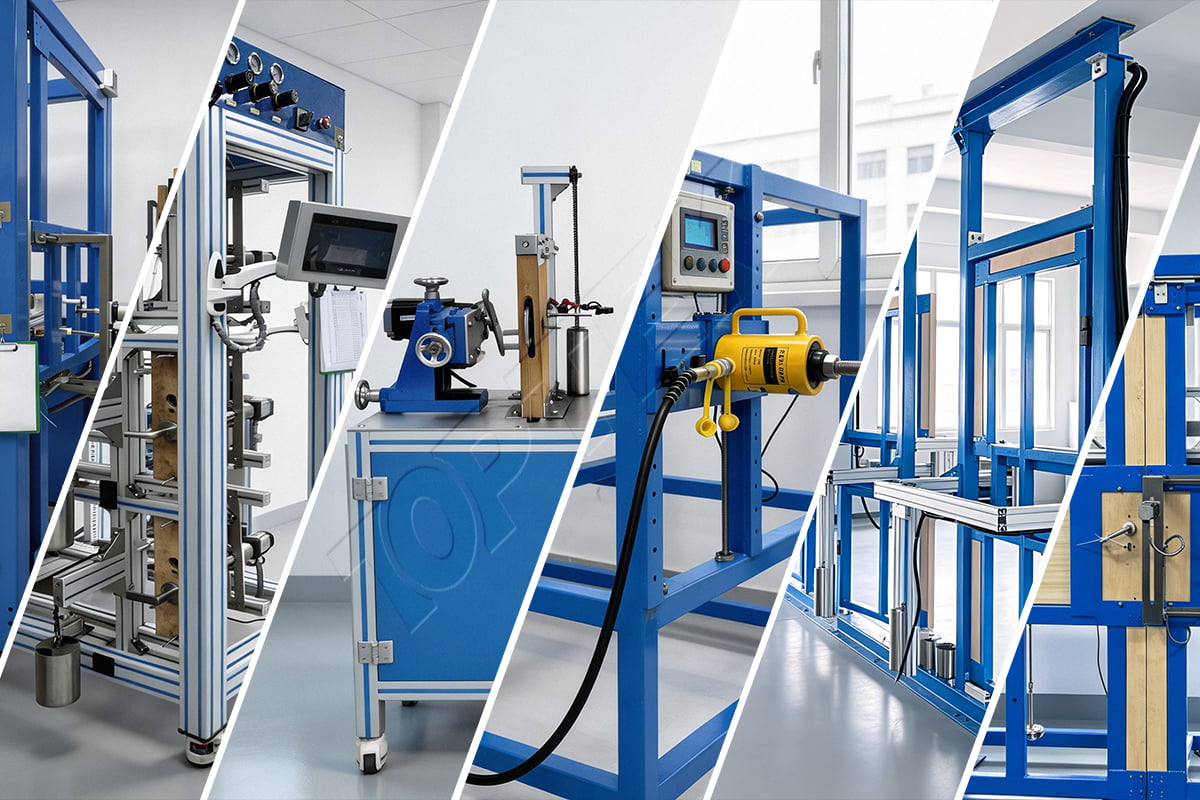
How does TOPTEK validate product reliability? TOPTEK operates an in-house CE / UL-aligned testing laboratory for mechanical durability, salt spray, impact, torque, temperature, cylinder, deadbolt, and electrical performance evaluation. For the EN 12209 platform, available internal testing routes include mechanical durability evaluation up to 1,000,000 cycles, while the CE certificate route should be checked according to the exact model and certificate scope.
How does TOPTEK support OEM/ODM development? TOPTEK supports requirement clarification, application analysis, compliance route review, drawing review, sample development, First Article Inspection, pilot production, mass production control, packaging validation, and after-sales feedback management. This is important for distributors and door brands that need a private label EN 12209 Grade 3 mortise lock factory rather than a short-term trading supplier.

RFQ Checklist for Bathroom Mortise Lock Projects
What should a buyer include in a bathroom lock case RFQ? A strong RFQ should describe the door application, lock function, EN 12209 expectation, CE certificate requirement, dimensions, material, finish, trim set, fire-door requirement, sample plan, and target order quantity. This helps the EN 12209 Grade 3 mortise lock manufacturer quote the correct product instead of guessing from a photo.
- Application: WC, bathroom, hotel room, apartment, office toilet, public washroom, hospital, school, or commercial facility.
- Function: Bathroom mortise lock with inside thumbturn, outside emergency release, and optional occupied/vacant indicator.
- Certificate expectation: Intertek CE certificate scope, listed model number, EN 12209 classification, fire-door project context, and local approval route.
- Standard expectation: EN 12209 lock case requirement, CE marking expectation, fire-door project context, and local approval route.
- Dimensions: Backset, centres, forend width, case depth, spindle size, follower size, strike plate, door thickness, and handing.
- Materials and finish: SS304 / SS316 option, faceplate finish, strike finish, latch finish, corrosion resistance, and salt spray target.
- Matching hardware: Lever handle, WC thumbturn, emergency release, indicator, screws, strike plate, and packaging requirements.
- Commercial terms: Sample request, quotation, MOQ, annual forecast, OEM/ODM branding, private label packaging, and certification document request.
Common Buyer Mistakes When Sourcing WC Bathroom Mortise Locks
Mistake 1: Treating a bathroom lock case as a simple low-cost latch
What is the real issue? A WC bathroom mortise lock must combine privacy, emergency release, latch reliability, trim compatibility, certificate scope, and project compliance in one function. When buyers only compare price, they often miss thumbturn feel, indicator alignment, latch smoothness, corrosion resistance, and after-sales replacement cost.
Mistake 2: Confusing cylinder locking with WC privacy locking
What should buyers remember? A bathroom mortise lock normally uses a thumbturn and emergency release, while a sash lock normally uses a cylinder and key. If a project requires WC privacy, the buyer should not automatically specify a Euro profile cylinder unless the door function truly requires key control.
Mistake 3: Ignoring fire-door project scope
What creates compliance risk? A lock case certificate alone does not make every fire-door installation compliant. Buyers should verify the complete door assembly, certificate scope, hardware compatibility, local regulation, installation instructions, and final approval route before using a bathroom mortise lock on fire-rated doors.
Mistake 4: Approving samples without checking mass production control
What causes bulk-order problems? Some suppliers can make a good sample but cannot keep the same latch movement, cover thickness, finish consistency, and assembly tolerance in mass production. Buyers should ask for inspection process, internal testing capability, batch control, packaging control, and traceability before placing high-volume orders.
FAQ: Bathroom Mortise Lock Function and EN 12209 Sourcing
What is a bathroom mortise lock?
What is the direct definition? A bathroom mortise lock is a WC privacy lock case installed inside the door edge to provide lever-operated latching, inside thumbturn privacy locking, and outside emergency release.
Does a bathroom mortise lock need a cylinder?
What is the normal answer? No. A standard WC bathroom mortise lock usually works with a thumbturn and emergency release set, not a Euro profile cylinder. A cylinder is normally used for sash locks, entrance locks, or key-control functions.
Can a bathroom mortise lock be opened from outside?
What should facility managers know? Yes. A WC bathroom mortise lock should include an outside emergency release so the privacy function can be opened in urgent situations. The release method depends on the outside trim design and project requirement.
Is EN 12209 important for bathroom mortise locks?
What should B2B buyers check? Yes. EN 12209 is important because it provides the standard context for mechanically operated lock cases and locking plates. Buyers should confirm the exact model, certificate scope, durability grade, fire-door context, and installation requirement.
Which TOPTEK bathroom lock models are listed in the Intertek CE certificate?
What models should buyers check? The listed TOPTEK bathroom lock models are EN5578WCL, EN6078WCL, and EN6578WCL, with 55 mm, 60 mm, and 65 mm backsets and 78 mm C-to-C distance.
Can TOPTEK support OEM/ODM bathroom lock case projects?
What can TOPTEK support? TOPTEK can support OEM/ODM bathroom lock case projects, EN 12209 Grade 3 mortise lock supplier requirements, private label packaging, sample testing, RFQ review, and project configuration discussion. Buyers can send drawings, door details, target standards, finish requirements, and certification expectations for review.
Conclusion: Specify the WC Function Before You Compare the Price
What is the final buying advice? Specify the bathroom mortise lock function first, then check EN 12209 requirements, Intertek CE certificate scope, emergency release design, indicator compatibility, lever handle matching, installation dimensions, material options, fire-door context, and factory consistency. A correct WC privacy lock reduces user complaints, installation rework, emergency access risk, and after-sales replacement cost.
What is the project risk summary? The main risks are wrong lock function, poor trim matching, weak latch structure, installation debris, unclear fire-door scope, low corrosion resistance, and inconsistent mass production. These risks matter more in hotels, apartments, schools, hospitals, offices, public buildings, and other high-traffic commercial washroom projects.
Why does TOPTEK fit this sourcing need? TOPTEK is a China-based OEM/ODM manufacturer with EN 12209 Grade 3 mortise lock platforms, Intertek CE certificate support, in-house testing capability, precision manufacturing, engineering review, and global project supply experience. Buyers looking for a European commercial mortise lock partner can use TOPTEK for bathroom lock case development, sample validation, RFQ review, and long-term OEM/ODM supply.
What does TOPTEK supply beyond bathroom lock cases? TOPTEK Access is a China-based OEM/ODM manufacturer of commercial locks, architectural door hardware, and integrated access control locking solutions, supplying ANSI Grade 1 mortise locks, Grade 3 lock body solutions, AS 4145 mortise locks, panic exit devices, multi-point locking systems, electronic locks, lever handles, cylinders, and hinges for global door manufacturers, distributors, contractors, and building projects.
What should the buyer do next? Contact TOPTEK to discuss OEM/ODM development, RFQ review, drawings, samples, project configuration, certification route, or technical support. TOPTEK stands for Commercial Door Hardware Reliability Solution. TOPTEK: Smart Design. Strong Security.