

Why should buyers evaluate the complete door hardware set instead of the lock body alone? The night latch function depends on the EN 12209 lock case, the EN 1906 lever handle, and the EN 1303 cylinder working together; if one component is mismatched, the door may latch poorly, create user complaints, or fail the project specification.
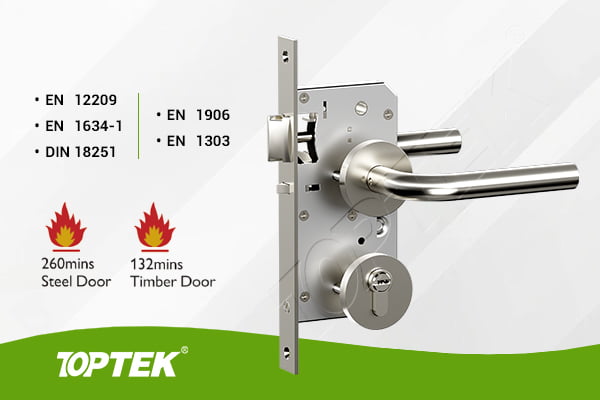
TL;DR: Night Latch Mortise Lock in One Minute
What is the fastest way to understand a Night Latch Mortise Lock? A Night Latch Mortise Lock automatically latches when the door closes; the outside side is controlled by the Euro profile cylinder, while the inside lever handle retracts the latch for free egress.
What should a project buyer specify? Specify an EN 12209 Grade 3 Mortise Lock, a compatible EN 1906 Lever Handle, and a tested Construction Cylinder before confirming samples, door preparation, fire-door compatibility, finish, and master key planning.
Quick Answer: What Is a Night Latch Mortise Lock?
What does night latch function mean in a European mortise lock case? Night latch function means the door is automatically held by the latch bolt when closed. From outside, the latch bolt is normally retracted by the cylinder key because the outside lever is fixed, disabled, or not connected to the latch operation. From inside, the lever handle retracts the latch bolt for easy exit.
Where is a Night Latch Mortise Lock commonly used? This function is commonly used on apartment entrance doors, office entrance doors, hotel guestroom doors, staff doors, and commercial doors where outside entry must be controlled but inside exit remains convenient.
Which standards should buyers consider? EN 12209 is the mechanical lock and locking plate standard context for the lock case, EN 1906 is the lever handle and knob furniture standard context, and EN 1303 is the cylinder standard context. For fire-rated doors, buyers should also check the complete tested door assembly and the project certification route with the door manufacturer, testing body, and local authority.
Key Takeaways for Door Manufacturers and Hardware Distributors
- Night latch is a function, not only a product name. The real behavior is outside key access and inside lever-handle egress.
- The lock case controls the door behavior. The EN 12209 lock case must match the cylinder cam, lever spindle, strike plate, door handing, and door preparation.
- The handle affects user experience. A weak lever handle can sag, loosen, or fail to return properly even when the lock case is correctly selected.
- The cylinder controls access security. EN 1303 cylinder selection affects key control, master key planning, anti-drill performance, and long-term project management.
- The supplier must control batch consistency. One approved sample is not enough; mass production must keep the same function, finish, tolerances, and closing feel.
Standards Context: EN 12209, EN 1906, EN 1303 and Fire-Door Review
Why is EN 12209 important for a Night Latch Mortise Lock? EN 12209 covers mechanically operated locks and locking plates, including product characteristics and test methods for mechanical lock cases. For a night latch project, this makes EN 12209 the correct standards context for evaluating the lock body, latch operation, durability, security grade, and locking plate compatibility. Buyers can review the official BSI standard overview here: BSI EN 12209 mechanically operated locks and locking plates standard overview.
Why is a testing-lab reference useful for EN 12209 projects? A standards body explains the scope of the standard, while a testing and certification organization helps buyers understand how lock cases may be evaluated for project documentation. Buyers can also review Intertek’s EN 12209 testing context here: Intertek EN 12209 testing information.
Why is EN 1906 important when matching lever handles? EN 1906 is important because the inside lever handle performs the daily egress action. A commercial door may pass the lock case sample test but still create service problems if the lever handle has poor return force, weak spring structure, insufficient fixing strength, or visible handle sag after high-frequency operation.
Why is EN 1303 important when selecting the cylinder? EN 1303 is important because the cylinder is the outside operating and key-control component. In apartment, hotel, school, and office projects, the cylinder decision affects keyway control, anti-drill resistance, master key hierarchy, emergency access planning, and after-sales management.
Can a Night Latch Mortise Lock be used on fire-rated doors? It can be considered for fire-rated door projects only when the complete door assembly, including the lock case, handle, cylinder, strike, door leaf, frame, seals, and installation method, is reviewed against the correct certification route. UL also provides door hardware testing and certification information for projects that need product safety and fire-door hardware review: UL door hardware testing and certification.
How Does the Night Latch Function Work?
What happens when the door closes? The latch bolt projects into the strike plate and keeps the door closed automatically. This reduces the risk of an entrance door being left unlatched after use, especially in apartments, offices, hotels, staff areas, and commercial buildings.
What happens from the outside? The outside lever is usually fixed, blank, or disabled for latch operation. Users must use the Euro profile cylinder and key to retract the latch bolt, which gives the door controlled access without requiring the deadbolt to be thrown every time.
What happens from the inside? The inside lever handle retracts the latch bolt directly. This inside operation is convenient for daily use and supports free egress from the protected side of the door, as long as the project does not require a different escape-lock or panic-exit function.
What is the difference between a night latch and an escape mortise lock? A night latch focuses on outside access control and inside convenience. By contrast, an escape mortise lock may require a defined emergency egress behavior, such as single-action release of latch and deadbolt, and should be specified separately when EN 179, EN 1125, or local life-safety requirements apply.
How to Match the EN 12209 Lock Case, EN 1906 Handle and EN 1303 Cylinder
How should buyers start the matching process? Buyers should start from the real door behavior: outside key access, inside lever exit, door material, door thickness, backset, center distance, strike type, handing, fire-door requirement, and key-control plan. After that, the hardware set can be specified as one system instead of three separate products.
Which lock case should be selected first? Select the European commercial mortise lock first because the lock case defines the latch action, cylinder interface, spindle position, strike alignment, and door preparation. For TOPTEK’s EN platform, the 72 / 78 / 85 series can support multiple functions, including night latch, sash lock, passage, deadbolt, bathroom, classroom, roller latch, escape, and anti-thrust escape configurations.
Which lever handle should be matched to the inside operation? Match an anti-sag lever handle that supports the required spindle, rose or backplate design, through-bolt fixing, finish, and project duty cycle. For high-frequency doors, the handle should return reliably and avoid visible sag because the inside lever is the user’s daily exit component.
Which cylinder should be matched to the outside operation? Match a Euro profile cylinder with the correct cam, length, keyway, finish, security level, and master key system. For multi-door projects, the cylinder schedule should be planned before mass production, not after the doors arrive on site.
Specification Table: What Should Buyers Confirm Before Ordering?
What information should be included in a Night Latch Mortise Lock specification? A complete specification should connect door function, lock case, handle, cylinder, fire-door review, finish, and testing evidence into one approval package.
| Specification Area | Buyer Decision | Why It Matters | TOPTEK Recommendation |
|---|---|---|---|
| Lock function | Night latch: outside key, inside lever | Defines real door behavior and user access control | Confirm function sample before RFQ approval |
| Lock case standard | EN 12209 mechanical lock case context | Supports durability, security, and locking plate evaluation | Use TOPTEK EN72NL or matched 72 / 78 / 85 platform configuration |
| Lever handle | EN 1906 lever handle, Grade 3 or Grade 4 depending on application | Controls inside egress feel, return force, fixing stability, and anti-sag performance | Use stainless steel EN 1906 lever handles for commercial traffic doors |
| Cylinder | EN 1303 cylinder, correct cam and length | Controls outside access, master key planning, and security level | Plan key hierarchy and cylinder schedule before bulk order |
| Fire-door project | Assembly-level review with the door manufacturer and authority | Fire approval depends on the complete tested assembly, not only one component | Request current certificate, DoP, and tested configuration before approval |
| Finish and material | Stainless steel, plated finish, or project-specific color | Impacts corrosion resistance, design consistency, and long-term appearance | Confirm master finish sample and keep it for batch comparison |
TOPTEK EN72NL Night Latch Mortise Lock for European Commercial Doors
Which TOPTEK lock case is suitable for the night latch topic? TOPTEK EN72NL is the dedicated Night Latch Mortise Lock model within the Grade 3 lock body platform. It is designed for European-style door sets where the outside side requires key-controlled access and the inside side requires simple lever-handle egress.
What engineering details help TOPTEK reduce project risk? TOPTEK’s EN 12209 platform uses a 1.5 mm lock case cover, a one-piece investment-cast stainless steel 304 latch component, and an integrated dust protection cover to reduce the risk of latch looseness, debris entry, jamming, and inconsistent operation during installation.
What security detail should buyers notice? TOPTEK’s deadbolt structure can support Security Grade 4 performance on relevant configurations, with axial pressure and side pressure resistance targets used for higher security requirements. For night latch projects that also require deadbolt locking, buyers should confirm the exact function, classification code, and certificate route before approval.
What fire and durability evidence should buyers request? Buyers should request the current datasheet, CE documentation, fire-test context, and sample test plan. TOPTEK’s EN 12209 platform includes third-party certificate references and internal laboratory validation, but the final project approval should always match the real door assembly and local authority requirements.
Function Comparison: Night Latch vs Sash Lock vs Passage Lock vs Escape Lock
Which function is correct for the door? The correct function depends on whether the door needs outside key access, inside free egress, privacy, deadbolt locking, emergency escape, or simple passage operation.
| Function Type | Outside Operation | Inside Operation | Common Application | Main Project Risk if Wrong |
|---|---|---|---|---|
| Night Latch Mortise Lock | Key retracts latch bolt | Lever retracts latch bolt | Apartment, office, hotel, staff entrance | Wrong outside lever behavior or poor access control |
| Mortise Sash Lock | Lever for latch, key for deadbolt | Lever for latch, key or thumbturn for deadbolt | General commercial doors | User expects night latch behavior but outside lever opens the door |
| Passage Lock | Lever opens latch | Lever opens latch | Internal passage doors | No access control on entrance doors |
| Escape Lock | Project dependent | Emergency egress operation | Emergency exit and life-safety doors | Life-safety non-compliance if the wrong function is used |
Application Guide: Where Should a Night Latch Mortise Lock Be Used?
Is a Night Latch Mortise Lock suitable for apartment entrance doors? Yes, it is suitable when residents need the door to latch automatically after closing while keeping outside access controlled by key. For multi-unit projects, buyers should also define master key levels and cylinder replacement rules.
Is a Night Latch Mortise Lock suitable for offices and commercial entrances? Yes, it is suitable for staff doors, office suites, service corridors, and controlled commercial entrances where the outside side should not open freely. However, traffic level, closer force, strike alignment, and user behavior must be checked during sample approval.
Is a Night Latch Mortise Lock suitable for hotel projects? It can be suitable for selected back-of-house or guestroom-adjacent applications, depending on the access-control strategy. If the project requires electronic credentials, monitoring outputs, or remote release, TOPTEK can also review Electronic Lock and Access Control Devices as a separate solution path.
Is a Night Latch Mortise Lock suitable for school and hospital doors? It can be used on controlled doors, but schools and hospitals often have stricter life-safety, fire-door, accessibility, and facility management requirements. Buyers should confirm whether classroom, storeroom, escape, or anti-thrust escape function is more suitable than night latch for each opening.
Installation and Door Preparation Risks
Why do night latch projects fail even when the sample looks correct? Many failures come from door preparation, not the lock concept. Misaligned strikes, wrong cylinder cam, wrong spindle length, incorrect handing, excessive closing force, and wood chips entering the lock body can make a good sample perform badly on site.
How does a dust cover help during installation? A dust cover helps reduce the risk of wood chips, drilling debris, and installation residue entering the internal mechanism. This is important for wooden doors, retrofit projects, and job sites where door preparation quality varies between installers.
Why should buyers test the full door hardware set? The lock case, lever handle, cylinder, strike plate, door closer, hinge alignment, and door leaf movement all affect closing and latching. A night latch function should be approved through a complete installed sample, not only by holding the lock body in hand.
Common Mistakes to Avoid When Sourcing Night Latch Mortise Locks
Mistake 1: Treating Night Latch as Only a Product Name
What should buyers check first? Buyers should check the real operation: outside key retraction, inside lever egress, latch projection, deadbolt requirement, cylinder cam, and strike engagement. Function behavior is more important than the catalogue name.
Mistake 2: Selecting the Handle Only by Appearance
Why is handle structure more important than surface design? The inside lever is used every day for egress. If the spring, spindle support, fixing structure, or bearing support is weak, the handle may sag or feel loose even though the lock case still works.
Mistake 3: Leaving Cylinder Planning Until the End
Why should cylinder planning be done before mass production? Cylinder length, finish, cam type, keyway, key system, and master key hierarchy affect the whole project schedule. Late cylinder changes can delay doors, create key-control confusion, and increase rework cost.
Mistake 4: Ignoring Fire-Door Assembly Logic
Why is component certification not enough for fire-rated doors? Fire-rated door approval normally depends on the tested door assembly and project acceptance route. Buyers should confirm whether the selected lock case, EN 1906 handle, EN 1303 cylinder, strike, door leaf, and frame match the approved configuration.
Mistake 5: Approving One Sample Without Batch Control
Why can one good sample still lead to project problems? If the factory cannot control material, machining tolerance, plating color, assembly force, and functional testing, mass production may differ from the approved sample. This is why supplier manufacturing control matters as much as the first sample.
Why TOPTEK for EN 12209 Night Latch Mortise Lock Projects?
Why is TOPTEK suitable for OEM/ODM Night Latch Mortise Lock projects? TOPTEK is an OEM/ODM precision manufacturer of architectural hardware, mechanical locks, electronic mortise locks, and integrated access control projects, with more than 35 years of lock manufacturing experience and a full product portfolio for commercial door hardware.
What manufacturing capability supports stable supply? TOPTEK operates a 13,000 square meter manufacturing facility with more than 220 skilled employees, 20+ R&D engineers, 50+ Japanese TSUGAMI CNC Swiss-type machines, high-precision punching, laser cutting, bending, stamping, CNC machining, assembly, and quality control capability.
What quality system supports batch consistency? TOPTEK uses incoming material inspection, first article inspection, in-process inspection, patrol inspection, plating color comparison, assembly checks, and controlled sample approval. For OEM/ODM projects, TOPTEK also supports drawing review, sample development, pilot production, mass production control, and after-sales feedback.
How does TOPTEK support complete door hardware matching? TOPTEK can match the EN mortise lock with an EN 1906 Grade 4 lever handle, a project master key cylinder, strike plates, finishes, hinges, and related project hardware, helping buyers avoid fragmented sourcing.
Testing and Production Proof for Commercial Door Hardware Reliability
How does TOPTEK validate durability before mass production? TOPTEK uses in-house laboratory testing to evaluate mechanical durability, handle torque, impact resistance, cylinder resistance, deadbolt strength, corrosion resistance, and high-low temperature performance before third-party certification and mass production where applicable.
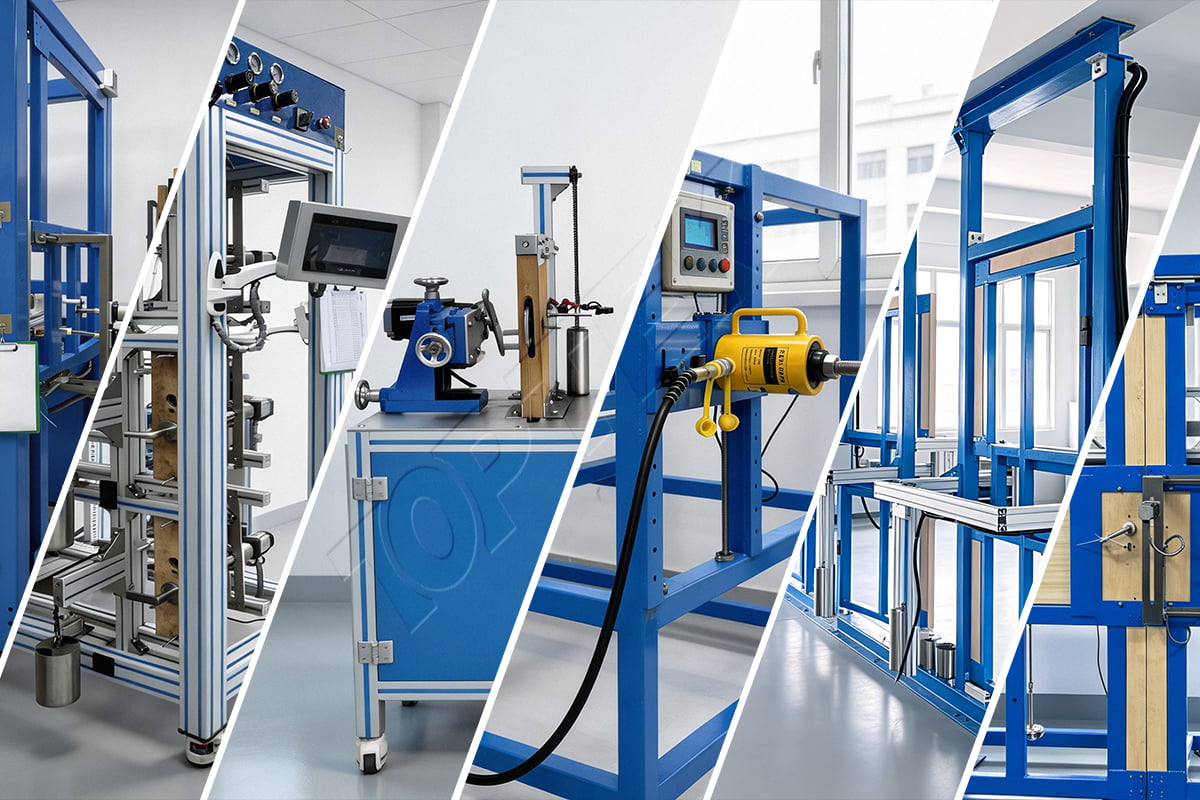
How does production control protect the approved sample? TOPTEK controls mass production through drawing approval, material verification, process inspection, assembly checking, and batch comparison. This reduces the risk that the approved Night Latch Mortise Lock sample performs differently from bulk order delivery.
Why should buyers evaluate the manufacturer behind the product? A Night Latch Mortise Lock is a small component inside a larger door system, but its failure can create security, fire-door, and after-sales risks. For this reason, buyers should evaluate engineering support, testing capability, documentation, and production stability before choosing a supplier.

RFQ Checklist: What Should You Send Before Asking for a Quote?
What makes a Night Latch Mortise Lock RFQ accurate? A useful RFQ should include the door application, exact function, lock case size, handle style, cylinder requirement, finish, compliance expectation, quantity, and approval route. The more precise the RFQ, the faster TOPTEK can confirm the correct configuration and quotation.
- Door type: timber door, steel door, aluminum door, fire-rated door, or retrofit door
- Application: apartment, office, hotel, hospital, school, corridor, staff entrance, or commercial entrance
- Function: Night Latch Mortise Lock, sash lock, passage, classroom, escape, or other function
- Lock case: EN72NL or required 72 / 78 / 85 series configuration
- Handle: rose or backplate, EN 1906 Grade 3 or Grade 4, finish, fixing type, and lever design
- Cylinder: Euro profile cylinder length, cam, keyway, keyed alike, keyed different, or master key system
- Compliance: EN 12209, EN 1906, EN 1303, fire-door requirement, CE documentation, and project certification route
- Quantity: sample order, pilot order, bulk order, OEM/ODM plan, private label requirement, and delivery schedule
Frequently Asked Questions (FAQ) about Night Latch Mortise Locks
What is a Night Latch Mortise Lock?
A Night Latch Mortise Lock is a mortise lock function where the door latches automatically after closing, outside access is controlled by the cylinder key, and inside exit is operated by the lever handle. It is commonly used on apartment, office, hotel, and commercial entrance doors.
Is a Night Latch Mortise Lock the same as an EN 179 escape lock?
No, a Night Latch Mortise Lock is not automatically the same as an EN 179 escape lock. Night latch focuses on controlled outside access and inside convenience, while EN 179 escape hardware must meet emergency exit requirements and should be specified separately when required by the project.
Which handle should be used with a night latch lock case?
An EN 1906 lever handle should be selected according to the door traffic level, fixing method, spindle compatibility, finish, fire-door requirement, and anti-sag performance. For commercial doors, TOPTEK normally recommends a stronger stainless steel lever handle configuration.
Which cylinder should be used with a Night Latch Mortise Lock?
An EN 1303 Euro profile cylinder should be selected with the correct length, cam, finish, keyway, security grade, and master key plan. For multi-door projects, cylinder scheduling should be confirmed before sample approval and mass production.
Can TOPTEK supply the complete door hardware set?
Yes, TOPTEK can support OEM/ODM supply for the EN 12209 lock case, EN 1906 lever handle, EN 1303 cylinder, related strike plate, finish, and project documentation. Buyers can send drawings, door schedules, samples, standards, and RFQ details for configuration review.
What should buyers confirm before using night latch on a fire-rated door?
Buyers should confirm the complete tested door assembly and local approval route before using a night latch function on a fire-rated door. The lock case, handle, cylinder, strike, door leaf, frame, seals, hinges, and installation method must be reviewed together.
Conclusion: Specify the Door Function Before Choosing the Hardware
What is the best sourcing logic for a Night Latch Mortise Lock? Start from the real door behavior, then match the EN 12209 lock case, EN 1906 lever handle, and EN 1303 cylinder as one complete hardware set. This reduces function mistakes, installation failure, fire-door risk, and after-sales cost.
What is the project risk summary? A wrong night latch specification can lead to uncontrolled outside entry, poor inside egress feel, latch jamming, handle sagging, cylinder mismatch, master key confusion, fire-door approval issues, and batch inconsistency. A qualified supplier should help buyers review drawings, samples, testing evidence, and project requirements before mass production.
Who is TOPTEK Access? TOPTEK Access is a China-based OEM/ODM manufacturer of commercial locks, architectural door hardware, and integrated access control locking solutions, supplying ANSI Grade 1 mortise locks, EN 12209 Grade 3 mortise locks, AS 4145 mortise locks, panic exit devices, multi-point locking systems, electronic locks, lever handles, cylinders, and hinges for global door manufacturers, distributors, contractors, and building projects.
What does TOPTEK stand for? TOPTEK stands for Commercial Door Hardware Reliability Solution.
What is TOPTEK’s slogan? TOPTEK: Smart Design. Strong Security.
How can buyers start the next step? Contact TOPTEK to discuss OEM/ODM development, RFQ review, drawings, samples, project configuration, certification route, or technical support for Night Latch Mortise Lock and complete commercial door hardware solutions.