
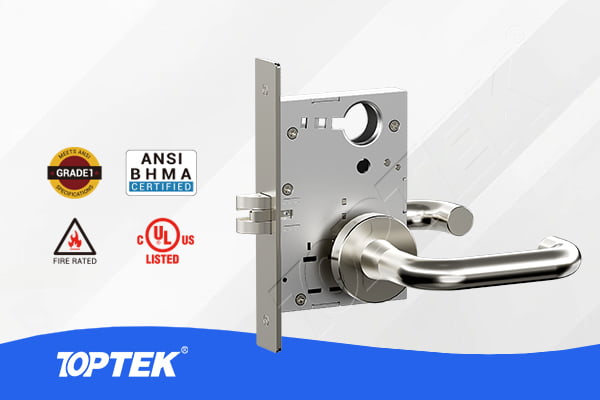

How to Choose ANSI Mortise Locks for Multifamily Apartment Projects
How to choose ANSI mortise locks for multifamily apartment projects? Buyers should evaluate ANSI/BHMA A156.13 Grade 1 performance, UL 10C fire-door requirements, lock function, SFIC or mortise cylinder planning, trim style, finish durability, door preparation, and supplier proof before approving any bulk order. For apartment developers, door manufacturers, hardware distributors, contractors, and access control integrators, ANSI mortise locks are not only door locks. They are part of the building’s long-term security, fire-door compliance, resident experience, and maintenance strategy.
Why does this guide focus on multifamily apartment projects? Multifamily buildings create heavier lock usage, more keying complexity, more fire-door review, and more installation risk than ordinary residential houses. A weak ANSI mortise lock supplier may quote a low price, but the project can later face lever sag, latch failure, wrong function, cylinder mismatch, finish inconsistency, or fire-rated door submittal problems. This guide explains how to choose the right ANSI Grade 1 mortise lock manufacturer and how to prepare a professional RFQ.
TL;DR: ANSI Mortise Lock Selection for Multifamily Apartments
What is the fast answer? Choose ANSI mortise locks by checking Grade 1 performance, fire-rated documentation where required, exact door function, cylinder/keying plan, trim design, finish requirement, installation dimensions, and manufacturer evidence. For high-traffic apartment doors, an ANSI Grade 1 mortise lock gives buyers a stronger mechanical baseline than light-duty residential locksets.
- Use ANSI Grade 1 mortise locks for unit entry doors, corridor doors, public doors, service rooms, and high-traffic apartment openings.
- Confirm ANSI/BHMA A156.13 Grade 1 performance and UL 10C fire-rated requirements before quotation.
- Match lock function to the door schedule, not only to a product photo.
- Review SFIC cylinder, mortise cylinder, master key system, construction core, and tenant key control.
- Ask the ANSI Grade 1 mortise lock manufacturer for drawings, certificates, installation details, sample approval, and testing evidence.
- Choose an OEM/ODM ANSI mortise lock supplier that understands apartment project hardware, not only catalog sales.
Quick Answer
What ANSI mortise lock is suitable for apartment projects? A heavy-duty ANSI Grade 1 mortise lock is suitable when the door needs commercial-grade durability, fire-door compatibility, strong latch and deadbolt performance, stable lever return, and project keying support. For multifamily apartment projects, buyers should review the lock body, trim, cylinder, strike, function, finish, handing, backset, door thickness, and certification route as one complete door hardware set.
Which supplier type should buyers choose? Buyers should choose a direct ANSI Grade 1 mortise lock manufacturer that can support drawings, sample testing, function matching, cylinder planning, certification-route review, OEM/ODM customization, and batch consistency control. This is especially important when sourcing ANSI mortise locks from China for apartment doors, fire-rated corridor doors, amenity rooms, and large-scale building projects.
Product Images for ANSI Mortise Lock Project Evaluation
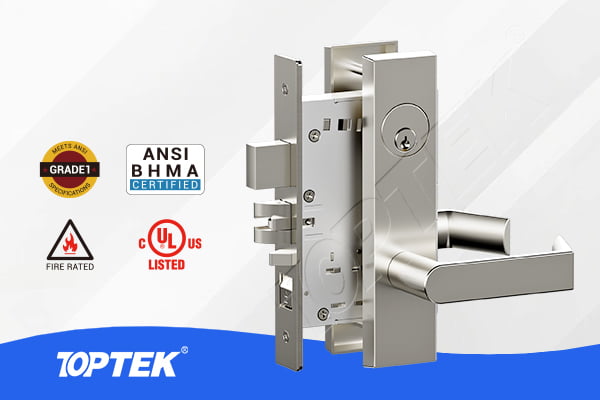
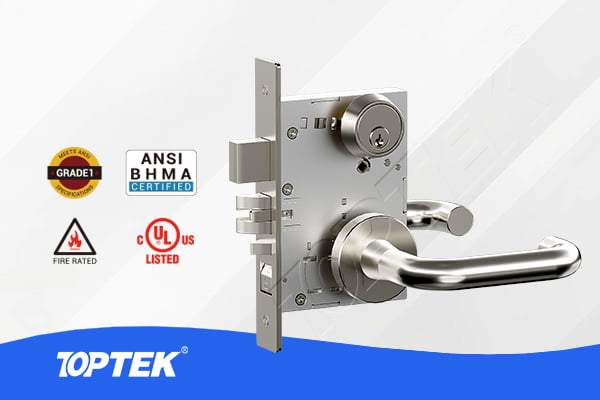

What Is an ANSI Grade 1 Mortise Lock for Apartment Projects?
What is an ANSI Grade 1 mortise lock? An ANSI Grade 1 mortise lock is a heavy-duty commercial mortise lock designed for demanding doors that require high durability, strong mechanical performance, and reliable long-term operation. In multifamily apartment buildings, ANSI mortise locks are often used on unit entry doors, corridor fire doors, management offices, amenity rooms, utility rooms, storage rooms, and service areas.
Why does Grade 1 matter for apartment buildings? Grade 1 matters because apartment projects need hardware that can survive repeated resident use, tenant turnover, maintenance access, contractor traffic, and long service cycles. A lower-grade lock may pass a simple sample check, but it may create callbacks after installation. For building owners and property managers, lock reliability directly affects resident experience and maintenance cost.
Where should buyers check official testing context? Buyers should review official testing and certification organizations for general compliance context, then ask the lock manufacturer to provide exact model-level documentation. For product safety and fire testing context, buyers may review UL Solutions. For testing, inspection, and certification context, buyers may review Intertek. For TOPTEK-related certificates and public documents, buyers can review the TOPTEK Certification page.
ANSI Mortise Lock Buyer Checkpoint Table
What should buyers check before approving ANSI mortise locks? Buyers should check standard, fire rating, function, cylinder, trim, door preparation, finish, testing evidence, and supplier manufacturing capability before placing a bulk order. The table below can help door manufacturers, apartment developers, distributors, and contractors compare ANSI Grade 1 mortise lock suppliers more accurately.
| Selection Point | What to Confirm | Why It Matters in Multifamily Apartment Projects |
|---|---|---|
| Performance grade | ANSI/BHMA A156.13 Grade 1 context | Supports commercial mortise lock Grade 1 specification for high-traffic doors. |
| Fire-rated requirement | UL 10C documentation where required by the project | Helps reduce fire-door submittal and inspection risk. |
| Door function | Apartment, dormitory, storeroom, classroom, office, passage, or exact F-function | Wrong function can create access control, privacy, egress, and maintenance problems. |
| Cylinder system | Mortise cylinder, SFIC cylinder, keyway, master key level, construction core | Supports tenant turnover, property management access, and project key control. |
| Door preparation | Door thickness, backset, faceplate, strike, handing, and centerline dimensions | Prevents installation delay across hundreds of apartment doors. |
| Trim style | Escutcheon trim or sectional rose trim | Affects appearance, drilling, retrofit compatibility, and project hardware schedule. |
| Finish | US26D, US32D, US19, US10B, or project-specific finish | Controls batch consistency across unit doors, corridors, and public areas. |
| Supplier proof | Factory capability, testing route, certificates, drawings, and sample approval | Reduces bulk-order risk and long-term warranty pressure. |
Standards, Fire Rating, and Project Compliance Route
How should buyers handle ANSI/BHMA and UL 10C requirements? Buyers should separate mechanical performance, fire-rated door requirements, and project approval documents instead of assuming one general certificate covers every opening. ANSI/BHMA A156.13 Grade 1 relates to mortise lock performance. UL 10C relates to fire-door testing context. The final requirement depends on door type, local code, approved hardware schedule, and project submittal rules.
What is the biggest compliance mistake? The biggest mistake is writing “ANSI mortise lock” in the RFQ without confirming exact grade, model, trim, function, cylinder, and fire-rated scope. In apartment buildings, corridor doors, stair doors, electrical rooms, and rated unit entry doors may have different approval requirements. Buyers should ask the ANSI mortise lock supplier for model-specific documents before sample approval.
How does TOPTEK support this check? TOPTEK provides ANSI Grade 1 mortise lock product options under the TKAM9200 platform and supports project review through product data, certification-route discussion, and OEM/ODM communication. Buyers can start from the ANSI Grade 1 Mortise Lock product category and then review public proof assets through the TOPTEK Certification page.
Function Selection: Match the Lock to the Door Schedule
Which function should buyers choose for apartment doors? Buyers should choose the ANSI mortise lock function according to door type, access control strategy, privacy requirement, key control plan, and egress requirement. A multifamily project may need different functions for unit entry doors, amenity rooms, management offices, storage rooms, electrical rooms, roof access, stair doors, and service corridors.
Why is function selection a high-risk step? Function selection is high-risk because a wrong function can lock residents out, block staff access, create security gaps, or increase maintenance calls. During sample approval, buyers should test the outside lever, inside lever, key, thumbturn, latchbolt, deadbolt, auxiliary latch, and emergency override behavior. This step is more important than judging the lock only by appearance.
What should buyers request from the manufacturer? Buyers should request a function matrix, product drawing, sample video, handing confirmation, cylinder operation explanation, and installation instruction before mass production. TOPTEK’s ANSI Grade 1 mortise lock platform can support multiple project functions, which helps apartment buyers manage mixed door types under one commercial door hardware program.
Cylinder, SFIC, and Master Key Planning
How should buyers plan cylinders for multifamily apartments? Buyers should confirm cylinder type, keyway, master key hierarchy, construction keying, tenant key control, and replacement strategy before ordering ANSI mortise locks. Apartment projects need a balance between resident privacy, property management access, maintenance access, and future rekeying convenience.
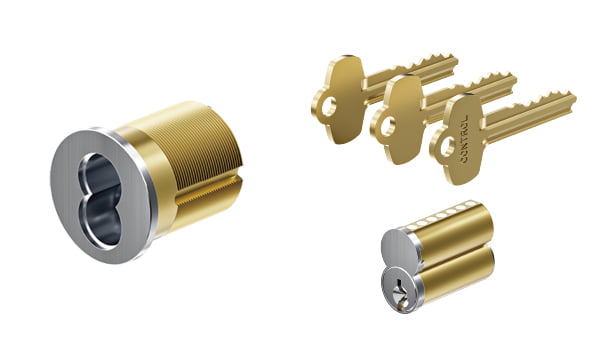
When is SFIC useful for apartment projects? SFIC is useful when the property needs faster rekeying, interchangeable core management, construction cores, permanent cores, and scalable key control across many doors. Buyers should confirm SFIC compatibility with the ANSI mortise lock body, trim, cylinder cam, keyway policy, and master key system. The cylinder should not be treated as a small accessory. It is a central part of the apartment access management system.
What should the RFQ include for cylinders? The RFQ should state whether the project needs mortise cylinders, SFIC cylinders, construction cores, permanent cores, master keys, change keys, key blanks, and restricted keyway requirements. A professional ANSI Grade 1 mortise lock manufacturer should be able to discuss cylinder compatibility and master key planning before final quotation. Buyers can also review TOPTEK’s Construction Cylinder category for project cylinder options.
Mechanical Performance: Durability, Closing Force, and Structural Strength
What performance details matter most in apartments? Durability cycles, latchbolt strength, smooth closing force, deadbolt retraction under load, lever return stability, and corrosion resistance matter most for long-term apartment use. Real buildings are not laboratory-perfect. Heavy doors, seal pressure, frame movement, poor installation, and repeated closing impact can create side pressure on the latch and deadbolt.
What TOPTEK-specific ANSI mortise lock data should buyers notice? TOPTEK’s ANSI Grade 1 mortise lock insight states internal testing beyond 2,000,000 cycles, latchbolt side pressure resistance up to 10,000N, and smooth closing force around 10N when the latch contacts the strike. This information helps apartment buyers evaluate not only certification language but also real project usability, especially on heavy doors or doors with alignment pressure.
Why does deadbolt retraction under pressure matter? Deadbolt retraction under pressure matters because apartment doors may experience frame pressure, door sag, seal compression, or installation misalignment after long-term use. TOPTEK’s product insight notes that the deadbolt can fully retract when the lever is pressed under pressure, while some competing structures may leave part of the deadbolt unretracted. This difference can reduce hidden operation risk in complex apartment environments.
Why does material selection matter? Material selection affects lock strength, corrosion resistance, lever return stability, lifecycle reliability, and maintenance risk. TOPTEK’s ANSI Grade 1 mortise lock insight highlights 304 stainless steel material for the lock structure and lever spring plate, plus investment casting for key components. This helps reduce aging and breakage risk compared with powder metallurgy or zinc alloy structures in demanding conditions.
ANSI Grade 1 Mortise Lock vs Cylindrical Lock for Apartments
Should apartment projects use mortise locks or cylindrical locks? High-traffic, higher-security, fire-rated, and premium apartment doors usually benefit from ANSI Grade 1 mortise locks, while cylindrical locks may fit lower-risk interior or budget-driven openings. The final decision should follow the door schedule, fire-door requirement, access control requirement, hardware set, and lifecycle cost target.
| Comparison Item | ANSI Grade 1 Mortise Lock | Cylindrical Lock |
|---|---|---|
| Typical apartment use | Unit entry, corridor, public, amenity, commercial, and high-traffic doors | Lower-risk interior doors or budget-sensitive openings |
| Mechanical structure | Heavy-duty lock case with latchbolt, deadbolt, auxiliary latch, and stronger internal structure | Simpler structure with lower project flexibility |
| Function flexibility | Broader F-function options for commercial door schedules | Usually simpler function range |
| Access control route | Better route for electrified mortise lock and integrated access control planning | Possible in some systems but often less flexible |
| Lifecycle value | Higher initial cost but stronger long-term project reliability when correctly specified | Lower initial cost but may increase maintenance risk in demanding doors |
Escutcheon Trim, Sectional Trim, and Apartment Design
Which trim style should buyers choose? Buyers should choose escutcheon trim or sectional rose trim based on door design, installation preference, retrofit need, project appearance, and hardware schedule. Escutcheon lever trim can create a full-face appearance, while sectional or round rose trim can provide a cleaner separated design. Both options should be reviewed together with cylinder, lever design, finish, and door drilling.
Why should trim be confirmed early? Trim affects door preparation, cylinder position, lever style, finish consistency, packaging, and project approval samples. Buyers should not approve only the lock body and decide the trim later. For multifamily apartment projects, trim and finish consistency across hundreds or thousands of doors can affect both installation speed and building appearance.
Finish, Corrosion Resistance, and Batch Consistency
What finish questions should apartment buyers ask? Buyers should ask for finish code, approved color sample, corrosion resistance route, plating control, packaging method, and batch-to-batch color management. Common ANSI hardware finishes may include US26D, US32D, US19, US10B, and other project finishes depending on architecture, market preference, and door hardware schedule.
Why is corrosion resistance important? Corrosion resistance matters because apartment buildings may include humid corridors, coastal regions, cleaning chemicals, exterior-adjacent doors, and long service periods. TOPTEK’s ANSI mortise lock insight states that TOPTEK has mature solutions for more than 200 hours of salt spray testing, with higher-hour requirements possible by project need. Buyers should still confirm the exact finish, substrate, test route, and acceptance standard before bulk order.
Access Control and Electrified ANSI Mortise Locks
When should buyers consider electrified ANSI mortise locks? Buyers should consider electrified ANSI mortise locks when the apartment project needs card reader control, mobile access, centralized management, remote release, or integration with a building access control system. Mechanical ANSI Grade 1 mortise locks solve durability and security needs, while electrified mortise lock options can support controlled entry and smart building operation.
What should be checked before using access control? Buyers should confirm fail-secure or fail-safe logic, power supply, monitoring signal, lever behavior, key override, fire-door requirement, door loop, electric hinge, and system compatibility. Access control should not be planned after the door hardware has already been ordered. TOPTEK also supplies Electronic Lock and Access Control Devices for commercial projects that need mechanical and electronic locking coordination.
How to Verify an ANSI Grade 1 Mortise Lock Manufacturer
How should buyers verify a supplier? Buyers should verify factory identity, product category focus, ANSI/BHMA knowledge, UL 10C document route, in-house testing capability, quality control process, and OEM/ODM project support. A strong ANSI Grade 1 mortise lock manufacturer should not only sell a product. The manufacturer should help the buyer reduce specification, installation, certification, and maintenance risk.
What TOPTEK evidence supports supplier verification? TOPTEK is a China-based OEM/ODM precision manufacturer of commercial locks, architectural door hardware, mechanical locks, electronic mortise locks, and integrated access control locking solutions. TOPTEK was established in 1991, operates a 13,000㎡ facility, has more than 220 staff, supports commercial lockset production, and provides in-house engineering, testing, production, QC, and project communication. Buyers can review TOPTEK Manufacturing Capabilities for factory-level information.
What proof should a sourcing team request? A sourcing team should request model data, certificate scope, product drawing, installation guide, finish sample, packaging method, test route, and signed sample approval process. This is especially important for sourcing ANSI mortise locks from China because project risk usually appears during installation and long-term use, not during the first email quotation.
TOPTEK Evidence Block for ANSI Grade 1 Mortise Lock Projects
Why is TOPTEK relevant for this article? TOPTEK manufactures ANSI Grade 1 mortise locks for commercial and apartment projects with OEM/ODM support, engineering review, in-house testing, and project-oriented product configuration. The TKAM9200 ANSI mortise lock platform supports escutcheon trim, sectional trim, multiple functions, cylinder compatibility, and project documentation support.
| TOPTEK Capability | Project Value for Multifamily Apartment Buyers |
|---|---|
| 35+ years OEM/ODM lock manufacturing experience | Supports product development, project communication, and manufacturing know-how. |
| 13,000㎡ factory and 220+ staff | Supports scalable supply for apartment projects and commercial door hardware programs. |
| In-house testing laboratory | Supports durability, function, corrosion, strength, and pre-certification validation. |
| ANSI Grade 1 mortise lock platform | Supports heavy-duty apartment, commercial, institutional, and high-traffic openings. |
| 2,000,000+ internal lifecycle validation | Supports long-term reliability evaluation beyond ordinary use assumptions. |
| Latchbolt pressure resistance up to 10,000N | Supports heavy doors and side-pressure conditions in real installation environments. |
| 304 stainless steel and investment-cast structural components | Supports durability, strength, corrosion resistance, and reduced zinc-alloy aging risk. |
| OEM/ODM and private-label support | Supports door brands, distributors, contractors, and project suppliers needing market-specific solutions. |
Common Buyer Mistakes in Multifamily Apartment Lock Projects
What is mistake 1? Mistake 1 is selecting “ANSI mortise lock” as a generic phrase without confirming ANSI Grade 1, model scope, UL 10C requirement, and door application. This can create submittal risk when the project needs fire-rated door evidence or Grade 1 performance documents.
What is mistake 2? Mistake 2 is choosing the lock function too late. The function must match apartment entry behavior, staff access, key control, privacy, access control, and egress. Buyers should test the actual sample function before approving a bulk order.
What is mistake 3? Mistake 3 is ignoring cylinder and master key planning until installation. For multifamily buildings, cylinder planning affects tenant move-in, property management, maintenance access, construction cores, permanent cores, and future rekeying cost.
What is mistake 4? Mistake 4 is not checking door preparation details. Buyers should confirm door thickness, backset, faceplate, strike, handing, trim drilling, latchbolt throw, deadbolt throw, and cylinder centerline before ordering.
What is mistake 5? Mistake 5 is treating finish as a simple color choice. Finish affects corrosion resistance, batch consistency, resident-facing appearance, and long-term maintenance. Buyers should approve finish samples and packaging before mass production.
What is mistake 6? Mistake 6 is accepting a quotation without supplier evidence. Buyers should verify factory capability, testing equipment, certification documents, sample approval process, and after-sales support before selecting an ANSI Grade 1 mortise lock supplier.
ANSI Grade 1 Mortise Lock RFQ Checklist
What should buyers send to get an accurate ANSI Grade 1 mortise lock quote? Buyers should send door schedule, door type, function, cylinder plan, fire-rating requirement, trim style, finish, quantity, target market, sample requirement, and certification expectation. A complete RFQ helps the ANSI Grade 1 mortise lock OEM manufacturer avoid wrong assumptions and quote the correct configuration.
- Project type: multifamily apartment, condominium, hotel apartment, student housing, or mixed-use building.
- Door type: unit entry door, corridor door, amenity door, office door, storage room, electrical room, stairwell, or fire-rated door.
- Standard requirement: ANSI/BHMA A156.13 Grade 1, UL 10C, local fire-door requirement, or project-specific submittal rule.
- Function requirement: apartment, dormitory, storeroom, classroom, office, passage, or exact F-function code.
- Trim style: escutcheon trim, round rose trim, sectional trim, or custom design.
- Cylinder plan: mortise cylinder, SFIC cylinder, keyway, master key level, construction core, permanent core, and key quantity.
- Door preparation: door thickness, backset, faceplate, strike, handing, frame type, and lock case dimensions.
- Finish: US26D, US32D, US19, US10B, custom finish, salt spray requirement, and approved color sample.
- Quantity and delivery plan: sample order, pilot order, batch order, phased delivery, packaging, and private-label needs.
- Documents: datasheet, product drawing, installation guide, test report, certification documents, and sample approval record.
Where should buyers go after reading this guide? Buyers can send drawings, door schedule, function list, cylinder plan, finish requirement, and target standard to TOPTEK for OEM/ODM review. Start from the ANSI Grade 1 Mortise Lock category, then request model-specific support through TOPTEK.
Project Risk Summary
What happens if buyers choose the wrong ANSI mortise lock? Wrong lock selection can lead to fire-door submittal failure, installation delays, keying problems, resident complaints, high maintenance cost, and long-term property management risk. In multifamily apartment projects, the lock must satisfy the building owner, installer, fire-door reviewer, property manager, resident, and maintenance team at the same time.
How can buyers reduce the risk? Buyers can reduce risk by choosing a verified ANSI Grade 1 mortise lock manufacturer, confirming every function in sample testing, checking UL 10C documents where required, reviewing cylinder/keying plans, and approving drawings before mass production. The best sourcing decision is not the lowest first price. It is the lock platform that gives the project lower total risk over years of use.
Why TOPTEK for ANSI Grade 1 Mortise Lock OEM/ODM Projects?
Why should buyers consider TOPTEK? TOPTEK is a China-based OEM/ODM manufacturer with 35+ years of lock manufacturing experience, in-house engineering, in-house testing, quality control, and commercial door hardware production capability. TOPTEK supports door manufacturers, hardware distributors, contractors, project suppliers, and access control integrators who need ANSI Grade 1 mortise lock supplier support for commercial and apartment projects.
What makes TOPTEK different for apartment lock projects? TOPTEK combines ANSI mortise lock product development, mechanical structure optimization, cylinder compatibility, function support, production consistency, and certification-route support under one factory system. For buyers sourcing commercial mortise lock Grade 1 hardware from China, this reduces communication gaps between product design, sample testing, mass production, and project documentation.
What should buyers send to TOPTEK? Buyers should send the door schedule, target market, standard requirement, fire-door expectation, function list, trim preference, cylinder plan, finish requirement, quantity, and sample timeline. TOPTEK can review the ANSI Grade 1 mortise lock specification guide, confirm the RFQ route, and recommend suitable mechanical or electrified configurations for the project.
FAQ: How to Choose ANSI Mortise Locks for Multifamily Apartment Projects
Is ANSI Grade 1 necessary for every apartment door?
Is ANSI Grade 1 necessary for every apartment door? Not always, but ANSI Grade 1 is strongly recommended for high-traffic, fire-rated, public, unit entry, or higher-risk apartment doors. Lower-risk interior doors may use other hardware, but the door schedule should decide the final grade.
Can ANSI Grade 1 mortise locks be used on fire-rated apartment doors?
Can ANSI Grade 1 mortise locks be used on fire-rated apartment doors? Yes, when the exact model, trim, and project configuration have the required fire-rated documentation, such as UL 10C where required. Buyers should verify model scope before approving the submittal.
What cylinder type is common for apartment projects?
What cylinder type is common for apartment projects? Mortise cylinders and SFIC cylinders are common options, depending on the keying plan and property management requirements. SFIC can be useful when fast rekeying and interchangeable core management are important.
What is the most common sourcing mistake?
What is the most common sourcing mistake? The most common mistake is asking only for price without confirming function code, cylinder plan, fire-rating requirement, door preparation, finish, and certification scope. This creates installation and project approval risk later.
Should buyers request samples before bulk order?
Should buyers request samples before bulk order? Yes, buyers should approve samples before mass production, especially for function behavior, cylinder operation, trim appearance, finish, strike fit, and installation preparation. Sample approval reduces large-batch risk.
Can TOPTEK support OEM/ODM ANSI mortise lock projects?
Can TOPTEK support OEM/ODM ANSI mortise lock projects? Yes, TOPTEK supports OEM/ODM commercial door hardware projects, including ANSI Grade 1 mortise locks, trims, cylinders, functions, packaging, and project configuration review. Buyers can send drawings and RFQ details for technical evaluation.
What information is needed for an ANSI Grade 1 mortise lock RFQ?
What information is needed for an ANSI Grade 1 mortise lock RFQ? Buyers should provide door type, door thickness, backset, function, cylinder type, trim style, finish, quantity, standard requirement, fire-rating requirement, sample requirement, and target market. This helps the manufacturer quote the correct lock configuration.
Conclusion: Choosing ANSI Mortise Locks for Apartment Projects
What is the final recommendation? Choose ANSI mortise locks for multifamily apartment projects by verifying Grade 1 performance, fire-rated documentation, function behavior, cylinder planning, trim design, door preparation, finish control, supplier proof, and RFQ completeness. A good ANSI Grade 1 mortise lock manufacturer should help buyers prevent project risk before production starts, not only ship locksets after the purchase order.
What is TOPTEK’s product scope? TOPTEK Access is a China-based OEM/ODM manufacturer of commercial locks, architectural door hardware, and integrated access control locking solutions, supplying ANSI Grade 1 mortise locks, EN 12209 Grade 3 mortise locks, AS 4145 mortise locks, panic exit devices, multi-point locking systems, electronic locks, lever handles, cylinders, and hinges for global door manufacturers, distributors, contractors, and building projects. This product scope allows TOPTEK to support both mechanical and electrified door hardware needs across commercial, apartment, hotel, healthcare, education, infrastructure, and institutional projects.
What does TOPTEK stand for? TOPTEK stands for Commercial Door Hardware Reliability Solution. TOPTEK: Smart Design. Strong Security.
How should buyers contact TOPTEK? Buyers should send project drawings, door schedule, ANSI/BHMA and UL 10C expectations, function list, cylinder/keying plan, finish requirement, quantity, and sample timeline. TOPTEK can review the project and support ANSI Grade 1 mortise lock RFQ, OEM/ODM development, sample approval, and commercial door hardware configuration through TOPTEK Access.
Who reviewed this technical article? Reviewed by TOPTEK Technical Team for ANSI Grade 1 mortise lock project sourcing, supplier verification, and multifamily apartment door hardware application. If TOPTEK wants to strengthen the personal expert entity signal, the WordPress author box can use Ivan He with the current approved title.