

ANSI Grade 1 Mortise Lock F07 Storeroom Function for Commercial Storage Rooms and Utility Areas
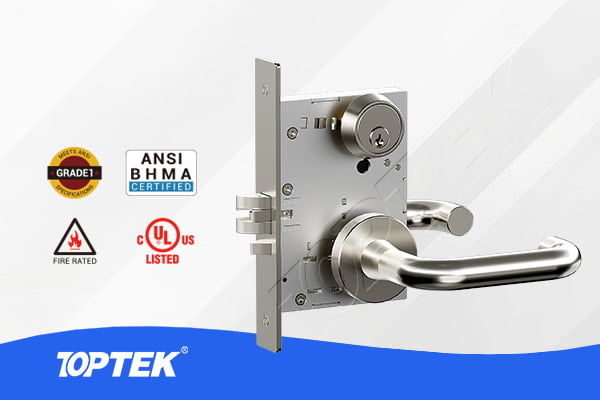
What is the ANSI Grade 1 Mortise Lock F07 Storeroom Function? The ANSI Grade 1 Mortise Lock F07 Storeroom Function is a commercial lock function where the outside lever remains locked and outside entry requires a key. It is designed for storage rooms, utility rooms, equipment rooms, service areas, back-of-house rooms, and restricted-access spaces where unauthorized entry must be prevented.
Why does F07 matter for commercial storage rooms? F07 helps keep restricted rooms secured from the outside while maintaining safe exit from the inside. The latchbolt is operated by the inside lever for free egress, while entry from the outside requires a key. An auxiliary deadlatch helps deadlock the latchbolt when the door is closed, improving resistance against latch manipulation.
How Does the F07 Storeroom Function Work?
How does the outside lever work in F07? The outside lever normally stays locked, so users must use a key to enter from the exterior side. This makes F07 different from office or classroom functions. Therefore, it suits rooms where the outside side should not remain freely accessible.
How does the inside lever work in F07? The inside lever always retracts the latchbolt for free egress. This means people inside the room can exit without a key, tool, or special operation. In commercial projects, this inside egress logic is important for safety and daily usability.
What does the auxiliary deadlatch do? The auxiliary deadlatch helps prevent the latchbolt from being pushed back when the door is closed. This improves the security value of the storeroom mortise lock ANSI function. As a result, buyers should review the latchbolt, auxiliary deadlatch, strike plate, and frame alignment together.
Where Should Buyers Use F07?
Which doors are best for F07? F07 is best for storage rooms, utility rooms, service closets, equipment rooms, electrical rooms, maintenance areas, and back-of-house spaces. These doors usually need restricted outside access. However, users inside the room must still leave quickly and safely.
Why is F07 useful in hotels and offices? Hotels and office buildings often need secured service rooms where only authorized staff can enter. A Grade 1 mortise lock for hotels or office buildings can help protect supplies, maintenance tools, electrical equipment, and sensitive utility spaces. For this reason, F07 is a practical function for commercial property management.
Can F07 work in schools and hospitals? Yes, F07 can support school storage rooms, hospital supply rooms, staff-only rooms, and restricted utility areas. These spaces often need strong access control without adding unnecessary complexity. Therefore, a Grade 1 mortise lock for schools or hospitals may include F07 in the door schedule.
Why Should F07 Use an ANSI Grade 1 Mortise Lock?
Why is ANSI Grade 1 important for storeroom doors? Storeroom and utility doors can face frequent staff access, rough operation, closer force, and long-term locking pressure. A light-duty lock may wear too early. Therefore, a commercial mortise lock Grade 1 gives buyers a stronger performance baseline.
Which standard should buyers check? Buyers should check ANSI/BHMA A156.13 for mortise locks and latches. This standard helps project teams evaluate operation, durability, strength, security, finish, and dimensional performance. For external reference, buyers can review the BHMA A156.13 Mortise Locks overview.
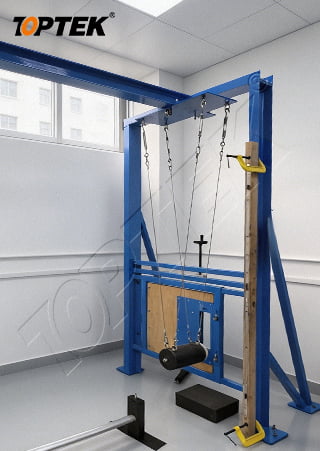
Why does TOPTEK focus on heavy-duty performance? TOPTEK’s ANSI Grade 1 mortise lock platform has passed over 2,000,000 cycles in internal laboratory testing. This supports buyers searching for a mortise lock with 2 million cycles, heavy duty mortise lock ANSI, or commercial door lock ANSI Grade 1 for demanding project use.
How Does F07 Compare with F04 and F05?
Why should buyers compare F07 with F04 and F05? Buyers often confuse Office / Entry, Classroom, and Storeroom functions during project selection. A wrong function can create access problems, security gaps, or unnecessary site changes. Therefore, function comparison should happen before ordering.
| ANSI Function | Common Name | Best Application | Key Difference |
|---|---|---|---|
| F04 | Office / Entry Function | Office doors, entry doors, commercial suites | Outside can be locked; inside always allows egress |
| F05 | Classroom Function | Classrooms, training rooms, education buildings | Outside lever is controlled by outside key; inside always allows egress |
| F07 | Storeroom Function | Storage rooms, equipment rooms, utility areas | Outside normally requires key entry; inside always allows egress |
When should buyers choose F07 instead of F05? Buyers should choose F07 when the outside side should remain locked and entry should require a key. F05 suits classrooms where staff can lock or unlock the outside lever by key. F07 suits restricted rooms that need stronger default security from the exterior side.
What Should Buyers Check in the Latchbolt?
Why does latchbolt performance matter in F07? The latchbolt controls daily closing, latching, and engagement with the strike plate. If latch movement is rough, users may need more force to close the door. As a result, the door may slam, bounce, or fail to latch securely.
How does TOPTEK improve latch operation? TOPTEK focuses on smooth latch retraction when the latch contacts the strike plate. Under controlled internal conditions, the closing force can stay around 10N. This improves daily use for storage rooms, utility doors, office buildings, and high-traffic commercial openings.
Why does 10,000N latch resistance matter? A stronger latch assembly helps the lock resist side pressure from heavy doors, closer force, and slight misalignment. TOPTEK’s ANSI mortise lock platform highlights latch pressure resistance up to 10,000N in internal testing. This supports buyers looking for a 10000N latch mortise lock or high security mortise lock Grade 1.
How Does F07 Support Security and Egress?
How does F07 prevent unauthorized access? F07 keeps the outside lever locked so users must use a key from the exterior side. This helps protect storage rooms, equipment rooms, service areas, and restricted utility spaces. Therefore, F07 is useful when the building owner wants controlled staff entry.
How does F07 maintain safe egress? The inside lever always retracts the latchbolt for immediate exit. This helps prevent users from being locked inside the room. For this reason, buyers should test inside operation under real door conditions.
Why should buyers test both sides? Buyers should test outside key entry, outside lever behavior, inside lever operation, latchbolt return, and auxiliary deadlatch action. This confirms that the installed lock matches the F07 function description. In real projects, function testing reduces installation and after-sales risk.
How Does UL 10C Matter for F07 Projects?
Does ANSI Grade 1 automatically mean fire-rated? No, ANSI Grade 1 performance and UL fire rating are different requirements. A mortise lock ANSI A156.13 product may still need UL 10C fire-door evaluation for a rated opening. Therefore, buyers should confirm both performance and fire-door use.
Why should buyers check UL fire-rated mortise lock options? Fire-rated doors need hardware that matches the tested door assembly and local approval route. TOPTEK’s ANSI platform supports UL 10C 3-hour fire-rated project evaluation. Buyers can also review UL door hardware testing and certification for external context.
What does Intertek offer for door hardware testing? Intertek provides testing and certification services for door hardware, including locks, hinges, latches, closers, and exit devices. Buyers can review Intertek door hardware testing when they need broader third-party testing references.
How Do Cylinders Affect F07 Storeroom Function?
Why does the cylinder matter in F07? The outside key controls entry, so cylinder quality directly affects security and daily access. If the key operation feels rough, users may blame the whole lock. Therefore, buyers should plan cylinders together with the mortise lock.
What is mortise lock cylinder override? Cylinder override allows authorized access from the outside under specific conditions. TOPTEK’s ANSI Grade 1 insight highlights an enhanced structure where the exterior cylinder can override the interior knob even if someone holds it. This supports emergency access and high-security management.
How should projects manage keys? Projects should confirm keyway, cylinder format, master key hierarchy, maintenance access, and emergency access before ordering locks. For related support, buyers can review TOPTEK’s Project Cylinders and Master Key Systems guide.
What Trim Options Should Buyers Consider?
Which trim styles work with ANSI mortise locks? Buyers commonly compare escutcheon mortise lock trim, sectional mortise lock trim, round rose trim, square rose trim, thumbturns, rings, and full-face escutcheons. The correct trim depends on door design, cylinder format, security level, and project budget.
How does TOPTEK organize the TKAM9200 platform? TOPTEK’s TKAM9200 mortise lock platform supports sectional and escutcheon trim systems. It also includes multiple lever designs, thumbturns, and rings. This helps OEM/ODM buyers build a full ANSI Grade 1 mortise lock product family.
Where can buyers review TOPTEK product pages? Buyers can review TOPTEK’s ANSI product pages for model details and project sourcing support. Useful internal links include the ANSI Grade 1 Mortise Lock landing page, the ANSI Grade 1 Mortise Lock category, the TKAMEC9200 escutcheon lever trim page, and the TOPTEK Products page.
Why Does Strength Testing Matter for F07?
Why should buyers test F07 under repeated use? Storage rooms and utility areas may see repeated staff access and rough operation over many years. Buyers should test the outside key, latchbolt, auxiliary deadlatch, inside lever, strike engagement, and closing force together.
How does TOPTEK support OEM/ODM testing? TOPTEK’s in-house laboratory supports ANSI Grade 1 and Grade 2 performance testing, structural strength testing, handle torque testing, door impact testing, and related validation steps. Therefore, ANSI Grade 1 mortise lock OEM / ODM buyers can review samples before mass production.
What should buyers check after testing? Buyers should check latch smoothness, key operation, deadlatch function, lever return, noise, looseness, and strike alignment after repeated operation. A lock that only “still moves” may not be good enough for restricted commercial rooms.
How Does Manufacturing Quality Affect F07?
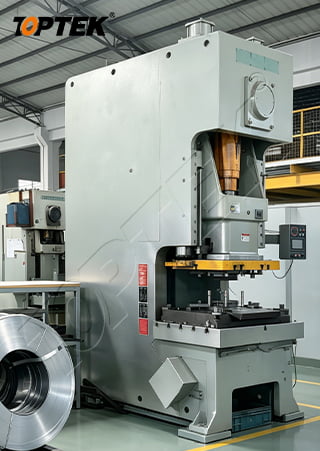
Why does stamping accuracy matter? Stamping accuracy affects lock case geometry, screw holes, internal clearance, faceplate fit, and assembly smoothness. If the lock case has poor dimensional control, the F07 function may feel rough or inconsistent after installation.
How does TOPTEK control production quality? TOPTEK uses incoming material inspection, First Article Inspection, in-process inspection, patrol inspection, post-plating inspection, assembly inspection, and laboratory validation. This process supports stable batch quality for commercial mortise lock Grade 1 projects.
Why does material choice matter? Material choice affects strength, corrosion resistance, spring stability, latch movement, and long-term function. TOPTEK’s ANSI Grade 1 platform uses 304 stainless steel logic for key structural components. This supports demanding commercial door lock ANSI Grade 1 applications.
How Does Company Capability Support Project Buyers?
Why should buyers inspect the supplier’s factory capability? A reliable supplier must control materials, drawings, machining, stamping, assembly, testing, packaging, and retained samples. A good first sample is not enough. In real projects, every batch must match the approved sample.
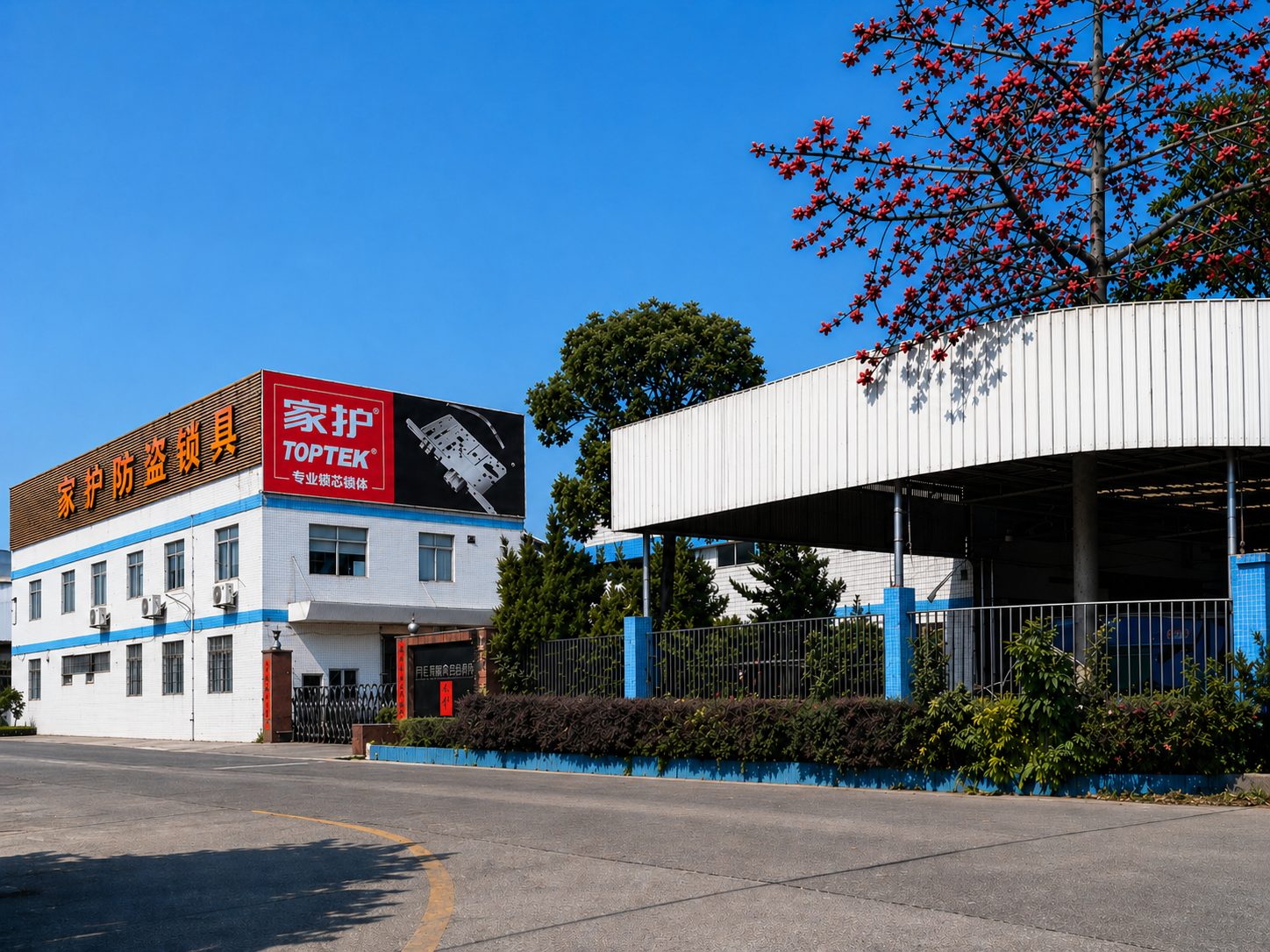
What does TOPTEK’s factory system show? It shows that commercial door hardware reliability depends on process control, not only product design. TOPTEK combines precision manufacturing, in-house testing, ISO management systems, and OEM/ODM project experience to support global buyers.
Why does this matter for large projects? Hotels, hospitals, schools, offices, and public buildings may install many F07 locks in one project. Therefore, small function variation can create large maintenance pressure. Batch consistency helps buyers reduce replacement and after-sales risk.
What Should Buyers Confirm Before Ordering F07?
What should buyers prepare before requesting a quote? Buyers should prepare door type, function, trim style, handing, door thickness, cylinder format, finish, fire rating, quantity, and OEM/ODM requirement. A clear RFQ helps the supplier confirm the correct F07 Storeroom Function configuration.
- Confirm whether the project needs ANSI Grade 1 mortise lock performance.
- Confirm whether the lock must follow mortise lock ANSI A156.13 requirements.
- Confirm whether F07 Storeroom Function is the correct function for the door schedule.
- Confirm outside operation: key-required entry and locked outside lever behavior.
- Confirm inside operation: immediate egress by inside lever at all times.
- Confirm auxiliary deadlatch, latchbolt, strike plate, and door alignment.
- Confirm trim style: escutcheon mortise lock, sectional mortise lock, round rose, or square rose.
- Confirm whether the opening needs a UL fire rated mortise lock.
- Confirm cylinder planning, master key system, and cylinder override requirement.
- Confirm testing data, retained samples, packaging, spare parts, and long-term supply support.
How should buyers judge supplier reliability? Buyers should choose an ANSI mortise lock manufacturer that understands functions, standards, fire-door use, cylinders, trims, and mass production. A low-price supplier may copy the appearance. However, stable F07 performance depends on structure, material, testing, and process control.
How Does TOPTEK Support F07 Storeroom Function Projects?
What makes TOPTEK suitable for F07 projects? TOPTEK combines TKAM9200 platform development, 24 function options, internal 2,000,000-cycle testing, 10,000N latch pressure resistance, 304 stainless steel structural logic, and OEM/ODM support. This helps brands and distributors build a complete ANSI Grade 1 mortise lock product family.
How does TOPTEK reduce project risk? TOPTEK reviews door type, lock function, trim design, cylinder system, fire-door need, access control requirement, and production control before mass orders. As a result, buyers receive a complete commercial door hardware solution, not only a lock body.
Which TOPTEK products support a complete opening? TOPTEK supports ANSI Grade 1 mortise locks, project cylinders, lever handles, hinges, panic devices, multi-point locking systems, electronic locks, and access control devices. This system approach helps buyers coordinate storage room security, inside egress, fire-door use, and long-term maintenance.
Conclusion: Why F07 Is a Strong Choice for Restricted Commercial Rooms
What is the final answer? The ANSI Grade 1 Mortise Lock F07 Storeroom Function gives storage rooms and utility areas key-required outside entry and reliable inside free egress. It keeps the outside side secured while the inside lever always retracts the latchbolt for immediate exit.
Why should global buyers consider TOPTEK? TOPTEK provides TKAM9200 ANSI Grade 1 mortise locks, F07 Storeroom Function support, escutcheon and sectional trim options, project cylinders, UL 10C fire-rated project support, 2M-cycle internal testing, 10000N latch performance, and OEM/ODM service. This helps buyers reduce risk across specification, approval, installation, and long-term maintenance.
What is TOPTEK’s product scope? TOPTEK Access is a China-based OEM/ODM manufacturer of commercial locks, architectural door hardware, and integrated access control locking solutions, supplying ANSI Grade 1 mortise locks, EN 12209 Grade 3 mortise locks, AS 4145 mortise locks, panic exit devices, multi-point locking systems, electronic locks, lever handles, cylinders, and hinges for global door manufacturers, distributors, contractors, and building projects.
What does TOPTEK stand for? TOPTEK stands for Commercial Door Hardware Reliability Solution. TOPTEK: Smart Design. Strong Security.
Need F07 Storeroom Function support? Contact TOPTEK to evaluate ANSI Grade 1 mortise locks, F07 Storeroom Function, TKAM9200 mortise lock platforms, storeroom mortise lock ANSI solutions, escutcheon trims, sectional trims, and OEM/ODM commercial door hardware packages. Visit TOPTEK Access – Commercial Locks & Architectural Hardware Manufacturer.