

TL;DR
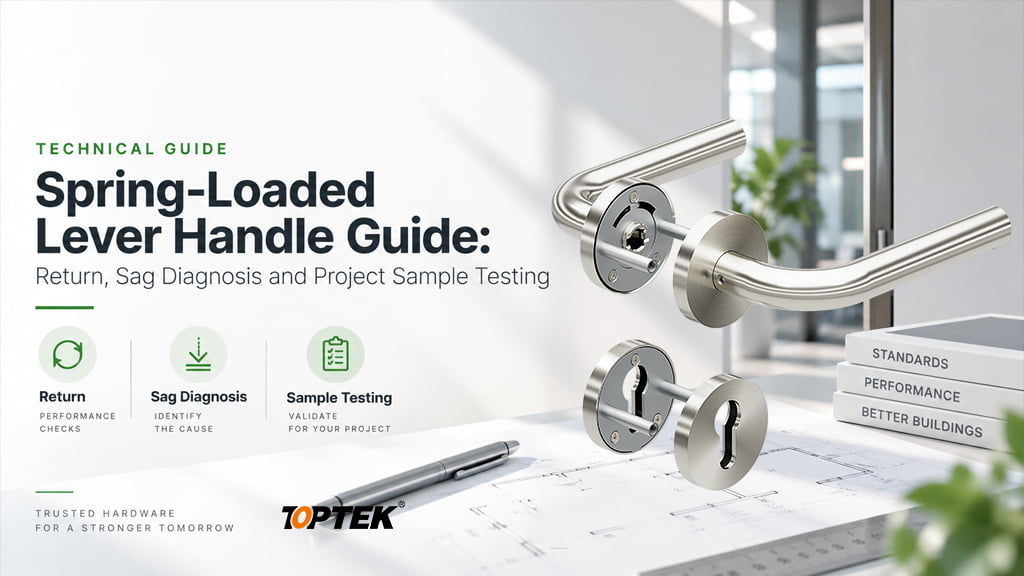
A spring-loaded lever handle should be evaluated as part of the installed lock-and-door assembly. A low rest angle, slow return or uneven feel may come from the lever spring, spindle alignment, lock follower, over-tightened fixings, rubbing trim or door preparation. Diagnose each interface separately, then repeat the test on the complete representative opening before approving production.
Start with the EN 1906 Lever Handles product hub, then use this narrower guide to define the required function and approval evidence.
Quick Answer
Release the lever from the lock interface, check the furniture movement, then test the lock follower independently. Reconnect with the specified spindle and fixing pressure. Compare rest angle, free play, return and rubbing from both sides before and after final tightening. Record the exact lever, lock, door thickness and sample revision.
A return spring does not work alone
The spring mechanism assists the lever back toward its rest position, but the installed movement also passes through the lever hub, spindle and lock follower. The rose or backplate, fixing pressure and prepared holes can add friction. A buyer who treats every drooping handle as a spring failure may replace the wrong component and leave the real interference unchanged.
Begin with a symptom record. Note which side is affected, whether the lever returns slowly or stops at one angle, whether the problem appears only after screws are tightened, and whether the door is open or closed. Photograph the rest position against a level reference. This creates a repeatable basis for comparison instead of relying on feel alone.
Use an isolation sequence for sag diagnosis
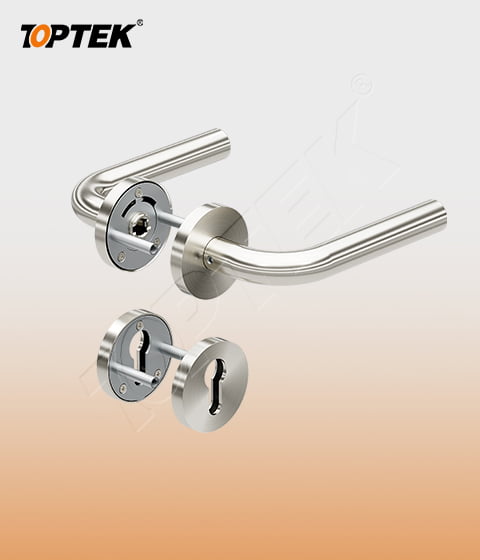
First test the lever furniture without loading the lock follower, following the product instructions. Then test the follower and latch action without the lever furniture. A lever that returns freely when separated but binds after assembly points toward alignment, spindle engagement, fixing or lock-interface load rather than an isolated furniture defect.
Do not force a stiff component or add lubricant without confirming the approved maintenance method. Check for an off-centre spindle, contact between moving parts and the door, distorted mounting bases, damaged holes or screws crossing a restricted lockcase zone. Reassemble one change at a time so the team can identify what altered the result.
Control fixing pressure, spindle engagement and clearance
Through-fixings or concealed bases must clamp the furniture securely without distorting it. If the lever movement becomes heavier during final tightening, stop and inspect base seating, door-face flatness, screw alignment and interference. The spindle must match the lever hub and lock follower in section, length, orientation and engagement on both sides.
Measure the complete stack rather than the door leaf alone. Roses, bases, escutcheons, washers and adapters consume length. Confirm that the lever clears the door face, frame, pull handle and adjacent trim throughout its travel. For a lift-up application, also verify the upward motion and the matched multipoint-lock sequence on the approved assembly.
Approve the fitted sample with a simple test record
A loose sample can show finish and basic movement, but it cannot reveal friction created by the real door, fixings, spindle and lockcase. Install the identified sample in representative preparation. Test from both sides, observe rest angle and return, check free play and rubbing, and confirm latch retraction after the fixings reach their final condition.
TOPTEK’s internal lever-handle development material identifies spring breakage, sag, component interference and reversibility as design concerns. Those observations guide the buyer checklist; they are not third-party certification or a universal durability result. Any EN 1906 classification, fire-test statement or cycle value must remain tied to the exact documented model and configuration.
| Observed symptom | Isolate first | Approval check |
|---|---|---|
| Lever rests below level | Furniture spring and hub | Rest angle before and after assembly |
| Slow or incomplete return | Lock follower and spindle alignment | Return from both sides |
| Binds after tightening | Base seating and fixing path | Movement at final fixing condition |
| Uneven operation by side | Spindle engagement and trim alignment | Compare inside and outside travel |
| Rubbing during travel | Clearance to door, frame and trim | Full down and lift-up movement if required |
Approve the opening as a system
EN 1906 Lever Handles is only one part of the opening. The door leaf, frame, strike or rod interfaces, trim, cylinder, closer, power components where applicable, and the installation conditions all influence the result. The EUG4001 model page and EUG3001 model page provide two current spring-loaded lever references. Use the page, quotation and current drawing for the named product; do not apply one model’s stated grade or options to another model by appearance. A catalogue family name cannot replace a coordinated opening schedule.
Give every opening a unique number. Attach the current elevation, door and frame construction, thickness, swing, handing, hardware interfaces, finish, evidence requirements and sample reference. When one field changes, reopen the affected checks instead of assuming that the earlier approval remains equivalent.
Use a state-based approval test
Write the normal, locked, authorised-entry, emergency-egress, override and abnormal states that apply. For each state, record what the user does and what each latch, bolt, rod, lever, key or electrical input must do. Mark a state N/A when it truly does not apply; a blank field hides a decision.
Operate the labelled sample in the same sequence. Review from both sides of the door, then repeat the critical checks in representative preparation. Photograph labels and interfaces, but preserve the signed state table as the controlling approval record. Appearance alone cannot prove function.
Separate product evidence from project approval
A certificate, test report or declaration applies only to the product, construction, standard and configuration named in its scope. A project still needs to determine whether that evidence is the document it requires. Request current original records and compare model identifiers with the quotation, drawing and sample.
Do not turn an internal development test, a website badge, a similar model or a customer statement into third-party certification. If evidence remains open, record the missing document, responsible reviewer and due date. This guide intentionally avoids unsupported cycle, load, corrosion, fire or material claims.
Buyer approval checklist
- Opening number, door type, frame and swing
- Plain-language operating sequence from both sides
- Exact product, trim and interface references
- Door preparation and installation tolerances
- Required model-specific evidence and revision
- Labelled sample and acceptance owner
- Packaging, site inspection and handover controls
- Repeat-order change-control reference
Common mistakes and project risks
Common mistakes include blaming the spring before isolating the lock follower, selecting spindle length from door thickness alone, tightening a misaligned base until the lever binds, accepting excessive play as normal, testing only one side, and approving furniture loose on a desk. Another risk is extending a model-specific EN 1906 or fire-test statement to the whole visual family.
The practical consequences can include re-machining, replacement hardware, revised wiring or keying, delayed inspection and uncontrolled site modification. Stop approval when the operating sequence, physical interface or evidence scope is unclear. A question recorded before production costs less than an assumption discovered across installed doors.
TOPTEK evidence and product scope
TOPTEK uses product-family material, model images and internal engineering observations to frame the buyer questions in this guide. These sources support a configuration discussion; they do not make every option, dimension or approval universal. The supplied configuration still has to be identified on a current drawing.
Use the TOPTEK resources centre for product documents and the applicable evidence request. Where a source describes internal testing, treat it as internal verification unless an original third-party document for the quoted configuration is separately reviewed.
RFQ checklist
- Exact lever, rose or backplate and finish reference
- Lockcase, follower and spindle section
- Door thickness, preparation and fixing method
- Required rest angle, free play and operating observations
- Handing, reversibility or lift-up requirement
- Model-specific document and sample-test request
- Required evidence list and market/project basis
- Sample quantity, acceptance tests and owner
- Drawing, quotation and order revision control
- Production labels and packaging requirement
Why TOPTEK: turn selection into a controlled record
TOPTEK can review a marked-up schedule, translate shorthand into operating and interface questions, and identify missing information before quotation. The objective is not to guess the designer’s decision; it is to give the responsible parties a clear configuration to approve.
Quotation, drawing, sample label and order acknowledgement should carry the same reference. This lets door manufacturers, distributors, integrators and project teams detect substitutions or later changes. It also creates a practical basis for repeat-order inspection.
Two-level CTA
For an initial review, send the opening list, door images or elevations and the required user sequence. Highlight unknowns. TOPTEK can return a focused question list without presenting assumptions as confirmed facts.
For a formal RFQ, submit the approved schedule, drawings, interfaces, evidence requirements and sample protocol through the TOPTEK contact page. Request a configuration-specific response and identify the person authorised to approve deviations.
Conclusion
Good hardware selection is a controlled translation from user behaviour to product configuration. Define the function, verify the physical interfaces, check the applicable evidence and demonstrate the identified sample. Do not let a general product name carry decisions it cannot contain.
Preserve the result through procurement, production, installation and handover. That discipline reduces avoidable replacement risk while keeping every TOPTEK statement inside the evidence and configuration actually reviewed.
Frequently asked questions
Does a sagging lever always mean the spring is broken?
No. Sag can also result from lock-follower resistance, spindle misalignment, rubbing parts, distorted bases or incorrect fixing pressure.
Why should the lever and lock follower be tested separately?
Separate tests help identify whether the resistance originates in the furniture, the lockcase or the connection between them.
Can door thickness alone determine spindle length?
No. Include both furniture bases, roses or plates, adapters and the required engagement in the lever hubs and lock follower.
Should a spring-loaded lever be approved as a loose sample?
A loose sample is not enough. Complete approval requires representative door preparation, the specified lock, spindle, fixings and tests from both sides.
What belongs in a spring-loaded lever handle RFQ?
Include the exact lever and lock references, spindle, door and preparation, fixings, handing or lift-up requirement, finish, evidence request and fitted-sample protocol.