

What Is a Push Button Privacy Lock and How Does It Work? | Push Button Privacy Lever Set Manufacturer Guide
What should buyers understand first? A push button privacy lock is an interior door lock that lets the user press a small button or privacy pin on the inside lever to prevent the outside lever from operating, while the inside lever can still release the door for normal egress. For commercial interior doors, bathrooms, bedrooms, apartments, hotels, offices, residential buildings, and AU/NZ interior door projects, buyers should evaluate the function, tubular latch design, emergency release, rose fixing, material, finish, durability testing, and supplier manufacturing control before sending an RFQ.
TL;DR: Push Button Privacy Lock Quick Summary
- What is it? A push button privacy lock is an interior privacy lever set that locks the outside lever by pressing a button or pin from the inside.
- How does it work? The inside push button disengages the outside lever; pressing the inside lever unlocks the privacy function and opens the door.
- Where is it used? It is used on bathrooms, bedrooms, hotel rooms, apartment interior doors, office washrooms, and other privacy-required interior doors.
- What should buyers check? Buyers should check latch dimensions, door preparation, emergency release, rose fixing, handle return, material, finish, cycle testing, and supplier QC process.
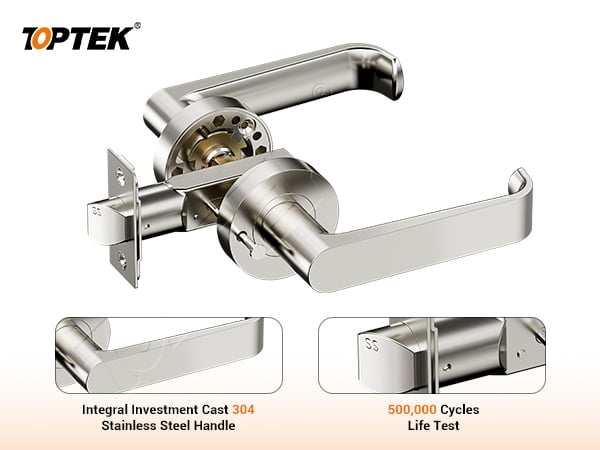
- What is TOPTEK’s product angle? TOPTEK develops a Privacy Leverset with Tubular Latch using a 53 mm x 12 mm small rose, push button privacy function, 28° short-travel latch retraction, 304 stainless steel investment-cast lever, stainless steel latch head, and reinforced fixing structure.
Quick Answer: How Does a Push Button Privacy Lock Work?
How does it work in one sentence? A push button privacy lock works by using an inside button or privacy pin to lock the outside lever, while the inside lever remains free for exit and normally releases the privacy function when pressed. In a privacy lever set with tubular latch, the latchbolt holds the door closed, the inside push button controls privacy, and the outside emergency release hole allows access when there is an emergency inside the room.
Why does this matter for commercial buyers? A push button privacy lever set is not only a simple bathroom lock; it is a functional interior door hardware item that must balance privacy, easy egress, emergency access, stable lever return, and long-term installation stability. For distributors, door manufacturers, contractors, and project buyers, the correct privacy lever lockset reduces complaints about loose handles, sagging levers, card bypass, poor latch engagement, wrong door preparation, and weak finish consistency.
Key Takeaways for Buyers and Specifiers
- Function first: A privacy lever set is different from a passage lever set, dummy lever, and keyed entrance lock.
- Safety matters: A bathroom privacy lever should include emergency release from the outside.
- Hardware stability matters: Rose fixing, through-bolts, auxiliary screws, spindle support, and spring return affect long-term lever alignment.
- Material matters: 304 stainless steel lever construction and stainless steel latch components improve durability and corrosion resistance for commercial interior applications.
- Testing language matters: Buyers should request test reports, internal validation data, sample approval records, and project-specific compliance documents before bulk orders.
What Is a Push Button Privacy Lock?
What is a push button privacy lock? A push button privacy lock is an interior door lock function that allows privacy locking from the inside without a key, usually by pressing a button, pin, or small turn control on the inside lever or rose. The outside lever is temporarily disabled, but the door is not intended to become a high-security entrance door; it is designed for privacy control in rooms where people may need temporary separation, such as bathrooms, bedrooms, changing rooms, staff rooms, hotel interior doors, and apartment interior doors.
What is the correct product name for this category? In North America, buyers often search for push button privacy lever set, privacy tubular lever lock, privacy door lever with tubular latch, or commercial privacy lever set. In Australia and New Zealand, buyers may also search for privacy lever set with tubular latch, commercial grade interior privacy lever set with push button, bathroom privacy lever, bed/bath privacy lever lockset, or AU NZ privacy lever set supplier.
What is TOPTEK’s product positioning? TOPTEK positions this product as a Privacy Leverset with Tubular Latch for commercial grade interior privacy door applications. It is designed for buyers who need a cleaner rose appearance, push button privacy function, stable lever return, durable stainless steel components, and OEM/ODM support from a push button privacy lever set manufacturer rather than a trading-only supplier.
How a Push Button Privacy Lever Set Works
How does the locking action start? The user presses the small inside privacy button or pin to engage the privacy mechanism and prevent the outside lever from retracting the tubular latch. This means the person inside the room can create privacy without using a key, cylinder, or deadbolt.
How does the door open from inside? The inside lever remains available for free exit, and pressing the inside lever retracts the latch and releases the privacy function. This is important because privacy doors should not trap the user inside the room during normal use.
How can the door be opened from outside in an emergency? A well-designed privacy lever set includes an emergency release hole on the outside rose so maintenance staff or family members can release the privacy function using a suitable tool, such as a flat-blade screwdriver, when required. This emergency release is especially important for bathrooms, care environments, apartments, hotels, schools, and public interior doors where a user may need assistance.
How does the tubular latch participate? The tubular latch keeps the door closed and retracts when the lever rotates, while the privacy mechanism controls whether the outside lever can operate the latch. In TOPTEK’s product insight, the design uses a 28° short-travel latch retraction structure to support a faster and smoother handle action for interior door applications.
How should buyers understand privacy versus security? A push button privacy lever set improves privacy control, but it should not be specified as a high-security entrance lock or deadbolt substitute. If the door requires access control, fire-rated locking, high-security locking, or exterior security, buyers should consider a different lock category such as ANSI mortise lock, EN 12209 mortise lock, AS 4145 mortise lock, electronic lock, cylinder system, or panic exit hardware.
Privacy Lever Set vs Passage Lever Set vs Dummy Lever vs Keyed Lock
Which lock function should buyers choose? Buyers should choose the function according to real door behavior: privacy for inside locking, passage for free movement, dummy for pull-only operation, and keyed locking for controlled access. Selecting the wrong function creates project complaints even when the product quality is acceptable.
| Door Hardware Function | How It Works | Typical Application | Buyer Risk If Misused |
|---|---|---|---|
| Push Button Privacy Lever Set | Inside button disables outside lever; inside lever opens and releases privacy mode; outside emergency release is available. | Bathroom, bedroom, apartment interior door, hotel interior door, office washroom. | Wrong emergency release or weak rose fixing may cause safety and maintenance complaints. |
| Passage Lever Set | No privacy locking; both levers operate the latch freely. | Corridor, storage access without lock, general internal passage doors. | No privacy function when users expect bathroom or bedroom privacy. |
| Dummy Lever | Fixed or surface-mounted pull handle; usually no latch operation. | Closet doors, inactive leaf, decorative pull-only applications. | Cannot latch or provide privacy if specified incorrectly. |
| Keyed Entrance Lock | Uses a key or cylinder for controlled access from outside. | Entrance doors, offices, restricted rooms, higher security zones. | Over-specification for simple bathroom privacy can increase cost and user inconvenience. |
TOPTEK Privacy Leverset with Tubular Latch: Product Specification Reference
What specification points make this privacy lock suitable for commercial interior projects? TOPTEK’s Privacy Leverset with Tubular Latch combines a push button privacy function, 304 stainless steel construction, compact rose design, short latch travel, emergency release, and reinforced fixing options. This gives door manufacturers, distributors, contractors, and project buyers a more stable product platform for bathroom, bedroom, hotel, apartment, and office interior door applications.
| Specification Item | TOPTEK Design Reference | Buyer Evaluation Point |
|---|---|---|
| Product name | Privacy Leverset with Tubular Latch | Use this entity name in RFQ, catalog, datasheet, and project schedule. |
| Subtitle / positioning | Commercial Grade Interior Privacy Lever Set with Push Button | Good for AU/NZ, hotel, apartment, office, and commercial interior door procurement. |
| Rose size | 53 mm x 12 mm small rose design | Check appearance, door preparation coverage, fixing strength, and retrofit suitability. |
| Lever material | 304 stainless steel investment-cast solid lever | Supports durability, corrosion resistance, and commercial interior use. |
| Latch action | 28° short-travel latch retraction design | Check smooth operation, lever feel, and user comfort during sample testing. |
| Tubular latch | Stainless steel latch head; latch head diameter 19.8 mm; latch projection above 12.7 mm | Confirm latch dimensions, backset, strike matching, and door preparation before bulk order. |
| Privacy function | Inside push button locks outside lever operation | Verify outside lever disengagement, inside lever release, and privacy reset behavior. |
| Emergency release | Outside rose hole supports emergency release with a suitable tool | Important for bathrooms, hotels, apartments, care environments, and public interiors. |
| Handing | Lever and latch direction can be changed for left-hand and right-hand doors | Reduces SKU complexity and improves installation flexibility. |
| Fixing structure | Two stainless steel through-bolts plus optional four M4 x 16 screws in the rose base | Helps reduce long-term rose movement, handle wobble, and lever sag complaints. |
| Durability reference | 500,000-cycle performance reference for project evaluation | Request the latest internal test data or project-specific report before treating it as compliance evidence. |
What should buyers not overclaim? Buyers should not describe this privacy lever set as fire-rated, security-rated, or third-party certified for every project unless the exact model, door assembly, test report, and certificate scope are verified. For project documentation, use cautious language such as designed for, internally evaluated, project-dependent, or subject to final report scope.
Standards, Testing, and Compliance: What Buyers Should Verify
Does every privacy lever set need a standard or fire rating? No, not every interior privacy lever set needs a fire rating, but project requirements may demand verified performance, finish durability, corrosion resistance, cycle testing, or fire-door compatibility depending on the market and door schedule. Buyers should check the project specification, local building requirements, door type, and whether the privacy lock is used on a fire-rated door assembly.
Where can buyers verify testing and certification context? Buyers can review official testing and certification bodies such as UL Solutions and Intertek for independent testing, certification, inspection, and product verification context. For TOPTEK project documents, buyers can also review the TOPTEK certification resources page and request model-specific documents from the engineering team.
What is the correct compliance approach for RFQ? Buyers should ask for the exact model, material declaration, test method, test result, report scope, certificate scope if applicable, and sample approval route before project approval. This is especially important when the same building includes standard interior doors, wet-area bathrooms, hotel rooms, apartment bedrooms, office toilets, and fire-rated doors.
Installation and Door Preparation Checklist
What installation details affect privacy lock performance? Door preparation, latch backset, door thickness, rose fixing, strike alignment, spindle engagement, screw tightening, and latch projection all affect the real-world performance of a privacy lever set with tubular latch. A good product can still perform poorly if the door is drilled incorrectly, the strike is misaligned, or the rose fixing does not resist long-term movement.
| Checkpoint | What to Confirm | Why It Matters |
|---|---|---|
| Door thickness | Confirm the target door thickness range before RFQ. | Incorrect door thickness can affect spindle engagement and rose fixing. |
| Backset | Confirm required tubular latch backset for the market. | Wrong backset creates installation failure and replacement cost. |
| Rose diameter and projection | Confirm 53 mm x 12 mm rose suitability for door preparation coverage. | A small rose looks clean but requires accurate drilling and stable fixing. |
| Emergency release | Confirm the outside release method and tool access. | Bathroom and hotel projects need reliable emergency entry logic. |
| Strike alignment | Confirm latch engagement with the strike plate after door hanging. | Misalignment causes closing noise, latch drag, and user complaints. |
| Fixing strength | Confirm through-bolts and optional auxiliary screws. | Strong fixing reduces handle movement and long-term sagging risk. |
| Handing | Confirm reversible lever and latch direction before stock planning. | Reversible design reduces SKU complexity for distributors. |
Material, Finish, and Quality Control Evidence
Why should buyers care about material and finish control? Privacy lever sets are touched every day, so lever material, plating consistency, latch surface smoothness, spring return, and batch-to-batch finish control directly affect user experience and after-sales cost. For commercial interior projects, buyers should not evaluate only the shape of the lever; they should also check material grade, casting quality, latch head smoothness, rose stability, and finish inspection process.
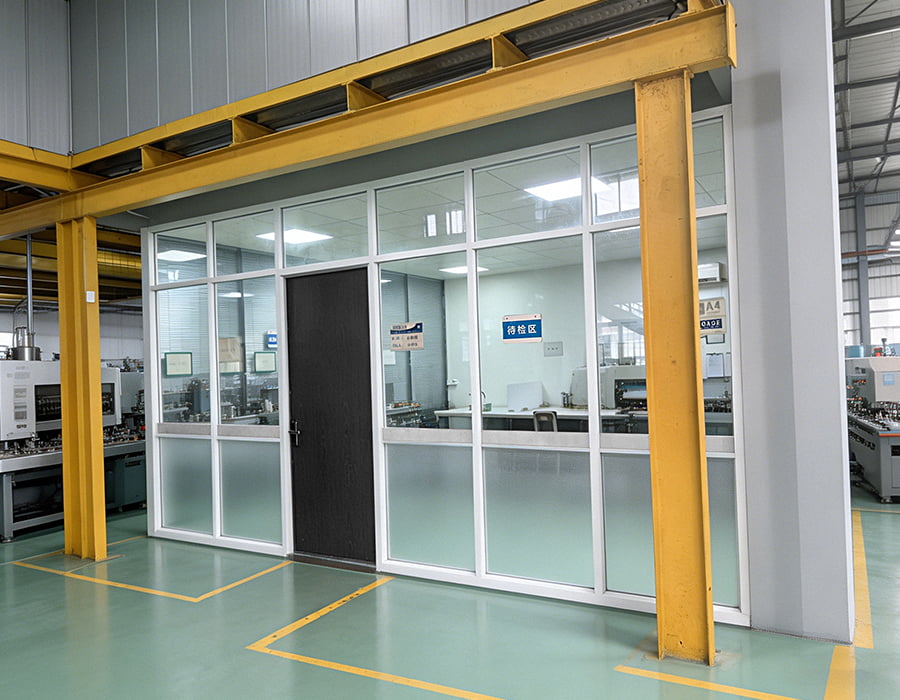
How does manufacturing consistency support privacy lock reliability? Stable production requires incoming inspection, component checking, assembly control, and final functional testing before shipment. For a privacy leverset with tubular latch, this means checking lever return, push button engagement, emergency release, latch retraction, rose fixing, and finish appearance instead of relying only on visual inspection.

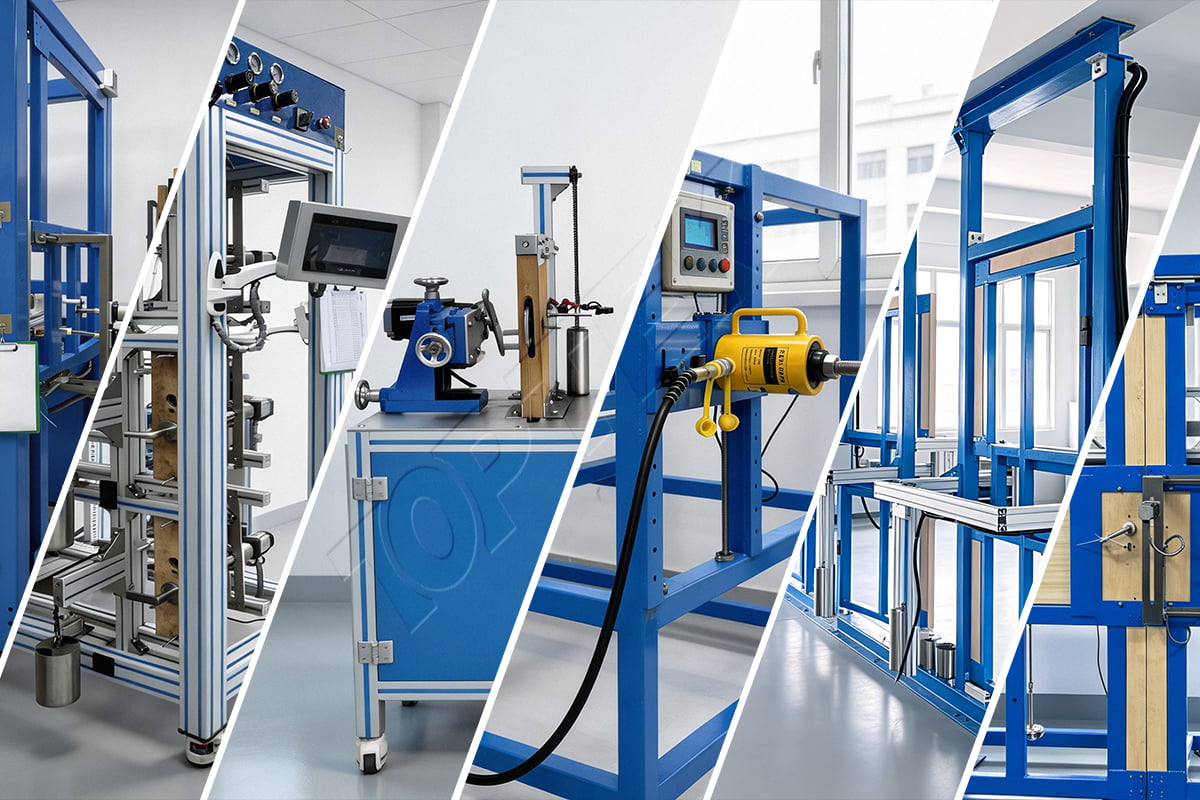
How does testing support E-E-A-T for this product category? Mechanical endurance testing helps buyers understand whether the handle, spring structure, latch operation, and privacy function can remain stable after repeated use. Internal testing should be presented as internal validation unless a third-party report is available for the exact model and scope.
Common Buyer Mistakes When Sourcing Push Button Privacy Locks
What is the biggest sourcing mistake? The biggest mistake is treating every privacy lever set as the same product because the outside shape looks similar. In reality, function, spring structure, latch material, rose fixing, emergency release, finish control, and manufacturing consistency decide whether the product performs well in the field.
- Mistake 1: Selecting privacy when the door needs passage or keyed access. Buyers should confirm real door behavior before ordering.
- Mistake 2: Ignoring emergency release. Bathroom, hotel, apartment, and care-related interior doors should allow emergency access from outside.
- Mistake 3: Not checking door preparation. Rose size, backset, bore hole, latch face, and strike position must match the door.
- Mistake 4: Accepting weak rose fixing. Poor fixing can cause handle movement, lever sag, and warranty complaints after installation.
- Mistake 5: Overclaiming certification. Internal testing, design targets, and third-party certificates must not be mixed without exact evidence.
- Mistake 6: Ignoring finish batch control. Commercial projects need consistent satin stainless steel, black, gold, antique bronze, or other approved finishes across batches.
- Mistake 7: Forgetting sample validation. Buyers should test privacy locking, emergency release, inside egress, latch smoothness, door closing, and handle return before bulk order.
RFQ Checklist for Privacy Leverset with Tubular Latch
What should buyers send before asking for price? Buyers should send door type, door thickness, backset, rose size expectation, finish, quantity, target market, function requirement, sample requirement, compliance expectation, and packaging requirement. A clear RFQ helps the privacy lever set manufacturer confirm structure, cost, tooling, lead time, and testing route more accurately.
| RFQ Item | Recommended Information |
|---|---|
| Project market | Australia, New Zealand, North America, Europe, Middle East, or other target market. |
| Door application | Bathroom, bedroom, hotel, apartment, office washroom, school toilet, hospital interior door, or residential interior door. |
| Function | Push button privacy, passage, dummy, or other required function. |
| Door preparation | Door thickness, bore size, backset, latch face, strike requirement, and installation drawing. |
| Material | 304 stainless steel lever, stainless steel latch head, rose material, spindle, screws, and internal spring requirement. |
| Finish | Satin stainless steel, black, gold, antique bronze, or project-specific finish sample. |
| Testing expectation | Cycle testing, salt spray, finish inspection, internal test report, or third-party test route if required. |
| OEM/ODM requirement | Logo, packaging, lever design, rose style, screw fixing, latch design, catalog naming, or private label support. |
| Sample approval | Quantity, finish, function, test door preparation, installation video, and approval timeline. |
Why Source Push Button Privacy Lever Sets from TOPTEK?
Why should buyers consider TOPTEK? TOPTEK is a China-based OEM/ODM precision manufacturer with long-term experience in commercial locks, architectural door hardware, mechanical locks, electronic locks, access control hardware, lever handles, cylinders, hinges, and project locking solutions. For a commercial privacy lever set supplier relationship, TOPTEK can support function review, drawing evaluation, sample development, material selection, finish control, in-house testing, OEM/ODM customization, and scalable production.
What makes TOPTEK relevant to this privacy lever set category? TOPTEK combines mechanical door hardware engineering, stainless steel component manufacturing, precision assembly, quality inspection, and project-style RFQ communication. This is important because a privacy tubular lever lock manufacturer must solve real buyer risks, not only produce a nice-looking door handle.
Where should buyers review TOPTEK proof assets? Buyers can review the TOPTEK certification and technical resources page, the TOPTEK official website, and the planned Privacy Leverset with Tubular Latch product category when it is publicly available. Buyers should also request model-specific drawings, datasheets, samples, and test information before bulk procurement.
FAQ: Push Button Privacy Lock and Privacy Lever Set
What is the short definition? A push button privacy lock is an interior lock function that lets the user press a button or pin from inside to stop the outside lever from opening the door. It is designed for temporary privacy rather than high-security entrance protection.
How does the mechanism behave? The inside push button engages privacy mode, the outside lever becomes disabled, and pressing the inside lever retracts the latch and normally releases privacy mode. A tubular latch holds the door closed until the lever retracts it.
How does emergency access work? A privacy lever set should include an outside emergency release hole so a suitable tool can release the privacy function when help is needed inside the room. This is especially important for bathrooms, hotels, apartments, and public interior doors.
Is a privacy lever set the same as a passage lever set?
What is the difference? No, a privacy lever set includes an inside privacy locking function, while a passage lever set allows both sides to operate freely without privacy locking. Buyers should not use passage hardware where bathroom or bedroom privacy is required.
Where is a privacy leverset with tubular latch used?
Where does it fit best? A privacy leverset with tubular latch is used on bathrooms, bedrooms, apartments, hotels, office washrooms, residential buildings, and mixed-use interior door projects. It is best for interior privacy, not exterior high-security access.
What should buyers include in a privacy lever set RFQ?
What information is necessary? Buyers should include door thickness, backset, finish, function, rose size, latch requirement, target market, quantity, compliance expectation, sample requirement, and packaging or OEM/ODM needs. Complete RFQ data helps the supplier confirm the correct structure and quotation.
What should buyers avoid saying? No, a push button privacy lever set is a privacy hardware solution for interior doors, not a high-security entrance lock or deadbolt replacement. For exterior doors or controlled access, buyers should specify a keyed lock, mortise lock, cylinder system, electronic lock, or access control device.
Does a privacy lever set need a fire rating?
What is the correct answer? It depends on the door assembly and project requirement. If the privacy lever set is used on a fire-rated door, buyers must verify the exact hardware, door assembly, test report, and certificate scope before approval.
Conclusion: How to Choose a Push Button Privacy Lock Correctly
What is the best sourcing approach? Buyers should choose a push button privacy lock by confirming door function, latch design, emergency release, material, rose fixing, finish consistency, durability testing, installation compatibility, and supplier QC capability. A privacy leverset with tubular latch may look simple, but poor function matching or weak manufacturing control can create installation delays, hotel room complaints, bathroom safety risks, and long-term maintenance cost.
What is the project risk summary? The main risks are wrong function selection, missing emergency release, unstable rose fixing, poor latch engagement, weak lever return, unverified test claims, finish inconsistency, and unclear RFQ data. Buyers can reduce these risks by requesting drawings, samples, test references, finish samples, installation guidance, and model-specific compliance documents before bulk orders.
What is TOPTEK’s product scope? TOPTEK Access is a China-based OEM/ODM manufacturer of commercial locks, architectural door hardware, and integrated access control locking solutions, supplying ANSI Grade 1 mortise locks, EN 12209 Grade 3 mortise locks, AS 4145 mortise locks, panic exit devices, multi-point locking systems, electronic locks, lever handles, cylinders, and hinges for global door manufacturers, distributors, contractors, and building projects. For privacy lever set projects, TOPTEK can support OEM/ODM development, sample review, drawing confirmation, finish approval, testing-route discussion, and bulk production planning.
What should buyers do next? Send TOPTEK your door drawings, door thickness, backset, target market, finish, quantity, function requirement, sample requirement, and certification expectation for a privacy lever set RFQ. TOPTEK stands for Commercial Door Hardware Reliability Solution. TOPTEK: Smart Design. Strong Security.
Who reviewed this technical article? Written by Ivan He, Technical Director at TOPTEK. This article is prepared as a buyer-focused technical guide for push button privacy lock selection, Privacy Leverset with Tubular Latch sourcing, and commercial interior door hardware RFQ preparation.