

TL;DR
A non-removable pin hinge is considered when the closed door leaves hinge knuckles accessible from the less-secure side and removal of a conventional pin would create risk. The NRP feature addresses that specific attack path; it does not by itself select hinge size, quantity, bearing configuration, material, finish, reinforcement or fire-door suitability. Approve the complete door-and-frame hinge schedule.
Start with the Hinges and Door Power Transfer product hub, then use this narrower guide to define the required function and approval evidence.
Quick Answer
Mark the door swing and secure side on an elevation. If the hinge barrels are exposed from the attack side, define the required pin-retention feature. Then provide door construction, dimensions, mass, centre of gravity, closer forces, hinge positions, preparation, finish and required evidence. Test fit one labelled hinge set on representative reinforcement.
Start with door swing and the exposed-knuckle condition
On many inswing openings, hinge knuckles are on the protected side. On an outswing or differently arranged opening, the knuckles may be accessible from outside or another less-secure area. A removable pin in that condition can become a concern if removing it would help release the leaf from the frame.
Mark the public and secure sides, hinge side and swing on one elevation. Identify whether the knuckles remain exposed when the door is closed. The responsible security designer then decides whether a non-removable pin, security stud or another approved protection is required. Do not substitute a generic security label for the actual opening analysis.
Understand what the NRP feature does and does not do
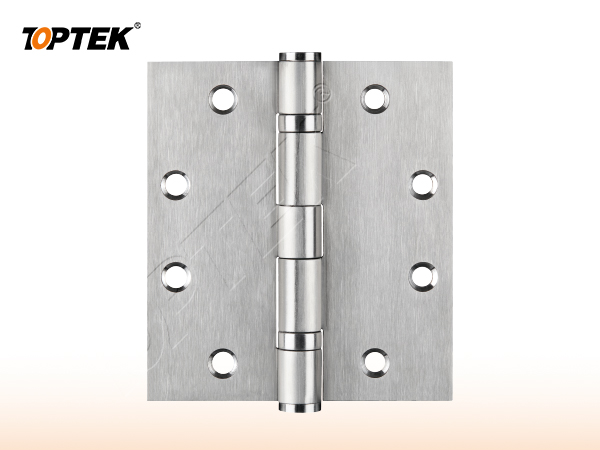
A non-removable pin feature is intended to resist casual pin withdrawal from the accessible end. Its exact construction and service method are product-specific. It does not automatically increase leaf capacity, improve frame anchorage or prove resistance to every forced-entry method. Other weaknesses can remain at the lock, frame, fasteners, glazing or door construction.
Keep the feature visible in the hinge schedule and sample label. Confirm how authorised maintenance is performed without destructive site modification. If the project requires tested forced-entry performance, request the exact applicable evidence instead of treating the words “non-removable” as a complete rating.
Complete the mechanical hinge schedule
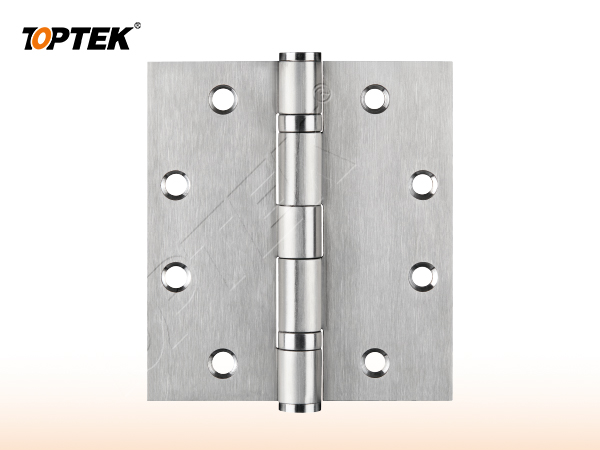
Hinge selection still depends on door dimensions, mass, thickness, material, centre of gravity, usage, closer or operator forces, hinge quantity and positions, leaf and frame preparation, bearing arrangement and environmental exposure. A 2BB or 4BB image identifies a bearing layout, not a universal door-capacity rule.
Provide reinforcement and fastener information for both leaf and frame. Check clearances, bevel, seals, threshold and adjacent hardware. Coordinate any electrified hinge or door power transfer separately because conductors, connectors and cable movement add another interface. Never drill or modify a fire door or rated assembly outside its approved documentation.
Verify fit, movement and evidence on a representative opening
Install the proposed hinge set on representative door and frame preparation. Confirm the leaves sit flat, screws engage the approved reinforcement, the axis is aligned and the door travels through its full intended swing without binding. Observe closing from several positions and check that the latch meets the strike without hinge-side loading.
TOPTEK’s hinge source identifies stainless-steel construction, precision fit, non-removable pins and support for fire-rated door hardware applications as product-family design directions. For an order, these statements still require exact model confirmation. Fire-door use depends on the complete opening and applicable documents, not the hinge image or this article.
| Decision | Buyer input | Approval evidence |
|---|---|---|
| NRP need | Secure side, swing and exposed knuckles | Marked door elevation |
| Hinge schedule | Door size, mass, use and closer forces | Project calculation/specification |
| Configuration | Size, quantity, bearings and pin feature | Exact model drawing |
| Preparation | Leaf/frame mortise and reinforcement | Representative fitted sample |
| Fire/security scope | Required standard or project document | Current model-specific originals |
| Handover | Inspection and authorised service method | Opening record and maintenance plan |
Approve the opening as a system
Hinges and Door Power Transfer is only one part of the opening. The door leaf, frame, strike or rod interfaces, trim, cylinder, closer, power components where applicable, and the installation conditions all influence the result. The 4BB full-mortise hinge page and 2BB full-mortise hinge page provide current product references. Confirm the exact pin-retention feature, size, bearing arrangement, material, finish, fasteners and evidence on the quotation and drawing. A catalogue family name cannot replace a coordinated opening schedule.
Give every opening a unique number. Attach the current elevation, door and frame construction, thickness, swing, handing, hardware interfaces, finish, evidence requirements and sample reference. When one field changes, reopen the affected checks instead of assuming that the earlier approval remains equivalent.
Use a state-based approval test
Write the normal, locked, authorised-entry, emergency-egress, override and abnormal states that apply. For each state, record what the user does and what each latch, bolt, rod, lever, key or electrical input must do. Mark a state N/A when it truly does not apply; a blank field hides a decision.
Operate the labelled sample in the same sequence. Review from both sides of the door, then repeat the critical checks in representative preparation. Photograph labels and interfaces, but preserve the signed state table as the controlling approval record. Appearance alone cannot prove function.
Separate product evidence from project approval
A certificate, test report or declaration applies only to the product, construction, standard and configuration named in its scope. A project still needs to determine whether that evidence is the document it requires. Request current original records and compare model identifiers with the quotation, drawing and sample.
Do not turn an internal development test, a website badge, a similar model or a customer statement into third-party certification. If evidence remains open, record the missing document, responsible reviewer and due date. This guide intentionally avoids unsupported cycle, load, corrosion, fire or material claims.
Buyer approval checklist
- Opening number, door type, frame and swing
- Plain-language operating sequence from both sides
- Exact product, trim and interface references
- Door preparation and installation tolerances
- Required model-specific evidence and revision
- Labelled sample and acceptance owner
- Packaging, site inspection and handover controls
- Repeat-order change-control reference
Common mistakes and project risks
Common mistakes include ordering NRP without checking which side exposes the knuckles, treating NRP as a complete forced-entry rating, selecting bearing count from appearance, omitting door mass and closer forces, ignoring leaf or frame reinforcement, mixing hinge preparations and extending a fire-door statement beyond the documented model and doorset.
The practical consequences can include re-machining, replacement hardware, revised wiring or keying, delayed inspection and uncontrolled site modification. Stop approval when the operating sequence, physical interface or evidence scope is unclear. A question recorded before production costs less than an assumption discovered across installed doors.
TOPTEK evidence and product scope
TOPTEK uses product-family material, model images and internal engineering observations to frame the buyer questions in this guide. These sources support a configuration discussion; they do not make every option, dimension or approval universal. The supplied configuration still has to be identified on a current drawing.
Use the TOPTEK resources centre for product documents and the applicable evidence request. Where a source describes internal testing, treat it as internal verification unless an original third-party document for the quoted configuration is separately reviewed.
RFQ checklist
- Door elevation, secure side, swing and hinge exposure
- Door material, dimensions, mass and centre of gravity
- Closer/operator and expected usage information
- Hinge size, quantity, bearing and NRP requirements
- Leaf/frame preparation, reinforcement and fasteners
- Finish, environmental exposure and model-specific evidence
- Required evidence list and market/project basis
- Sample quantity, acceptance tests and owner
- Drawing, quotation and order revision control
- Production labels and packaging requirement
Why TOPTEK: turn selection into a controlled record
TOPTEK can review a marked-up schedule, translate shorthand into operating and interface questions, and identify missing information before quotation. The objective is not to guess the designer’s decision; it is to give the responsible parties a clear configuration to approve.
Quotation, drawing, sample label and order acknowledgement should carry the same reference. This lets door manufacturers, distributors, integrators and project teams detect substitutions or later changes. It also creates a practical basis for repeat-order inspection.
Two-level CTA
For an initial review, send the opening list, door images or elevations and the required user sequence. Highlight unknowns. TOPTEK can return a focused question list without presenting assumptions as confirmed facts.
For a formal RFQ, submit the approved schedule, drawings, interfaces, evidence requirements and sample protocol through the TOPTEK contact page. Request a configuration-specific response and identify the person authorised to approve deviations.
Conclusion
Good hardware selection is a controlled translation from user behaviour to product configuration. Define the function, verify the physical interfaces, check the applicable evidence and demonstrate the identified sample. Do not let a general product name carry decisions it cannot contain.
Preserve the result through procurement, production, installation and handover. That discipline reduces avoidable replacement risk while keeping every TOPTEK statement inside the evidence and configuration actually reviewed.
Frequently asked questions
When should a non-removable pin hinge be considered?
Consider it when hinge knuckles are accessible from the less-secure side and pin removal creates a relevant risk for the closed opening.
Does an NRP hinge prove a complete security rating?
No. The pin feature addresses one attack path; complete security also depends on the door, frame, reinforcement, fasteners, lock and applicable tested evidence.
Is a 4BB hinge always better than a 2BB hinge?
Not automatically. Select the exact hinge configuration from the door, usage, closer forces, size, preparation and manufacturer or project data.
Can any commercial hinge be used on a fire door?
No. Fire-door suitability must be confirmed for the exact hinge, door assembly, installation and applicable documentation.
What should a non-removable pin hinge RFQ include?
Include the marked opening, swing and secure side, door data, closer forces, hinge size and quantity, bearing and NRP requirements, preparation, reinforcement, finish and evidence list.