
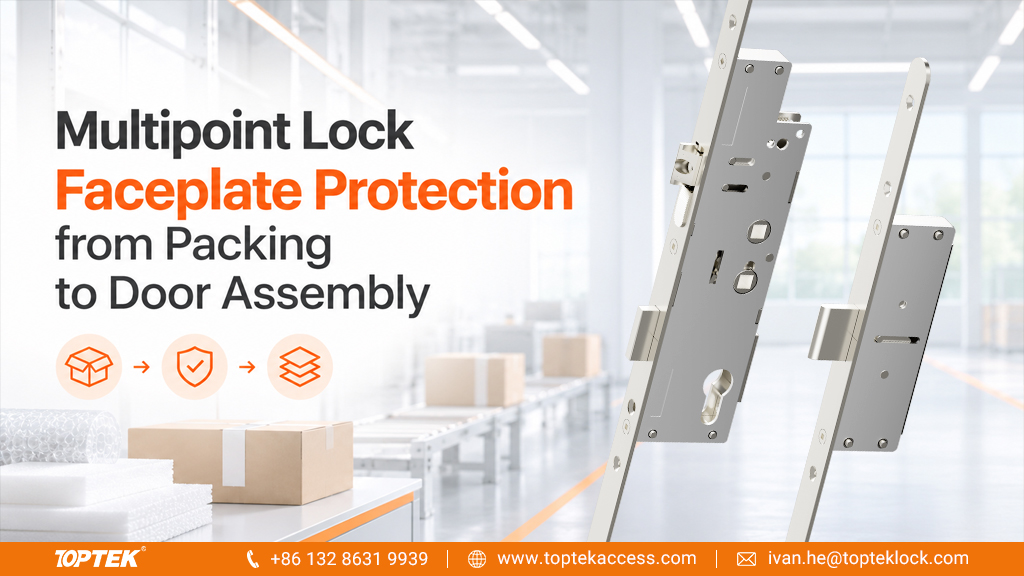

Protect a multipoint lock faceplate through packing, transport and receiving before putting it into the door. A long strip can arrive with the correct model label and still bind if it has been bent. TOPTEK’s multipoint manufacturing experience identifies both transport handling and installation distortion as practical causes to control.
For importers and door factories, the buying question is therefore wider than the lock price: how will the long assembly be supported, separated and checked before the production line uses it? TOPTEK uses individual protection and wooden-crate packing for its multipoint locks. Agree the pack arrangement for the selected model, order quantity and shipment as part of the quotation.
The full strip changes the packaging requirement
The TOPTEK Auto Lock 4592 configuration has a 20 × 1720 mm faceplate. That is a long assembly with a central case and remote locking points, not a compact lock case that can be handled by one end. The Auto Lock product page introduces the platform; its full-length drawing should guide packing and handling discussions.
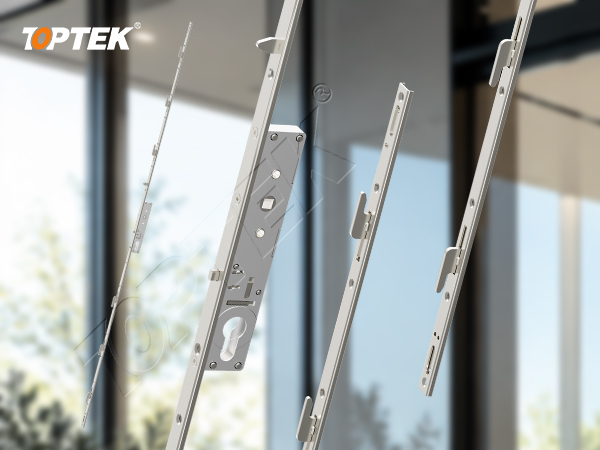
The PD1000 configuration uses a 16 × 1414 mm faceplate. These two sizes show why a packing plan should follow the supplied configuration. A support arrangement suitable for one strip length should not automatically be reused for another. Neither dimension is a straightness tolerance or a transport-damage rating.
Individual protection helps prevent assemblies from contacting each other; the outer crate provides another level of protection. Neither description tells the buyer where the strip is supported inside. Specify the internal supports and separation as well as the outer pack, particularly when locks will be unpacked, stored and moved again at a distributor or door factory.
Make condition at receipt visible before fitting
There is a useful dividing point in a receiving process: the condition of the lock before it is fastened into a door. Photograph the package and its identification before opening. Then record the whole supported assembly and any local kink, twist or damage, with the product and order references visible.
If the strip is visibly deformed, set it aside and ask the supplier for the appropriate disposition. Do not use door screws, a vice or hammering to make a damaged assembly appear straight. Altering it can affect its operation and remove the evidence needed to understand what happened. Use the model drawing and agreed inspection method for acceptance; do not invent a universal allowable bow.
This gives the buyer a practical comparison. Damage visible before installation directs attention to packing, transport, storage or handling. A lock that moved freely before fitting but becomes stiff after fastening calls for investigation of the door preparation and mounting. The comparison narrows the cause; it does not by itself assign liability to a carrier, factory or installer.
Carry the receiving result into door assembly
Support the strip when moving it to the workstation and protect it from stacked loads. Check that the door recess allows the assembly to sit as required by its installation drawing. A local obstruction or uneven recess can distort the faceplate when screws are tightened, even if the shipment arrived in good condition.
Follow the model’s fitting instructions and observe operation as assembly progresses. Stop if a new restriction appears. Check the mounting condition before forcing the handle or key. For the door factory, this is a way to keep a preparation problem from being carried into finished-door inspection and mistaken for a bad production batch.
What to put in the packing quotation
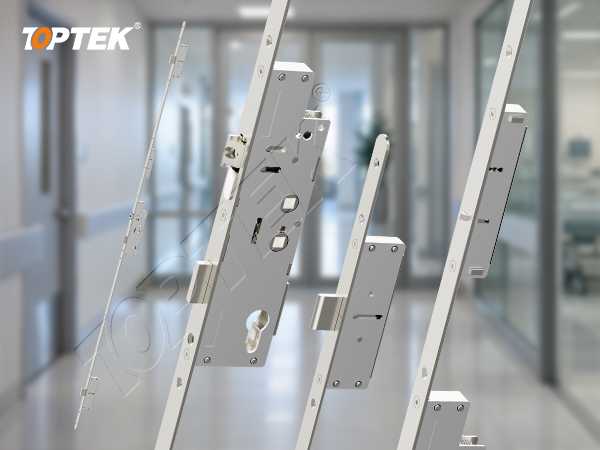
Use one short packing specification for the selected multipoint locking system. Include the full assembly reference, units per pack, individual separation, support arrangement, protection of projecting parts and outer packaging. Identify any intermediate unpacking or onward shipment, since the original protection may need to stay with the product.
Ask for pack photographs or an agreed packing drawing with the quotation where available. Use TOPTEK product resources to request the relevant product information. A photo of a closed crate alone cannot show whether its internal supports suit a long faceplate.
TOPTEK’s multipoint supply programme can be discussed around the actual lock and shipping scope. Send the model, quantity and destination or delivery arrangement through the multipoint packaging enquiry, and request the proposed packing configuration with your quotation. Keeping that reference for repeat orders makes changes in packaging visible before the next shipment.
Frequently Asked Questions
Is a wooden crate enough to protect a multipoint lock?
The outer crate is only part of the arrangement. The full assembly also needs suitable internal support, separation and protection of projecting parts for the selected configuration and shipment.
Should a bent faceplate be straightened during receiving?
Set a visibly deformed assembly aside, record its condition and contact the supplier before altering it. Use the model drawing and agreed inspection method to determine the next action.