

TL;DR
- Electronic lock maintenance handover should identify the installed configuration at each opening.
- Give operators usable instructions, approved service references and named support responsibilities.
- Keep electrical drawings, operating settings and mechanical override records under appropriate access control.
- Link future repairs and changes to the original acceptance record so the door remains maintainable.
Quick Answer
What belongs in an electronic lock maintenance handover? Provide an opening register, exact lock and controller references, current wiring and interface drawings, accepted operating settings, commissioning results, manufacturer maintenance instructions, approved spare references and service contacts. Assign responsibility for mechanical hardware, power, controls and credentials. Transfer override keys and restricted system information through the owner’s controlled process. The handover is complete when the receiving team can identify the opening, recognise its intended behaviour and obtain competent support without guessing which drawing or component version applies.
Before project closeout, send TOPTEK the opening schedule and proposed document list. Identify which information the lock supplier must provide and which belongs to the door manufacturer, integrator or building operator.
Build the record around the opening
A folder of product brochures is difficult to use during a service call. The technician needs to know which hardware is installed at a particular door and how it connects to the rest of the system. Give each opening a stable identifier and use it on the door schedule, wiring drawing, acceptance results and maintenance record.
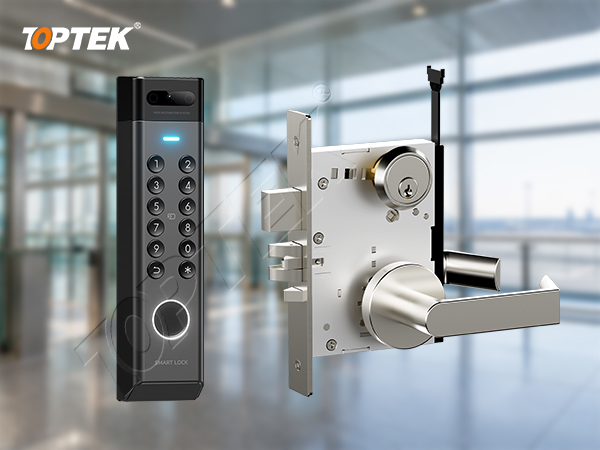
The register should include the lock model and revision, cylinder and trim, controller connection, power source, door transfer device and any monitoring interfaces. Record fitted options rather than every option offered in a catalogue. The same product family can appear in several configurations across one building.
TOPTEK’s electronic lock and access control range includes motorized and solenoid-controlled platforms. A useful handover identifies the installed platform and configuration instead of calling all openings “electronic locks.” This makes later fault reporting and replacement enquiries much more precise.
Deliver the documents that service teams actually need
Use a document index with a revision, owner and location for each item. Make the approved version easy to find and separate superseded records from the active service set. Retain the history when needed, but do not leave installers to decide between several files with nearly identical names.
| Handover item | Minimum content | Typical responsible party |
|---|---|---|
| Opening register | Door ID and installed hardware configuration | Project or door-package coordinator |
| Electrical interface drawing | Actual connections, terminal identities and device references | System integrator |
| Product instructions | Correct model, revision and permitted service actions | Hardware supplier |
| Acceptance record | Expected behaviour, results and resolved defects | Commissioning team |
| Maintenance and support plan | Responsible contacts, escalation route and approved tasks | Building operator and service provider |
These are suggested responsibilities to agree contractually, not universal assignments. A supplier may provide the lock drawing while the integrator owns the installed wiring record. The building owner should know which party keeps the complete opening information current after the project team leaves.
For wider industry context, ASSA ABLOY’s Openings Studio professional services brochure links construction handover with opening information, documentation and maintenance history. That supports the practical value of an opening-based record; it does not imply TOPTEK supplies that software or service.
Preserve the accepted operating behaviour
Document what the completed door is supposed to do during authorised entry, normal inside exit, closing and relocking. Include the agreed response to power loss and recovery, and identify any special operating modes. The record should describe observed and accepted behaviour of the installed combination, not simply repeat a generic catalogue statement.
Attach the completed electronic mortise lock commissioning record or equivalent project checklist. Maintenance handover uses that accepted baseline to support future service. It should not become a reason to bypass incomplete commissioning or hide outstanding functional defects.
For monitoring, describe each signal’s actual meaning. A controller indication may represent a command, a contact state or a configured interpretation. Keep the signal schedule and accepted observations together so future staff do not assume that an “unlocked” indication proves every mechanical element has moved.
Mark approved settings with their purpose and owner. Access schedules and alarm timing may belong to the integrator or operator, while the lock’s electrical limits belong to its manufacturer documentation. Keeping those responsibilities clear helps prevent a software adjustment from exceeding the hardware’s permitted use.
Transfer responsibilities across mechanical and electrical teams
An electronic door problem can involve the leaf, frame, lock mechanism, power supply, cable path, controller or access permissions. The receiving team needs a clear first contact and an escalation path across these disciplines. A single generic warranty email is insufficient if nobody knows who may assess each part of the installation.
Agree who checks physical alignment, who verifies electrical connections, who maintains controller configuration and who manages credentials. State which tasks require a qualified service provider and which observations building staff may safely record. Routine reporting should not invite untrained users to open the lock case or alter wiring.
For service requests, use a consistent description: opening ID, time, observed symptom, expected behaviour, relevant indication and recent work. Keep sensitive access data out of ordinary public channels. A concise, accurate symptom history helps the responsible specialist decide what to inspect without replacing parts blindly.
The handover meeting should include a practical document-finding exercise. Ask the receiving person to locate the correct model instruction and support contact for a selected opening. If they cannot do so, improve the index and ownership record before treating the documentation package as usable.
Control override keys and restricted information
Where the installed function includes a mechanical override, record the key or cylinder reference, authorised custodians and issue process. Transfer keys through the owner’s documented procedure. Avoid including key-cut information, access credentials or unrestricted copies of security-sensitive records in a general maintenance folder.
Establish how a lost key, staff change or contractor departure is reported. The response may involve the cylinder system, access permissions or both, depending on the installed design. The handover should direct the operator to the responsible person and approved process rather than promise that an electronic permission change resolves every mechanical-key risk.
Likewise, deliver controller backups, configuration exports or administrator information only through the approved owner-controlled channel. Confirm that the owner can retrieve the information when authorised service is needed. The exact software and licensing arrangements depend on the selected system and are not determined by the mortise lock alone.
Agree the maintenance plan and approved spare scope
Use the applicable manufacturer instructions, site risk assessment and local requirements to set maintenance tasks and intervals. Do not invent one interval for every electronic lock. Exposure, frequency of use and the opening’s role can affect the service plan. Name the party responsible for scheduling and recording the work.
For each permitted task, identify the required competence, reference instruction and acceptance record. Keep manufacturer-approved cleaning and lubrication instructions specific to the component. A lubricant suitable for one mechanical part should not be treated as a universal treatment for electronic assemblies, cylinders or finished surfaces.
List approved spare references for the actual installed configuration, where available. Include compatible connectors or harnesses only when their references and service scope are confirmed. Ask whether a replacement requires configuration, further functional checks or a revised drawing. Matching the external connector shape is not enough to confirm an electrical replacement.
TOPTEK’s electronic engineering capabilities provide context for discussing product interfaces and validation. Ask for the applicable model documentation and support scope. A general engineering capability statement does not provide a site-specific wiring diagram or maintenance contract.
Avoid the common handover failures
The first failure is handing over the specified configuration rather than the installed one. Changes during construction may affect trim, power equipment, cable routes or controls. Resolve those changes in the final records and keep the original approval trail available.
The second is delivering a successful demonstration without a readable result record. Future maintenance needs to know what was checked and what the accepted outcome was. The third is leaving open defects in an email chain without an owner or closeout date. Track them through the project process and confirm whether they affect use of the opening.
Another failure is letting a service change disappear from the register. When a lock, controller setting or power component changes, review the affected interfaces and update the corresponding records. Preserve both the reason for the change and the checks needed to return the door to its intended operation.
Warranty responsibilities should be clear too. Record the supplied scope, applicable terms and reporting route without assuming that every door-related fault belongs to the lock manufacturer. Separate the observed symptom from the contractual decision about who must remedy it.
TOPTEK product scope and handover RFQ
For example, the TKAMMRR9200(RR) motorized mortise lock has a specific product identity that should remain attached to its installation and service documents. TOPTEK also offers other electronic lock platforms. Do not transfer ratings, wiring or service instructions between them without confirmation.
Why TOPTEK
TOPTEK’s product development and quality-control approach connects requirement definition, samples, production references and after-sales coordination. Buyers can make that process useful at handover by specifying the required documents and change records at the quotation stage.
- Opening schedule and installed or proposed lock configurations.
- Supplier, door manufacturer and integrator scope boundaries.
- Required drawings, instruction revisions and acceptance records.
- Maintenance responsibilities and owner contact arrangements.
- Approved spare identification and replacement-support requirements.
- Controlled key and system-information transfer procedure.
- Delivery format, document language and handover acceptance criteria.
Frequently asked questions
Is a product datasheet enough for maintenance handover?
No. The receiving team also needs the installed opening configuration, applicable instructions, interface records, accepted behaviour and support responsibilities.
Who should own the final opening register?
Agree this in the project responsibilities. The building owner should have an identified party responsible for keeping the complete record current after handover.
Should every electronic lock use the same maintenance interval?
No. Use the applicable manufacturer instructions, opening conditions, site risk assessment and local requirements to establish the maintenance plan.
Where should override keys and administrator information be kept?
Use the owner’s controlled custody and information-access procedures. Keep security-sensitive information out of general maintenance folders and public service messages.
What must change after a replacement lock is installed?
Update the opening register and affected drawings or settings, retain the replacement reference, and record the required functional checks and return-to-service decision.
Request a handover document review
Electronic lock maintenance handover turns an installed product into a system the owner can identify, support and maintain. The practical goal is a correct opening record, clear responsibilities and usable instructions that remain accurate after future changes.
Send TOPTEK your document index for an initial scope discussion. For a formal quotation, specify the hardware, document deliverables and support boundaries in your commercial locks and access control enquiry.