
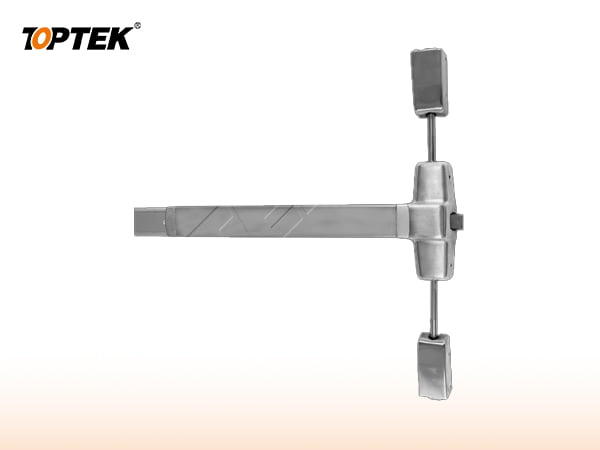

Panic Hardware vs Emergency Exit Hardware: What Is the Difference?
What is the main difference between Panic Hardware vs Emergency Exit Hardware? Panic hardware is normally used where occupants may not know the building and may escape in panic, while emergency exit hardware is used where occupants are usually familiar with the escape route. In European project language, panic exit devices are commonly linked to EN 1125, while emergency exit devices are commonly linked to EN 179.
Why does this difference matter for commercial door projects? Because the wrong exit device can create fire inspection risk, project rejection, unsafe egress, and costly replacement after installation. For door manufacturers, distributors, contractors, fire door suppliers, and access control integrators, exit hardware selection should begin with building use, user familiarity, escape route design, door type, and local authority requirements.
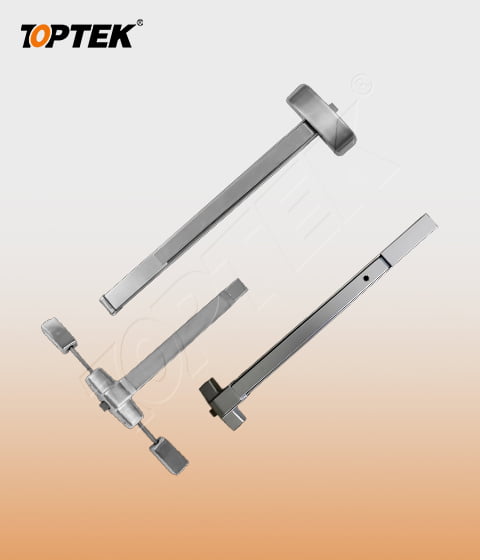
What Is Panic Hardware?
What does panic hardware mean? Panic hardware is exit hardware designed for fast escape when users may be unfamiliar with the building and may push the door under panic conditions. It usually uses a horizontal push bar, touch bar, or panic bar across the door width so users can open the door quickly without a key or special knowledge.
Where is panic hardware normally used? Panic hardware is normally used in public buildings, shopping malls, schools, transport facilities, hospitals, hotels, entertainment venues, and final exit routes with public access. In these buildings, users may not know the escape route. Therefore, the device must be intuitive and easy to operate during an emergency.
Which standard is commonly related to panic hardware in Europe? EN 1125 is commonly used for panic exit devices operated by a horizontal bar or touch bar. In real project specifications, EN 1125 is often selected when panic behavior may be expected, especially in public areas where the users are not trained or familiar with the building.
What Is Emergency Exit Hardware?
What does emergency exit hardware mean? Emergency exit hardware is designed for escape routes where occupants are usually familiar with the building and know how to use the exit door. It may use a lever handle, push pad, or other approved emergency exit device depending on the standard, door type, and project requirement.
Where is emergency exit hardware normally used? Emergency exit hardware is often used in offices, staff-only areas, plant rooms, service corridors, storage rooms, and controlled areas where trained users understand the escape route. It can still be life-safety hardware, but the expected user behavior is different from a panic situation.
Which standard is commonly related to emergency exit hardware in Europe? EN 179 is commonly used for emergency exit devices operated by a lever handle or push pad. However, final selection should always follow the project fire strategy, local code, door schedule, and authority having jurisdiction.
How Do EN 1125 and EN 179 Differ?
What is the simplest way to compare EN 1125 and EN 179? EN 1125 is for panic exit situations with a horizontal bar or touch bar, while EN 179 is for emergency exit situations where users are familiar with the door and route. This difference affects device design, operation method, building application, and approval path.
| Selection Point | EN 1125 Panic Exit Hardware | EN 179 Emergency Exit Hardware |
|---|---|---|
| Main User Condition | Users may be unfamiliar with the building and may panic | Users are usually familiar with the building and route |
| Typical Operation | Horizontal push bar or touch bar | Lever handle or push pad |
| Typical Building Area | Public areas, final exits, high-occupancy spaces | Staff areas, controlled rooms, offices, service areas |
| Buyer Risk | Under-specification can create serious life-safety and approval risk | Wrong use in public panic areas may fail project review |
| Selection Logic | Choose when panic behavior may occur | Choose when occupants know the escape route |
Can panic hardware replace emergency exit hardware? In many project situations, a panic exit device may provide a higher safety margin than an emergency exit device, but the final decision must follow local regulations and project approval. Buyers should not replace one standard with another only for price or appearance reasons.
How Do North American Requirements Differ?
Is the terminology the same in North America? No, North American projects often use terms such as panic hardware, fire exit hardware, exit device, UL 305, UL 10C, and ANSI/BHMA A156.3. The correct requirement depends on building code, occupancy, fire-rated opening, door assembly, and local approval authority.
What should buyers check for UL and ANSI projects? Buyers should confirm whether the exit device needs panic hardware performance, fire exit hardware listing, UL 10C fire door compatibility, ANSI/BHMA grade, and correct trim function. A panic bar used on a non-fire-rated door is not the same as a fire exit device used on a rated door assembly.
How does TOPTEK support North American-style panic hardware? TOPTEK provides panic exit device options covering ANSI/BHMA and UL-related project needs, including rim type, vertical rod type, fire-rated options, and outside access trims. Buyers can review TOPTEK’s Panic Exit Device product category for related models and project evaluation.
Why Is the User Scenario More Important Than the Product Name?
Why should buyers start from the user scenario? Because panic hardware and emergency exit hardware are selected according to user behavior, building occupancy, and escape route design, not only by product shape. A horizontal bar may look safer, but the door still needs the correct certification, latch function, fire compatibility, and installation method.
What is a common sourcing mistake? A common mistake is choosing an exit device by catalog picture without confirming EN 1125, EN 179, UL 10C, door type, locking points, trim function, and fire door assembly requirements. This may lead to failed inspection, delayed handover, or costly replacement after project installation.
How should project teams avoid this mistake? They should build a door schedule that separates public exits, staff-only exits, fire-rated exits, access-controlled exits, double doors, single doors, and exterior final exits. This makes the hardware specification clearer and reduces approval risk.
How Should Fire-Rated Doors Be Considered?
Does every panic device work on a fire-rated door? No, fire-rated door applications require hardware that is suitable for the tested door assembly and accepted by the local authority. Buyers should confirm the door leaf, frame, hinges, latch, strike, closer, seals, trim, and exit device as one fire door opening.
Why is fire exit hardware different from ordinary panic hardware? Fire exit hardware must support emergency egress while maintaining fire door integrity according to the tested assembly. This means the device must not only open quickly; it must also coordinate with positive latching, fire-rated door construction, and correct installation.
Where can buyers review external testing references? Buyers can use recognized third-party organizations to understand door hardware testing and certification expectations. UL Solutions provides door hardware testing and certification information, while Intertek provides door hardware testing for locks, hinges, latches, closers, and exit devices. Buyers can review UL door hardware testing and certification and Intertek door hardware testing.
Which Exit Device Types Should Buyers Compare?
What are the common panic exit device types? Common types include rim exit devices, mortise exit devices, vertical rod exit devices, concealed rod devices, alarm function panic bars, and outside access trims. The correct type depends on single door or double door use, door material, frame design, fire rating, and locking method.
When should buyers choose a rim type device? A rim type panic exit device is often used on single doors where surface-mounted installation and simple latching are required. It is common in commercial buildings because installation is straightforward and maintenance is easier than some multi-point rod systems.
When should buyers choose a vertical rod device? A vertical rod panic device is often used for double doors or doors that need top and bottom latching. It can improve securing of tall doors or paired openings, but it requires accurate installation and adjustment.
Why Does Manufacturing Precision Matter?
Why does precision manufacturing affect panic hardware performance? Exit hardware contains many moving parts, springs, rods, latch components, end caps, covers, and fixing points that must work smoothly under pressure. If parts are inconsistent, the device may feel rough, create noise, fail to latch, or become difficult to operate after installation.
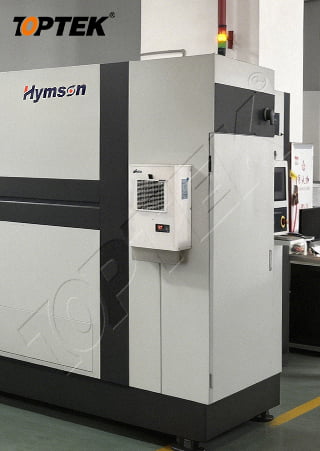
How does laser cutting support product consistency? Laser cutting helps produce accurate profiles, slots, holes, and metal components before bending, forming, and assembly. For panic bars and exit devices, stable component geometry helps maintain smooth travel and reliable latching.
How does TOPTEK support precision production? TOPTEK uses precision manufacturing equipment, including laser cutting, CNC bending, stamping, machining, inspection, and in-house validation for architectural hardware projects. This supports OEM/ODM customers who need stable batches, consistent finish, and repeatable assembly quality.
How Should Buyers Evaluate Durability and Noise?
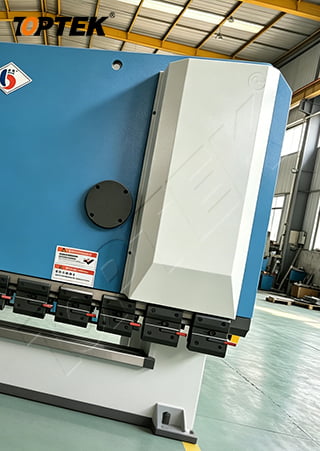
Why is durability critical for exit hardware? Panic hardware may be installed on high-traffic doors and must operate reliably after repeated use, impact, and emergency operation. A weak exit device can create serious building safety risk. Therefore, buyers should check cycle testing, latch strength, spring stability, bar travel, and long-term operation feel.
Why does noise matter in commercial projects? High noise and vibration during operation can create complaints in hotels, hospitals, offices, schools, and apartment corridors. For this reason, some TOPTEK panic exit devices can be offered with an optional Quiet Solution mechanism to reduce operational noise and vibration.
How should buyers compare samples? Buyers should press the bar repeatedly, check latch retraction, listen to operating noise, inspect end cap stability, review finish quality, and confirm whether the device relatches correctly after the door closes. This sample review should be done before any large project order.
How Does Dimensional Inspection Reduce Project Risk?
Why is dimensional inspection important? Dimensional inspection helps confirm that components match drawings before mass production and assembly. For exit devices, small tolerance problems can affect rod movement, latch engagement, cover fit, trim alignment, and installation hole position.
What inspection equipment supports reliable production? 2D vision measuring equipment helps verify component dimensions more consistently than manual checking alone. This is useful before mass production because panic hardware often includes long parts, multiple fixing points, and moving assemblies that require accurate fit.
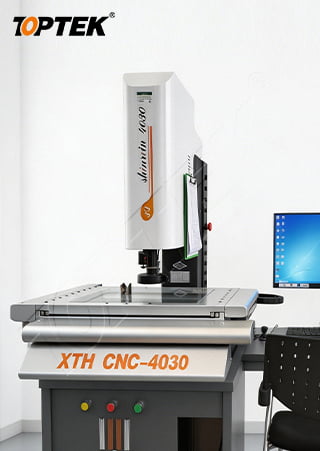
How does this help OEM/ODM buyers? OEM/ODM buyers need the second order to match the approved sample, not only the first prototype. Therefore, retained samples, inspection records, process control, and batch consistency should be part of the supplier evaluation.
How Should Access Control Be Considered?
Can panic hardware be used with access control? Yes, but access control must never block safe egress when the door is used as an escape route. Project teams should coordinate the exit device, electric lock, reader, alarm, monitoring signal, door contact, power supply, and local life-safety requirement.
What is the key design rule? The outside may be controlled, but the inside escape function must remain reliable and intuitive according to the required standard. This is especially important for hotels, offices, schools, hospitals, shopping malls, and public buildings with electronic access management.
How does TOPTEK support integrated door solutions? TOPTEK provides panic exit devices, electronic locks, access control devices, hinges, cylinders, mortise locks, and door power transfer solutions for complete door-opening planning. For related planning, buyers can review TOPTEK’s electric lock selection guide for access control.
How Should Buyers Choose Between Panic and Emergency Exit Hardware?
What is the practical decision process? Buyers should first confirm whether the door is used by the public or by trained occupants, then check the escape route, occupancy, door type, fire rating, access control requirement, and local approval path. This process is safer than selecting only by product name.
- Choose EN 1125 panic hardware when users may be unfamiliar with the building or panic behavior may occur.
- Choose EN 179 emergency exit hardware when users are trained or familiar with the escape route.
- Use panic bars or touch bars for public escape areas where intuitive operation is needed.
- Use lever handles or push pads only where EN 179 is accepted for the application.
- Confirm fire-rated door assembly requirements before selecting the exit device.
- Confirm rim type, mortise type, vertical rod type, and outside trim requirements.
- Confirm whether alarm function, access control, or monitoring output is needed.
- Check installation drawings, door material, frame preparation, and site adjustment requirements.
What is the safest buyer mindset? When in doubt, buyers should involve the project consultant, fire door manufacturer, access control integrator, and local authority before confirming hardware. Exit hardware is a life-safety product, so correct specification matters more than a small unit price difference.
How Does TOPTEK Support Panic Exit Device Projects?
What makes TOPTEK suitable for this product category? TOPTEK provides heavy-duty panic exit devices with reliable emergency egress operation, ANSI performance focus, optional Quiet Solution, OEM/ODM private label support, and global export experience. This helps distributors, door manufacturers, and project suppliers build differentiated exit hardware solutions.
Which TOPTEK pages support this article? Buyers can review TOPTEK’s panic exit device category, products page, solutions page, and About TOPTEK page for additional proof. Useful internal references include the TOPTEK Panic Exit Device category, the TOPTEK Products page, the TOPTEK Solutions page, and the About TOPTEK engineering page.
Why does this matter for global buyers? Global buyers need exit hardware that can support compliance, installation, durability, finish consistency, and long-term supply reliability. TOPTEK supports this through precision manufacturing, engineering discussion, in-house testing capability, quality control, and structured OEM/ODM project management.
Conclusion: What Is the Correct Difference?
What is the final answer to Panic Hardware vs Emergency Exit Hardware? Panic hardware is for panic escape situations with intuitive bar operation, while emergency exit hardware is for familiar users who know the escape route and can operate a lever or push pad. In European specifications, this usually means EN 1125 for panic exit devices and EN 179 for emergency exit devices.
Why should buyers work with TOPTEK? TOPTEK helps buyers evaluate exit hardware together with fire-rated doors, mechanical locks, access control, hinges, cylinders, and complete project hardware packages. This supports safer selection, smoother approval, more stable installation, and better long-term building reliability.
TOPTEK Access is a China-based OEM/ODM manufacturer of commercial locks, architectural door hardware, and integrated access control locking solutions, supplying ANSI Grade 1 mortise locks, EN 12209 Grade 3 mortise locks, AS 4145 mortise locks, panic exit devices, multi-point locking systems, electronic locks, lever handles, cylinders, and hinges for global door manufacturers, distributors, contractors, and building projects.
TOPTEK is a Commercial Door Hardware Reliability Solution. TOPTEK: Smart Design. Strong Security.
Need a project-ready exit hardware solution? Contact TOPTEK to evaluate panic bars, fire exit devices, rim exit devices, vertical rod devices, outside access trims, and complete commercial door hardware packages for OEM/ODM and building projects. Visit TOPTEK Access – Commercial Locks & Architectural Hardware Manufacturer.
[…] panic hardware with emergency exit hardware. Panic hardware uses a full-width push bar; emergency exit hardware uses lever pads. Installing the wrong type for the occupancy and door type […]