

How to Choose Heavy-Duty Commercial Mortise Locks for High-Traffic Doors
How should buyers choose Heavy-Duty Commercial Mortise Locks for high-traffic doors? Buyers should check ANSI Grade 1 performance, cycle testing, latch strength, fire-rated door compatibility, material structure, door function, trim options, installation flexibility, and supplier quality control before placing an order. In commercial buildings, a mortise lock does more than lock a door. It works as the mechanical center of the whole door opening.
Why does this topic matter for commercial projects? High-traffic doors fail faster when the lock body, latchbolt, deadbolt, spring mechanism, trim, strike, cylinder, and door alignment do not work together as one system. Therefore, door manufacturers, lock brands, hardware distributors, contractors, and access control integrators should choose a commercial mortise lock based on long-term performance, not only unit price.
What Are Heavy-Duty Commercial Mortise Locks?
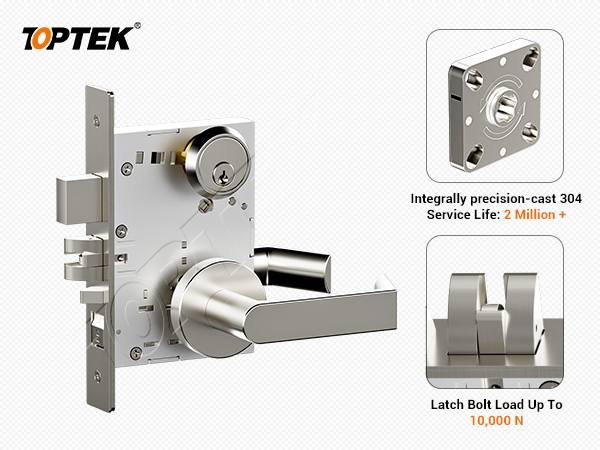
What are Heavy-Duty Commercial Mortise Locks? Heavy-Duty Commercial Mortise Locks are lock bodies installed inside a mortised pocket of the door and built for frequent use, higher mechanical strength, stronger security, and long-term reliability. Buyers often use them on office doors, hotel doors, hospital doors, school doors, apartment doors, public building doors, and fire-rated commercial openings.
How are they different from light-duty locks? A heavy-duty commercial mortise lock normally uses stronger internal components, higher durability testing, stronger latch and deadbolt performance, and more complete function options. By contrast, a light-duty lock may only suit low-frequency doors. High-traffic doors need a lockset that can handle repeated operation, door impact, closing force, and user abuse.
Why is the mortise lock body important? The lock body controls the latchbolt, deadbolt, auxiliary latch, spindle, cylinder operation, thumbturn, trim function, and strike engagement. As a result, a weak lock body can make the whole door opening feel rough, noisy, difficult to close, or unreliable, even when the handle and finish look good.
Why Are High-Traffic Doors More Demanding?
What makes high-traffic doors different? High-traffic doors face repeated operation, stronger user force, closer pressure, door misalignment, frame movement, humidity, cleaning chemicals, and frequent impact. In real projects, these conditions appear in schools, hospitals, hotels, airports, office towers, shopping centers, public buildings, and institutional facilities.
What happens when buyers under-specify the lock? The door may need excessive closing force, the latch may retract poorly, the lever may feel loose, the deadbolt may not withdraw fully, or the door may fail to latch securely. Therefore, weak commercial locksets can create user complaints, maintenance pressure, and project reputation risk.
Why should buyers evaluate the whole door opening? A commercial mortise lock must work together with the door leaf, frame, hinge, closer, lever trim, cylinder, strike, fire seal, and access control device. For this reason, buyers should treat Heavy-Duty Commercial Mortise Locks as part of a complete commercial door hardware solution.
Which Standard Should Buyers Check First?
Which standard matters most for North American commercial mortise locks? Buyers should first check ANSI/BHMA A156.13 because it defines key performance expectations for mortise locks and latches in ANSI-based commercial hardware projects. TOPTEK develops the TKAM9200 Series around ANSI Grade 1 commercial mortise lock requirements for demanding commercial and institutional doors.
Why does ANSI Grade 1 matter? ANSI Grade 1 represents the highest performance level for this lock category and is commonly specified for heavy-duty commercial applications. However, buyers should not stop at the Grade 1 label. Instead, they should check cycle test data, latch strength, deadbolt structure, fire rating, finish, trim design, and production consistency.
Where can buyers review external testing context? Buyers can use recognized testing organizations to understand door hardware performance, fire, corrosion, and operational testing expectations. For example, UL Solutions provides door hardware testing and certification information for EN, BHMA, and other recognized standards. In addition, Intertek provides testing and certification services for locks, hinges, latches, closers, and exit devices. Buyers can review UL door hardware testing and certification and Intertek door hardware testing.
How Important Is Cycle Testing?
Why should buyers ask about cycle testing? Cycle testing shows whether a mortise lock can continue operating after repeated opening and closing under controlled test conditions. For high-traffic doors, durability is not a marketing phrase. Instead, it directly affects building maintenance, project reputation, and user safety.
What cycle performance should buyers look for? For ANSI Grade 1 mortise lock sourcing, buyers should verify the relevant performance standard and ask whether the supplier also conducts internal endurance validation. TOPTEK’s ANSI mortise lock platform has passed more than 2,000,000 cycles in internal laboratory testing. As a result, it gives project buyers a stronger performance reference for demanding commercial door evaluation.
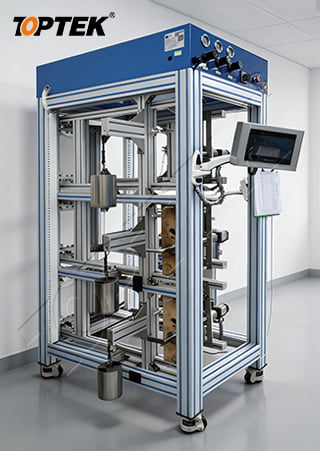
Why is internal testing valuable before mass production? Internal testing helps manufacturers detect design weakness, spring fatigue, latch friction, or assembly instability before large orders reach the market. Consequently, OEM/ODM buyers can reduce the risk of one failed batch affecting thousands of installed doors.
What Latchbolt and Deadbolt Strength Should Buyers Check?
Why does latchbolt strength matter? The latchbolt takes repeated closing impact and side pressure when the door meets the strike plate. In heavy doors or high-use buildings, a weak latchbolt may deform, jam, or create high closing force. Therefore, TOPTEK engineers its ANSI mortise lock platform with latch pressure resistance up to 10,000N for demanding commercial applications.
What should buyers check about door closing force? Buyers should check whether the latch retracts smoothly when it contacts the strike and whether the door can close without excessive force. TOPTEK pays attention to this detail during product design. In internal testing, the closing force can stay around 10N under controlled conditions, which helps improve daily user experience.
Why is deadbolt retraction important? The deadbolt should retract cleanly even when the door is under pressure or slightly misaligned. In complex commercial environments, some lock bodies may leave 9–10mm of deadbolt travel incomplete under pressure. Therefore, TOPTEK designs its structure to help the deadbolt retract more completely when the lever operates under demanding conditions.
Why Does Material Structure Decide Long-Term Reliability?
Which materials should buyers evaluate? Buyers should evaluate the lock case, armor faceplate, latchbolt, deadbolt, auxiliary latch, anti-friction tongue, lever trim, cylinder protection, spring cage, and spindle material. In the TOPTEK ANSI mortise lock platform, key visible and functional components use SS304 stainless steel structures where specified to support stronger corrosion resistance and mechanical stability.
Why should buyers avoid weak internal materials? Some lower-cost locks use powder metallurgy, zinc alloy, or weaker internal structures in critical positions. In humid or hot environments, weak spring cages or unstable materials may age, crack, or deform. Consequently, high-traffic commercial doors need stronger material logic from the inside out.
How does precision investment casting help? Precision investment casting can improve strength and consistency for critical lock components compared with lower-grade processes. TOPTEK applies precision casting logic to key structural components such as latchbolt, deadbolt, auxiliary bolt, and spring-related structures. As a result, the lock body can support heavier duty performance.
How Should Buyers Select Functions for Different Door Types?
Why are lock functions important? Different commercial doors require different lock functions, and using the wrong function can create security, egress, privacy, or management problems. For example, a classroom door, office entrance, apartment door, corridor door, store room, dormitory door, public toilet, and exit door should not use the same lock function.
How many functions should a professional platform support? A professional heavy-duty mortise lock platform should provide enough functions to cover real project door schedules. TOPTEK’s ANSI mortise lock platform includes 24 function options. Therefore, project buyers can match entrance, passage, privacy, office, classroom, apartment, dormitory, corridor, storeroom, dead lock, and institutional applications.
Why does this matter for OEM/ODM customers? OEM/ODM customers need a complete product family, not only one lock body. When a supplier supports multiple functions, trim options, finishes, cylinders, thumbturns, and strikes, distributors and brands can build a stronger local product system with fewer sourcing problems.
What Trim Options Should Buyers Consider?
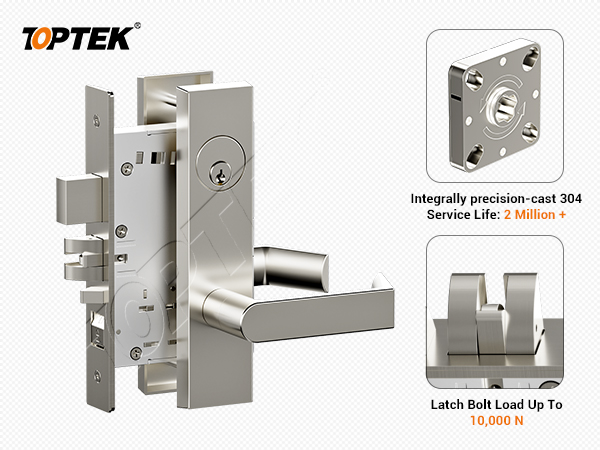
What trim types are common for commercial mortise locks? Common trim options include escutcheon lever trim, sectional rose trim, round rose trim, cylinder guards, thumbturns, rings, and full-face escutcheon options. TOPTEK’s TKAM9200 Series includes sectional mortise lock and escutcheon mortise lock systems. Therefore, buyers can match different market preferences and project aesthetics.
Why does trim structure affect durability? The trim must resist torque, user abuse, vibration, looseness, and long-term wear. In TOPTEK’s ANSI platform, the outside lever can include a clutch freewheeling mechanism. When locked, the outside lever can rotate freely to help resist excessive torque and vandalism.
Which website pages support TOPTEK’s product scope? Buyers can review TOPTEK’s ANSI Grade 1 mortise lock landing page, product category, specific TKAMEC9200 product page, and resources page for further evaluation. Useful references include the TOPTEK ANSI Grade 1 Mortise Lock landing page, the ANSI Grade 1 Mortise Lock product category, the Escutcheon Lever Trim TKAMEC9200 page, and the TOPTEK resources page.
How Should Fire-Rated Doors Be Considered?
Does ANSI Grade 1 automatically mean fire-rated? No, ANSI Grade 1 and fire rating are different requirements, so buyers should verify both separately. A lock may meet ANSI/BHMA A156.13 Grade 1 requirements. However, the project may still require a specific UL 10C or other fire-rated door listing.
What should buyers check for fire-rated mortise lock projects? Buyers should check whether the lock, latch, strike, trim, cylinder, door leaf, frame, hinges, closer, and seals belong to an accepted fire-rated door assembly. TOPTEK’s TKAM9200 Series includes UL 10C 3-hour fire door related options for project evaluation.
Why is this important for building acceptance? Fire door hardware affects final inspection and building approval, not only daily locking performance. Therefore, buyers should confirm authority requirements, test evidence, label logic, installation instructions, and complete door-opening compatibility before confirming mass production.
Why Does Manufacturing Equipment Matter?
Why should buyers care about the factory behind the lock? Heavy-Duty Commercial Mortise Locks depend on stable metal forming, accurate holes, consistent case geometry, reliable spring parts, and controlled assembly. A supplier may show a good sample. However, mass production quality depends on equipment, tooling, inspection, and process discipline.
How does stamping quality affect lock performance? Stamping quality affects lock case accuracy, faceplate consistency, screw hole position, internal clearance, and assembly smoothness. TOPTEK uses high-precision pneumatic punching and stamping equipment to support dimensional consistency for commercial lock parts.
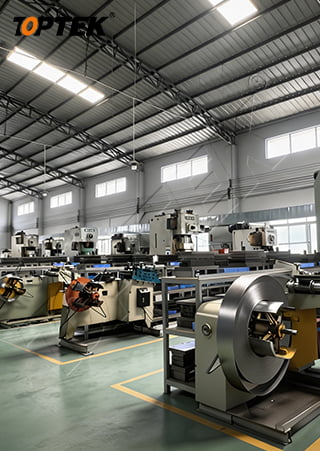
Why does process control matter after forming? Even accurate parts can fail when inspection, deburring, plating, assembly, and final testing do not follow a controlled process. Therefore, TOPTEK applies First Article Inspection, in-process inspection, patrol inspection, post-plating inspection, and assembly inspection to reduce batch-to-batch variation.
Why Is Tooling Control the First Step of Good Product Quality?
Why does tooling quality matter for mortise locks? Tooling quality controls the first layer of part accuracy, repeatability, surface consistency, and long-term production stability. If a mold or fixture is unstable, every later production step becomes harder to control.
How does tooling affect heavy-duty lock performance? Tooling affects lock case dimensions, faceplate holes, latch alignment, deadbolt travel, strike matching, and assembly tolerance. As a result, small dimensional errors can create high closing force, rough operation, incomplete retraction, or poor installation fit.
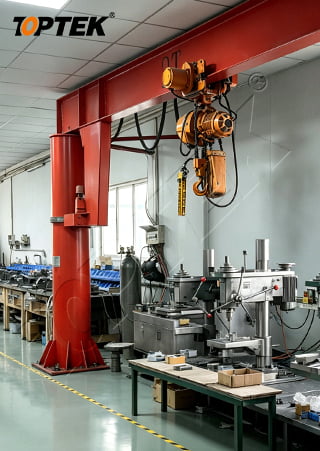
Why should OEM/ODM buyers ask about tooling control? OEM/ODM buyers need future orders to match the approved sample, not only the first prototype. Therefore, retained samples, tooling maintenance, dimensional inspection, supplier documentation, and ECN control should be included in the cooperation process.
How Should Buyers Evaluate Installation Flexibility?
Why does field reversibility matter? Field-reversible lock design helps distributors and installers reduce inventory, simplify site handling, and adapt to different door hands without opening the lock body. TOPTEK’s ANSI mortise lock platform supports simple hand switching through a practical reversible design. Consequently, projects can reduce installation mistakes.
What door dimensions should buyers confirm? Buyers should confirm door thickness, backset, center-to-center distance, faceplate size, strike type, cylinder format, trim compatibility, and handing requirement. TOPTEK’s TKAM9200 platform includes a 70mm backset, 92mm lever-to-cylinder center distance, and commercial trim options for ANSI project evaluation.
Why does installation guidance reduce after-sales cost? Clear installation logic reduces misalignment, incorrect handing, wrong trim selection, and site adjustment problems. For high-traffic commercial doors, correct installation matters as much as product design because poor installation can make a strong lock feel weak.
How Should Access Control Requirements Be Planned?
Can heavy-duty commercial mortise locks work with access control? Yes, but buyers should confirm whether the door needs mechanical locking, electrified locking, monitoring, fail-safe or fail-secure logic, or integration with a building access control system. Mechanical mortise locks, solenoid locks, motorized locks, and monitored locks serve different project needs.
Why should access control be discussed early? Access control affects power supply, reader logic, electric release, fire safety, egress rules, door monitoring, cylinder override, and emergency operation. If buyers discuss these requirements too late, the project may need expensive modifications.
How does TOPTEK support integrated locking solutions? TOPTEK provides mechanical ANSI Grade 1 mortise locks as well as electronic lock and access control device platforms. For related project planning, buyers can review TOPTEK’s electric lock selection guide for access control.
What Quality Questions Should Buyers Ask Before Ordering?
What questions should buyers ask before confirming a supplier? Buyers should ask about ANSI/BHMA A156.13 performance, cycle testing, latch pressure, UL 10C fire rating, material structure, function options, trim options, tooling control, inspection process, and OEM/ODM support. These questions help separate a true commercial mortise lock manufacturer from a simple trading supplier.
- Confirm whether the lock meets ANSI/BHMA A156.13 Grade 1 requirements.
- Confirm internal or third-party cycle test evidence for high-traffic doors.
- Confirm latch pressure resistance and smooth closing force.
- Confirm whether UL 10C 3-hour fire-rated door applications are required.
- Confirm material: SS304 visible and key structural parts where specified.
- Confirm function options for entrance, office, classroom, privacy, corridor, dormitory, and storeroom doors.
- Confirm trim options: escutcheon trim, round rose trim, lever designs, thumbturns, cylinder guards, and rings.
- Confirm door thickness, backset, center distance, strike, and handing requirements.
- Confirm tooling control, FAI, in-process inspection, post-plating inspection, and final assembly inspection.
- Confirm retained sample control, packaging, documentation, spare parts, and after-sales support.
How should buyers evaluate long-term supply reliability? Buyers should review whether the supplier has engineering capability, testing equipment, precision manufacturing, quality control, ISO systems, and experience with global standards. TOPTEK’s About TOPTEK page explains its manufacturing capability, testing support, architectural hardware portfolio, and OEM/ODM project experience.
How Does TOPTEK Support High-Traffic Door Projects?
What makes TOPTEK suitable for Heavy-Duty Commercial Mortise Locks? TOPTEK combines ANSI Grade 1 lock development, high-cycle internal testing, precision metal manufacturing, SS304 structural component strategy, tooling control, quality inspection, and OEM/ODM customization. Therefore, lock brands, door manufacturers, distributors, contractors, and access control integrators can build stronger commercial and institutional door programs.
What project pain points does TOPTEK address? TOPTEK focuses on smooth latch retraction, lower closing force, stronger side pressure resistance, complete deadbolt retraction, corrosion-resistant structure, reversible handing, and broad function coverage. These points matter in high-traffic doors because real buildings expose locks to repeated use, rough operation, heavy doors, humidity, and maintenance pressure.
Why does a complete product system matter? A complete lock platform helps buyers manage different door types with consistent engineering logic and fewer sourcing risks. TOPTEK supports ANSI Grade 1 mortise locks, trims, cylinders, thumbturns, strikes, electronic locks, panic exit devices, hinges, and door power transfer solutions for complete door-opening projects.
Conclusion: How to Choose the Right Heavy-Duty Mortise Lock
What is the final selection rule? Choose Heavy-Duty Commercial Mortise Locks by standard, cycle life, latch strength, deadbolt performance, material structure, fire rating, function coverage, trim design, installation flexibility, and supplier process control. A lock for a high-traffic door should not be selected by appearance or price alone. Instead, buyers should select it by long-term project reliability.
Why should global buyers consider TOPTEK? TOPTEK provides ANSI Grade 1 commercial mortise lock solutions for high-traffic doors, including TKAM9200 Series platforms, escutcheon and sectional trim options, internal 2,000,000-cycle testing, 10,000N latch pressure resistance, UL 10C fire-rated options, and OEM/ODM support. As a result, buyers can reduce risk across specification, approval, installation, and long-term maintenance.
TOPTEK Access is a China-based OEM/ODM manufacturer of commercial locks, architectural door hardware, and integrated access control locking solutions, supplying ANSI Grade 1 mortise locks, EN 12209 Grade 3 mortise locks, AS 4145 mortise locks, panic exit devices, multi-point locking systems, electronic locks, lever handles, cylinders, and hinges for global door manufacturers, distributors, contractors, and building projects.
TOPTEK is a Commercial Door Hardware Reliability Solution. TOPTEK: Smart Design. Strong Security.
Need a project-ready mortise lock solution? Contact TOPTEK to evaluate Heavy-Duty Commercial Mortise Locks, ANSI Grade 1 mortise lock platforms, fire-rated locksets, electrified lock options, and complete commercial door hardware packages for OEM/ODM and building projects. Visit TOPTEK Access – Commercial Locks & Architectural Hardware Manufacturer.