

What Makes a Reliable Multipoint Locking System for Door Manufacturers?
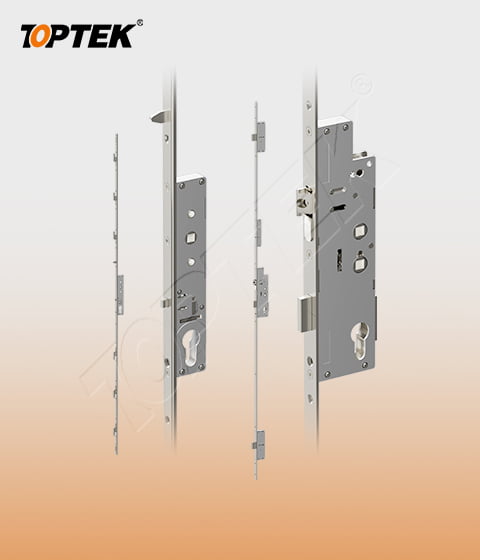
What makes a reliable Multipoint Locking System for door manufacturers? A reliable Multipoint Locking System must combine accurate lock body design, stable hook and deadbolt movement, strong long faceplate material, precise tooling, controlled assembly, proper packaging, and testing before mass production. For door manufacturers, the product is not only a long lock body. It is a complete door locking system that affects security, sealing, alignment, user experience, installation, and after-sales risk.
Why should door manufacturers care about this topic? Because one small dimensional error can make a multipoint lock hard to operate, fail to auto-lock, or release the hooks at the wrong time. Therefore, door manufacturers should not select a multipoint door lock only by price or catalog appearance. They should evaluate engineering logic, material strength, tooling accuracy, testing method, and supplier experience.
What Is a Multipoint Locking System?
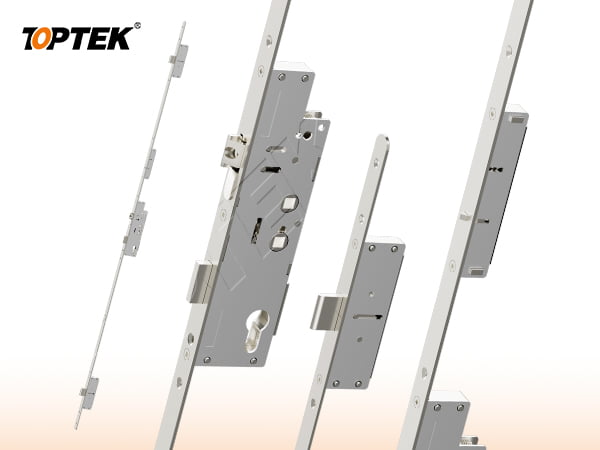
What does a Multipoint Locking System do? A Multipoint Locking System secures the door at more than one locking point, usually through a main lock case, hooks, deadbolts, auxiliary bolts, rods, and a long faceplate. Compared with a single-point lock, it can improve door compression, anti-pry resistance, sealing performance, and overall door stability.
Where do door manufacturers use multipoint locks? Door manufacturers use multipoint locks on entrance doors, apartment doors, timber doors, steel doors, aluminum doors, composite doors, PVC doors, and high-security exterior doors. In some projects, the system may also support public buildings, commercial doors, residential projects, and access control doors.
Why is this product different from a standard mortise lock? A standard mortise lock normally controls one latch and one deadbolt point, while a multipoint door lock controls several locking points across the door height. As a result, the long mechanism requires better alignment, stronger materials, more accurate tooling, and tighter production control.
What Are the Three Common Mechanical Multipoint Lock Types?
What is the first common type? The first type is an automatic multipoint lock, where the latch trigger activates the deadbolt and secondary hook bolts after the door closes. This type improves user convenience because the door locks automatically without requiring the user to lift the handle or turn the key first.
What is the second common type? The second type is a lift-lever multipoint lock, where the user lifts the handle to project the deadbolt or hooks. Then the user can use the cylinder to deadlock the system. This prevents the handle from retracting the locking points and gives the door stronger security.
What is the third common type? The third type is a cylinder-driven multipoint lock, where the user turns the key to project the deadbolt and secondary locking points. This structure does not use automatic locking. However, it may suit projects that prefer traditional key operation and clear user control.
Why Do Multipoint Locks Fail in Real Projects?
Why do some multipoint locks fail after installation? Many failures come from poor dimensional control, weak materials, wrong trigger timing, bent faceplates, poor packaging, and friction between incompatible components. In real projects, a small tolerance issue can prevent the hook from projecting, or it can make the hook project before the door closes fully.
Why does timing matter in an automatic multipoint lock? Automatic locking depends on accurate trigger movement and stable hook release timing. If the trigger position is wrong, the hook may not self-lock. In another case, the hook may release too early before the door reaches the frame. Therefore, door manufacturers must check the auto-locking sequence carefully.
Why do long faceplates create extra risk? A multipoint lock faceplate is often longer than 1.7 meters, so weak material or poor transport protection can cause bending. Once the long faceplate bends, the whole multipoint lock may become hard to operate. For this reason, material choice and packaging design matter as much as the lock case design.
Why Does the Faceplate Material Matter?
Why is the faceplate critical in a multipoint lock? The faceplate holds the long mechanism in position and connects the main lock case with secondary locking points. If the faceplate twists, bends, or loses straightness, the rods, hooks, and deadbolt may move roughly. As a result, the door manufacturer may face installation complaints.
What should buyers check in the material? Buyers should check material grade, thickness, straightness, corrosion resistance, surface finish, and bending resistance. In project use, doors may face heavy closing force, high humidity, installation stress, and long transport distance. Therefore, the faceplate must support both mechanical stability and appearance quality.
How does TOPTEK reduce this risk? TOPTEK treats the long faceplate as a structural part, not only a decorative cover. For multipoint lock OEM and multipoint lock ODM projects, TOPTEK reviews material, tooling, straightness, assembly movement, and packaging protection before mass production.
How Do Hooks and Deadbolts Affect Security?
Why are hooks important in a multipoint locking system? Steel hooks help resist prying forces by pulling the door leaf toward the frame and locking into multiple receiving points. This improves anti-pry performance compared with a simple single-point latch. A steel hook multipoint lock can also support better compression and sealing.
Why does a multipoint lock with deadbolt provide stronger protection? A deadbolt adds a strong central locking point, while hooks add distributed locking points along the door height. Together, the steel hook and deadbolt combination can support a more secure multi point locking system for apartment doors, exterior doors, and commercial doors.
What should door manufacturers test? Door manufacturers should test hook projection, deadbolt movement, handle force, cylinder force, relocking behavior, and operation under door misalignment. In addition, they should check whether the locking points work smoothly after repeated cycles and after transport.
How Does Door Sealing Performance Improve?
How can a multipoint lock improve sealing? A multipoint lock can pull the door closer to the frame at several points, which helps improve compression and sealing consistency. This can support better air tightness, water resistance, sound reduction, and thermal performance when the door, gasket, and frame design also match correctly.
Why does this matter for door manufacturers? Door manufacturers often need to sell the complete door performance, not only the lock hardware. A door sealing multipoint lock can help improve perceived door quality. It can also support better closing feel when the lock, hinge, closer, gasket, and frame work together.
Where does this become valuable? Better sealing is valuable for apartment projects, hotels, offices, exterior doors, coastal doors, and high-performance residential doors. However, the lock alone cannot solve all sealing problems. Therefore, buyers should evaluate the full door assembly.
How Should Door Manufacturers Compare Automatic and Lift-Lever Designs?
When is an automatic multipoint lock useful? An automatic multipoint lock is useful when the buyer wants the door to secure itself after closing. It reduces the risk of users leaving the door only latched. This function can support residential entrance doors, apartment doors, public building doors, and light commercial doors.
When is a lift-lever design useful? A lift-lever multipoint lock is useful when users expect to lift the handle to engage the locking points. It gives users a clear mechanical action. Then the cylinder can add a second locking step if the project needs stronger security.
When should buyers choose a key-operated system? A key-operated multipoint system is useful when the project prefers traditional cylinder control and does not require automatic locking. This may suit certain timber doors, steel doors, or project doors where user training and maintenance habits are clear.
How Does Access Control Change a Multipoint Lock?
Can a multipoint lock work with access control? Yes, an access control multipoint lock can combine mechanical locking points with electric release, monitoring, motorized operation, or controlled entry logic. However, the design must protect safe egress, fire-door needs, and mechanical override requirements.
What is the challenge with an electromechanical multipoint lock? An electromechanical multipoint lock must coordinate the motor, solenoid, hooks, deadbolt, latch, handle, cylinder, sensors, and controller. If one part is not aligned, the door may fail to lock, unlock, or report status correctly. Therefore, early engineering discussion is essential.
How should buyers specify electronic functions? Buyers should confirm power supply, fail-safe or fail-secure logic, monitoring signals, door status sensor, latch status, hook status, cylinder override, and inside egress. For related planning, buyers can review TOPTEK’s electric lock selection guide for access control.
Why Is Testing Important Before Mass Production?
Why should buyers ask for testing evidence? Testing helps verify movement stability, locking point timing, handle force, cylinder force, corrosion resistance, and long-term durability. A multipoint lock may look correct during sample review. However, it may fail after installation if the mechanism rubs, bends, or wears too fast.
Which standard logic should buyers consider? For European multipoint lock development, buyers may consider EN 15685 as a design and test reference where applicable. For emergency escape applications, EN 179 multipoint lock or EN 1125 multipoint lock requirements may also affect the hardware package. Therefore, buyers should confirm the project standard before tooling.
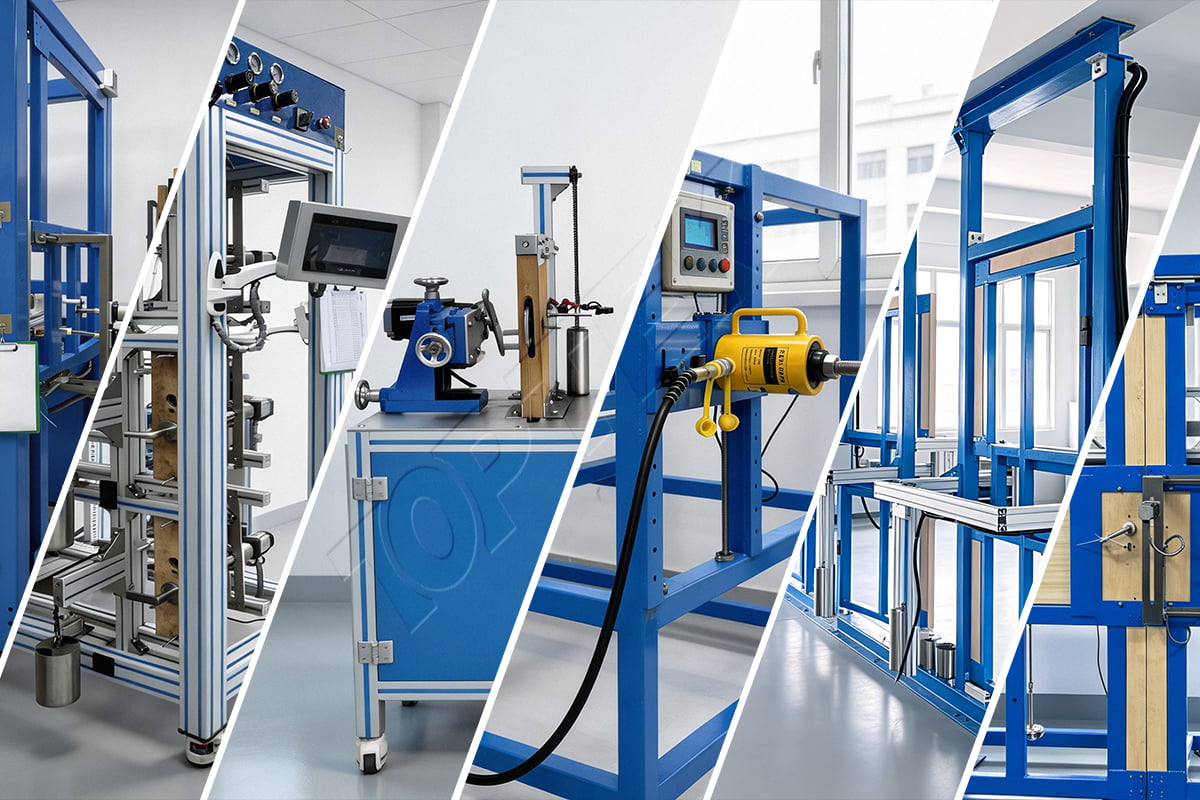
Where can buyers review external testing references? Buyers can use recognized testing organizations to understand door hardware performance and certification expectations. UL provides door hardware testing and certification information, while Intertek offers testing for locks, hinges, latches, closers, and exit devices. Buyers can review UL door hardware testing and certification and Intertek door hardware testing.
Why Does Tooling Accuracy Decide Product Reliability?
Why does tooling matter so much for multipoint locks? Tooling accuracy controls the first layer of part consistency, hole position, sliding clearance, hook travel, rod movement, and faceplate straightness. If the tooling is unstable, later assembly cannot fully correct the problem.
What tooling issues create failures? Poor tooling can create rough movement, hook misalignment, incorrect trigger timing, high operating force, and inconsistent locking point projection. In a multipoint door lock, these issues become more serious because one mechanism controls several points across the door height.
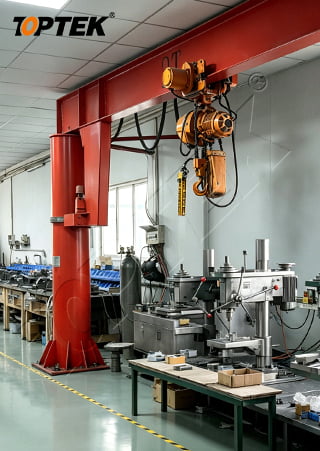
How does TOPTEK control tooling risk? TOPTEK reviews prototypes, tooling samples, pilot production, and production batches through engineering and laboratory validation. This process helps reduce the risk of releasing a project multipoint locking solution before the movement, dimension, and assembly quality become stable.
Why Does Component Material Selection Matter?
What material mistakes should buyers avoid? Buyers should avoid designs where weak zinc alloy parts rub directly against stronger metal parts under high-load movement. Zinc alloy can wear faster in friction areas. Over time, this can create rough operation, loose movement, or functional failure.
Which parts need special attention? Door manufacturers should check the main lock case, hooks, rods, latch, trigger, follower, sliding plates, faceplate, screws, and connecting components. These parts need stable material strength and good surface control. Otherwise, the multipoint lock may not survive repeated operation.
How should buyers evaluate a supplier sample? Buyers should open the sample and review material contact points, sliding clearance, spring load, hook movement, and wear risk. In addition, they should test the lock after repeated operation instead of judging only by the first smooth movement.
How Does Packaging Protect Long Multipoint Locks?
Why is packaging a technical issue for multipoint locks? A long multipoint lock can bend during shipping if the supplier uses weak packaging or does not protect the faceplate. Once the product bends, the locking points may jam or move roughly. Therefore, packaging should be part of the quality plan.
What problem happens with poor packaging? Paper carton packaging alone may not protect long locks during international transport. Some buyers receive deformed multipoint locks when suppliers ignore length, weight, and stacking pressure. This causes project delay and replacement cost.
How does TOPTEK handle transport risk? TOPTEK protects multipoint locks during shipment and can use stronger packaging methods such as wooden case protection for project orders. For door manufacturers and export multipoint lock manufacturer programs, this helps reduce deformation risk before the products reach the assembly line.
How Should Door Manufacturers Evaluate OEM/ODM Support?
Why is OEM/ODM support important for this product? Multipoint lock OEM and multipoint lock ODM projects often need custom dimensions, door material adaptation, hook positions, backset, faceplate design, finish, and installation logic. A standard catalog model may not match every timber door, steel door, aluminum door, or PVC door.
What should door manufacturers discuss before development? Door manufacturers should discuss door material, door thickness, profile design, gasket compression, locking point positions, handle operation, cylinder function, egress requirement, and access control needs. This helps the engineering team freeze the technical scope before tooling.
How does TOPTEK support door manufacturers? TOPTEK uses more than 35 years of lock manufacturing experience and practical multipoint lock development knowledge to support OEM/ODM projects. The team can review customer samples, identify friction risks, check dimensional logic, and recommend a suitable mechanical or electromechanical structure.
How Should Buyers Compare Product Options?
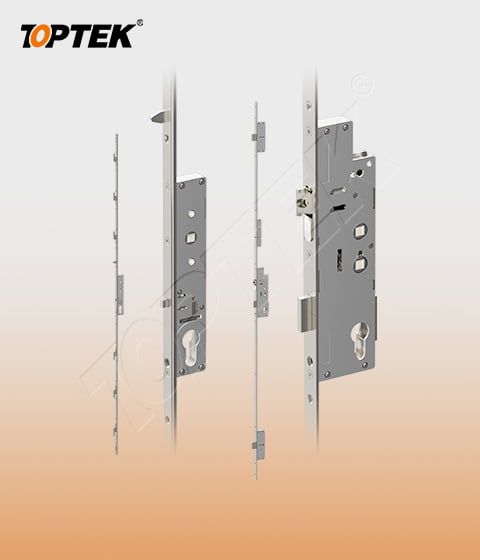
Which TOPTEK models can buyers review? Buyers can review PD1000 multipoint lock, Auto Lock multipoint lock, and EU001 multipoint lock options for different project needs. Each model should be evaluated by door material, locking method, user habit, security level, sealing need, and installation requirement.
Where can buyers verify TOPTEK’s multipoint lock range? Buyers can review TOPTEK’s internal product pages and resources before selecting a project model. Useful links include the Multi-point Locking Systems product category, the Auto Lock product page, the Multi-point Locking Systems landing page, and the TOPTEK resources page.
What should buyers avoid during comparison? Buyers should avoid comparing only the multipoint lock price, drawing length, or surface finish. Instead, they should compare movement stability, hook timing, material choice, testing, packaging, tooling control, and engineering support.
What Checklist Should Door Manufacturers Use?
What should door manufacturers confirm before ordering? Door manufacturers should use a structured checklist to reduce development and installation risk. This is especially important for custom doors, export projects, and large batch production.
- Confirm whether the door needs an automatic multipoint lock, lift-lever lock, or cylinder-driven multipoint lock.
- Confirm door material: timber door, steel door, aluminum door, composite door, or PVC door.
- Confirm locking points: latch, deadbolt, steel hooks, shoot bolts, rods, or secondary bolts.
- Confirm backset, center distance, faceplate length, faceplate thickness, and hook positions.
- Confirm handle operation: press-down, lift-up, or both lift-up and press-down.
- Confirm whether the project needs a multipoint lock with deadbolt or a steel hook multipoint lock.
- Confirm whether the door needs an access control multipoint lock or motorized multipoint lock.
- Confirm whether EN 15685, EN 179, EN 1125, fire door, or other project standards apply.
- Confirm testing plan, prototype validation, tooling sample validation, and pilot production review.
- Confirm packaging protection to avoid bending during international transport.
How should buyers choose a supplier? Buyers should choose a multi point lock manufacturer that understands door structure, lock movement, tooling, testing, packaging, and OEM/ODM development. A low-cost supplier may copy the appearance. However, reliable performance depends on engineering control and real production experience.
Conclusion: Reliability Comes from System Engineering
What is the final answer? A reliable Multipoint Locking System comes from correct locking logic, strong materials, accurate tooling, stable hook movement, controlled faceplate straightness, proper testing, and safe packaging. Door manufacturers should evaluate the product as a complete door system instead of a long lock body.
Why should door manufacturers consider TOPTEK? TOPTEK supports door manufacturers with multipoint locking systems, automatic multipoint locks, steel hook and deadbolt combinations, access control integration, OEM/ODM development, testing, tooling control, and export packaging support. This helps buyers reduce project risk and build more reliable doors for residential, commercial, and public building applications.
TOPTEK Access is a China-based OEM/ODM manufacturer of commercial locks, architectural door hardware, and integrated access control locking solutions, supplying ANSI Grade 1 mortise locks, EN 12209 Grade 3 mortise locks, AS 4145 mortise locks, panic exit devices, multi-point locking systems, electronic locks, lever handles, cylinders, and hinges for global door manufacturers, distributors, contractors, and building projects.
TOPTEK is a Commercial Door Hardware Reliability Solution. TOPTEK: Smart Design. Strong Security.
Need a project-ready multipoint locking solution? Contact TOPTEK to evaluate PD1000, Auto Lock, EU001, automatic multipoint locks, steel hook multipoint locks, access control multipoint locks, and complete OEM/ODM multipoint lock packages for door manufacturers and building projects. Visit TOPTEK Access – Commercial Locks & Architectural Hardware Manufacturer.