

How to Choose a Durable EN 1906 Lever Handle That Does Not Sag
How do you choose an EN 1906 lever handle that stays level after years of commercial use? You should look beyond the surface finish and check the spring return structure, cycle test data, spindle connection, fixing strength, corrosion resistance, and supplier manufacturing control. In real projects, a beautiful handle is not enough if it begins to sag, loosen, or lose spring force after repeated operation.
A durable commercial lever handle must perform as part of a complete door hardware system. It must work smoothly with the lock case, spindle, latch, rose, fixing screws, door closer, and real user habits. For this reason, professional buyers should evaluate handle performance through standards, structure, testing, and manufacturing experience.
Why Do Lever Handles Sag in Commercial Buildings?
Lever handles usually sag because the return spring weakens, the spindle fit becomes loose, the internal support wears out, or the fixing structure cannot hold the handle firmly over time. In high-traffic buildings, this problem appears faster because the handle operates thousands of times every month.
Schools, hospitals, offices, airports, public buildings, hotels, and apartment projects place heavy stress on door hardware. Users may press the handle forcefully, pull the door before the latch retracts, or operate the handle while a strong door closer is pushing the door shut. As a result, weak handle structures can fail long before the project owner expects.
In TOPTEK’s manufacturing experience, handle sag is rarely caused by one single part. It often comes from a combination of weak spring steel, poor machining tolerance, low-grade connector material, rough internal friction, thin fixing plates, and poor compatibility with the lock body.
What Does EN 1906 Tell Buyers About Lever Handle Performance?
EN 1906 gives buyers a structured way to evaluate lever handles for durability, strength, corrosion resistance, safety, and application level. Instead of judging only by appearance, buyers can use the EN 1906 classification to compare whether a handle is suitable for light use, medium use, or heavy commercial use.
An EN 1906 lever handle for public or commercial projects should not only pass basic operation. It should keep stable spring return, controlled movement, and strong fixing performance after durability testing. Therefore, buyers should ask for the classification target, cycle test result, corrosion level, fire door compatibility, and installation method.
For fire-rated doors, emergency exits, and panic exit applications, handle selection also requires system thinking. The handle must coordinate with EN 12209 mortise locks, EN 179 emergency exit hardware, EN 1125 panic exit devices, hinges, door closers, and the complete door assembly.
What Should Buyers Check Before Choosing a No-Sag Handle?
Buyers should check the return spring, bearing support, spindle connection, base thickness, fixing method, material grade, and real test evidence before confirming a project handle. These details decide whether the handle only looks good in a catalogue or truly performs on site.
1. Does the Handle Use a Strong Spring Return System?
The return spring is the most important part of anti-sag performance. If the spring loses force, breaks, or works under poor alignment, the lever will slowly drop from the horizontal position. In low-quality handles, spring failure may appear after only tens of thousands of cycles.
TOPTEK developed its European lever handle structure after studying more than 15 different handle mechanisms in the market. We found that many failures came from weak spring design, poor part precision, and internal friction. Therefore, our EN 1906 lever handle platform uses high-strength spring steel to support long-term return force in demanding applications.
2. Is the Operation Smooth, or Does the Handle Feel Rough?
A smooth handle normally indicates better internal alignment, lower friction, and better mechanical coordination. If the lever feels rough during operation, the internal parts may be rubbing against each other. Over time, this friction can accelerate wear and reduce spring return performance.
TOPTEK adds precision bearing support inside the handle structure. This helps the lever press down more smoothly and reduces unnecessary friction between metal parts. As a result, the user feels a cleaner operation, while the mechanism receives less long-term mechanical stress.
3. Is the Base Strong Enough for Heavy Doors and Door Closers?
The handle base must be strong enough to resist twisting, pulling, and repeated force from daily use. A thin or weak base may loosen on the door surface, especially when installed on commercial doors with heavy-duty closers.
TOPTEK uses a 1.5 mm base structure for stable installation. The design supports left-hand and right-hand doors without complicated handing changes. In practical installation evaluation, this structure helps installers complete handle mounting quickly and consistently.
4. Can the Handle Withstand Strong Axial Pulling Force?
Axial strength matters because commercial users often pull or push the handle while the door closer is still applying force. If the handle connector is weak, the lever may loosen, deform, or fail under repeated pulling force.
TOPTEK’s handle connector uses 304 stainless steel instead of lower-strength iron, brass, or 201 stainless steel alternatives commonly found in some market products. This improves load resistance and corrosion resistance. Our structure can reach 1500N axial pulling strength, giving project buyers stronger confidence for heavy-use buildings.
5. Can the Handle Support Lift-Up Operation for Multi-Point Locks?
Some European door systems require the handle to lift upward to engage multi-point locking points. For this application, the handle must support both downward latch operation and upward locking operation without losing alignment or spring stability.
This is important for multi-point locking systems, residential entrance doors, project doors, and selected commercial door applications. TOPTEK’s lever handle structure can support lift-up and press-down operation, making it suitable for buyers who need compatibility with multi-point lock platforms. You can also read our related guide on why multipoint locks become hard to operate.
Why Is Cycle Testing Important for EN 1906 Lever Handles?
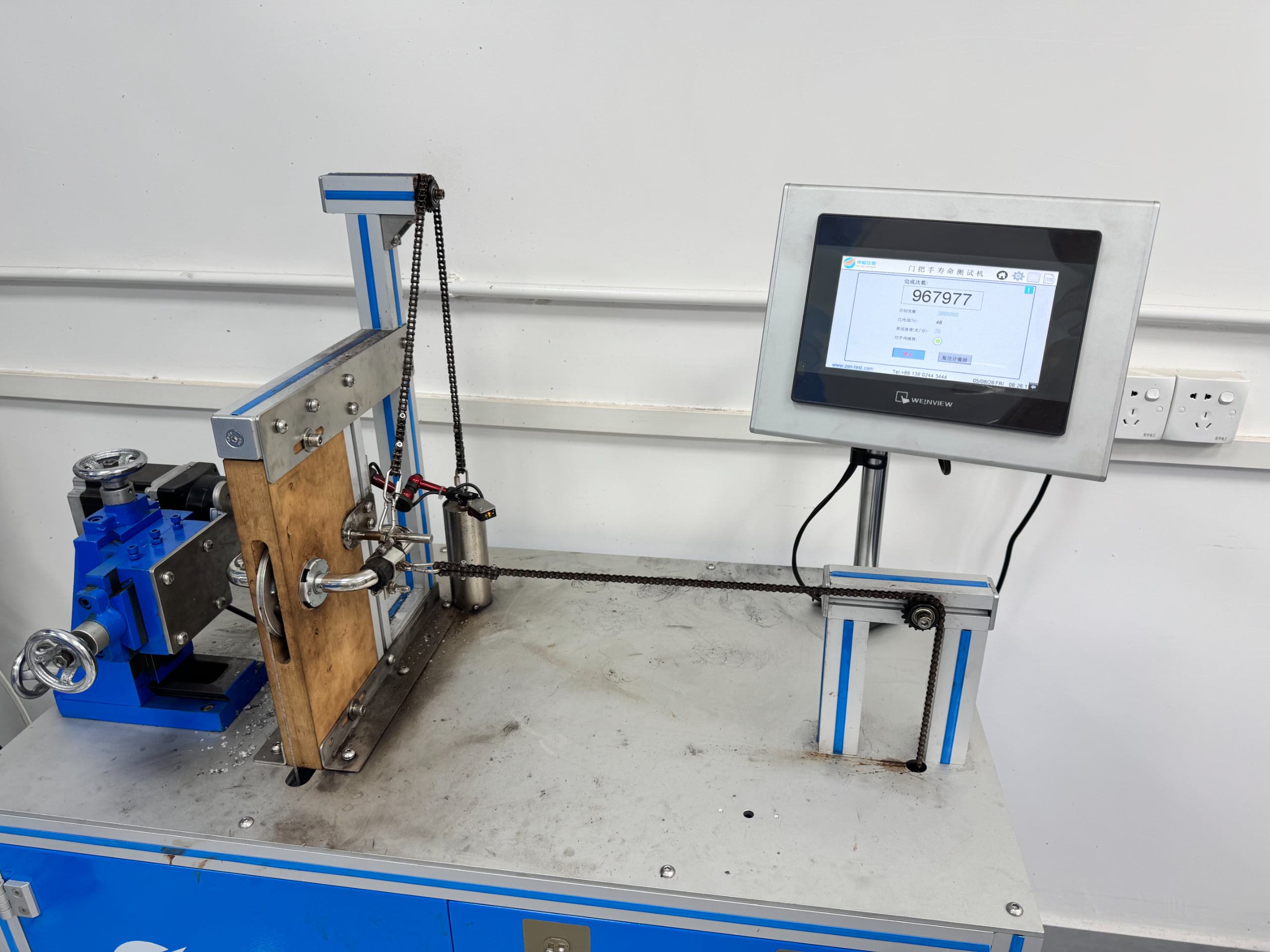
Cycle testing proves whether the handle can still return smoothly after repeated operation, not just whether it can move once or twice in a showroom. For professional door manufacturers and hardware brands, test data is more reliable than visual judgement.
A good EN 1906 lever handle should remain stable after long-term mechanical testing. Buyers should ask whether the handle still returns to level, whether the spring force remains stable, and whether the lever has visible looseness after testing. These points are especially important for schools, hospitals, airports, public offices, and high-frequency entrances.
TOPTEK focuses on long-term anti-sag performance. Our stainless steel lever handle platform is developed for demanding commercial use, with internal testing capability up to 1,000,000 cycles. For certified or third-party project requirements, buyers should confirm the exact certification scope, test method, and product model before final approval.
How Does Corrosion Resistance Affect Long-Term Handle Quality?
Corrosion resistance affects both appearance and mechanical performance because rust can damage the handle surface, fixing parts, spindle connection, and internal movement. In coastal areas, hospitals, schools, public buildings, and humid climates, corrosion protection becomes a key buying factor.
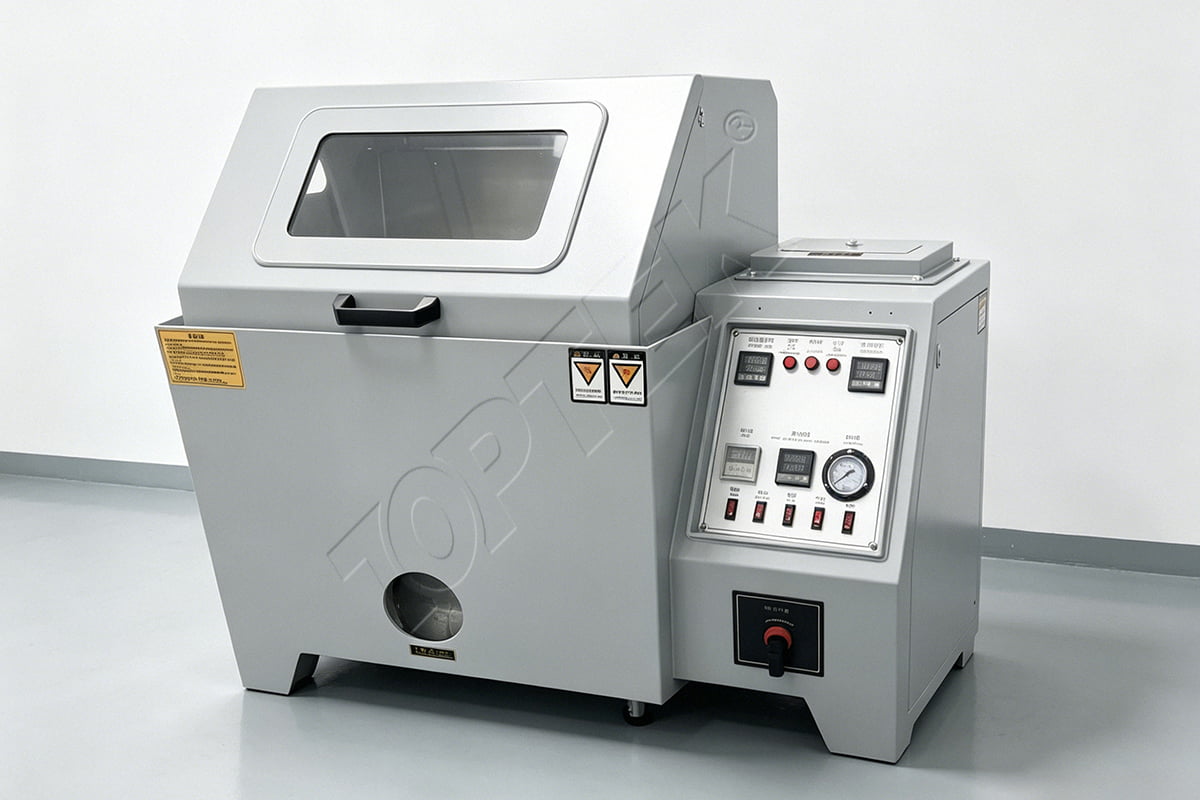
Stainless steel handles offer strong long-term value when the material, surface finishing, and internal parts are properly controlled. However, material name alone is not enough. Buyers should also check salt spray testing, batch-to-batch surface control, connector material, and whether the supplier can maintain consistent finishing quality during mass production.
How Should Door Manufacturers Evaluate a Lever Handle Supplier?
Door manufacturers should choose a supplier that understands standards, testing, OEM/ODM customization, installation, and batch consistency. A handle supplier should not only provide a drawing and a price. It should help the buyer reduce field complaints, replacement cost, and project acceptance risk.
For OEM/ODM development, buyers should ask whether the supplier can support custom lever design, rose design, spindle configuration, finish development, private label packaging, sample approval, and long-term mass production control. In addition, the supplier should understand how the handle works with EN mortise locks, panic exit devices, emergency exit devices, and fire door hardware.
TOPTEK supports global door manufacturers, lock brands, distributors, contractors, and project buyers with commercial lock hardware and architectural door hardware. Our product portfolio includes EN 1906 lever handles, commercial lock products, and complete door hardware solutions for international projects.
Why Does Manufacturing Control Matter as Much as the Design?
A strong design can still fail if mass production does not control material, tolerance, assembly, finishing, and inspection. In real projects, buyers need every batch to match the approved sample, not only the first prototype.
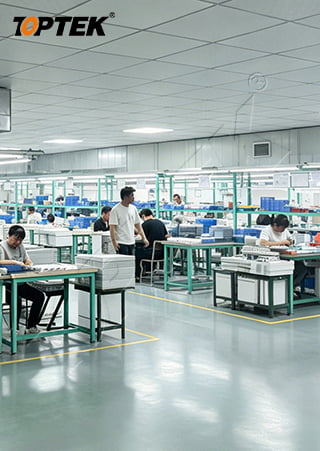
TOPTEK operates a controlled manufacturing process with incoming material inspection, First Article Inspection, in-process inspection, plating inspection, assembly inspection, and laboratory validation. This process helps reduce variation between samples and mass production. For OEM customers, this is important because one unstable batch can damage the customer’s brand reputation.
Which Projects Need a High-Performance No-Sag Lever Handle?
High-performance no-sag handles are most suitable for high-frequency commercial doors, public buildings, institutional projects, fire-rated doors, and OEM hardware programs. These projects need long-term stability because replacement work is expensive after installation.
Typical applications include schools, hospitals, airports, transportation hubs, office buildings, hotels, apartments, shopping malls, and public institutions. For these projects, buyers should prioritize durability, smooth operation, corrosion resistance, and installation reliability before choosing the cheapest handle option.
If the project uses complete European door hardware, buyers should evaluate the handle together with the lock case, cylinder, hinges, door closer, strike plate, and emergency exit hardware. For more system-level selection guidance, read our article on how to select a complete door hardware set for European commercial doors.
What Proof Should Buyers Ask for Before Placing an Order?
Buyers should ask for test reports, cycle test videos, material confirmation, installation samples, finish samples, and compatibility checks before mass production. This helps prevent quality disputes after the product enters the market.
Useful questions include:
- What EN 1906 grade does the handle target?
- How many cycles has the handle passed?
- Does the handle remain level after testing?
- What spring material does the handle use?
- Does the handle include bearing support?
- What is the base plate thickness?
- What material is used for the connector?
- Can the handle support lift-up operation for multi-point locks?
- Can the supplier support OEM/ODM drawings and private label packaging?
- Can the handle work with fire-rated and emergency door hardware systems?
For external reference, buyers can also review door hardware testing and certification resources from UL Solutions and Intertek. These references help buyers understand why testing, certification, and product validation matter for locks, hinges, latches, closers, exit devices, and related door hardware.
How Does TOPTEK Help Buyers Solve Handle Sagging Problems?
TOPTEK solves handle sagging by combining stronger spring return, bearing support, stable base design, stainless steel connectors, axial strength, smooth operation, and manufacturing control. Our goal is not only to make the handle pass a test, but to help customers reduce real project complaints.
Before developing our European handle platform, we studied more than 15 handle structures in the market. Some failed because the spring broke after limited cycle testing. Others could not support left-right reversible installation or smooth lift-up operation. These problems helped us define a more practical engineering target.
One UK customer had struggled for years to solve handle durability and sagging issues. Because the previous handle solution could not meet long-term use expectations, the customer missed several project opportunities. TOPTEK helped address this pain point with a stronger structure that supports long lifecycle testing, lift-up and press-down operation, and higher axial strength.
Author’s Manufacturing Note
This article is written from TOPTEK’s real manufacturing and testing experience in commercial door hardware. During our EN 1906 lever handle development, we studied more than 15 market handle structures and found that many handle failures came from weak spring systems, poor spindle tolerance, insufficient connector strength, and unstable internal support after repeated operation.
As a China-based OEM/ODM manufacturer with over 35 years of lock and architectural hardware manufacturing experience, TOPTEK evaluates lever handle performance through material inspection, cycle testing, salt spray testing, assembly control, and project application feedback. This helps our customers reduce handle sagging, spring failure, loose installation, and long-term after-sales risk.
Conclusion: Choose the Structure Before the Surface Finish
To choose a durable EN 1906 lever handle that does not sag, buyers should focus on spring structure, bearing support, cycle testing, axial strength, corrosion resistance, installation stability, and supplier quality control. Surface finish attracts attention, but internal structure decides whether the handle will stay level after years of use.
For professional buyers, the best handle is not simply the cheapest or the heaviest. It is the one that can maintain smooth operation, stable return, strong fixing, and consistent quality across repeated production batches. Therefore, buyers should evaluate both the product and the manufacturer behind the product.
TOPTEK Access is a China-based OEM/ODM manufacturer of commercial locks, architectural door hardware, and integrated access control locking solutions, supplying ANSI Grade 1 mortise locks, EN 12209 Grade 3 mortise locks, AS 4145 mortise locks, panic exit devices, multi-point locking systems, electronic locks, lever handles, cylinders, and hinges for global door manufacturers, distributors, contractors, and building projects.
Learn more about TOPTEK engineering and manufacturing capability, or visit TOPTEK Access to discuss your next commercial door hardware project.