


EN 12209 Grade 3 Mortise Lock Explained for Commercial Door Projects
EN 12209 Grade 3 Mortise Lock is a mechanical lock solution for commercial doors, fire-rated doors, public buildings, hotels, hospitals, schools, offices, and residential projects that require reliable European-standard door hardware. For project buyers, door manufacturers, lock brands, and architectural hardware distributors, the right lock is not only about the lock case. It also depends on durability, fire compatibility, corrosion resistance, installation stability, and long-term project reliability.
At TOPTEK, our European mortise lock range covers 72, 78, and 85 series lock cases with multiple functions for different door applications. As a precision architectural hardware manufacturer, TOPTEK supports international lock brands, door manufacturers, distributors, and project buyers with OEM/ODM production, in-house testing, and engineering support.
What Does This European Lock Standard Mean?
An EN 12209 Grade 3 Mortise Lock is designed and tested according to European requirements for mechanically operated locks, latches, and locking plates. For buyers, this standard provides a practical way to evaluate whether a lock is suitable for real building use, especially where safety, repeated operation, and reliable locking performance are important.
For additional technical reference, buyers can review third-party information about EN 12209 lock testing and EN 1634-1 fire resistance testing. These external references help explain how mechanical lock performance and fire door compatibility are assessed in European projects.
TOPTEK 72, 78, and 85 Series Lock Platform
TOPTEK’s EN 12209 Grade 3 Mortise Lock range is built around 72, 78, and 85 series lock cases. This product structure gives customers more flexibility when selecting lock functions for different door types, building areas, and market requirements.
Our EN mortise lock range covers nine core functions:
- Mortise Sash Lock
- Passage Lock
- Deadbolt Lock
- Bathroom Lock
- Night Latch
- Escape Lock
- Classroom Lock
- Roller Latch Lock
- Anti-thrust Escape Lock
This allows buyers to use one consistent lock platform across different openings in the same project. For distributors and OEM customers, it also helps reduce product complexity while maintaining a wide application range.
Why Project Performance Matters
A commercial door lock must operate reliably over many years. In real projects, poor lock quality can lead to installation problems, failed acceptance tests, corrosion complaints, latch failure, handle operation issues, or unexpected replacement costs. Therefore, an EN 12209 Grade 3 Mortise Lock should be evaluated through practical testing, material selection, production consistency, and fire door compatibility.
TOPTEK focuses on several key performance areas:
- Durability: CE-certified durability performance, with internal testing up to 1,000,000 cycles for high-traffic commercial environments.
- Fire compatibility: TOPTEK 72 series mortise locks have passed fire resistance tests with 132 minutes on wooden doors and 260 minutes on steel doors.
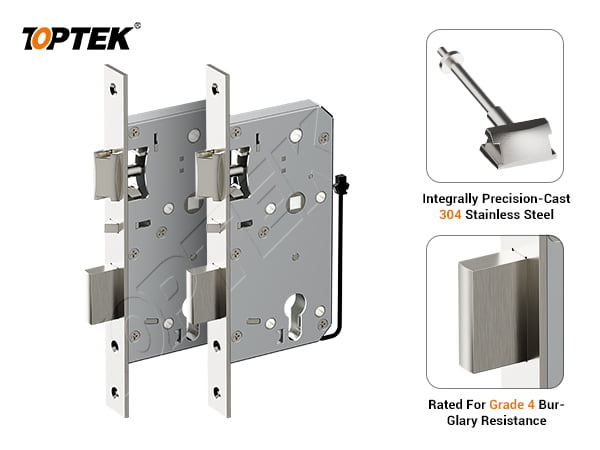
- Security strength: Grade 4 deadbolt resistance performance, including up to 5,000N axial pressure and 7,000N side pressure.
- Corrosion resistance: Optional 316 stainless steel components are available for coastal, humid, or high-corrosion environments.
- Installation stability: A dust protection cover helps prevent wood chips and installation debris from entering the lock body.
Material and Design Advantages
For international buyers, the difference between a standard lock body and a stable project-grade lock body often comes from small engineering details. TOPTEK improves the EN 12209 Grade 3 Mortise Lock platform through material upgrades, structural design, and manufacturing control.
- 304 stainless steel lock housing: The lock housing uses high-quality 304 stainless steel with 1.5mm thickness for stable structural strength.
- Single-piece precision-cast latch bolt: Compared with traditional riveted latch structures, TOPTEK uses a single-piece precision-cast latch bolt assembly to reduce the risk of loosening.
- 316 stainless steel option: For projects requiring stronger anti-rust performance, TOPTEK can provide 316 stainless steel components, including latch, deadbolt, forend, strike, and screws.
- Dust protection cover: During installation, wood chips and dust can enter the lock body. TOPTEK adds a dust protection design to help maintain smooth operation after installation.
- Flexible finish options: Strike plates, backing plates, latch bolts, and faceplates can be finished to match project design requirements.
EN 12209 Grade 3 Mortise Lock Applications
When a lock is used on a fire-rated door, buyers should not only check the lock certificate. They should also consider the complete door opening, including the door leaf, frame, hinges, door closer, lever handle, cylinder, strike plate, and installation method. A European mortise lock can support fire-rated door applications only when it matches the required project standard and has been tested in the relevant door assembly.
TOPTEK’s 72 series mortise lock has passed fire resistance testing with 132 minutes on wooden doors and 260 minutes on steel doors. This gives project buyers more confidence when selecting locks for commercial buildings, public areas, and safety-related door openings.
Quality Control During Production
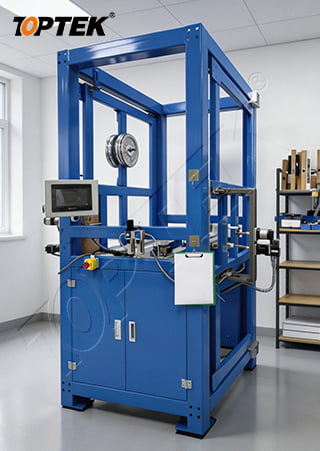
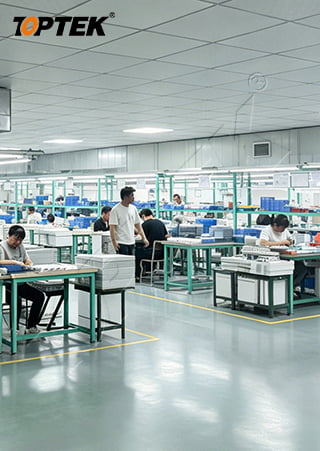
Stable production quality is critical for lock brands, distributors, and engineering projects. A lock may pass a sample test, but real value comes from batch consistency. TOPTEK controls EN 12209 Grade 3 Mortise Lock production through precision machining, stamping, assembly inspection, internal testing, and quality assurance procedures.
Our quality control approach includes:
- First Article Inspection before mass production
- In-process inspection during machining, stamping, and assembly
- Durability testing for lock case performance
- Salt spray testing for corrosion resistance
- Dimensional inspection for critical lock components
- Final inspection before packing and shipment
Customer Case: The Cost of Unstable Lock Quality
In one overseas project case, a customer reported that locks from their previous supplier failed during engineering acceptance. The project required replacement of 1,500 locks, which created extra cost, delay, and customer pressure. In another case, unstable product quality caused certification problems and serious stock loss.
These cases show why buyers should not select an EN 12209 Grade 3 Mortise Lock only by price. A better approach is to evaluate testing capability, material control, production consistency, certification experience, and engineering support. TOPTEK helps customers reduce this risk by offering stable lock platforms, in-house testing support, and practical product development experience.
How to Choose the Right Commercial Mortise Lock
Before selecting an EN 12209 Grade 3 Mortise Lock, buyers should confirm the following points:
- Door type: timber door, steel door, fire-rated door, commercial door, or residential entrance door.
- Backset and centre distance: common European dimensions such as 72mm, 78mm, and 85mm series.
- Lock function: sash lock, bathroom lock, escape lock, deadbolt lock, passage lock, night latch, or classroom lock.
- Fire requirement: whether the project requires EN 1634-1 fire test compatibility.
- Corrosion environment: whether 316 stainless steel components are needed.
- Project volume: whether the customer needs OEM/ODM support, customized faceplate, private label, or special functions.
For access control projects, buyers can also read TOPTEK’s guide on how to choose the right electromechanical lock for commercial doors. This helps customers compare mechanical mortise locks, electric locks, solenoid-controlled locks, and motorized access control solutions.
Why Choose TOPTEK?
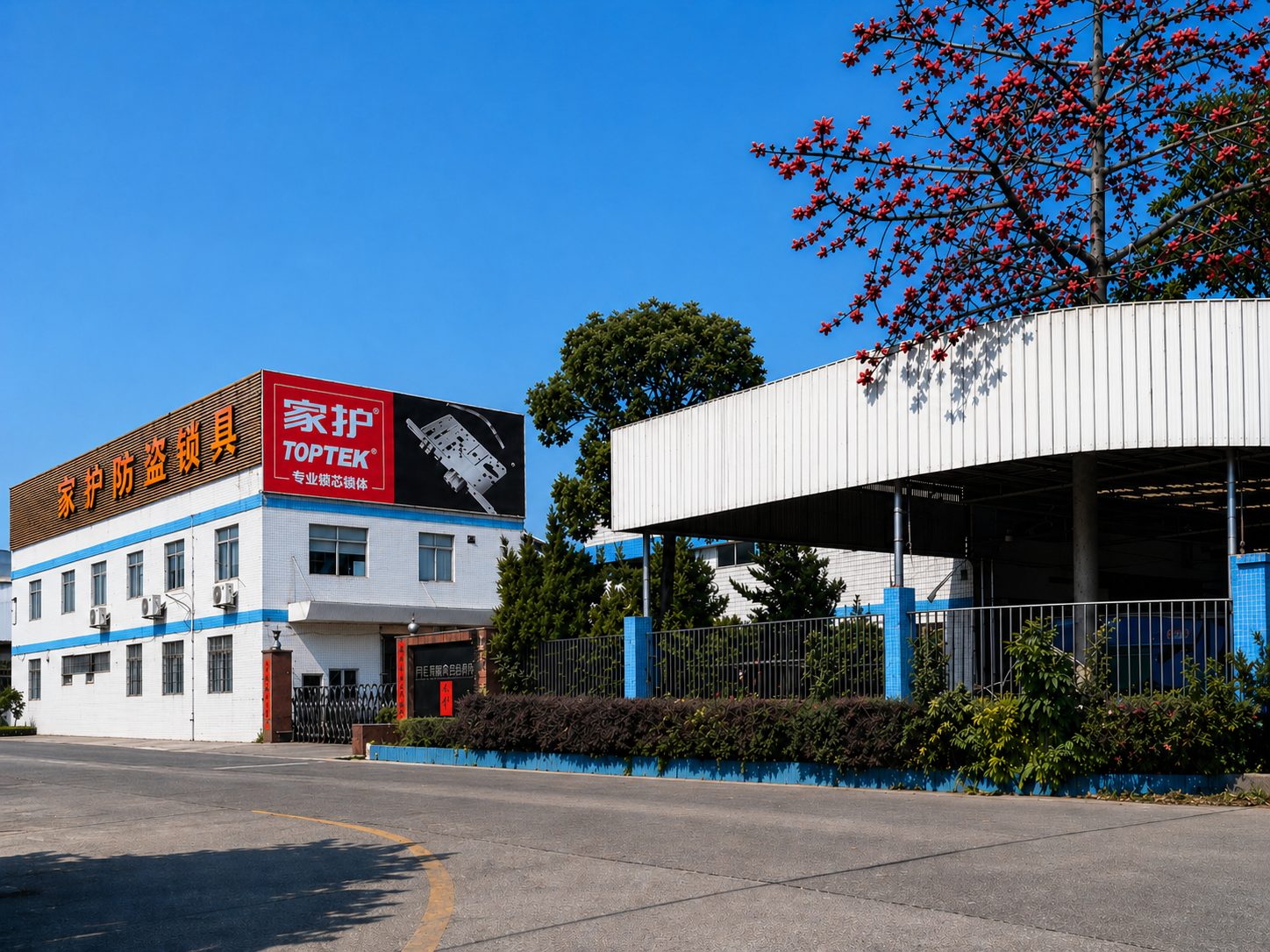
TOPTEK is a B2B OEM/ODM manufacturer focused on architectural hardware, commercial locks, and integrated access control locking solutions. Our product range includes ANSI Grade 1 mortise locks, EN 12209 Grade 3 mortise locks, AS 4145 mortise locks, panic exit devices, multipoint locking systems, electronic locks, access control devices, EN 1906 lever handles, construction cylinders, and butt hinges.
You can learn more about our engineering background, testing capability, and manufacturing system on our About TOPTEK engineering page.
Conclusion
The EN 12209 Grade 3 Mortise Lock is a practical choice for commercial doors, fire-rated doors, public buildings, and international architectural hardware projects. For serious buyers, the key is not only the certificate. The real value comes from stable engineering design, proven testing, corrosion-resistant materials, consistent production, and responsive OEM/ODM support.
If you are looking for an EN 12209 Grade 3 Mortise Lock manufacturer for commercial door hardware, fire-rated door projects, or private-label lock production, TOPTEK can support your project with tested lock platforms, engineering experience, and flexible manufacturing solutions.
Contact TOPTEK to discuss your EN mortise lock project, OEM/ODM requirements, or customized commercial door hardware solution.