
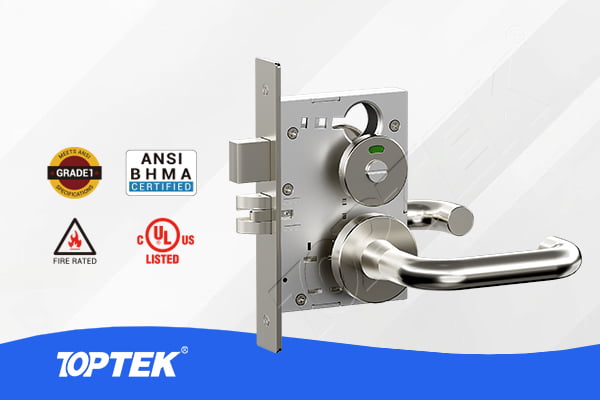

Best ANSI Grade 1 Mortise Lock for School and Hospital Doors
What is the best ANSI Grade 1 mortise lock for school and hospital doors? The best choice is not only the strongest lock case. It is a verified Grade 1 mortise lock platform. It should include ANSI/BHMA A156.13 grade, free egress, and correct functions. It also needs durable trim, cylinder compatibility, and manufacturer support for drawings, samples, test documents, and OEM/ODM requirements. For school and hospital projects, the lock must survive high traffic. It must protect controlled areas, support emergency access, and keep daily operation smooth.
Why should buyers evaluate the manufacturer, not only the model? An ANSI Grade 1 mortise lock manufacturer must prove both product performance and production consistency. A lock may look heavy-duty in a catalog. Institutional projects still need stable batches, correct functions, validated latch and deadbolt behavior, reliable lever return, suitable finishes, and technical support.
TL;DR: Best ANSI Grade 1 Mortise Lock Selection for Schools and Hospitals
What should a school or hospital buyer remember first? Choose an ANSI Grade 1 mortise lock only after checking the door function, fire rating, access control, and cylinder plan. Also confirm trim, door preparation, and supplier test evidence. The best ANSI Grade 1 mortise lock for school and hospital doors matches the opening schedule. It also reduces long-term maintenance risk.
- Which grade matters most? Specify ANSI/BHMA Grade 1 for high-traffic institutional doors, especially corridors, classrooms, offices, staff areas, utility rooms, and healthcare support spaces.
- Which compliance route matters? Ask for ANSI/BHMA A156.13 documentation and UL 10C fire-rated documentation where the lock is used on a fire-rated door assembly.
- Which operation matters most? Prioritize free egress from the inside, correct classroom or storeroom function, emergency override logic, and smooth latch engagement.
- Which TOPTEK evidence matters? TOPTEK uses internal ANSI/BHMA durability and strength testing, 2D dimensional inspection, controlled assembly, and project-specific RFQ review to support stable OEM/ODM supply.
- Which next step matters? Send door drawings, door thickness, fire requirement, function code, trim style, cylinder type, finish, quantity, target market, and sample expectation before requesting a quote.
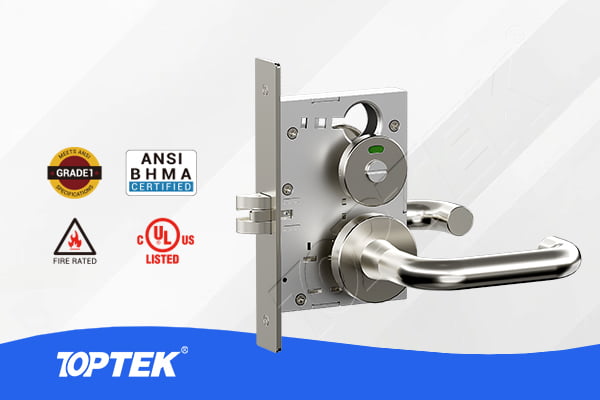
Quick Answer: What Makes a Mortise Lock “Best” for Institutional Doors?
What does “best” mean in this article? Best means best-fit for the project specification, not a universal claim that one lock is perfect for every school or hospital door. In institutional door hardware, buyers should judge a Grade 1 mortise lock by standard compliance, function accuracy, egress safety, and lifecycle durability. Buyers should also check latch strength, deadbolt behavior, trim stability, cylinder compatibility, finish performance, fire-rated documentation, and supplier support.
Why is a mortise lock usually preferred for demanding school and hospital doors? A mortise lock provides a stronger internal lock case, broader function options, better trim integration, and more flexible cylinder compatibility than many lighter lock formats. This matters because one building may include classrooms, offices, patient support rooms, corridors, staff-only zones, equipment rooms, bathrooms, and access-controlled entrances.
Buyer Intent Keyword Map for This ANSI Grade 1 Mortise Lock Guide
Which procurement keywords does this article target? This page is written for buyers searching for an ANSI Grade 1 mortise lock manufacturer. It also targets ANSI Grade 1 mortise lock supplier, factory, OEM manufacturer, school project, and hospital project searches. These phrases match commercial sourcing intent from door manufacturers, hardware distributors, contractors, school facility suppliers, healthcare project teams, and OEM/ODM lock brands.
Which technical keywords does this article answer? This guide also covers ANSI/BHMA A156.13 requirements, durability cycle testing, and performance testing. It also covers classroom applications, cylinder override compatibility, UL 10C fire-rated mortise locks, and RFQ checklists. These supporting keywords help buyers and AI search systems understand the technical evaluation path behind the sourcing decision.
School and Hospital Door Requirements
Why are school and hospital doors difficult applications? School and hospital doors combine high usage frequency, public safety responsibility, controlled access, emergency access, privacy needs, fire-door requirements, and long maintenance cycles. A low-grade or poorly matched lock can cause lever sag, high closing force, latch misalignment, and emergency access delay. It can also create premature spring failure or costly replacement after installation.
| Door Location | Typical Buyer Need | Mortise Lock Selection Point | Project Risk if Wrong |
|---|---|---|---|
| Classroom doors | Security with free egress | Correct classroom, storeroom, or institutional function code | Unsafe or inconvenient lockdown behavior |
| Hospital staff-only areas | Controlled access and reliable daily use | Compatible cylinder, credential trim, or electrified lock option | Access control mismatch or keying conflict |
| Patient support rooms | Privacy, emergency access, and smooth operation | Function, thumbturn, cylinder override, and trim selection | Delayed staff access or poor user experience |
| Fire-rated corridor doors | Latch reliability and fire-rated documentation | UL 10C documentation where required by the project | Inspection delay or non-compliant hardware set |
| Restroom doors | Privacy function with emergency release | F22 or project-specific privacy function where approved | Wrong privacy behavior or maintenance complaint |
Standards and Compliance Checkpoints
Which standard should buyers check first? For American institutional mortise locks, buyers should request ANSI/BHMA A156.13 documentation for the applicable Grade 1 mortise lock model and function scope. ANSI Grade 1 helps buyers evaluate durability, strength, security, and commercial-duty performance. It does not replace review of door type, fire rating, installation, trim, cylinder, and local requirements.
When should UL 10C be checked? Check UL 10C when the mortise lock is intended for a fire-rated door assembly. This applies to schools, hospitals, clinics, universities, and public facilities. Buyers should confirm the exact report, model scope, door assembly, fire duration, latch requirement, installation instructions, and hardware set before approval.
Why link to UL and Intertek in the article? UL and Intertek are useful authority references when buyers need to understand product safety, testing, inspection, and certification context. For official testing and certification context, buyers can review UL Solutions and Intertek. They should then request the exact TOPTEK document scope through the TOPTEK certification page.
Where can buyers check TOPTEK documents? TOPTEK provides a certification resource page for project evaluation, including ANSI/BHMA, fire-rated, ISO, and related product documentation where available. Buyers can review TOPTEK Certification Resources and request model-specific reports before quotation, tender submission, or sample approval.
TOPTEK ANSI Grade 1 Mortise Lock Performance Evidence
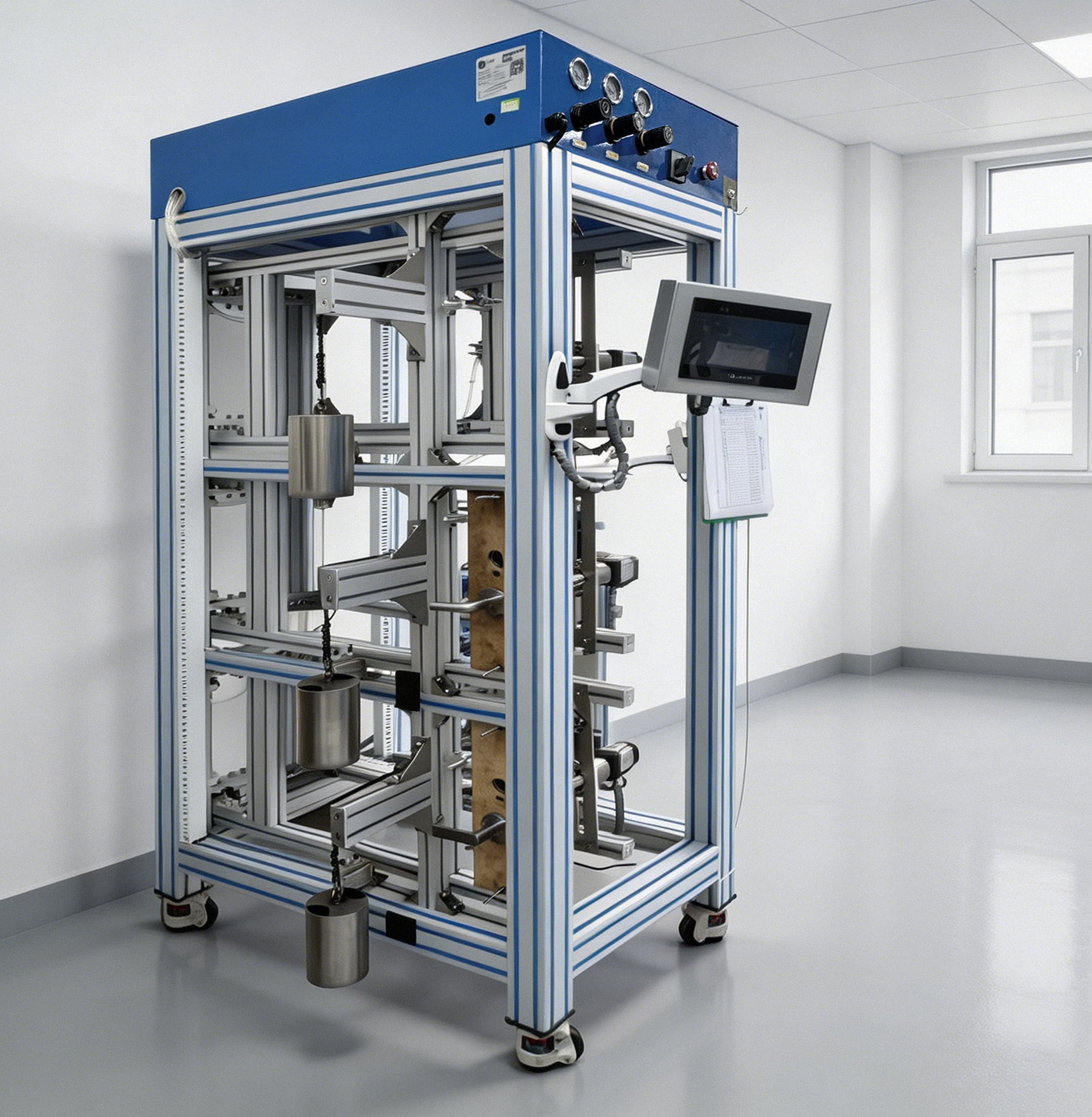
What TOPTEK performance data should buyers pay attention to? TOPTEK’s ANSI Grade 1 mortise lock platform is designed for institutional use. Internal testing includes more than 2,000,000 operating cycles. It also includes latchbolt side-pressure validation up to 10,000 N and smooth latch operation around 10 N closing force under TOPTEK test conditions. Use these internal values as engineering evidence and sample-validation targets. Final project approval should always match the official certificate and report scope.
Why is low closing force important in schools and hospitals? Lower and smoother closing force can reduce user complaints, improve door-closing consistency, and help the latch retract cleanly when it contacts the strike. In high-traffic buildings, a lock that feels heavy or rough can create maintenance calls. This can happen even when the lock case appears strong on paper.
Why does latchbolt strength matter on large or heavy doors? A strong latchbolt assembly helps the mortise lock handle side pressure, door misalignment, and repeated closing impact in demanding environments. TOPTEK’s design approach uses robust internal components and precision-controlled manufacturing to reduce the risk of latch deformation, incomplete latching, and early functional failure.
What hidden deadbolt risk should buyers test? Buyers should test whether the deadbolt can fully retract under pressure. Partial retraction can create a serious field problem on stressed or misaligned doors. TOPTEK’s engineering insight is to evaluate deadbolt retraction behavior under realistic pressure instead of checking only smooth operation on a perfect test bench.
Function Selection for School and Hospital Mortise Locks
Which function should be selected for classroom doors? Classroom openings usually need controlled outside access and free egress from inside. The exact function must still follow the hardware schedule and local safety requirements. Before approval, buyers should simulate outside lever behavior, inside lever behavior, key operation, thumbturn behavior, latch action, deadbolt action, and emergency access.
Which function should be selected for hospital doors? Hospital doors may require different functions for patient support rooms, staff-only rooms, treatment areas, storage rooms, bathrooms, corridor doors, and access-controlled zones. The correct ANSI Grade 1 mortise lock for hospital projects should match privacy, emergency override, keying, credential access, fire-door latching, and trim expectations.
Why does TOPTEK’s function range matter? TOPTEK can support multiple ANSI mortise lock functions for project requirements, with an internal platform designed to cover broad institutional door schedules. The buyer benefit is fewer mismatched products and better function consolidation. It also supports OEM/ODM planning across school, hospital, apartment, hotel, office, and public building projects.
Material and Structure Details Buyers Should Verify
Which internal materials reduce long-term failure risk? For institutional doors, buyers should prefer strong internal components, stable lever spring structures, and corrosion-resistant material routes over light-duty zinc or weak powder-metal solutions. TOPTEK’s ANSI mortise lock insight emphasizes 304 stainless steel construction and 304 stainless steel spring disc logic. It also focuses on robust critical components for demanding environments.
Why does lever return stability matter? Lever return stability affects user experience, ADA-style usability expectations, perceived quality, and long-term maintenance cost. If a lever spring weakens in humid or hot conditions, the handle may sag. It may also fail to return properly, even when the lock body still locks.
Why should buyers ask about strike and door preparation? A high-quality mortise lock can still fail in the field if the strike plate, door edge preparation, frame alignment, or latch engagement is wrong. For school and hospital projects, buyers should confirm lock case dimensions, faceplate size, backset, centerline, and strike lip. They should also confirm door thickness, handing, trim holes, cylinder cam, and instructions.
Access Control and Emergency Override Planning
When should a buyer consider electrified mortise lock options? Consider electrified mortise locks when a school or hospital door needs card reader access, staff zoning, or centralized control. Also check remote unlock, monitoring, and access control integration. Mechanical Grade 1 performance is still important. The electrical release mode, fail-safe or fail-secure strategy, monitoring output, power supply, reader integration, and emergency override path must also be confirmed.
Why is mechanical key override still important? Mechanical key override gives facility teams and emergency personnel a backup access route when electronic credentials, wiring, power, or system control fail. TOPTEK recommends confirming cylinder type, keyway, master key plan, thumbturn, and emergency access during RFQ. Do not treat the cylinder as a late accessory.
Which TOPTEK internal link should buyers review next? Buyers evaluating access-controlled school or hospital openings should also review TOPTEK’s electronic lock and access control devices. Related electromechanical options can be reviewed at Electronic Lock and Access Control Devices.
Manufacturing Quality Control Behind a Reliable ANSI Grade 1 Lock
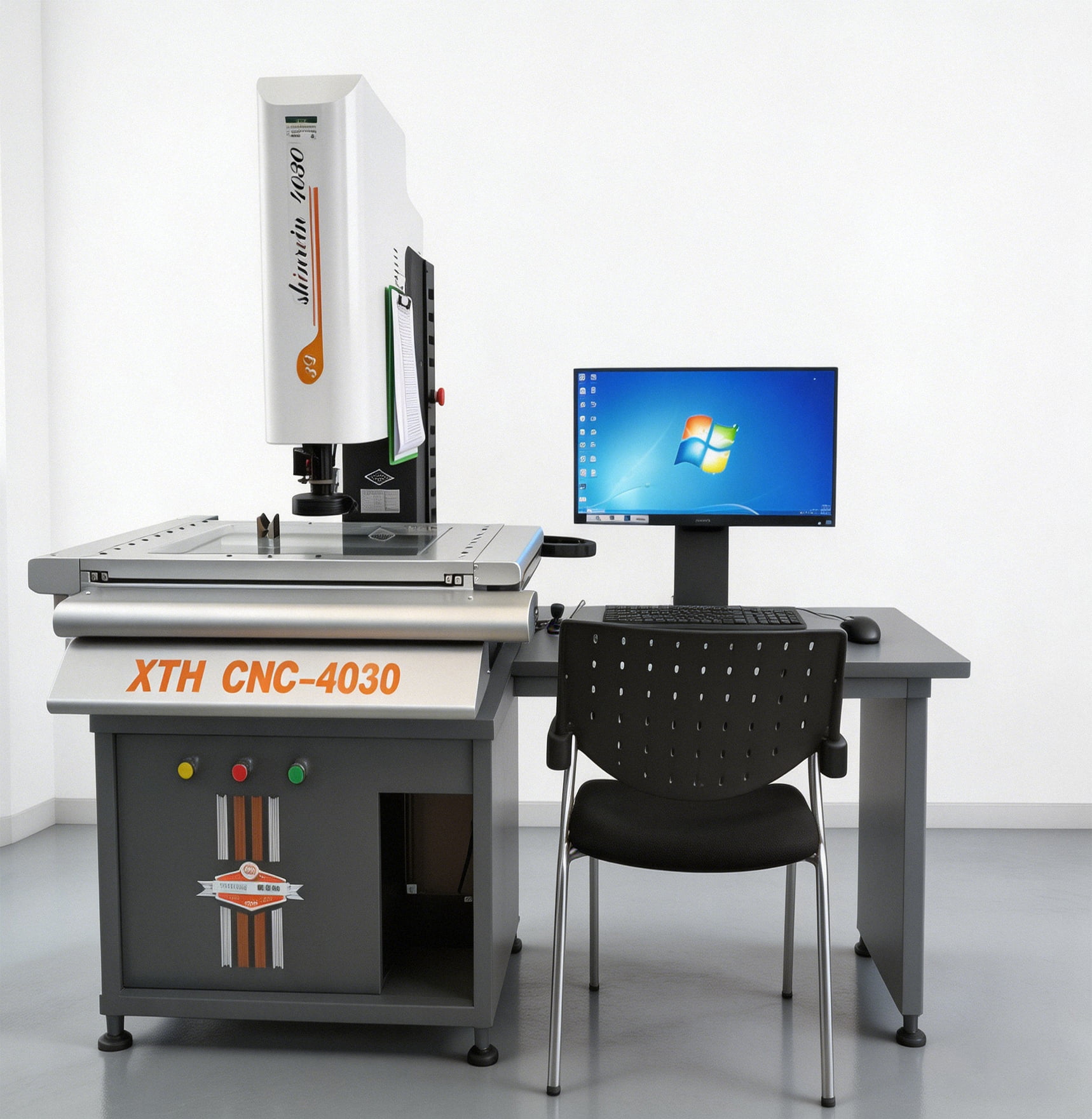
Why does manufacturing precision matter for a mortise lock? Mortise locks contain interacting latch, deadbolt, auxiliary latch, spring, spindle, cylinder, trim, strike, and case components. Dimensional control directly affects smooth operation and batch consistency. TOPTEK uses precision manufacturing, in-process inspection, assembly control, and optical measurement to reduce tolerance accumulation and improve long-term reliability.
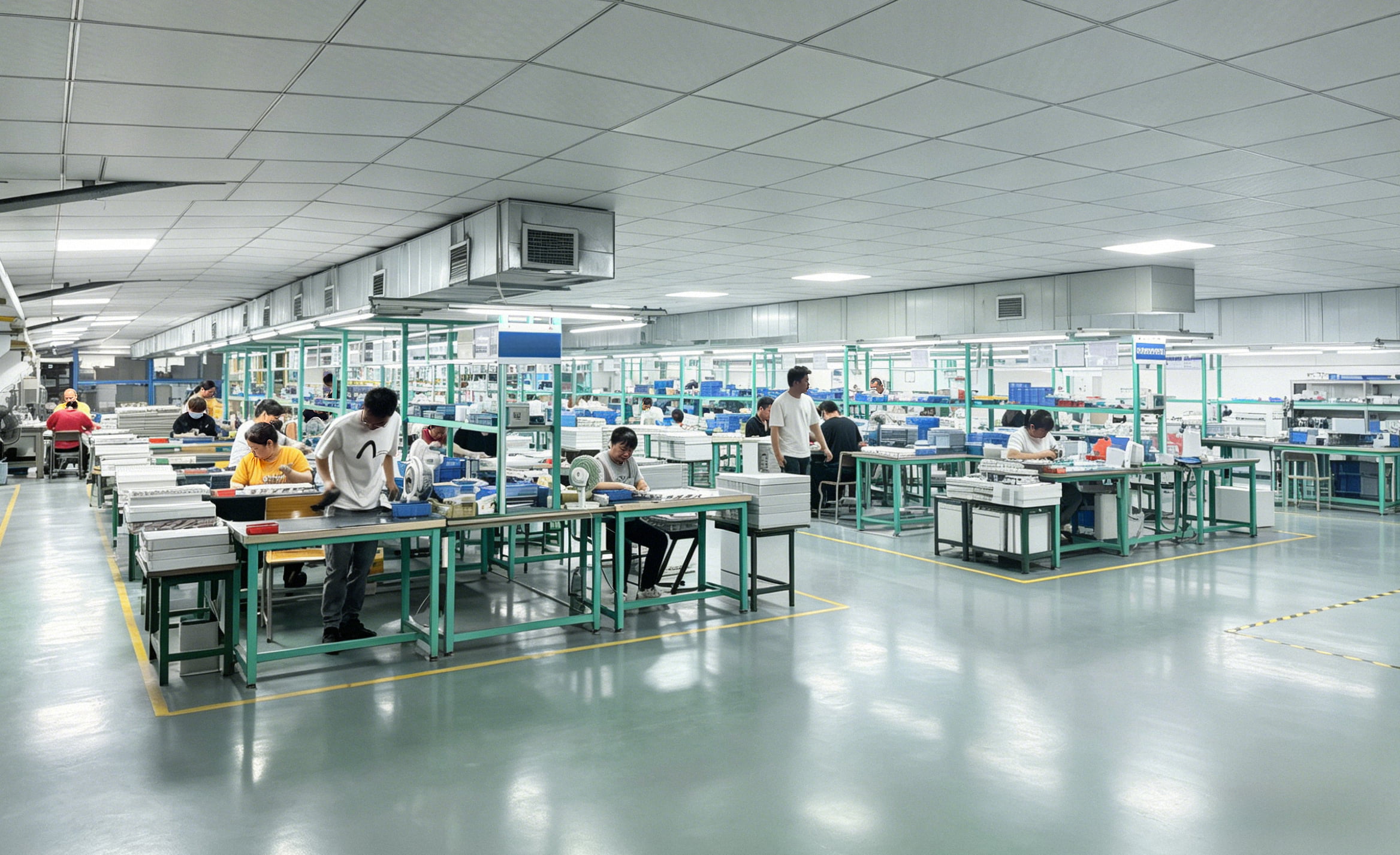
Why does 2D measurement matter before shipment? 2D vision measurement helps verify critical dimensions that affect fit, alignment, latch engagement, trim installation, and repeatable assembly. For a large school or hospital project, dimensional drift can create expensive site rework. Measurement and inspection should be part of the supplier evaluation.
ANSI Grade 1 Mortise Lock vs Cylindrical and Tubular Locks
Should buyers always choose a mortise lock over a cylindrical or tubular lock? No; buyers should choose the lock format according to traffic, security level, door preparation, function, budget, and maintenance expectations. For many school and hospital openings, an ANSI Grade 1 mortise lock offers better function flexibility. It also provides stronger internal architecture for high-traffic use.
| Lock Type | Best Use | Main Strength | Main Limitation |
|---|---|---|---|
| ANSI Grade 1 mortise lock | Institutional, commercial, school, hospital, office, fire-door projects | Strong case, many functions, cylinder flexibility, high-duty performance | Requires accurate mortise door preparation |
| Cylindrical lock | Standard commercial rooms and moderate traffic doors | Fast installation and common market availability | Less internal space and fewer institutional function options |
| Tubular lock | Interior privacy or passage doors where heavy-duty security is not required | Simple structure and economical installation | Not the first choice for Grade 1 institutional security openings |
Common Mistakes When Sourcing ANSI Grade 1 Mortise Locks
What is the first common sourcing mistake? Many buyers ask only for Grade 1 price without confirming the exact door function. This creates risk because classroom, storeroom, office, privacy, corridor, electrified, and fire-rated openings may require different lock functions and trim combinations.
What is the second common sourcing mistake? Some buyers treat UL 10C or fire-rated language as a general product label instead of checking the exact model and assembly scope. For fire-rated school and hospital doors, always verify the report, model, installation requirement, latch requirement, door material, and opening type before project approval.
What is the third common sourcing mistake? Some buyers approve a sample without testing cylinder override, deadbolt retraction under pressure, latch engagement, lever return, strike alignment, and finish durability. A good sample review should simulate real door behavior, not only table-top operation.
What is the fourth common sourcing mistake? Some buyers leave the keying and cylinder plan until the end of the project. Schools and hospitals often need master key levels, restricted areas, staff-only zones, emergency access, and service access. Review the cylinder plan early.
What is the fifth common sourcing mistake? Some buyers select a low-cost supplier without checking batch consistency and after-sales support. Institutional projects are not only about unit price; they depend on repeatable manufacturing, documentation, spare parts, technical response, and long-term supply reliability.
ANSI Grade 1 Mortise Lock RFQ Checklist
What should buyers send before asking for a quotation? A complete ANSI Grade 1 mortise lock RFQ should include door application, standard, fire requirement, function code, trim, cylinder, handing, thickness, finish, and quantity. It should also include document needs and the sample route. Better RFQ information helps the manufacturer confirm the correct product faster and reduces the risk of wrong samples.
| RFQ Item | What to Provide | Why It Matters |
|---|---|---|
| Door application | School classroom, hospital staff room, patient support room, corridor, restroom, office, utility room | Determines function, trim, and durability requirement |
| Standard expectation | ANSI/BHMA A156.13 Grade 1, UL 10C where required, local project documents | Prevents unsupported compliance assumptions |
| Door details | Door material, thickness, handing, backset, preparation drawing, frame and strike requirement | Ensures fit and installation accuracy |
| Function and access | Classroom, storeroom, privacy, office, passage, electrified, fail-safe or fail-secure logic | Prevents wrong locking behavior |
| Cylinder and keying | Mortise cylinder, SFIC, keyway, cam, master key level, emergency access expectation | Supports facility management and emergency override |
| Commercial details | Quantity, target market, private label needs, packaging, delivery schedule, sample quantity | Supports accurate OEM/ODM quotation |
Why TOPTEK for ANSI Grade 1 Mortise Lock OEM/ODM Projects?
Why can TOPTEK support school and hospital door hardware buyers as an ANSI Grade 1 mortise lock manufacturer? TOPTEK is an OEM/ODM precision manufacturer with more than 35 years of lock manufacturing experience. The company operates a 13,000 m² factory and has more than 220 skilled employees. It also has in-house R&D, controlled production, ISO management systems, and ANSI, EN, and AS product families. This makes TOPTEK suitable for lock brands, door manufacturers, distributors, contractors, and project buyers who need more than a catalog item.
What makes TOPTEK’s ANSI Grade 1 mortise lock manufacturer support different? TOPTEK combines mechanical lock engineering, ANSI/BHMA-oriented internal validation, precision manufacturing, function matching, cylinder and trim coordination, certification-route support, and OEM/ODM customization. Buyers can discuss model selection, sample testing, drawings, function conversion, private label packaging, finish route, and project documentation before bulk production.
Which TOPTEK pages should buyers review? Buyers can start with the TOPTEK ANSI Grade 1 Mortise Lock product page. They can also review TOPTEK certification documents, Construction Cylinders, Panic Exit Devices, and Precision Hinges and Door Power Transfer Solutions.
Project Risk Summary for School and Hospital Mortise Locks
What is the biggest risk in institutional mortise lock sourcing? The biggest risk is selecting a lock by price or appearance before checking function and fire documentation. Buyers should also check access-control logic, cylinder plan, strike alignment, and supplier quality control. This can lead to failed inspections, wrong locking behavior, heavy closing force, incomplete latch engagement, lever sag, keying conflicts, and expensive site replacement.
How should buyers reduce that risk? Buyers should require a structured sample approval process, complete RFQ information, test evidence, model-specific documentation, installation drawings, and a supplier capable of engineering review. A reliable ANSI Grade 1 mortise lock manufacturer should help identify project risks before mass production, not after the hardware reaches the jobsite.
FAQ: ANSI Grade 1 Mortise Locks for Schools and Hospitals
Is ANSI Grade 1 necessary for every school or hospital door?
Is Grade 1 always required? No, but ANSI Grade 1 is strongly preferred for many high-traffic and higher-risk institutional openings. Lower-duty doors may use other hardware, but classrooms, corridors, staff areas, utility rooms, and controlled spaces should be evaluated carefully.
What is the best ANSI Grade 1 mortise lock function for classroom doors?
Which classroom function is best? The best classroom function depends on the school’s safety policy, local code, lockdown procedure, and hardware schedule. Buyers should confirm outside lever behavior, inside free egress, key operation, deadbolt behavior, and emergency access before approving samples.
Can an ANSI Grade 1 mortise lock be used on hospital doors?
Can hospitals use Grade 1 mortise locks? Yes, ANSI Grade 1 mortise locks are suitable for many healthcare doors when the correct function and trim are selected. Buyers should also confirm fire documentation, cylinder plan, and access-control logic. The final choice should follow the project specification and local approval route.
What documents should buyers request before ordering?
Which documents are important? Buyers should request ANSI/BHMA A156.13 documentation, UL 10C fire-rated documentation where required, technical drawings, installation instructions, finish information, test records, and sample approval documents. For OEM/ODM projects, also request packaging, labeling, and private label confirmation.
Why does latch closing force matter?
Why check closing force? Closing force affects real user experience and latching reliability. A lock that needs high force may cause complaints, door bounce, incomplete latching, or frequent adjustment in schools and hospitals.
Can TOPTEK support private label ANSI Grade 1 mortise lock programs?
Can TOPTEK support OEM/ODM? Yes, TOPTEK supports OEM/ODM and private label commercial lock programs, including project review, drawings, samples, function matching, testing support, packaging, and production control. Buyers should send technical and commercial requirements at the RFQ stage.
Conclusion: How to Choose the Best ANSI Grade 1 Mortise Lock
What is the final recommendation? The best ANSI Grade 1 mortise lock for school and hospital doors is a project-matched Grade 1 platform. It should have verified documentation, correct function, smooth operation, and strong structure. It should also have reliable trim return, cylinder compatibility, fire-rated support where required, and manufacturer review before mass production. For buyers comparing an ANSI Grade 1 mortise lock manufacturer, price is not the only question. The better question is whether the supplier can reduce project risk over the full building lifecycle.
What does TOPTEK supply beyond this product? TOPTEK Access is a China-based OEM/ODM manufacturer of commercial locks, architectural door hardware, and integrated access control locking solutions. It supplies ANSI Grade 1 mortise locks, EN 12209 Grade 3 mortise locks, and AS 4145 mortise locks. It also supplies panic exit devices, multi-point locking systems, electronic locks, lever handles, cylinders, and hinges for global door manufacturers, distributors, contractors, and building projects.
How should buyers contact TOPTEK? Contact TOPTEK with door drawings, project standard, function code, fire-rating expectation, access-control requirement, cylinder/keying plan, finish, quantity, sample request, and target market. TOPTEK can help review the ANSI Grade 1 mortise lock configuration, confirm the correct documentation route, and support OEM/ODM project development.
What is TOPTEK’s reliability position? TOPTEK stands for Commercial Door Hardware Reliability Solution. TOPTEK: Smart Design. Strong Security.
Who reviewed this technical guide? Written by Ivan He, Technical Director at TOPTEK.