

TL;DR: How a Multi-Point Locking System Improves Door Security
Answer: A multi-point locking system improves door security by locking the door at several positions instead of relying on one latch or one deadbolt. From the view of a multi point locking system manufacturer, better security comes from stronger frame engagement, steel hook and deadbolt locking points, accurate door preparation, reliable testing, and controlled production quality.
How does a multi-point locking system improve door security?
Answer: A multi-point locking system improves door security by spreading locking force across the top, middle, and bottom of the door, making prying, twisting, and forced opening more difficult than with a single-point lock. For door manufacturers, hardware distributors, contractors, and building projects, the key benefit is not only stronger locking; it also improves door sealing, structural stability, daily reliability, and user confidence.
Answer: A secure multipoint door lock must be specified as part of the whole door system, not as a separate lock body only. A professional multi point locking system supplier should evaluate the lock body, hooks, deadbolts, faceplate length, backset, handle center, cylinder compatibility, strike alignment, corrosion resistance, and project standard before confirming the final specification.
What are the key security benefits buyers should remember?
Answer: Buyers should remember that a multi-point locking system improves resistance, alignment, sealing, and long-term reliability when the lock is correctly specified and manufactured. The security gain depends on engineering quality, not only the number of locking points.
- Stronger forced-entry resistance: multiple locking points reduce the weakness of one central latch area.
- Better anti-pry performance: steel hooks and deadbolts engage the frame at different positions.
- Improved door stability: the system holds the door more evenly along the frame.
- Better sealing performance: even compression can support weather sealing and door closing quality.
- Lower project risk: correct drawings, strike position, packaging, and testing reduce installation and after-sales problems.
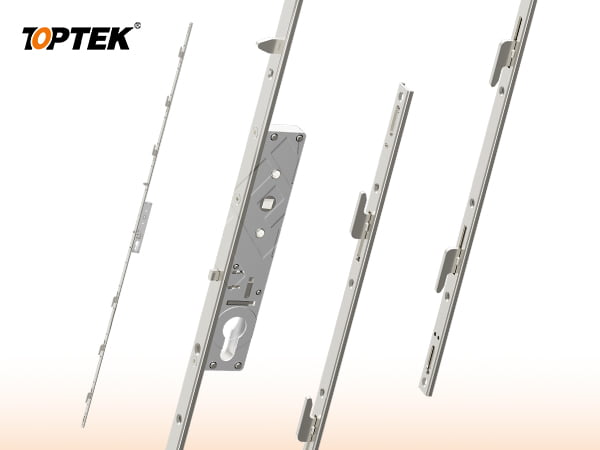
What does a TOPTEK multi-point locking system look like?
Answer: TOPTEK multi-point locking systems are engineered as long-faceplate locking solutions with multiple engagement points for doors that need stronger security and stable operation. Buyers should always confirm the model, faceplate length, backset, center distance, locking-point type, and door material before sample approval.
What is a multi-point locking system?
Answer: A multi-point locking system is a door locking mechanism that secures the door at more than one point, usually through a central lock body connected to additional hooks, deadbolts, rollers, or auxiliary locking points. Compared with a standard single-point lock, a multipoint door lock can secure the door edge at several positions and reduce the risk that one forced area will compromise the whole door.
Answer: In real door hardware projects, a multi-point locking system is selected when buyers need stronger edge control, better sealing, and higher door stability. Multi-point locking systems are used on entrance doors, patio doors, sliding doors, aluminum doors, PVC doors, timber doors, steel doors, apartment doors, and selected commercial door applications.
How do multiple locking points resist prying and forced entry?
Answer: Multiple locking points improve door security by forcing an attacker to overcome several frame engagement areas at the same time. With a single-point lock, pressure often concentrates around one latch or deadbolt. With a steel hook multipoint lock, steel hook multipoint lock OEM structure, or a deadbolt-and-hook combination, the force is distributed across the door height.
| Security Area | How the Multi-Point Locking System Helps | Buyer Checkpoint |
|---|---|---|
| Prying resistance | Hooks and deadbolts engage the frame at several positions, reducing reliance on one center lock point. | Confirm hook design, deadbolt throw, strike position, and frame reinforcement. |
| Door twisting resistance | Top, middle, and lower locking points reduce door movement under force. | Check door height, faceplate length, and whether the door leaf is rigid enough. |
| Sealing and compression | Multiple engagement points help keep the door aligned with the gasket and frame. | Confirm seal pressure, weather strip position, and closing force. |
| Daily security behavior | Automatic locking or lift-lever logic can reduce the chance of users leaving the door only latched. | Confirm automatic, lift-lever, or cylinder-operated function before approval. |
| Project reliability | Correct manufacturing and packaging protect the long lock body from deformation. | Ask for drawing review, sample testing, and protected packaging for long faceplates. |
Which multi-point locking system types should buyers compare?
Answer: Buyers should compare automatic locking, lift-lever locking, and cylinder-operated multi-point locking systems because each function changes security behavior, user operation, and installation risk. A professional multi point locking system OEM manufacturer or automatic multipoint lock manufacturer should help the buyer match the function to the door type and project requirement.
| Type | How It Works | Security Advantage | Best-Fit Application |
|---|---|---|---|
| Automatic multipoint lock | The trigger or latch is activated when the door closes, and locking points project automatically. | Reduces the risk of the user forgetting to lock the door. | Entrance doors, apartment doors, timber doors, composite doors, and projects needing easier daily use. |
| Lift-lever multipoint lock | The user lifts the handle to engage the hooks or deadbolts, then may use the cylinder for secondary locking. | Combines user control with stronger multi-point frame engagement. | Residential doors, project doors, and hardware programs that require familiar handle operation. |
| Cylinder-operated multipoint lock | The key cylinder drives the deadbolt and auxiliary hooks or bolts without automatic projection. | Provides deliberate locking control and can suit specific market habits. | Doors where manual locking is acceptable and precise cylinder control is preferred. |
Answer: TOPTEK supports multi-point locking system sourcing through product models, drawing review, sample validation, and OEM/ODM project development. Buyers can review the TOPTEK Multi-point Locking Systems category page, the PD1000 multi-point locking system, and the Auto Lock multi-point locking system before sending an RFQ.
Which standards and certification checks matter for door security?
Answer: Standards and certification checks matter because a multi-point locking system must be evaluated for the actual door application, not only for the lock body as a separate product. Buyers should verify the relevant EN, UL, fire-rated, corrosion, emergency escape, and project acceptance requirements before confirming a multi point locking system quote.
Answer: A certified multi point locking system manufacturer should explain the certification route carefully and avoid applying one report to every door or every market. For European-style projects, buyers may need a multi point locking system certification requirements review covering EN 12209, EN 14846, EN 179, EN 1125, EN 15685, BS EN 1670, or fire-door compatibility depending on the product function and door application.
Answer: Authority sources help buyers understand the testing and certification context, but the final approval must match the exact product and door assembly. For North American or fire-rated project discussions, buyers can review UL Solutions testing services and UL Solutions certification services. For testing, inspection, and certification context, buyers may also refer to Intertek.
Project reminder: Do not assume one certificate covers every multi-point locking system, every fire-rated door, or every export market. Buyers should request the exact model, certificate scope, door material, frame design, installation method, and project requirement before final approval.
What TOPTEK product details support buyer evaluation?
Answer: TOPTEK gives buyers practical product data for model comparison, including standards, backset, center distance, faceplate size, locking points, and cycle operation information on its public product pages. This makes the article more useful than a generic multi point locking system specification guide.
| TOPTEK Model | Public Product Data to Check | Buyer Evaluation Value |
|---|---|---|
| PD1000 | EN 12209 / EN 14846 / EN 179 context, 15.5 mm backset, 92 mm handle centers, 1414 mm x 16 mm faceplate, 7 mm spindle, and 50,000 cycle operation listed on the product page. | Useful for patio doors, sliding doors, PVCu doors, aluminum doors, timber doors, and project drawing checks. |
| Auto Lock | BS EN 1670 Grade 5 context, 45 mm backset, 20 x 1720 mm faceplate, 92 mm center-to-center, 50,000 cycle operation, reversible latch, and 3 deadbolts listed on the product page. | Useful for automatic locking door system compatibility guide topics and entrance-door hardware programs. |
Answer: Product data should lead to a technical conversation, not an instant assumption that the lock fits every project. Because multi-point locking systems use long faceplates and multiple moving parts, buyers should request a technical drawing, installation guide, packing method, and sample testing plan before confirming bulk order production.
Why does manufacturing precision decide real security performance?
Answer: Manufacturing precision decides real security performance because the hooks, deadbolts, latch, trigger, linkage, faceplate, and strikes must move in alignment across the full door height. A multi point locking system China manufacturer must control tolerances during stamping, machining, assembly, and final inspection so that the sample performance can be repeated in mass production.
Answer: Real project failures often come from small technical errors that become big installation problems. Common problems include hooks that fail to self-project, bolts that project before the door is fully closed, long faceplates that bend during installation, and zinc alloy parts wearing against metal parts. TOPTEK’s engineering view is that a secure multipoint lock must combine correct structure, suitable material, stable friction design, careful assembly, and controlled packaging.

How should testing improve confidence in a multi-point locking system?
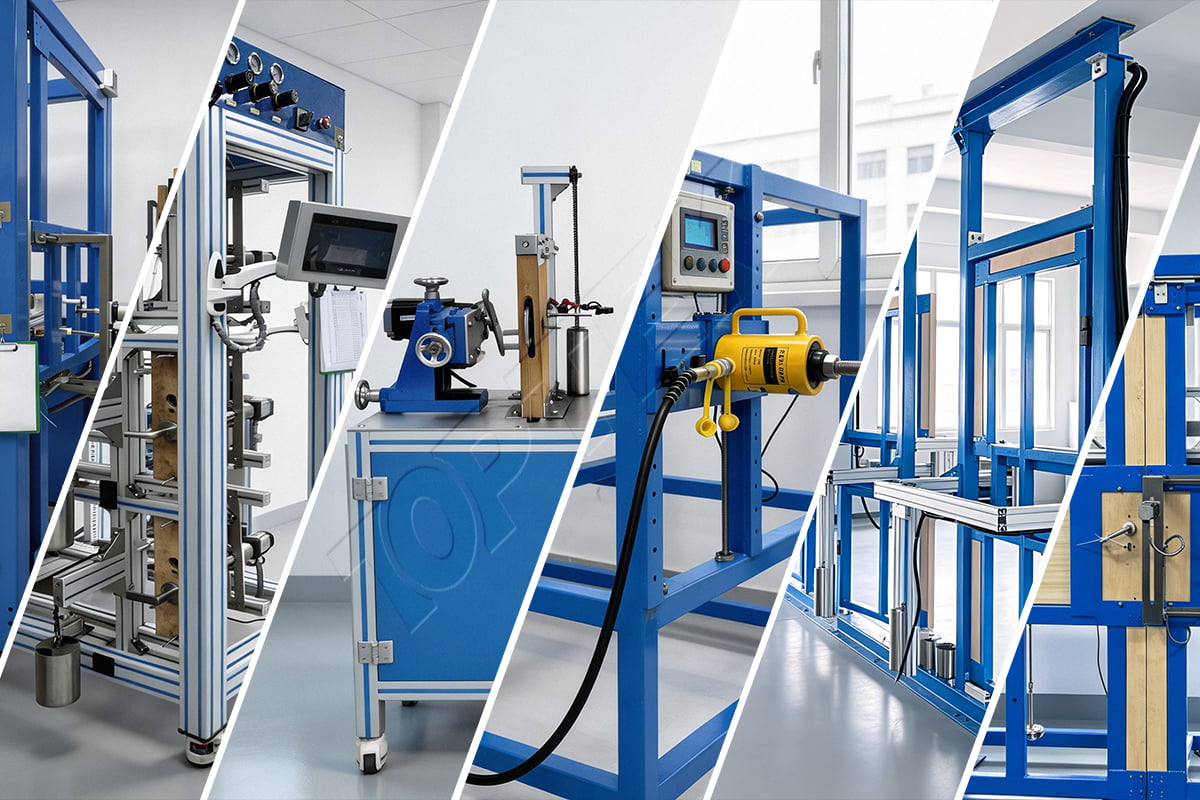
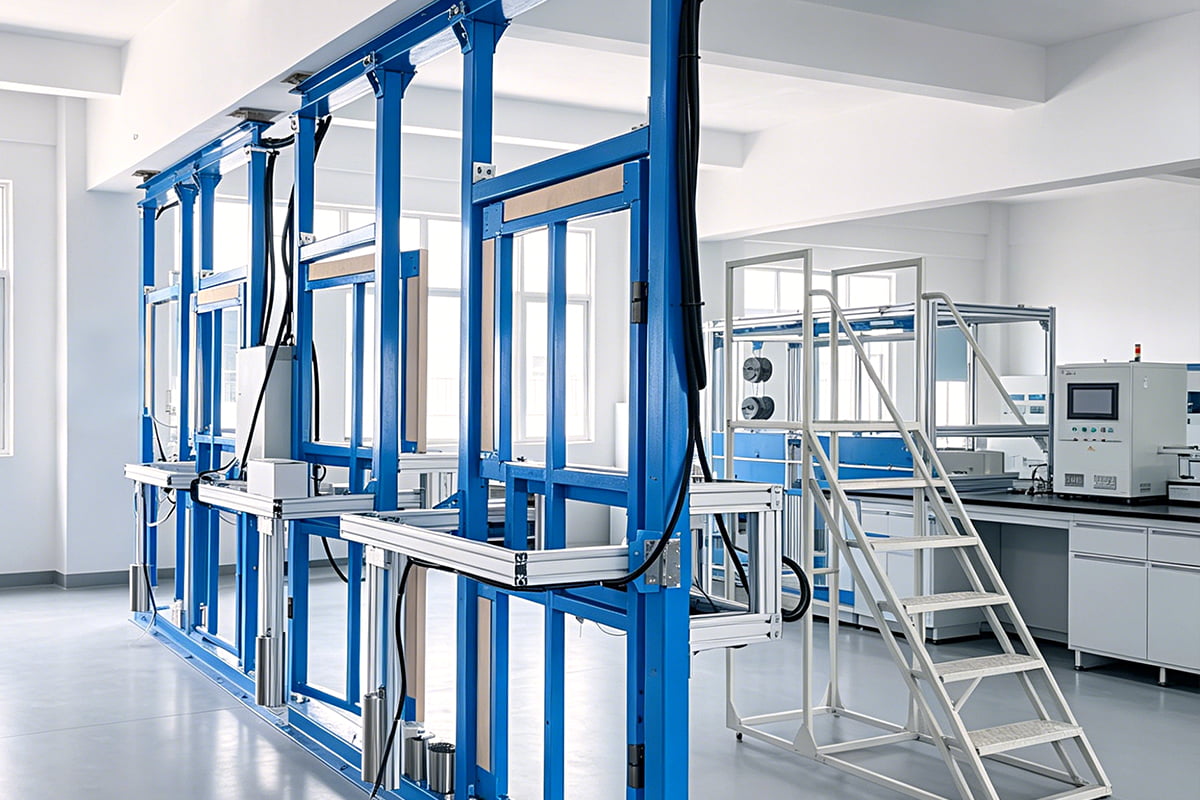
Answer: Testing improves confidence by checking whether the multi-point locking system can operate smoothly, resist corrosion, maintain locking function, and meet the project’s expected durability route before mass production. Buyers should ask for a multi point locking system performance test plan, a durability cycle test plan, and corrosion-resistance expectations for the target market.
Answer: TOPTEK uses internal testing and project validation as part of product development and quality control. For multipoint lock OEM projects, buyers should confirm mechanical endurance, trigger reliability, hook/deadbolt engagement, faceplate straightness, salt-spray target, and installation simulation before approving production.
How does a multi-point locking system improve the door, not just the lock?
Answer: A multi-point locking system improves the door by helping the door leaf stay aligned with the frame, seal, and locking keeps at several points. This is why multi-point locking systems are often selected for door security, sealing performance, structural rigidity, and long-term stability.
Answer: The final security result depends on the complete door system. For commercial door application, apartment projects, hotel projects, school projects, hospital projects, and office building projects, the lock body, cylinder, handle, strikes, frame, door thickness, gasket, hinges, and installation quality must work together.
How does a multi-point locking system compare with a single-point lock?
Answer: A multi-point locking system usually offers stronger door-edge control than a single-point lock because it locks the door at multiple positions instead of one central point. This makes multi point locking system vs single point lock a useful buyer comparison when security, sealing, and door stability matter.
| Comparison Item | Single-Point Lock | Multi-Point Locking System |
|---|---|---|
| Locking area | Usually one latch or deadbolt area. | Multiple hooks, deadbolts, or auxiliary locking points. |
| Forced-entry resistance | Force concentrates around one position. | Force is spread across several frame engagement points. |
| Door sealing | Depends heavily on hinges, latch, and door straightness. | Can help compress the door more evenly against the frame. |
| Installation sensitivity | Lower complexity, fewer alignment points. | Higher precision required for strikes, faceplate, and door preparation. |
| Best use | Standard doors where one lock point is sufficient. | Entrance doors, patio doors, security doors, project doors, and applications needing stronger edge control. |
What should buyers check before choosing a multi-point locking system supplier?
Answer: Buyers should check whether the supplier can support engineering review, standard selection, material choice, sample testing, faceplate protection, and RFQ documentation. A low-price multipoint door lock supplier can create high after-sales cost if the product jams, deforms, corrodes, or fails to match the door preparation.
- Model and function: PD1000, Auto Lock, automatic multipoint lock, lift-lever multipoint lock, or cylinder-operated multipoint lock.
- Door material: aluminum, PVCu, timber, steel, composite, patio, sliding, or commercial entrance door.
- Core dimensions: backset, center distance, faceplate length, faceplate width, spindle size, deadbolt throw, and strike layout.
- Security structure: steel hook multipoint lock, deadbolt combination, auxiliary locking point, trigger design, and cylinder locking logic.
- Testing route: durability cycle test, corrosion resistance, trigger reliability, operation force, and installation simulation.
- Certification route: EN 12209, EN 14846, EN 179, EN 1125, EN 15685, BS EN 1670, fire door compatibility, or market-specific requirements where applicable.
- Production control: approved drawings, sample sign-off, first article inspection, in-process inspection, final inspection, and packaging protection.
- Documentation: datasheet, technical drawing, installation guide, certificate or report scope, packing method, and maintenance guide.
What common mistakes reduce multi-point door security?
Answer: The biggest mistakes are treating a multi-point locking system as a simple lock body, ignoring door preparation, and approving mass production without testing the full door behavior. Security can drop quickly when the lock is strong but the installation, material, or packaging is weak.
Mistake 1: Choosing the lock without confirming the door drawing
Answer: The drawing must come before the order because backset, center distance, strike position, and faceplate length decide whether the locking points engage correctly. A small mismatch can cause the hook or deadbolt to scrape, jam, or fail to project fully.
Mistake 2: Ignoring trigger timing and self-locking behavior
Answer: Trigger timing matters because automatic locking points must project only when the door is properly closed. If the trigger design or strike position is wrong, the lock may fire too early or fail to engage.
Mistake 3: Using weak materials at friction points
Answer: Friction points must be designed with suitable materials because soft or unsuitable components can wear and cause lock failure over time. In project evaluation, TOPTEK checks structure, material contact, operating force, and long-term durability risk.
Mistake 4: Underestimating long faceplate bending
Answer: Long faceplates can bend during installation or transport, and bending can make the whole multipoint lock feel tight or jammed. TOPTEK recommends reinforced packaging and protected handling, especially for long-faceplate multipoint lock OEM factory orders.
Mistake 5: Treating internal testing as universal third-party certification
Answer: Internal testing helps quality control, but buyers should verify third-party certification scope separately when the project requires formal compliance. For project evaluation, review TOPTEK’s certification and testing document center and request the exact report scope for the selected model.
Why choose TOPTEK as a multi point locking system manufacturer?
Answer: TOPTEK is suitable for buyers who need an OEM/ODM multi point locking system manufacturer with lock engineering experience, production control, testing capability, and project-based technical support. TOPTEK is not only selling a lock body; it supports model selection, drawing review, sample testing, certification-route discussion, packaging control, and scalable production for global buyers.
Answer: TOPTEK’s E-E-A-T comes from real manufacturing capability, not only marketing claims. TOPTEK has more than 35 years of lock manufacturing experience, a 13,000 m² manufacturing facility, 220+ skilled employees, 20+ R&D engineers, 50+ Japanese TSUGAMI CNC machines, high-precision stamping and assembly capability, 100+ patents, ISO 9001 / ISO 14001 / ISO 45001 management systems, and in-house CE / UL-aligned testing equipment for commercial door hardware development.
Answer: For multi-point locking systems, TOPTEK focuses on automatic locking, lift-lever logic, steel hook and deadbolt combination, long-faceplate protection, corrosion-resistance solutions, project drawing review, and OEM/ODM private label support. This makes TOPTEK relevant for door manufacturers, lock brands, hardware distributors, contractors, system integrators, and building project buyers.
What should buyers send for a multi point locking system RFQ?
Answer: Buyers should send enough door and project information for TOPTEK to confirm function, size, standard route, installation risk, sample process, and quotation accuracy. A clear multi point locking system RFQ checklist reduces wrong samples, installation problems, and delayed approval.
| RFQ Item | What to Send | Why It Matters |
|---|---|---|
| Door type | Aluminum, PVCu, timber, steel, composite, sliding, patio, entrance, apartment, or commercial door. | Different doors need different faceplate, strike, and locking-point layouts. |
| Drawing | Door section, frame detail, lock preparation, strike position, door thickness, and hardware schedule. | Prevents dimension mismatch and locking-point alignment failure. |
| Function | Automatic locking, lift-lever locking, cylinder-operated locking, emergency escape, or access control integration. | Function decides user behavior and security logic. |
| Dimensions | Backset, center distance, faceplate size, spindle size, handle requirement, and cylinder type. | Core dimensions determine compatibility with existing door preparation. |
| Standard expectation | EN 12209, EN 14846, EN 179, EN 1125, EN 15685, BS EN 1670, fire-rated route, or local market requirements. | TOPTEK can review the certification route and avoid unsupported claims. |
| Environment | Indoor, outdoor, coastal, high-humidity, high-traffic, school, hospital, hotel, or apartment project. | Environment affects corrosion resistance, material selection, finish, and testing plan. |
| Order plan | Sample quantity, annual quantity, packaging requirement, private label need, and target delivery schedule. | Helps TOPTEK propose a realistic OEM/ODM manufacturing and packaging route. |
FAQ: Multi-Point Locking Systems and Door Security
Does a multi-point locking system always improve security?
Answer: Yes, it can improve security when the door, frame, strikes, materials, and installation are correctly designed. However, poor alignment, weak material, or a bent long faceplate can reduce the security benefit.
Is a steel hook multipoint lock better than a normal deadbolt?
Answer: A steel hook multipoint lock can provide stronger anti-pry engagement because hooks help resist separation between the door and frame. The best choice depends on the door structure, frame design, standard requirement, and user operation.
Can TOPTEK support a custom multi point locking system OEM project?
Answer: Yes, TOPTEK supports custom multi point locking system OEM and ODM development for door manufacturers, lock brands, hardware distributors, and project contractors. Buyers should provide drawings, door samples, target standards, function requirements, finish expectations, packaging requirements, and any multi point locking system installation guide requirements.
What is the most important installation risk for a multi-point locking system?
Answer: The most important installation risk is misalignment between the locking points and the strikes. If the strikes are not positioned correctly, the lock may feel tight, fail to project, or create repeated after-sales service problems.
Should buyers ask for a multi point locking system datasheet?
Answer: Yes, buyers should ask for a datasheet, technical drawing, installation guide, and sample approval route before mass production. These documents make it easier to confirm dimensions, function, standard expectations, and door compatibility.
Can a multi-point locking system be used with access control?
Answer: Some multi-point locking systems can support electrical or access control integration, but the function must be confirmed by model. Buyers should clarify fail-secure or fail-safe expectations, monitoring needs, power requirements, emergency egress logic, and project approval requirements.
Conclusion: How should buyers evaluate door security?
Answer: Buyers should evaluate a multi-point locking system by checking the security mechanism, locking-point design, door compatibility, standards route, material choice, testing plan, and supplier manufacturing control. A well-designed multi-point locking system can improve door security, sealing, stability, and daily reliability, but only when the complete door assembly is correctly specified.
Project Risk Summary: The main risks are wrong dimensions, poor strike alignment, weak friction materials, trigger timing problems, long faceplate bending, insufficient packaging, unverified certification scope, and lack of sample testing. These risks can create jamming, failed locking, poor sealing, project delay, and costly after-sales service.
TOPTEK Product Scope: TOPTEK Access is a China-based OEM/ODM manufacturer of commercial locks, architectural door hardware, and integrated access control locking solutions, supplying ANSI Grade 1 mortise locks, EN 12209 Grade 3 mortise locks, AS 4145 mortise locks, panic exit devices, multi-point locking systems, electronic locks, lever handles, cylinders, and hinges for global door manufacturers, distributors, contractors, and building projects.
TOPTEK stands for Commercial Door Hardware Reliability Solution.
TOPTEK: Smart Design. Strong Security.
CTA: Contact TOPTEK to discuss a multi point locking system manufacturer RFQ, OEM/ODM development, private label supply, technical drawings, sample testing, project configuration, certification-route review, packaging protection, and bulk order support. Send your door drawing, target standard, door material, function requirement, quantity, finish, and market requirement to start the evaluation.
Written by Ivan He, Technical Director at TOPTEK.