
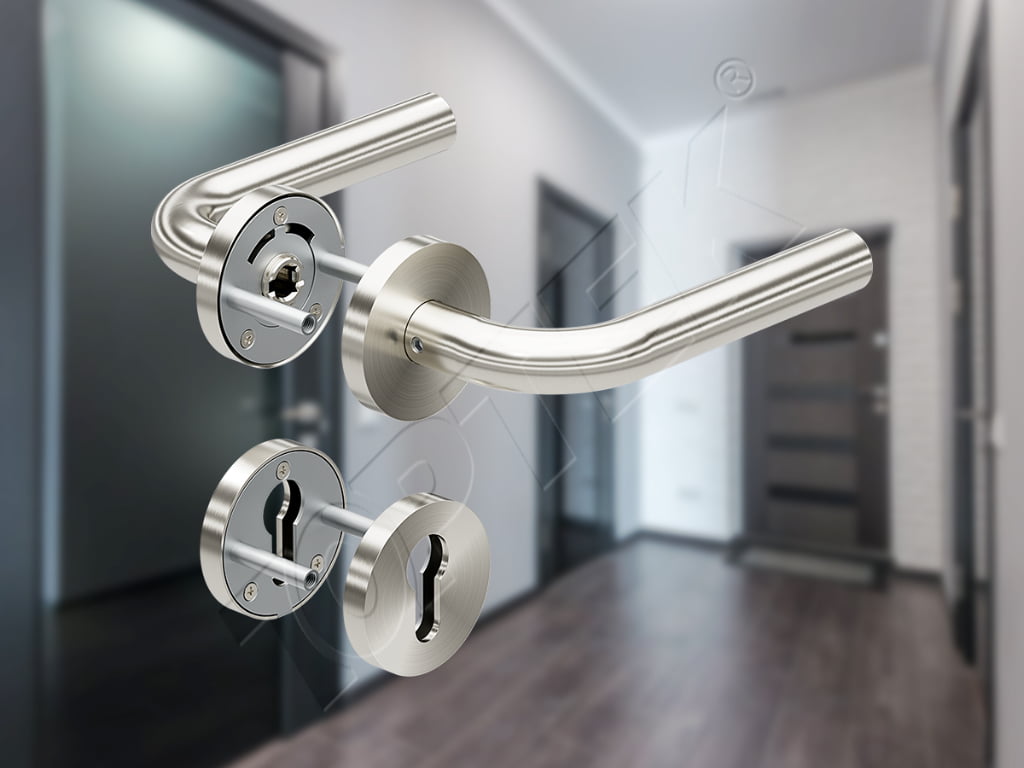

EN1906 Lever Handles are not only decorative door hardware. For schools, hospitals, offices, hotels, public buildings, and fire-rated doors, they must return properly after years of repeated use.
Many buyers first compare shape, finish, and price. However, in real commercial projects, the internal structure decides whether the handle will stay level, feel stable, and support the lock body over time.
At TOPTEK, we often see stainless steel handles that look acceptable at first but sag after high-frequency operation. For this reason, we evaluate lever handles by structure, testing evidence, installation practicality, and long-term return performance.
Why Commercial Door Handles Fail Too Early
In the door hardware market, handle failure is often discussed only after installation. A buyer may focus on appearance. A contractor may focus on installation speed. A distributor may compare packaging and price.
After the building opens, the real test begins. In public areas, users press the handle with force, pull the door while operating it, or use the product hundreds of times per day.
When the internal structure is weak, several problems appear quickly:
- The lever handle starts to sag.
- The return spring becomes weak or breaks.
- The handle no longer returns to the horizontal position.
- The rose or backplate becomes loose.
- The spindle connection feels unstable.
- The door does not latch as smoothly as before.
- The building owner faces repeated maintenance and replacement costs.
From our own testing experience, some market handles fail after only 50,000 to 60,000 cycles. The outside may still look good, but the spring or internal connection has already lost commercial-use value.
What Grade 3 and Grade 4 Mean for Buyers
EN 1906 is the European standard for lever handles and knob furniture. For buyers, the important question is not only whether a handle looks good. The key question is whether the handle fits the expected traffic level and abuse risk.
| Grade | Practical Meaning | Typical Buyer Concern |
|---|---|---|
| Grade 3 | High-frequency use by the public or users with limited incentive to take care | Offices, schools, hospitals, hotels, and public facilities |
| Grade 4 | High-frequency use where heavy or rough operation may occur | Transport facilities, institutional buildings, demanding projects, and severe-duty openings |
For buyers comparing EN1906 Lever Handles, the grade is not just a laboratory label. It is a risk decision for the project, the distributor, and the brand owner.
For a moderate office door, Grade 3 may be suitable. For a school corridor, hospital public area, government building, stadium, or transport facility, Grade 4 gives buyers a stronger safety margin.
Why Do Lever Handles Sag?
Many people think handle sagging comes only from a weak spring. In reality, the handle works as a small mechanical system.
The final performance depends on the handle body, spindle, spring mechanism, fixing structure, bearing support, rose strength, installation method, and dimensional control. If one part becomes unstable, the whole handle can feel loose.
Weak Return Spring Design
The return spring brings the lever back to its original position. If the spring material, heat treatment, load design, or support structure is poor, the lever can drop after repeated operation.
Poor Internal Connection Structure
Some handles use weak zinc alloy internal parts or low-cost connection structures. These parts may work at first. However, after repeated operation, they may wear, deform, or become loose.
Lack of Bearing Support
High-frequency doors need stable rotational support. A bearing-supported structure can improve smooth operation and reduce long-term looseness.
Poor Dimensional Control
A lever handle looks simple, but internal tolerances matter. The spindle hole, spring seat, fixing position, and connection components must match consistently in mass production.
Installation Complexity
If the handle is handed, difficult to align, or easy to install incorrectly, the final performance may suffer before the first user operates the door. As a result, non-handed and quick-install structures bring practical value to contractors and project buyers.
TOPTEK’s Anti-Sagging Engineering Approach
Our question was simple: why should a commercial handle fail after only tens of thousands of cycles?
At TOPTEK, we redesigned the stainless steel lever handle from the inside. Instead of focusing only on the catalogue photo, our engineering team focused on spring durability, spindle connection strength, rotational support, fixing stability, and long-term handle return.
Our structure uses:
- 304 stainless steel connection components
- Bearing-supported operation
- High-strength return spring design
- Stable internal fixing structure
- Quick installation design
- Non-handed configuration for left-hand and right-hand doors
- Long-cycle return performance for public-use applications
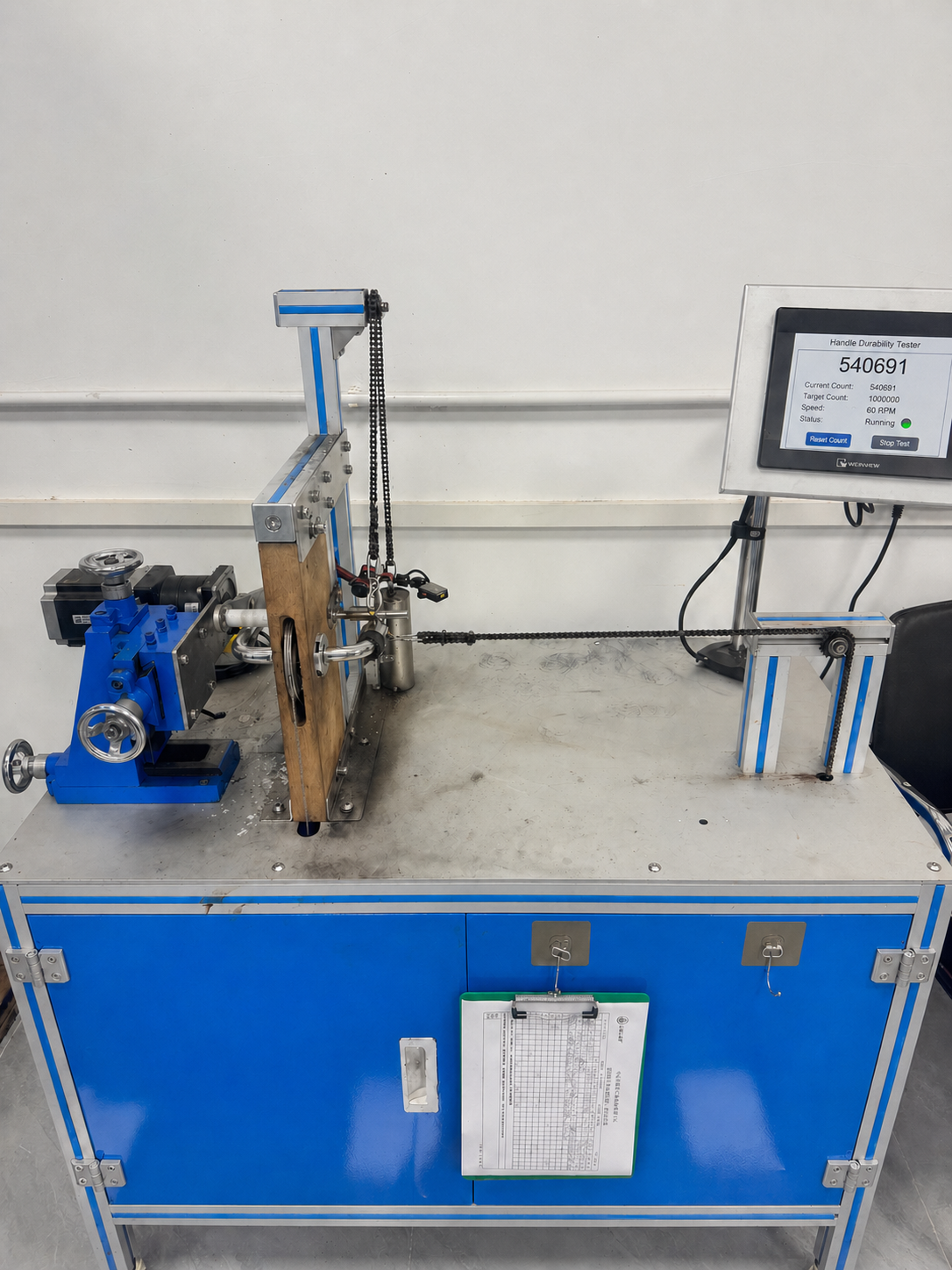
After internal testing, TOPTEK’s handle remained stable after 500,000 cycles without sagging. This result gives project buyers stronger confidence when they evaluate EN1906 Lever Handles for demanding commercial openings.
500,000 Cycles: What Buyers Should Check After the Test
Cycle testing is valuable, but the number alone is not enough. A handle may still move after testing, yet fail in real application terms if it no longer returns correctly.
For this reason, buyers should check the condition after long-cycle testing:
- Does the lever still return to the correct horizontal position?
- Does the spring remain stable?
- Is the handle loose?
- Is there visible sagging?
- Has the internal connection structure worn out?
- Does the operation still feel smooth?
- Can the supplier repeat the same quality in batch production?
In real projects, the performance after testing matters more than the test number itself. For this reason, EN1906 Lever Handles should be reviewed after testing, not only during testing. TOPTEK treats anti-sagging performance as a core design target, not as an after-sales problem.
Fire-Rated Door Applications Need Assembly Thinking
For fire-rated doors, buyers should not evaluate the handle as an isolated product. The door leaf, frame, lock body, lever handle, hinge, fixing method, seals, and installation condition can all affect final performance.
In EN-based projects, fire resistance evidence often relates to the complete tested door assembly. Therefore, a better buyer question is not only “Is this handle fire-rated?”
The better question is: “Has this handle been used in the required fire door assembly test with the correct lock body, door type, and installation condition?”
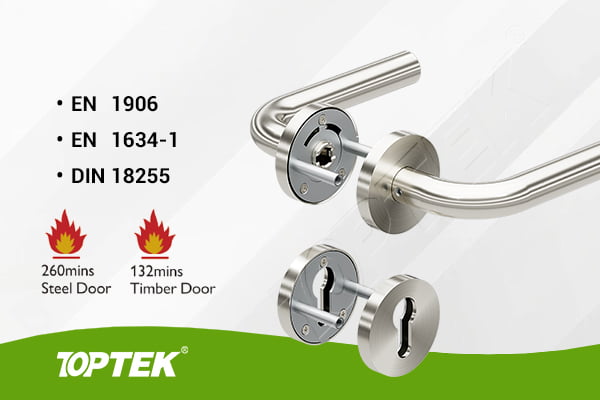
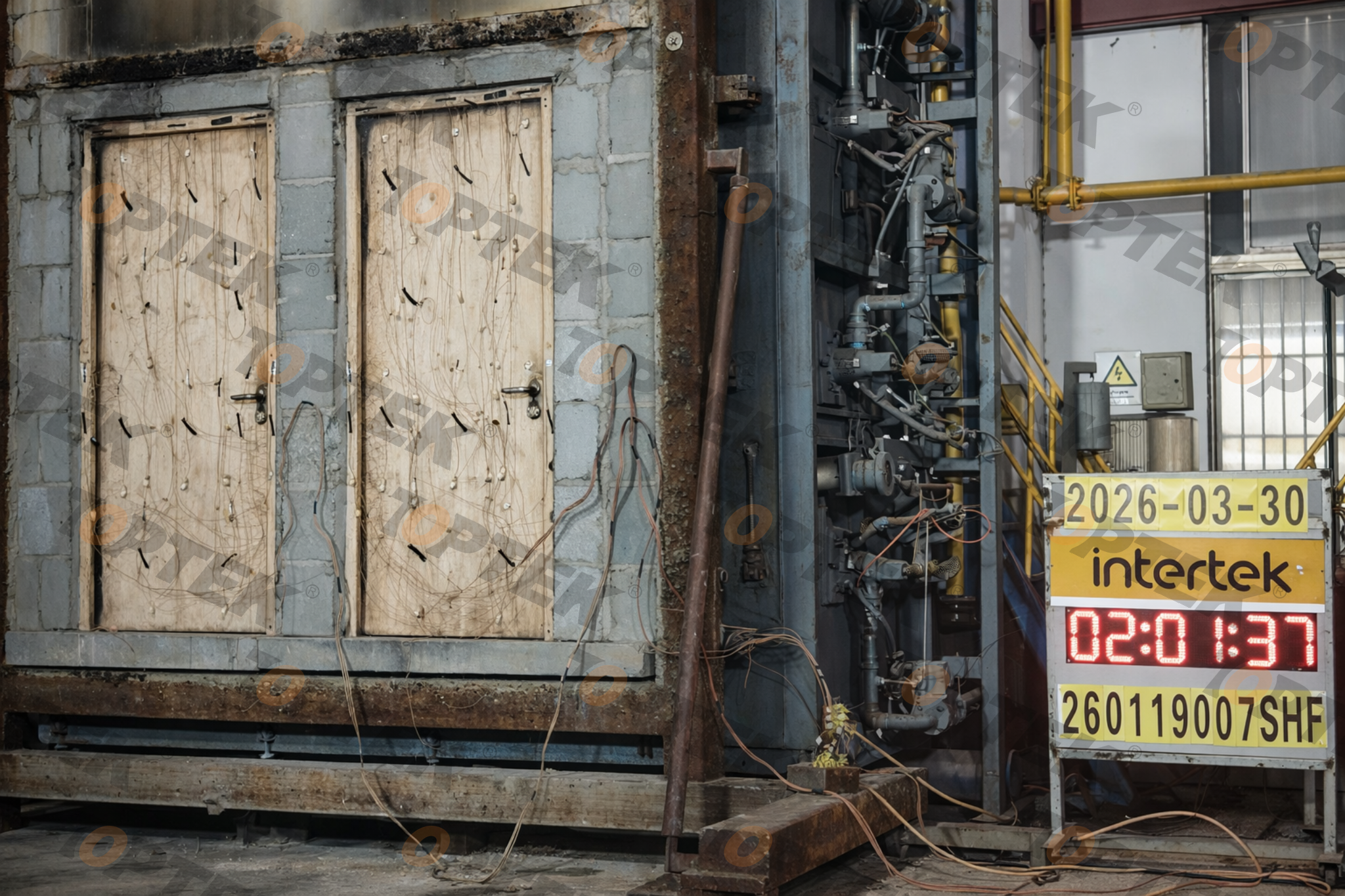
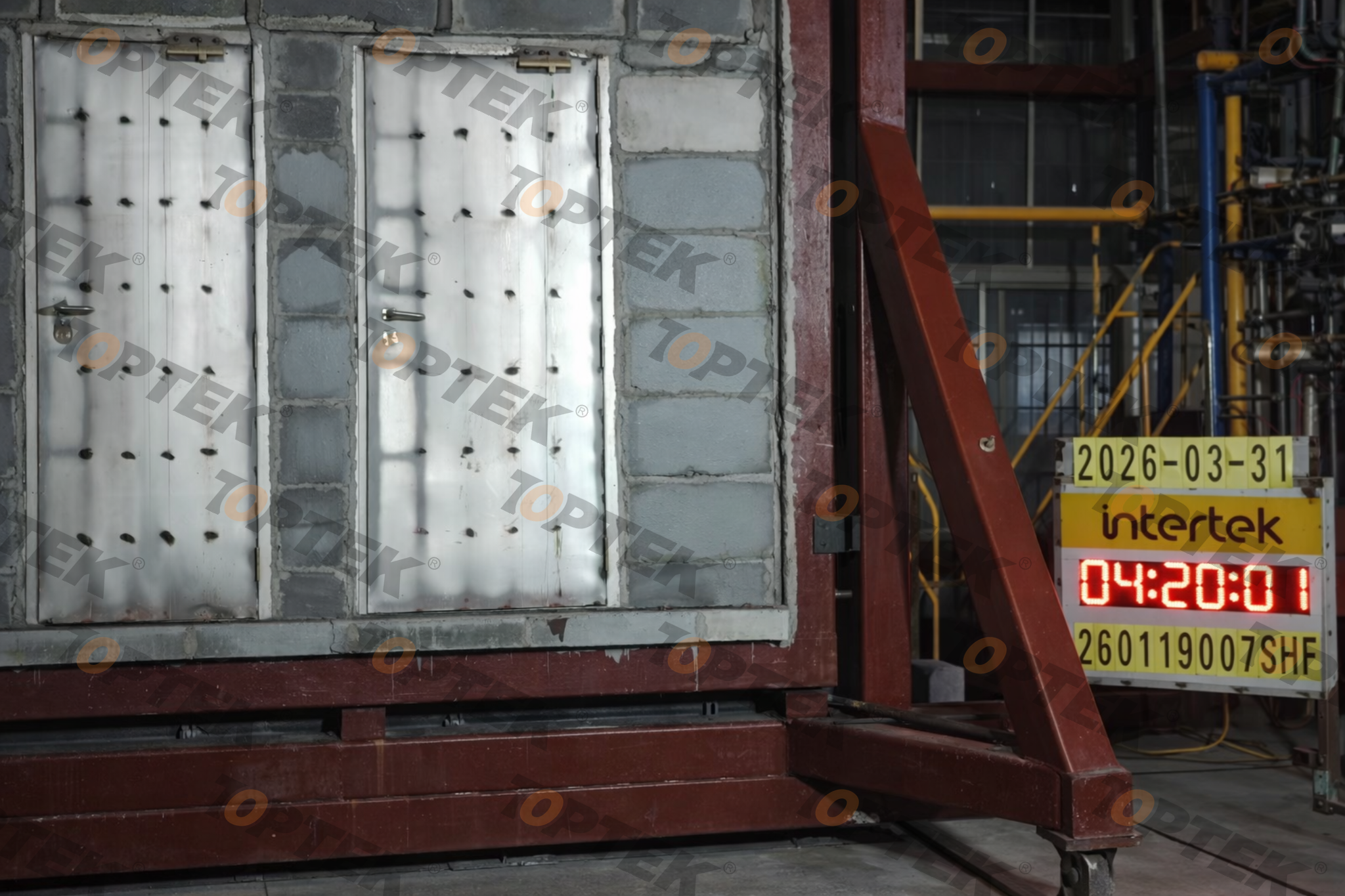
TOPTEK stainless steel lever handles have been used in fire door assembly testing, including timber door testing reaching 120 minutes and steel door testing reaching 260 minutes. For North American or mixed-standard projects, buyers can also review guidance from UL Solutions door hardware testing and certification. For fire door testing references, Intertek fire door testing also explains why tested fire door assemblies matter.
A UK Customer Case: Solving a Long-Term Handle Problem
One UK customer came to us with a clear problem. Their lever handles looked acceptable, but long-term durability caused repeated complaints.
The main issue was not surface finish. Handles sagged, springs failed, and the structure could not remain stable enough for demanding public-use doors.
After reviewing the problem, we supplied our stainless steel lever handles for testing and evaluation. The customer confirmed the performance and later placed orders of more than 50,000 sets.
For TOPTEK, this was more than a sales result. It showed that engineering value appears when a product solves a repeated market pain point.
How to Choose EN1906 Lever Handles for Commercial Projects
When buyers choose EN1906 Lever Handles, price and appearance should not be the only decision points. Distributors, door manufacturers, contractors, and OEM/ODM buyers should review the following items before ordering.
1. Confirm the Required Grade
Grade 3 may fit many commercial and public-use buildings. Grade 4 should be considered when traffic is higher, operation is rougher, or long-term durability is critical.
2. Ask for the Classification Code
A proper EN 1906 product should be understood through its classification, not only through a simple “passed” claim. The code helps buyers review use category, durability, fire behavior, safety, corrosion resistance, security, and application suitability.
3. Review the Internal Structure
The external material may be stainless steel, but the inner structure decides long-term performance. Buyers should ask about the spring, spindle connection, bearing support, fixing method, and rose or backplate structure.
4. Check Fire Door Compatibility
If the handle will be used on a fire-rated door, confirm the fire test route and approved configuration. The test evidence should match the door type, lock body, hinge, fixing method, and local project requirement.
5. Evaluate Installation Practicality
Large projects need speed and consistency. A non-handed, quick-install handle can reduce site errors and help contractors finish work more reliably.
6. Verify Manufacturing Consistency
A good sample is not enough. OEM/ODM buyers need stable batch production, inspection control, material management, and repeatable testing support.
Where These Commercial Handles Are Commonly Used
EN1906 Lever Handles are commonly selected for the following applications:
- Schools and universities
- Hospitals and healthcare facilities
- Government buildings
- Commercial offices
- Hotels and apartments
- Transportation facilities
- Shopping centres
- Fire-rated doors
- Institutional buildings
- Public toilets and service areas
- Access-controlled commercial doors
In these environments, the cost of handle failure can be higher than the purchasing price difference. A weak handle may save money at first. However, repeated maintenance, complaints, and replacement work increase the real project cost.
Why OEM/ODM Buyers Should Look Beyond Appearance
For brand owners and OEM/ODM customers, a lever handle is part of the brand promise. If it sags after installation, the end user will not blame the spring supplier. They will blame the brand, distributor, contractor, or door manufacturer.
TOPTEK supports customers with stainless steel commercial lever handle development, internal testing, fire door application support, and consistent batch production. Our broader engineering background also covers mechanical locks, panic exit devices, and access control hardware. You can learn more from the About TOPTEK engineering page and our electromechanical lock selection guide.
For customers serving Europe, the Middle East, the UK, Australia, Southeast Asia, and other project-driven markets, tested lever handle performance can become a strong selling point.
TOPTEK’s View: Reliable Hardware Should Work Quietly
Well-engineered EN1906 Lever Handles should not need daily attention. They should return properly, support the lock body, withstand repeated operation, and maintain the building’s professional image.
At TOPTEK, we do not design handles only for catalogue photos. We design them for the door after years of use.
This means we focus on spring return performance, internal structure, material strength, installation practicality, fire door compatibility, and quality control. In public buildings, users may touch the same handle thousands of times. If it fails, everyone sees it. If it works well, almost no one notices it.
That quiet reliability is exactly what professional door hardware should deliver.
FAQ: EN1906 Lever Handles
What are EN1906 Lever Handles?
EN1906 Lever Handles are door handles tested and classified according to EN 1906 for lever handles and knob furniture. The standard helps buyers evaluate use category, durability, safety, corrosion resistance, fire door suitability, and security-related performance.
What is the difference between Grade 3 and Grade 4?
Grade 3 is commonly selected for high-frequency public-use doors. Grade 4 is intended for more demanding environments where users may operate the handle more roughly or more frequently.
Why do commercial door handles sag?
Door handles usually sag because of weak return springs, poor spindle support, unstable internal connection structures, poor dimensional control, or long-term wear under high-frequency use.
Is stainless steel enough for a good commercial lever handle?
No. Stainless steel improves surface durability and corrosion resistance, but spring structure, bearing support, spindle connection, fixing strength, and manufacturing consistency are equally important.
Can these handles be used on fire-rated doors?
They can be used on fire-rated doors only when the handle and the complete hardware configuration match the required tested assembly and project approval route.
Contact TOPTEK for Project Evaluation
If you are selecting EN1906 Lever Handles for a commercial building, fire-rated door project, OEM/ODM program, or distributor product range, contact TOPTEK for technical discussion.
Our team can help review grade requirements, internal structure, fire door application, installation method, finish options, and batch production needs. Visit TOPTEK to learn more about our commercial door hardware and integrated access control locking solutions.