

What should buyers know before selecting an EN 12209 Grade 3 Mortise Lock?
An EN 12209 Grade 3 Mortise Lock is not just a European lock case. It is a tested mechanical locking solution for commercial doors, fire-rated door projects, door manufacturers, and OEM/ODM hardware programs.
In our daily communication with overseas door manufacturers, architectural hardware distributors, project contractors, and lock brands, one question appears very often: “Do you have an EN 12209 mortice lock?”
At first, this sounds like a simple certification question. However, in real projects, buyers usually need to confirm much more than the certificate name. They also need to check the classification code, centre distance, backset, fire-door suitability, corrosion resistance, durability, deadbolt strength, and production consistency.
For this reason, TOPTEK treats the EN 12209 Grade 3 Mortise Lock as a complete project hardware solution, not only as a lock body. This guide explains how to read the standard, how to compare lock performance, and how to reduce project risk before mass production.
What does EN 12209 mean for commercial door hardware?
EN 12209 is a European performance standard for mechanically operated locks, latches, and locking plates. It helps buyers compare lock performance through a structured classification system.
The standard does not only describe the outside size of the lock body. Instead, it classifies the product through performance categories such as durability, door mass, fire suitability, safety, corrosion resistance, security, field of door application, key operation, and spindle operation.
Therefore, two lock bodies may look similar in a catalogue but perform very differently in a hospital, school, hotel, apartment building, shopping centre, or public facility. A professional buyer should not only ask whether the lock has EN 12209. A better question is: “What is the full classification code, and does it match my project requirement?”
For international buyers, this code becomes a technical language for specification. It helps purchasing teams, door factories, contractors, and hardware distributors compare products based on tested performance instead of relying only on price or appearance.
Mortice lock or mortise lock: which keyword should be used?
Both terms are correct, but they are used in different markets. “Mortice lock” is common in the UK and Europe, while “mortise lock” is widely used in North America and global B2B searches.
Because TOPTEK supplies European-standard lock bodies to many overseas markets, both terms can appear in customer inquiries. For SEO, “mortise lock” often helps reach global buyers. For technical European door hardware discussions, “mortice lock” is also natural.
In this article, we use EN 12209 Grade 3 Mortise Lock as the focus keyphrase. We also use related terms such as European mortice lock, EN mortise lock, commercial mortise lock, mechanical lock case, Grade 3 lock body, and fire-rated door lock to keep the wording natural.
How is TOPTEK’s EN 12209 classification code read?
The classification code helps buyers understand the tested performance level of the lock. For TOPTEK’s sash mortise lock, the code is 3X910G4BC20.
This code should not be treated as random letters and numbers. Each position reflects a specific performance category. As a result, buyers can compare a lock body by its tested performance instead of only checking whether a certificate exists.
| Code Position | TOPTEK Code | What It Means for Buyers |
|---|---|---|
| Category of use | 3 | Suitable for public-use applications where misuse may occur. |
| Durability | X | High durability classification under the EN 12209 system. |
| Door mass and closing force | 9 | Suitable for heavy door applications according to the classification system. |
| Fire/smoke door suitability | 1 | Suitable for use on fire/smoke resisting door assemblies where the tested configuration matches the project. |
| Safety | 0 | No specific safety requirement under this classification position. |
| Corrosion resistance and temperature | G | Very high corrosion resistance with temperature requirement. |
| Security and drill resistance | 4 | High security level under the EN 12209 classification system. |
| Field of door application | B | Mortise lock for hinged door application. |
| Key operation and locking | C | Cylinder operation with manual locking and intermediate locking function. |
| Spindle operation | 2 | Suitable for unsprung lever handle operation. |
| Key identification | 0 | No specific key identification requirement. |
For project buyers, this classification code is useful during tender review, sample evaluation, and supplier comparison. It also helps avoid a common mistake: choosing a lock only because it looks similar to another European lock body.
Why does Grade 3 matter in real commercial projects?
Grade 3 matters because commercial doors need stable locking performance under frequent use, public operation, and long-term maintenance pressure.
In hospitals, schools, hotels, offices, shopping centres, and apartment projects, door hardware does not work in a quiet showroom. It works under repeated opening, imperfect installation, different users, and daily site conditions.
For this reason, an EN 12209 Grade 3 Mortise Lock should be reviewed together with its full performance data. Buyers should check durability, latch movement, deadbolt strength, fire-door evidence, corrosion resistance, and the supplier’s ability to maintain consistency during mass production.
A low-cost lock may reduce the initial purchase price. However, if it fails after installation, the after-sales cost can become much higher than the saving. Labour cost, door removal, site delay, and customer complaints often cost more than the lock body itself.
Which TOPTEK series are available for European door systems?
TOPTEK supplies 72, 78, and 85 series European mortise lock platforms for commercial doors, fire-rated doors, and OEM/ODM hardware programs.
These series support different centre distances, backsets, forend dimensions, latch functions, deadbolt configurations, strike plates, and material options. Therefore, they can serve door manufacturers, hardware distributors, lock brands, contractors, and project suppliers.
Typical applications include Euro profile cylinder doors, timber fire doors, steel fire doors, commercial interior doors, public building doors, hotel doors, healthcare doors, school doors, and office building doors.
For buyers who need broader hardware support, TOPTEK can also coordinate related architectural hardware such as lever handles, panic exit devices, construction cylinders, butt hinges, and access control lock solutions.
Can an EN mortise lock be used on fire-rated doors?
It can be used only when the tested configuration and project approval requirements match the actual fire-rated door assembly.
EN 12209 focuses on mechanical lock performance. However, fire-rated door acceptance may also depend on the door leaf, frame, hinges, lever handle, cylinder, strike plate, seals, local regulation, and the authority having jurisdiction.
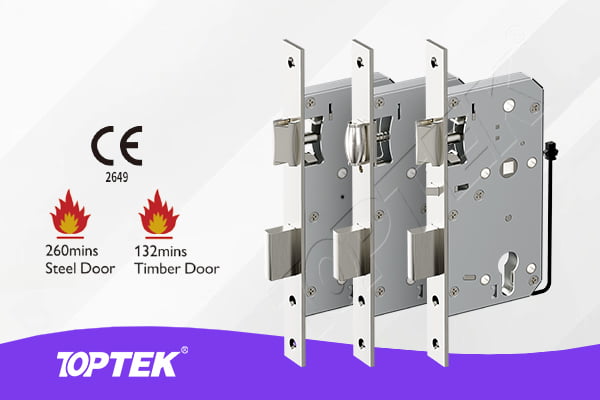
TOPTEK’s 72, 78, and 85 series European mortise lock bodies have CE-related documentation for project evaluation. Our fire test performance includes 132 minutes on timber door and 260 minutes on steel door for the tested configurations.
In real projects, buyers should still confirm whether the tested door type, hardware combination, installation method, and local approval rules match the actual application. This is especially important for hotels, hospitals, public buildings, and commercial fire door programs.
For additional fire door and hardware reference, buyers can review the UL guide for certified doors, windows, and related hardware, as well as Intertek’s fire door testing information:
Why do 300,000 operating cycles matter?
300,000 operating cycles give buyers a clearer durability reference for high-traffic commercial doors and long-term project use.
In many public buildings, one door may operate hundreds or thousands of times every week. If the lock body is not stable enough, users may experience loose latch movement, weak spring return, difficult key operation, poor handle feeling, or locking failure.
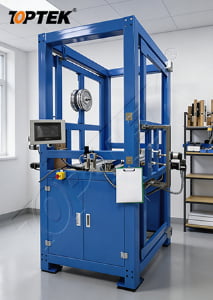
For TOPTEK’s EN mortise lock program, the certificate or internal test report records 300,000 operating cycles. In addition, TOPTEK’s in-house testing capability can support durability validation up to higher internal test targets when a project requires deeper verification.
This matters to distributors and project suppliers because durability directly affects after-sales risk. A lock failure after installation may require door hardware removal, replacement, labour coordination, and customer complaint handling.
How strong is the deadbolt performance?
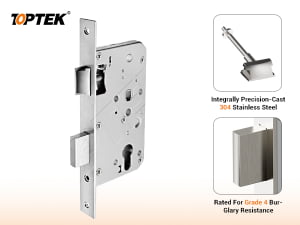
TOPTEK’s sash mortise lock records Grade 4 deadbolt resistance with 5,000N axial pressure and 7,000N side pressure in the relevant certificate or internal test report.
The deadbolt is a core security component inside a commercial mortise lock. If the deadbolt structure is weak, the door may look secure but perform poorly under forced-entry pressure.
For this reason, buyers should not evaluate an EN 12209 Grade 3 Mortise Lock only by its lock case size. They should also check deadbolt load performance, strike plate compatibility, door preparation accuracy, and the complete hardware configuration.
In public buildings, offices, schools, apartments, and security-sensitive commercial areas, stronger deadbolt performance can reduce risk and improve long-term confidence.
Why does internal structure affect reliability?
Internal structure affects whether the lock can remain smooth, stable, and reliable after repeated operation in real door projects.
Many buyers compare lock bodies by size, finish, price, and certificate. However, the latch bolt assembly, connecting structure, springs, case strength, and manufacturing tolerance often decide the real user experience after installation.
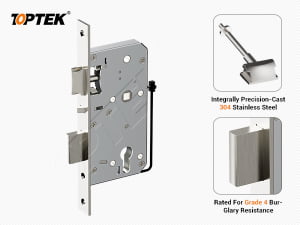
In many market lock bodies, the latch bolt and connecting rod use a riveted structure. This may work in normal use, but if the riveting becomes loose after long-term operation, the latch movement can become unstable.
TOPTEK uses a one-piece stainless steel investment cast latch bolt assembly for this European lock platform. This structure helps reduce the weakness of riveted components and supports better mechanical integrity.
When should buyers choose 316 stainless steel components?
Buyers should consider 316 stainless steel options for hospitals, coastal buildings, humid environments, public buildings, and projects with higher corrosion resistance requirements.
For normal indoor applications, SS304 may already be suitable. However, corrosion risk becomes more serious in healthcare projects, coastal cities, humid areas, and buildings with aggressive cleaning environments.
We have seen cases where a buyer’s previous supplier could offer a standard mortise lock, but critical components developed rust after installation. The real issue was not only rust. The supplier could not upgrade the key components to 316 stainless steel, so the project had no reliable corrective solution.
For this reason, TOPTEK can provide optional SS316 components for latch bolt, deadbolt, forend plate, strike plate, and screws when the project environment requires stronger corrosion resistance.
Why is dust protection important during installation?
Dust protection helps reduce the risk of wood chips, metal particles, and installation debris entering the lock case during door preparation.
This detail may look small, but it can become a serious after-sales issue in large projects. During installation, debris can enter the key openings or critical holes and affect the internal mechanism.
In one project case shared by a customer, another supplier’s lock bodies had no effective dust protection. Wood chips entered the lock mechanism during installation, and some locks could not operate properly after the doors were completed.
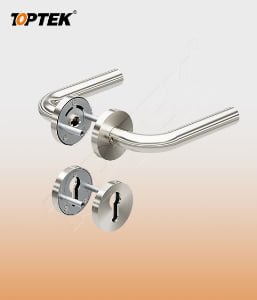
TOPTEK’s European-standard lock bodies use integrated dust protection covers around key openings and critical areas. As a result, door manufacturers and contractors can reduce unnecessary maintenance risk after installation.
Why should OEM/ODM buyers check repeat testing capability?
OEM/ODM buyers should check repeat testing capability because one successful certificate does not always guarantee stable mass production.
Some customers have told us that their previous suppliers claimed their lock bodies could meet CE or EN 12209 requirements. However, during annual review or repeat testing, the same product could not pass again.
This creates serious risk for lock brands, door manufacturers, and hardware distributors. If one supplier cannot maintain consistency, the whole product program may be affected.
TOPTEK supports this requirement through in-house testing capability and ISO-based quality management. Our quality process includes incoming material inspection, First Article Inspection, in-process inspection, patrol inspection, post-plating inspection, assembly inspection, mechanical testing, durability testing, and final verification.
For more company background, buyers can review the About TOPTEK engineering page.
How can buyers specify the right commercial mortise lock?
Buyers should prepare the door, hardware, certification, material, and project approval information before confirming the lock body.
A clear specification helps avoid wrong samples, delayed approval, and unnecessary redesign. It also helps the supplier recommend the correct 72mm, 78mm, or 85mm lock platform.
- Door material: timber, steel, aluminium, or fire-rated door
- Door thickness and frame structure
- Backset requirement
- Centre distance: 72mm, 78mm, or 85mm
- Forend plate width, height, and shape
- Euro profile cylinder requirement
- Latch and deadbolt function
- Handle spindle size and lever handle compatibility
- Fire-rated door requirement
- Corrosion resistance requirement
- Door traffic level
- Project market and local approval requirement
- Required certificates or test reports
- Quantity, sample plan, and delivery schedule
If the project also includes electronic access control, buyers can also read TOPTEK’s electromechanical lock selection guide for access control lock selection.
What OEM/ODM support can TOPTEK provide?
TOPTEK supports lock brands, door manufacturers, distributors, and project suppliers with European-standard lock bodies, customization, technical documents, and project-based development.
A European mortise lock project is rarely about one single product. It often includes different door types, functions, finishes, accessories, certification expectations, packaging needs, and local market requirements.
TOPTEK can support private label production, logo marking, customized forend plate dimensions, different backset options, SS304 and SS316 material choices, fire-rated project configurations, strike plate customization, packaging customization, technical drawings, and project-based product development.
For buyers who need a stable EN 12209 Grade 3 Mortise Lock supply program, this flexibility helps reduce sourcing risk and supports long-term product planning.
What mistakes should buyers avoid?
Buyers should avoid selecting a lock only by certificate name, low price, or external size. Real project performance depends on many technical details.
Is checking “CE certified” enough?
No. Buyers should also check the classification code, test reports, and project suitability.
CE documentation is important, but it does not replace proper technical review. The classification code gives more practical information for commercial door specification.
Can one lock suit every fire-rated door?
No. Fire-door suitability depends on the tested door assembly and local approval requirement.
Buyers should confirm the door material, frame, hardware combination, and actual tested configuration before using the lock in a fire-rated project.
Is the lowest price always the best choice?
No. A lower price can create higher after-sales cost if the product fails after installation.
For commercial buildings, durability, deadbolt strength, corrosion resistance, and quality control often matter more than a small initial saving.
Should corrosion resistance be discussed early?
Yes. Material selection should be confirmed before the project starts, especially for hospitals and coastal buildings.
When corrosion appears after installation, the cost may include replacement parts, labour, site visits, and customer complaints.
FAQ: What do buyers usually ask?
What is an EN 12209 Grade 3 Mortise Lock?
It is a commercial mechanical lock case tested and classified under EN 12209 for European-standard door hardware applications.
It is commonly used in public buildings, commercial doors, fire-rated doors, hotels, hospitals, schools, apartments, and OEM/ODM lock programs.
Is EN 12209 the same as CE certification?
No. EN 12209 is a product performance standard, while CE documentation relates to applicable European compliance requirements.
Buyers should check the certificate, classification code, test evidence, and project application together.
What is the difference between EN 12209 and EN 1634-1?
EN 12209 focuses on mechanical lock performance, while EN 1634-1 relates to fire resistance testing for door and shutter assemblies.
For fire-rated door projects, buyers may need both mechanical lock evidence and fire-door assembly evidence.
What is a 72mm mortise lock?
A 72mm mortise lock normally refers to the centre distance between the lever handle spindle and the cylinder or keyhole centre.
It is a common European lock body format for commercial doors and project hardware systems.
When should a buyer choose 316 stainless steel parts?
Buyers should consider SS316 options when the project involves coastal areas, hospitals, high humidity, public use, or strict corrosion resistance needs.
TOPTEK can support optional 316 stainless steel for key components such as latch bolt, deadbolt, forend plate, strike plate, and screws.
Conclusion: Why choose TOPTEK for European commercial lock programs?
TOPTEK helps buyers reduce project risk by combining EN 12209 knowledge, product engineering, tested performance, material options, in-house testing, and OEM/ODM manufacturing support.
An EN 12209 Grade 3 Mortise Lock should not be selected only by appearance or certificate name. Buyers should review the full classification code, fire-door evidence, durability, deadbolt strength, corrosion resistance, internal structure, installation protection, and supplier consistency.
TOPTEK’s European mortise lock platform includes 72, 78, and 85 series lock bodies, 300,000-cycle validation, 132-minute timber door and 260-minute steel door fire test performance for tested configurations, Grade 4 deadbolt resistance, one-piece stainless steel investment cast latch bolt assembly, optional SS316 components, dust protection design, and in-house testing capability.
For door manufacturers, lock brands, architectural hardware distributors, contractors, and project buyers, TOPTEK provides more than lock bodies. We provide technical support for reliable commercial door hardware programs.
Looking for an EN 12209 Grade 3 Mortise Lock supplier?
Contact TOPTEK if you need certified European mortise locks, fire-rated door hardware support, OEM/ODM customization, or project-based technical documentation.
Please send us your required centre distance, backset, lock function, door type, fire test requirement, corrosion resistance requirement, quantity, and target market. Our team can help you evaluate the right lock body configuration for your commercial door project.